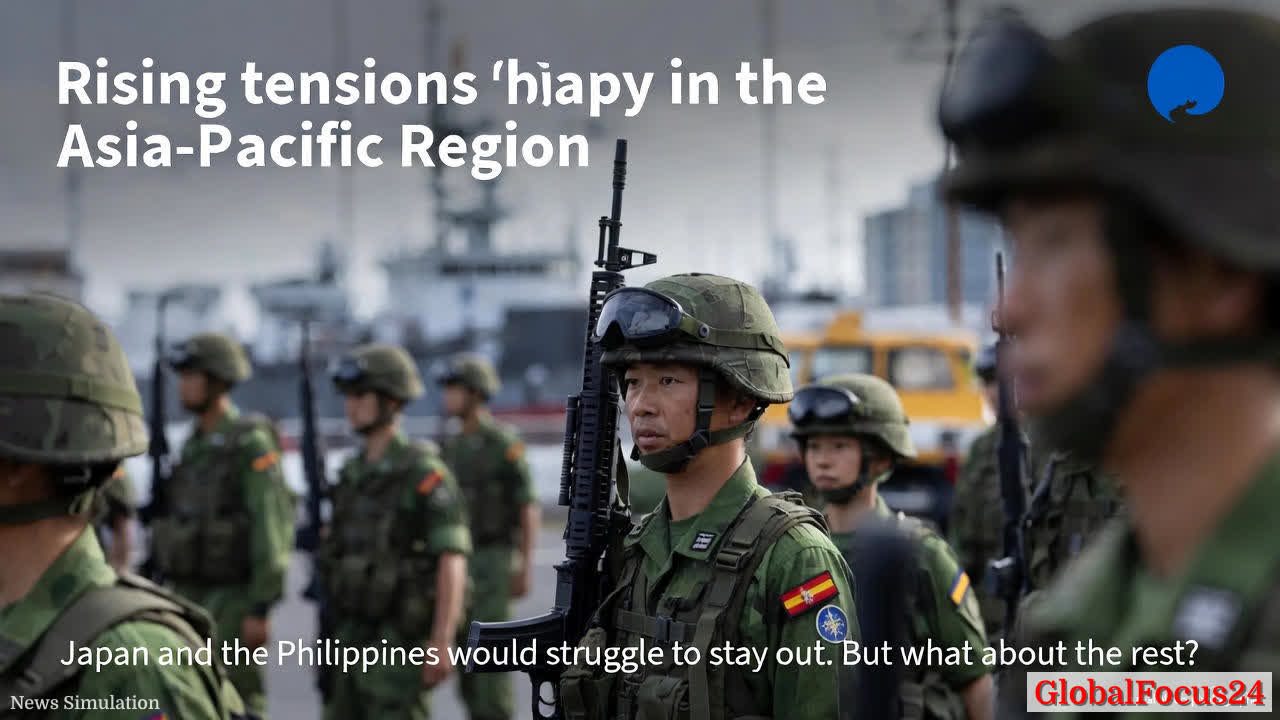
Rising Tensions in the Asia-Pacific: Strategic Questions for Markets, Policy, and People
Historical backdrop and current landscape Across the Asia-Pacific, a long arc of regional integration and economic collaboration has been punctured by renewed strategic frictions in recent months. The region’s security architecture, built over decades through bilateral alliances, multilateral fora, and dense commercial ties, now sits at a crossroads. Historical patterns—such as the shift from Cold War era buffer zones to today’s interconnected economy—underscore how regional rivalries can ripple through supply chains, investment decisions, and consumer confidence. The recent uptick in maritime patrols, joint exercises, and diplomatic signaling reflects a recalibration by several states as they weigh security commitments against the benefits of open regional trade.
In this environment, Japan and the Philippines stand out as focal points of vulnerability for several reasons. Japan, a high-tech manufacturing hub and major investor, depends on stable sea lanes for energy, materials, and components essential to its export sector. The Philippines, with its strategic location along major shipping routes and its growing role in global IT and business process outsourcing, faces direct exposure to disruptions in maritime commerce and regional security dynamics. Taken together, these dynamics illuminate how a broader geopolitical moment can translate into concrete economic and social consequences for local communities and national budgets alike.
Economic currents and implications Market participants are watching a mosaic of indicators that intersect at the regional level. First, confidence among manufacturers and exporters has shown sensitivity tos about geopolitical risk, with lead times in global supply chains extending as companies reroute or diversify sourcing strategies. A durable pattern has emerged: when risk perceptions rise, firms accelerate diversification toward alternatives that reduce exposure to single points of failure. This tendency, while beneficial for resilience, can also lift logistics costs and encourage investment in new infrastructure, such as port facilities, warehousing, and digital tracking systems.
Second, energy and commodity markets have demonstrated how security considerations translate into price volatility. The Asia-Pacific region consumes a sizable share of global energy and industrial metals, and any disruption or credible threat to transport routes has the potential to push prices higher. This effect can filter through to consumer goods and industrial production, particularly in industries sensitive to energy costs, such as plastics, steel, and chemicals. While markets often price in a range of scenarios, the broader expectation remains that energy security will continue to dominate strategic budgeting decisions for both governments and corporations.
Third, currency and investment flows react to risk sentiment. The prospect of regional instability can influence cross-border investments, including equity and bond markets, where investors reassess exposure to sovereigns, corporations, and projects tied to regional growth. In turn, this can impact financing conditions for infrastructure programs, defense procurement, and research and development initiatives—areas that frequently determine a country’s long-run capacity to compete in high-value industries such as aerospace, semiconductors, and green technologies.
Regional comparisons illuminate how different approaches to security and economic policy shape outcomes. For example, one larger economy in the region has emphasized diversified supply chains and regional manufacturing clusters as a hedge against external shocks. In contrast, another economy has prioritized maritime domain awareness and preventive diplomacy as core to its risk management strategy. These varying models influence not only defense postures but also industrial policy, education and workforce development, and public-private collaboration in innovation ecosystems.
Strategic considerations for Japan and the Philippines Japan’s strategic calculus hinges on balancing deterrence with diplomacy, maintaining robust alliance ties, and sustaining a technologically advanced economy. The country’s industrial base—anchored in automobiles, electronics, robotics, and precision manufacturing—relies on stable import pathways for energy, critical minerals, and high-end components. Ensuring uninterrupted access to supply chains requires both deterrence to shape regional behavior and proactive measures to diversify suppliers and logistics routes. Public and private sector actors are increasingly coordinating on resilience—investing in port modernization, digital trade facilitation, and advanced forecasting tools to anticipate disruptions and respond swiftly.
For the Philippines, resilience hinges on anchoring growth in services, digital capabilities, and infrastructure that strengthens connectivity along major sea lanes. The nation’s attractiveness as a regional hub for information technology, business process outsourcing, and logistics is matched by the need to safeguard critical route security and to maintain predictable operating environments for investors. Policy trajectories that focus on maritime security, port efficiency, and regulatory stability can help attract long-term capital while supporting domestic job creation. In both cases, the role of international cooperation remains pivotal, whether through defense partnerships, maritime domain awareness initiatives, or joint research programs aimed at hardening supply chains against disruption.
Economic resilience and public policy levers A multi-pronged policy toolkit can help mitigate short-term shocks while laying groundwork for long-run resilience. Key levers include:
- Diversification of supply chains: Firms can reduce exposure to single sources by cultivating multiple suppliers across the region. This approach may involve nearshoring or regionalizing production, alongside investments in supplier development and quality assurance programs.
- Infrastructure investment: Strategic port improvements, rail connections, and digital infrastructure can lower transit times, improve inventory control, and enhance overall logistics efficiency. Public funding, public-private partnerships, and international financial institutions play important roles in financing these upgrades.
- Energy and resource security: Diversification of energy sources, strategic reserves, and investment in energy efficiency reduce vulnerability to price shocks and supply interruptions. Regional cooperation on energy trade and grid connectivity can further strengthen stability.
- Innovation and human capital: Government and industry collaboration on research and development, STEM education, and advanced manufacturing skills supports high-value production and adapts the workforce to evolving technologies.
- Financial risk management: Currency, interest rate, and credit risk can be mitigated through prudent macroeconomic management, hedging strategies, and diversified investment portfolios. Transparent governance and predictable policy signals boost investor confidence.
Public reaction and societal impact In times of heightened security risk, communities often feel the push and pull between caution and opportunity. Businesses adjust procurement, hiring plans, and capital expenditures in response to projected volatility. Local media coverage can shape perceptions of risk, influencing consumer sentiment and spending patterns. In some cases, government communications focused on resilience and continuity of service help households anticipate price changes or disruptions and plan accordingly. The social fabric—ranging from regional tourism to supply-chain-dependent enterprises—experiences a mix of anxiety and adaptability as people recalibrate expectations about jobs, prices, and daily life.
Regional context and historical parallels The Asia-Pacific region has a long memory of how external shocks reshape economies and political dynamics. Past tensions have triggered shifts in trade patterns, with some countries expanding ties with alternative markets or accelerating regional integration initiatives to reduce dependence on any single partner. This pattern is evident in the way industries adapt when supply chains are stressed, prompting a reallocation of production footprints or the formation of new subregional blocs. Historical context helps investors and policymakers distinguish between short-term jolts and lasting structural changes, guiding decisions about capital allocation, workforce development, and strategic planning.
Public-private collaboration and risk communication A practical, transparent approach to risk communication can help decohere fear from fact. Businesses reporting on contingency plans, inventory buffers, and supplier diversification can bolster confidence among workers, suppliers, and customers. Governments that publish clear, achievable targets for infrastructure delivery and defense readiness—without resorting to alarmist rhetoric—tend to foster a more stable investment climate. When stakeholders share information and coordinate actions, the region can respond to challenges with agility rather than paralysis.
Looking ahead: scenarios and preparation Analysts outline several plausible scenarios based on differing escalations and diplomatic responses. In a mild scenario, deterrence and diplomacy prevent escalation, allowing existing economic networks to adapt gradually with incremental improvements in resilience. A moderate scenario could see some disruption to shipping lanes or manufacturing hubs, prompting accelerated diversification and investment in resilience. A high-intensity scenario might involve broader regional involvement or synchronized policy responses to stabilize markets, potentially triggering a reconfiguration of trade routes and investment priorities. Regardless of the path, the underlying imperative is to maintain open channels for dialogue, reduce misperceptions, and reinforce rules-based norms that promote stability and predictable markets.
Impact on regional comparisons: case studies
- Southeast Asia’s manufacturing footprint: Countries in Southeast Asia have steadily expanded manufacturing bases to mitigate dependence on a single supplier region. The result is a diversified ecosystem that supports electronics, automotive components, and consumer goods. This diversification has helped cushion some shocks but also escalated competition for skilled labor and capital.
- East Asia’s energy security posture: Nations with mature energy markets are prioritizing diversified imports and strategic storage, recognizing that energy security underpins industrial activity and fiscal stability. Balancing environmental goals with practical reliability remains a central challenge for policymakers.
- Pacific economies and maritime hubs: Island and coastal economies face unique vulnerabilities due to exposure to sea-lane disruptions. Investments in port efficiency, navigation systems, and disaster resilience have become priorities for maintaining trade flows and preserving livelihoods.
Conclusion without bias The evolving tensions in the Asia-Pacific region present a complex web of risks and opportunities for economies, governments, and communities. By focusing on diversification, resilience, and prudent policy design, nations can navigate uncertainty while preserving the dynamism that has defined the region’s growth story for decades. The historical context provides valuable lessons about how markets and societies respond to disruption, and the current moment underscores the importance of collaboration—across borders, sectors, and disciplines—to safeguard stability and prosperity for a broad, interconnected world. Public institutions, private firms, and civil society each play a role in shaping a balanced, resilient path forward that aligns security with sustainable economic development.