Rio de Janeiro Grapples With Crime, Corruption, and Rising Secessionist Rhetoric
A City Under Pressure
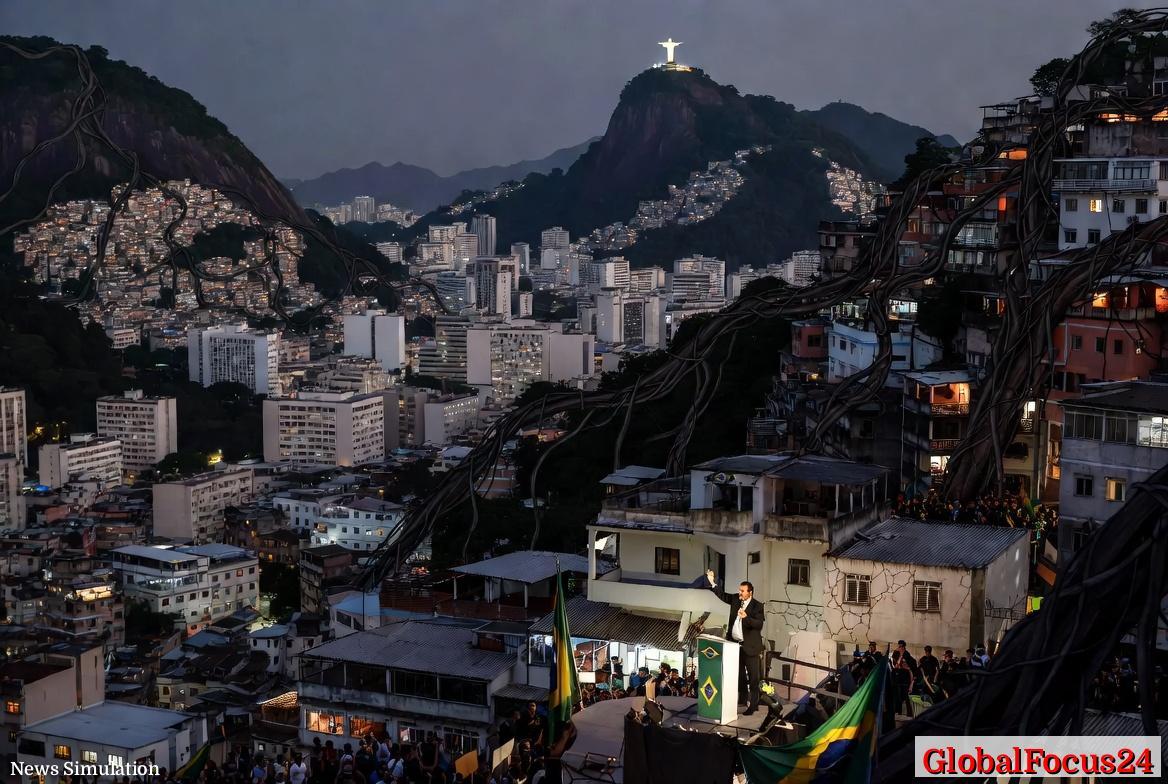
Rio de Janeiro, one of Brazil’s most iconic cities, is confronting a deepening crisis marked by persistent crime, entrenched corruption, and growing political unrest. Long celebrated for its beaches, cultural vibrancy, and global appeal, the city now faces mounting challenges that have reshaped public life and governance. In recent months, these pressures have fueled the emergence of an anti-establishment political figure advocating for a controversial proposal: the separation of Rio de Janeiro from the rest of Brazil.
The idea, once considered fringe, has begun to gain traction among segments of the population frustrated with public safety concerns and disillusioned with political leadership. While the proposal remains legally and constitutionally complex, its rising visibility reflects the intensity of dissatisfaction in Brazil’s second-largest city.
Historical Roots of Crime and Inequality
Rio de Janeiro’s current struggles are deeply rooted in decades of social inequality and uneven urban development. Since the mid-20th century, rapid population growth and rural-to-urban migration led to the expansion of informal settlements, known as favelas, across the city’s hillsides. These communities often developed with limited state presence, creating conditions where organized crime groups could establish control.
By the 1980s and 1990s, drug trafficking organizations had become powerful actors within many neighborhoods, operating parallel systems of governance. Efforts to reclaim territory through policing initiatives, such as the Pacifying Police Units (UPPs) introduced in the late 2000s, initially showed promise but later faltered amid funding shortages and corruption allegations.
Corruption within political and law enforcement institutions has further complicated efforts to address crime. High-profile scandals involving state officials, including former governors, have eroded public trust and reinforced perceptions of systemic dysfunction.
The Economic Toll of Urban Violence
The economic impact of crime in Rio de Janeiro extends far beyond immediate security concerns. Businesses face increased costs related to private security, insurance, and operational disruptions. Tourism, a key pillar of the city’s economy, has experienced fluctuations as safety concerns influence traveler decisions.
Local entrepreneurs, particularly in small and medium-sized enterprises, often bear the brunt of instability. In some areas, criminal groups impose informal taxes or extortion schemes, further constraining economic activity. These pressures contribute to a cycle in which reduced investment limits job creation, reinforcing the socioeconomic conditions that can foster crime.
Public finances have also been strained. The cost of policing, incarceration, and emergency services places a significant burden on municipal and state budgets. At the same time, corruption can divert resources away from essential services, weakening the city’s ability to respond effectively to public needs.
Political Discontent and Anti-Establishment Momentum
Against this backdrop, political dissatisfaction has intensified. Voters increasingly express frustration with traditional parties and leadership structures, which are often viewed as complicit in or incapable of addressing the city’s challenges.
The emergence of an anti-establishment politician advocating for Rio’s separation from Brazil reflects this sentiment. Positioning the proposal as a means to regain control over local governance, the candidate argues that autonomy would allow for more targeted policies on public safety, economic development, and anti-corruption measures.
Supporters of the idea point to perceived inefficiencies in federal oversight and resource allocation. They argue that Rio, as a major economic and cultural hub, contributes significantly to national revenues yet struggles with chronic underinvestment and mismanagement.
Critics, however, highlight the legal and practical barriers to secession. Brazil’s constitution does not provide a clear mechanism for a state or city to separate, and such a move would likely face strong opposition from federal authorities and other regions.
Regional Comparisons Across Brazil
Rio de Janeiro’s challenges are not unique within Brazil, though they are particularly visible due to the city’s international profile. Other major urban centers, such as São Paulo and Salvador, also grapple with crime and inequality, albeit with different dynamics.
São Paulo, Brazil’s largest city, has implemented more consistent policing strategies and benefited from stronger economic diversification, contributing to relatively lower homicide rates in recent years. Salvador, in the northeastern state of Bahia, faces socioeconomic challenges similar to Rio’s but with different patterns of criminal activity and governance.
In contrast, smaller cities and interior regions often experience less intense but still significant issues related to organized crime and corruption. These variations highlight the complexity of addressing security and governance across a country as large and diverse as Brazil.
Public Safety and Law Enforcement Challenges
Law enforcement agencies in Rio de Janeiro operate in a high-risk environment. Police officers frequently confront heavily armed criminal groups, leading to violent confrontations that can endanger both officers and civilians. The use of military-style tactics has drawn scrutiny from human rights organizations, particularly when operations result in civilian casualties.
At the same time, allegations of corruption within police forces undermine efforts to build trust with communities. Instances of collusion between officers and criminal organizations have periodically surfaced, complicating reform efforts.
Efforts to modernize policing, improve training, and enhance accountability have been introduced, but progress has been uneven. Analysts emphasize that sustainable improvements in public safety require not only enforcement but also investments in education, social services, and economic opportunities.
The Role of Militias
In addition to traditional drug trafficking organizations, Rio de Janeiro has seen the rise of militias—paramilitary groups often composed of former or off-duty law enforcement officers. These groups initially presented themselves as protectors of communities but have increasingly been associated with extortion, illegal land development, and other criminal activities.
Militias exert control over various services, including transportation and utilities, in certain areas. Their presence adds another layer of complexity to the city’s security landscape, as they operate differently from drug gangs and often maintain connections within political structures.
Economic Recovery and Investment Concerns
Efforts to attract investment and stimulate economic growth in Rio de Janeiro face significant obstacles. Investors closely monitor security conditions, governance stability, and regulatory transparency when making decisions. Persistent concerns about crime and corruption can deter both domestic and international investment.
Major infrastructure projects and events, such as the 2016 Olympic Games, temporarily boosted development and global attention. However, the long-term benefits have been mixed, with some facilities underutilized and fiscal pressures remaining.
To improve economic prospects, experts suggest a combination of reforms, including:
- Strengthening anti-corruption measures and transparency in public administration.
- Enhancing public-private partnerships to support infrastructure development.
- Expanding workforce training and education programs to reduce inequality.
- Promoting sectors beyond tourism, such as technology and renewable energy.
National Implications of Secessionist Discourse
The proposal to separate Rio de Janeiro from Brazil carries broader implications for national unity and governance. While it remains a political outlier, its visibility underscores the depth of frustration among some քաղաքացին segments.
Historically, Brazil has maintained strong territorial cohesion despite regional disparities. Movements advocating for greater autonomy have surfaced at various points, but none have significantly threatened the country’s unity in modern times.
The current rhetoric may be less about actual secession and more about signaling dissatisfaction with existing systems. It reflects a desire for more effective governance and accountability, themes that resonate across different regions.
Public Reaction and Social Climate
Public reaction to the idea of separation is mixed. Some residents view it as a bold response to longstanding problems, while others see it as impractical or potentially destabilizing. Conversations about the proposal have gained traction on social media and in local forums, indicating a growing willingness to question traditional political assumptions.
At the same time, many citizens continue to focus on immediate concerns such as safety, employment, and access to public services. Grassroots initiatives and community organizations play a crucial role in addressing local needs, often stepping in where formal institutions fall short.
Looking Ahead
Rio de Janeiro stands at a critical juncture. The convergence of crime, corruption, and political dissatisfaction presents significant challenges but also opportunities for reform. Whether through incremental policy changes or more dramatic political shifts, the city’s future will depend on its ability to address underlying structural issues.
As debates over governance and autonomy continue, the experiences of Rio de Janeiro may serve as a broader reflection of the pressures facing urban centers in Brazil and beyond. The path forward will likely require a combination of political will, institutional reform, and sustained public engagement to restore confidence and stability in one of the country’s most important cities.