Retreat and Reform: A Veteran Professor’s Departure Signals Deep Rifts in Elite Academia
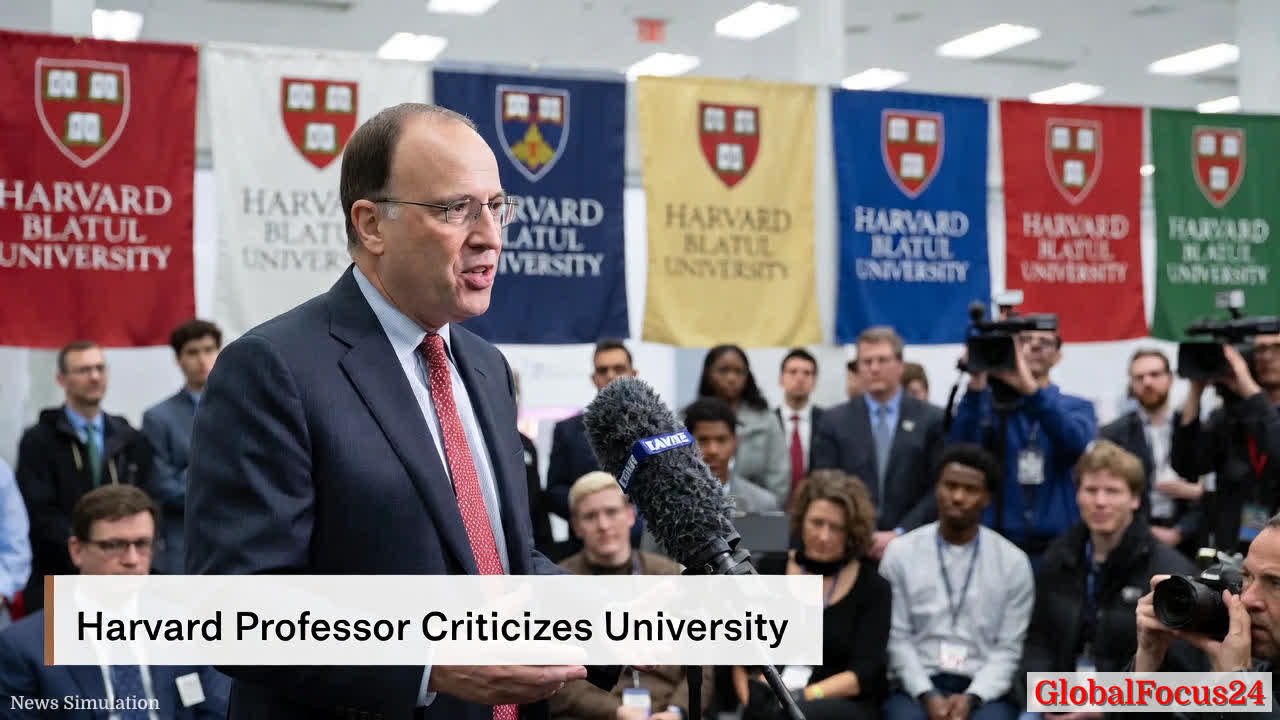
A veteran history professor, after four decades of tenure at a prestigious university, has announced his retirement and framed his decision as a signaling moment for broader tensions within higher education. In a lengthy reflective essay, he argues that changes accelerated in 2021—spurred by the COVID-19 pandemic, social upheaval, and evolving campus culture—have transformed admission practices, teaching norms, and faculty expectations in ways that he believes have narrowed opportunity and degraded traditional scholarly standards. He centers his critique on what he characterizes as an exclusionary climate for white males and a shift away from rigorous, two-book publication requirements for faculty, tying these trends to perceived political and activist pressures.
Historical context: the arc of liberal education and faculty norms in recent decades To understand the professor’s perspective, it helps to situate his experience against a broader historical arc in American universities. Over the past half-century, elite institutions have increasingly emphasized diversity, equity, and inclusion as central to their mission and governance. This shift often manifests in recruitment practices, curricular reform, and the evaluation criteria used in tenure and promotion processes. Proponents argue that these changes broaden access and elevate multiple forms of scholarship and pedagogy. Critics, however, contend that rising emphasis on identity-driven criteria and external influences can, in some cases, create dissonance with traditional expectations of merit, rigor, and open inquiry.
According to the professor’s account, the post-2021 era saw admissions dynamics that he describes as more exclusionary toward white male applicants. He recounts specific anecdotes: a high-achieving male graduate applicant deemed a “perfect fit” in prior years was reportedly rejected after a committee member indicated that admitting white males would not be pursued in that admissions season. He presents a second example involving a top student, described as the best in his graduating class and white male, who he says was rejected by all graduate programs to which he applied. He notes similar patterns at other universities, with a single exception involving a white male applicant who transitioned from female. Although focused on a limited set of cases, the professor frames these instances as symptomatic of a broader trend within elite higher education, one that he believes undermines traditional pathways to scholarly achievement.
Economic impact: implications for talent pipelines and regional competitiveness Beyond admissions narratives, the professor’s essay hints at downstream economic and intellectual consequences. If recruitment and placement pipelines become less accessible to high-achieving students from certain demographic groups, universities risk narrowing the pool of candidates who later contribute as faculty, researchers, and innovators. The long-term effects could reverberate through regional economies that rely on high-skill labor and research outputs, particularly in fields that demand advanced degrees and extensive training. In broader terms, the perceived narrowing of opportunity might influence donor engagement, alumni involvement, and institutional branding—factors that, in turn, affect endowments, research funding, and partnership opportunities with industry.
Regional comparisons: how universities differ in governance and culture Academic cultures vary widely across regions and institutions, and this divergence can shape experiences for students and faculty alike. Some universities have formal policies and transparent review processes designed to minimize bias and promote outreach to diverse groups. Others operate within more informal norms that reflect specific institutional histories and leadership styles. The professor’s critique appears to align with a narrative that portrays a departure from what he views as core academic values—rigor, open inquiry, and a merit-based advancement trajectory—toward a framework he characterizes as more politically influenced. Yet in other regional contexts, universities emphasize collaborative research ecosystems, cross-disciplinary programs, and inclusive pedagogy that integrate diverse perspectives while maintaining rigorous standards.
Teaching norms and the student experience: the role of COVID-era changes The professor also criticizes the university’s COVID-19 policies, including mandatory masked lectures and Zoom-based seminars, arguing that these measures undermined liberal education by reducing in-person interaction, spontaneous debate, and the immersive experiences that classrooms historically offered. Proponents of pandemic-era protocols would counter that such measures were necessary precautions to protect public health and to preserve continuity of learning during a public health crisis. They also note that many institutions gradually resumed in-person instruction, hybrid formats, and updated safety protocols, aiming to balance scholarly continuity with well-being. The debate over the pedagogical impact of remote or hybrid formats remains a live topic in higher education discussions about learning outcomes, student engagement, and the long-term evolution of classroom norms.
Publication standards: shifts in scholarly expectations A core element of the professor’s critique centers on what he describes as a decline in scholarly rigor, attributed to pressures from advocates seeking to hire more women and to diversify faculties. He claims that the traditional two-book publication standard—an established benchmark in some disciplines for tenure and promotion—has eroded under broader recruitment and diversity initiatives. Critics of this view argue that scholarly excellence is a function of multiple indicators, including quality and impact of research, pedagogical effectiveness, and contribution to the discipline, rather than a single metric. They contend that inclusive hiring and broader scholarly contributions can coexist with rigorous standards, albeit with recalibrated expectations that reflect evolving disciplines and interdisciplinary work. The tension between maintaining rigorous publication requirements and expanding inclusive practices remains a central debate in university governance.
Institutional reform and the path forward The professor’s decision to retire and move into a new academic position focused on teaching Western civilization signals a desire to emphasize pedagogy and curricular immersion at a time when institutions grapple with balancing tradition and reform. His hope, as he describes it, is to build or join institutions that align with a particular vision of liberal education—one that prioritizes rigorous study of foundational civilizations, critical thinking, and an environment free from perceived corruption or self-hatred within elite circles. Whether such reforms can be pursued within existing universities or require new institutional models remains a matter of ongoing discussion among scholars, administrators, and policymakers.
Public reaction and the broader discourse The professor’s account has likely resonated with audiences concerned about perceived inequities in access to advanced opportunities and the perceived politicization of higher education. Public reaction to such narratives tends to be polarized, reflecting broader societal debates about identity politics, merit, and the purpose of universities. Supporters may applaud a call to reaffirm merit-based pathways and traditional scholarly standards, while critics may point to the necessity of inclusive practices that address historical injustices and broaden the scope of who participates in academic discourse. In any case, the debate underscores the pivotal role of universities as civic institutions responsible for cultivating critical thought, advancing knowledge, and preparing the workforce for a rapidly changing economy.
Implications for students and prospective scholars For students and prospective scholars, the unfolding conversations around admissions practices, teaching modalities, and publication expectations carry practical implications. Applicants must weigh the reputation and culture of potential programs, including how they balance inclusivity with rigorous admissions standards and how they support research, mentoring, and career development. Current students face questions about the relevance of program design, the availability of in-person intellectual exchange, and the alignment of faculty priorities with their own academic goals. Universities, in turn, must articulate clear policies that reinforce equal opportunity, protect academic freedom, and uphold rigorous standards while pursuing inclusive excellence.
Economic and regional resilience: a longer view From a regional economic perspective, the health of higher education institutions is intertwined with labor markets, innovation ecosystems, and demographic trends. Regions that invest in robust research infrastructure, graduate education, and strong ties between universities and industry tend to attract high-skilled enterprises and talent. Conversely, if universities are perceived as failing to maintain rigorous standards or as becoming overly politicized, regions may see shifts in talent retention or recruitment, with potential impacts on startups, research collaborations, and regional competitiveness. The professor’s critique thus sits within a larger conversation about how elite institutions adapt to technological change, globalization, and evolving public expectations.
Conclusion: a moment of reflection for the academy The retirement announcement and the accompanying essay raise timely questions about the direction of higher education in the United States and its major research universities. The juxtaposition of longstanding scholarly traditions with new demands for diversity, inclusion, and different metrics of achievement presents a complex landscape. Whether institutions can reconcile these competing imperatives without compromising core academic values remains an ongoing challenge. The professor’s perspective—rooted in decades of teaching and research—offers one lens through which to examine these tensions. His move to focus on Western civilization education signals both a personal commitment to foundational studies and a broader invitation for institutions to reassess how they cultivate inquiry, mentorship, and a robust, inclusive, and rigorous academic environment for future generations.