Gold and Silver: Retail Demand Surges as Institutions Retreat in Turbulent Metals Market
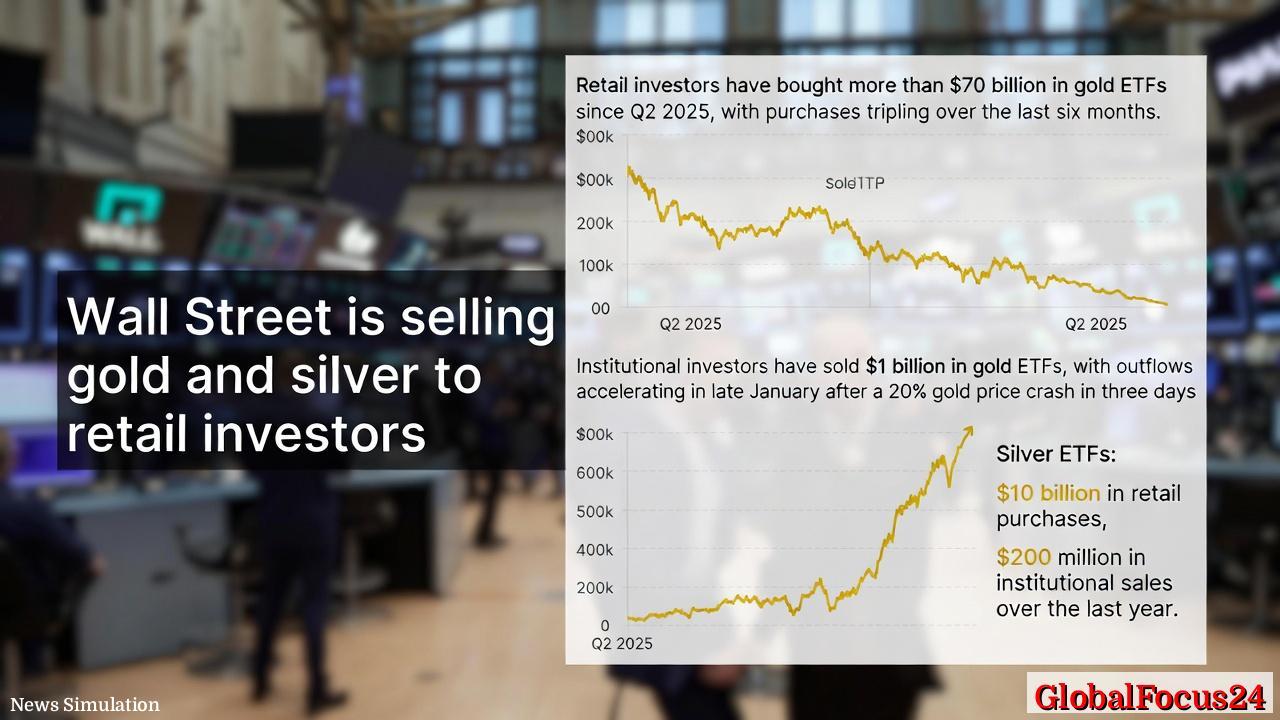
In a striking shift within the precious metals landscape, retail investors are driving a dramatic upswing in gold and silver exposure, while institutional players pull back. Since the second quarter of 2025, retail purchases of gold exchange-traded funds (ETFs) have surpassed $70 billion, more than tripling in six months. Silver ETFs have likewise drawn robust retail interest, with about $10 billion in purchases over the past year. By contrast, institutions have sold roughly $1 billion in gold ETFs over the same period, and about $200 million in silver ETFs, underscoring a clear divergence in appetite between individual investors and professional money managers.
Historical context: a cycle shaped by risk, liquidity, and macro uncertainty
The current dynamic sits at the intersection of several longer-term trends in the commodities and financial markets. Gold has long been viewed as a store of value and a hedge against inflation, with central banks and institutional players often acting as price anchors during bouts of macro uncertainty. The recent surge in retail gold ETF inflows echoes prior episodes when household investors crowded into the metal amid rising inflation expectations and currency volatility. In the early 2010s, for example, gold benefited from a broad-based pursuit of portfolio diversification and protection against financial stress. The latest wave, however, reflects a more granular set of drivers: accessible digital trading, clearer retail investment channels, and a perception that bullion can provide liquidity during periods of market stress.
Silver’s appeal sits on a slightly different axis but aligns with the same broader risk-off impulse. Historically, silver has traded both as an industrial metal and as a precious metal, which adds a layer of demand sensitivity to manufacturing cycles and tech adoption. In recent months, retail buyers have demonstrated a willingness to absorb higher volatility in exchange for potential upside and portfolio balance from a precious-metal exposure that is historically priced lower than gold on a per-ounce basis. The blend of affordability, perceived safety, and liquidity has made silver ETFs a popular entry point for many new and smaller investors seeking to diversify beyond equities and bonds.
Economic impact: implications for markets, consumers, and financial ecosystems
The shift toward retail metal ownership carries multifaceted economic consequences. First, the surge in gold ETF inflows can influence bullion markets through heightened demand pressure, potentially supporting prices even as institutional selling persists. While the price trajectory of gold is driven by a range of factors—from real yields and inflation expectations to global demand from central banks—the persistent retail buying rhythm contributes to a broader base of demand that may cushion short-term price swings.
Second, the substantial inflow into gold ETFs can affect the cost and accessibility of investment products for consumers. Greater retail participation often leads to more competitive fee structures and product innovation, as asset managers respond to rising demand with enhanced liquidity, tighter bid-ask spreads, and broader platform integration. This dynamic can democratize access to precious metals exposure, allowing individuals to incorporate bullion-like characteristics into diversified portfolios without the logistical complexities of physical metal ownership.
Third, the dissonance between retail inflows and institutional outflows signals shifting risk sentiment. Institutions may be repositioning away from precious metals due to evolving macroeconomic outlooks, opportunity costs elsewhere in fixed income or equities, or risk-management considerations in a higher-rate environment. For retail investors, the perceived safety net of gold and silver in times of monetary policy ambiguity may supersede institutional caution, particularly when investors seek to rebalance risk as inflation trajectories and real yields move.
Regional comparisons: how different markets are responding
In North America, the home market for many retail buyers, the surge in gold ETF ownership aligns with a broader trend of DIY investing and digital access. Brokerage platforms have simplified the process of purchasing ETFs, and education initiatives around risk and diversification have empowered a wide spectrum of households to participate in precious metals markets. The United States, with its deep financial infrastructure and active retail investor base, has seen sustained demand for gold and silver exposure even as equities experience volatility.
Across Europe, investors have long treated gold as a strategic hedge against geopolitical risk and macro instability. The European market has a nuanced mix of central-bank policy expectations, currency movements, and energy price dynamics that influence metal valuations. While institutional flows can be more conservative in the short term, retail demand remains resilient, particularly when consumer inflation is a focal concern for households managing household budgets and long-term savings.
In Asia-Pacific, the landscape varies by country and regulatory environment. In markets where capital controls or investment mandates shape investor behavior, gold and silver ETFs can offer accessible exposure without the logistical considerations of physical metal. Retail enthusiasm can be bolstered by cultural affinity for gold as a safeguard asset, as well as by fintech innovations that lower barriers to entry for new investors.
Market structure and investor behavior: what’s driving the divergence
Several structural factors help explain why retail investors are flocking to precious metals while institutions are sellers. Literacy and accessibility have improved dramatically in the retail space, with robo-advisors, fractional share programs, and commission-free trading reducing friction. This democratization makes it easier for individuals to allocate small amounts of capital into gold and silver ETFs, accumulating a meaningful position over time.
Meanwhile, institutions operate under a different calculus, emphasizing liquidity, diversification, and mandate constraints. When markets exhibit sharp price moves—as gold did with a 20% decline in three days—institutional players may reassess risk and reduce exposure to assets perceived as cyclical or non-core. The late-January price drop likely accelerated these adjustments, prompting outflows that contrast with the steadier, incremental accumulation seen among retail buyers.
Another dynamic is the role of collateral and balance-sheet considerations. Gold and silver ETFs provide a straightforward, efficient mechanism for holding metal-backed exposure without the logistical burdens of storage and insurance associated with physical metal. For institutions, this convenience is offset by strategic cash management decisions and regulatory capital requirements, which can tilt preference toward more liquid or higher-yielding assets during certain cycles.
What this means for investors and policymakers
For individual investors, the current environment reinforces the value of thoughtful asset allocation. Gold and silver can serve as diversifiers in a broad portfolio, particularly when equities display heightened volatility or when inflation concerns re-emerge. However, investors should maintain a disciplined approach to risk, avoiding overconcentration in any single asset class and considering cost structures, tracking error, and the potential for price corrections in the short term.
From a policy and market integrity perspective, robust transparency around ETF flows remains essential. Clear disclosure of inflows and outflows helps market participants gauge liquidity conditions, price discovery dynamics, and the potential implications for ancillary markets such as futures and options. Regulators and industry groups may monitor unusual activity to ensure orderly markets, while also promoting investor education to help individuals understand the nuances of precious metals exposure within a diversified portfolio.
Moving forward: potential scenarios and considerations
- Scenario one: sustained retail demand with moderate institutional thinning. In this case, gold and silver prices might experience steadier support, aided by persistent retail buying and the absence of abrupt macro shocks. Volatility could remain contained if macro indicators stabilize, though episodic spikes may occur around inflation prints, central-bank communications, or geopolitical developments.
- Scenario two: renewed volatility prompting renewed hedging. If macro risks intensify, gold and silver could once again attract risk-averse investors seeking liquidity and preservation of capital. ETF inflows could accelerate, potentially leading to sharper price moves in the short term and wider bid-ask spreads as market makers adjust.
- Scenario three: cross-asset reallocation pressures. A shift in the broader financial market—such as a rally in equities or tighter monetary policy—could influence the relative appeal of precious metals as hedges. Retail buyers may adjust exposure in response to evolving yield curves, currency movements, and wealth effects.
Public reaction and societal implications
Public sentiment surrounding the metals wave is varied and nuanced. For many retail investors, the move toward gold and silver reflects a broader desire for tangible, visible assets amid market uncertainty. Stories of families reallocating portions of savings toward ETFs or discussing metal ownership at community gatherings illustrate a cultural dimension to the current momentum. At the same time, experts emphasize the importance of balanced portfolios, cautioning against overexposure to a single asset class and highlighting the role of diversification across stocks, bonds, cash, and alternatives.
The regional and demographic diversity of retail buyers also matters. Younger investors may be drawn to the simplicity and accessibility of ETFs, while older savers may leverage precious metals as a time-tested hedge within retirement planning. Financial education initiatives, workplace savings programs, and digital advisory tools play a role in shaping how these patterns evolve over the coming months.
Conclusion: a market in transition with lasting implications
The surge in retail gold and silver demand marks a notable moment in the precious metals market. As households increasingly participate in gold ETFs and silver ETFs, the market dynamics reflect a broader trend toward democratized investing and risk-aware portfolio construction. While institutional selling has created a counterpoint to retail enthusiasm, the net effect is a market characterized by growing retail ownership, evolving liquidity profiles, and heightened attention from policymakers, regulators, and market participants alike.
As the narrative unfolds, observers will watch for how these inflows influence price stability, ETF liquidity, and the broader perception of precious metals as a strategic asset class. The coming months will likely test the durability of the current wave, assess the resilience of retail investors, and reveal how regional market structures adapt to a landscape where individual buyers play an increasingly prominent role in shaping metal markets.