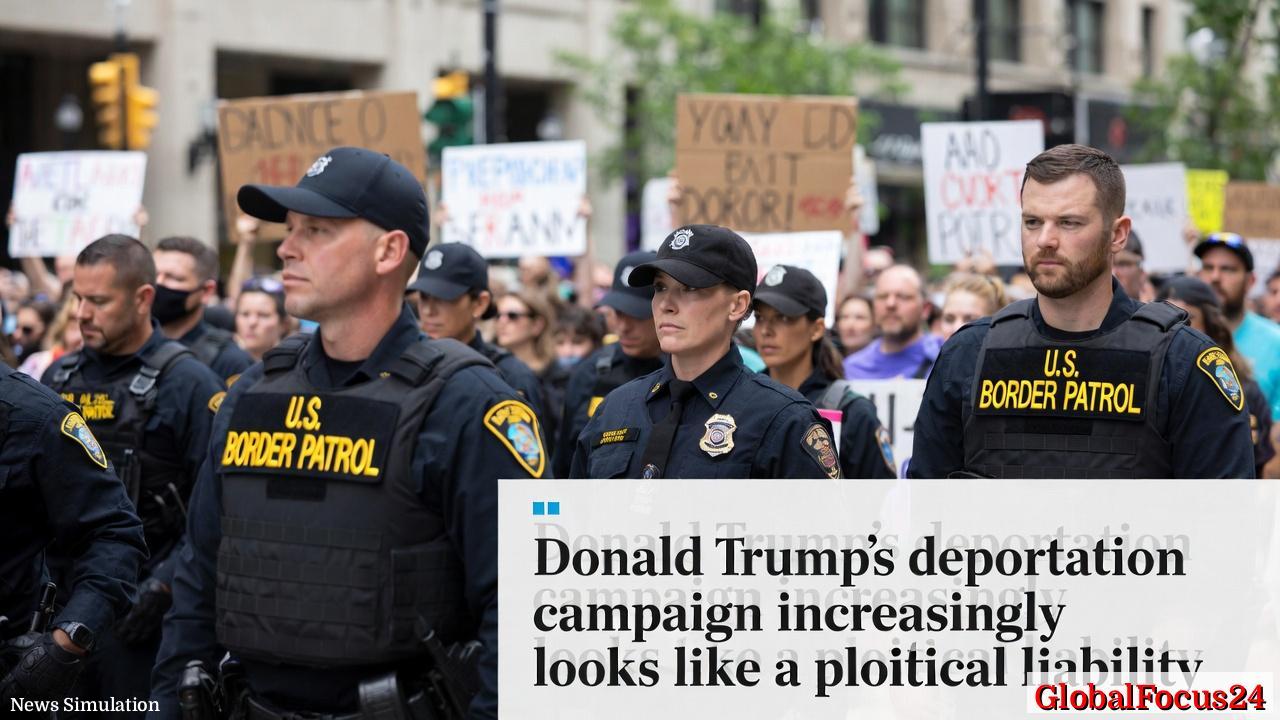
Minneapolis Firestorm: Republicans Reassess Immigration Tactics After Fatal Shooting
In a case that has quickly become a flashpoint for national debate on immigration enforcement, Republicans are reexamining the Trump administration’s handling of the fatal shooting of Alex Pretti, a 37-year-old intensive care unit nurse, by Border Patrol agents in Minneapolis on a recent Saturday. The incident has sparked renewed scrutiny of federal tactics at the border and inside American cities, drawing attention to the broader consequences of aggressive enforcement strategies on local communities and healthcare workers who serve on the front lines of public safety.
Historical context: a shift in federal enforcement posture To understand the current moment, it helps to revisit the arc of federal immigration policy over the past decade. The Border Patrol’s mission has long centered on border security, but in recent years, enforcement actions have expanded into interior operations, including apprehensions in urban centers and high-visibility demonstrations that often collide with civil liberties concerns. The Minneapolis episode arrives at a time when federal agencies are balancing the imperatives of national security with the practical realities of maintaining public trust in diverse urban neighborhoods. Historically, such tensions have spurred debates within both major political parties about the appropriate role of federal agents in domestic affairs, the proportionality of force, and the need for accountability mechanisms when lethal force is involved.
From a regional perspective, the Upper Midwest has grappled with distinctive immigration dynamics: a mix of labor demand in industries ranging from healthcare to logistics, alongside concerns about border policy, humanitarian considerations, and community integration. In cities like Minneapolis, hospitals, schools, and local governments rely on a stable and empathetic approach to public safety, particularly when healthcare professionals—such as Pretti—are part of the daily fabric of the community. The episode therefore resonates beyond a singular tragedy, becoming a reference point for evaluating how federal operations intersect with urban public health infrastructure, law enforcement coordination, and the rights of residents to safe, predictable policing.
Economic impact: uncertainty, workforce implications, and regional resilience The economic ramifications of aggressive immigration enforcement in metropolitan areas extend beyond immediate costs tied to investigations and legal proceedings. Hospitals, clinics, and other essential services depend on public confidence and predictable risk management. When incidents involving federal agents generate fear or confusion, skilled workers—nurses, physicians, technicians—may reevaluate commute routes, patient access, and shift patterns, potentially affecting patient outcomes and operational efficiency. In Minneapolis and similar markets, healthcare institutions operate within tight margins and rely on stable staffing, which means any controversy surrounding federal enforcement can have measurable implications for healthcare delivery, payroll planning, and regional labor markets.
Moreover, the broader regional economy is shaped by migrant labor that supports critical sectors, including long-term care, hospitality, manufacturing, and transportation. Uncertainty about enforcement trends can influence investment choices, workforce planning, and small-business hiring. As Republicans among party leadership and rank-and-file members weigh inquiries into the shooting, policymakers on both sides of the aisle face a practical question: how to maintain a robust economy while upholding civil rights and ensuring accountability for government actions. The Minneapolis case adds a data point to discussions about risk management, community policing, and the allocation of federal resources in urban settings.
Regional comparisons: how different metros approach similar challenges Across major metropolitan areas, responses to federal enforcement actions have varied, reflecting local governance styles, community trust histories, and the presence of service-sector economies with deep ties to immigrant communities. In some regions, governors and mayors have pushed for greater transparency and rapid after-action reporting to reassure residents that federal operations are conducted with proportionate force and clear oversight. Other areas have emphasized the importance of de-escalation training, rapid coordination with local law enforcement, and the involvement of community organizations to mediate tensions during protests or demonstrations.
For hospitals and public health systems, the comparisons highlight a shared vulnerability: the need to shield frontline workers and patients from the unintended consequences of heavy-handed tactics. In practice, this can translate into phased responses that minimize exposure to crowd-control measures, the timely dissemination of safety guidelines to hospital staff, and the establishment of hotlines or liaison offices to address concerns raised by healthcare workers or their families. The Minneapolis incident underscores how such institutional considerations intersect with national policy, shaping the lived experience of communities that rely on both federal policy and local governance working in concert.
Public reaction: a mix of grief, concern, and calls for accountability Public sentiment following the shooting has been nuanced. Many residents have expressed grief for a healthcare professional whose life was lost during a moment of national tension, while others have called for a thorough, transparent investigation to understand the sequence of events and to prevent a recurrence. Community leaders have urged de-escalation, emphasizing the importance of preserving trust between law enforcement, federal agencies, and everyday Americans who live and work in cities like Minneapolis. The political response among Republicans who initially supported or deferred to federal enforcement has evolved into a broader conversation about accountability, the adequacy of reviews, and the need for independent inquiries when lethal force is involved. This shift reflects a broader trend in which party lines are tested by real-world incidents that touch on public safety, civil liberties, and the balance of power between federal authorities and local communities.
Operational transparency and the path forward A central theme in the evolving discourse is transparency. Advocates across the spectrum are calling for clear, timely briefings detailing the facts of the case, the rules of engagement that governed the operation, and the decision-making process that led to any use of force. Independent investigations, internal agency reviews, and, where appropriate, bipartisan oversight can help illuminate the circumstances surrounding the shooting and identify any policy gaps that warrant reform. For healthcare systems and municipal leaders, the path forward includes concrete steps to reinforce community trust: enhanced communication protocols, robust de-escalation training for personnel involved in crowd management, and collaboration with public health officials to ensure that emergency medical services remain unimpeded by enforcement actions in the vicinity of hospitals and clinics.
Security posture and policy implications The Minneapolis incident also raises questions about the security posture of federal agents operating within urban environments. Experts note that balancing effective enforcement with the protection of civil liberties requires precise protocols, continuous training, and rigorous oversight. Some analysts suggest a reexamination of rules of engagement, the threshold for utilizing chemical agents or other crowd-control measures, and the need for independent review mechanisms when incidents involve loss of life. As policymakers weigh reforms, the focus remains squarely on reducing risk to noncombatants while maintaining the ability to respond to potential threats swiftly and decisively. In the long term, this could influence how agencies allocate resources, coordinate with local partners, and design training programs that emphasize proportionality, accountability, and community safety.
Industry and academic perspectives Scholars and practitioners in public policy, criminology, and healthcare administration have weighed in on the implications of the Minneapolis case. Many emphasize the importance of evidence-based practices that minimize harm while preserving public safety outcomes. Healthcare administrators point to the need for robust incident response plans that protect patients and staff from collateral disruption during federal operations in urban settings. Civil rights experts stress the importance of safeguarding due process and ensuring that investigations consider both the human impact of enforcement actions and the factual record surrounding use-of-force decisions. The convergence of these viewpoints highlights a shared objective: to secure public safety outcomes that are commensurate with the values of fairness, transparency, and respect for human life.
Conclusion: navigating a complex landscape with prudence and empathy The shooting of Alex Pretti has become more than a single tragedy; it is a stress test for how federal enforcement intersects with urban life, healthcare infrastructure, and the social contract that binds communities to the institutions charged with protecting them. Republicans and Democrats alike face the imperative to scrutinize procedures, ensure accountability, and prioritize de-escalation whenever possible. As investigations unfold and public officials chart the next steps, the central message for Minneapolis and similar cities is clear: public safety must not come at the cost of civil liberties or the trusted relationships that healthcare workers, residents, and local authorities rely upon every day.
In the end, the episode serves as a bellwether for a national conversation about how to balance border security with the everyday realities of American urban life. The path forward will require careful, evidence-based policymaking, robust oversight, and a renewed commitment to safeguarding the people at the heart of every decision—the patients who need care, the nurses who provide it, and the communities that depend on predictable, just, and humane policing. The outcome of this moment will shape not just policy notes or political rhetoric but the lived experience of cities that, like Minneapolis, strive to maintain safety, dignity, and opportunity for all residents.