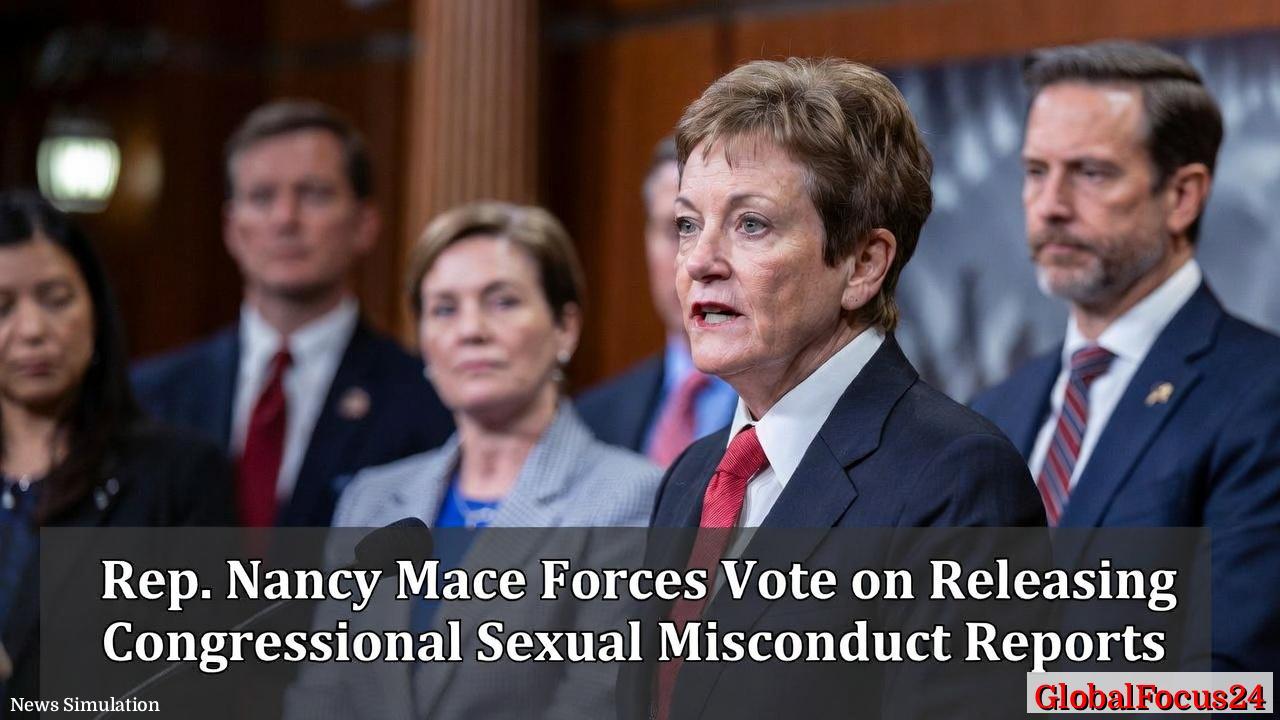
Rep. Nancy Mace Pushes Vote to Release Congressional Sexual Misconduct Reports
A Bold Move to Expose Misconduct in Congress
U.S. Representative Nancy Mace of South Carolina has called for a full release of all sexual misconduct reports involving members of Congress, a move that could fundamentally reshape transparency and accountability in federal government. Her initiative forces a public vote that could reveal, for the first time, the scope of taxpayer-funded settlements tied to sexual harassment, discrimination, and other workplace misconduct among elected officials and Capitol staff.
The initiative follows renewed outrage over a recent incident involving a Republican congressman accused of sending explicit messages to a staffer who later died by suicide. The congressman has refused to step down despite widespread condemnation, prompting Mace to push Congress to act decisively on transparency and ethics.
The Challenge of Transparency in Washington
The U.S. Congress has long faced criticism for shielding misconduct from public view. Under the Congressional Accountability Act of 1995, staffers who experience harassment or discrimination must navigate a confidential dispute process that often ends in a settlement funded by taxpayer money. These settlements — sometimes reaching six figures — rarely identify the lawmakers or senior aides involved.
According to public data released after a wave of reform in 2017, the Office of Compliance (now the Office of Congressional Workplace Rights) paid over $17 million in settlements between 1997 and 2017 for a range of workplace violations. However, the exact details of those cases, including the names of the accused lawmakers, remain classified.
Mace’s proposal would require the House to make every report public, including historical settlements and any ongoing claims, while protecting victim identities. “The people deserve to know how their money has been spent — and who in government has abused their power,” Mace said during a statement to reporters on Capitol Hill. “This is not a partisan issue. It’s an issue of trust and accountability.”
A History of Hidden Cases
Congress’s handling of misconduct has evolved unevenly over the past three decades. Prior to the #MeToo movement, reports of sexual harassment in government offices often vanished into bureaucratic obscurity. The lack of transparency and the use of public funds to quietly settle claims created deep mistrust between lawmakers and the public.
In late 2017, amid a cascade of allegations that touched figures in nearly every sector of American life, a handful of congressional settlements were exposed. Those details spurred bipartisan calls for change. Lawmakers passed the Congressional Accountability and Reform Act in 2018, intended to end forced mediation and require members of Congress to personally reimburse settlements related to harassment. Despite these reforms, key records remained hidden.
Mace’s proposed vote would go further than any past transparency measure, demanding a comprehensive release of all reports and settlements — a bold test of whether Congress is willing to expose its own history of misconduct.
Bipartisan Reactions and Political Calculations
Reaction to Mace’s move has revealed sharp divisions within her party and across the aisle. Some lawmakers quietly support the effort, acknowledging that public confidence in Congress is at historic lows. Others fear the release could unleash a political firestorm, exposing both past and current members to intense scrutiny.
“Transparency is essential, but this has to be done carefully,” one senior Democratic aide said. “We must ensure we’re not re-traumatizing victims or weaponizing misconduct reports for partisan gain.” Still, the aide conceded that the public should have access to information on how taxpayer dollars were used.
Republican leadership has so far remained measured. While few have directly opposed Mace’s motion, several have privately signaled discomfort with the potential fallout, especially during an election year. Some fear the issue could pull attention away from legislative priorities, while others worry about the reputational damage to the institution itself.
A Controversial Figure Amid Controversy
Mace herself is no stranger to political turbulence. In recent weeks, she has mades for a confrontation at Charleston International Airport, after which she stated publicly she would “not apologize” for her actions. Her willingness to embrace controversy has made her both a rising figure among reform-minded Republicans and a target of criticism from party insiders who view her style as disruptive.
Supporters argue that her brash approach gives voice to frustrations shared by many voters who see Washington as corrupt and insulated. Critics, however, see her latest move as grandstanding that risks damaging the reputation of Congress without due process.
Public Pressure Mounts for Disclosure
Public reaction to Mace’s announcement has been immediate and intense. Advocacy organizations promoting workplace equity and government accountability have praised the effort as long overdue. Groups like the Government Accountability Project and the National Women’s Law Center argue that transparency is the most effective deterrent to future misconduct.
On social media, many voters echoed those sentiments, calling for an end to what they see as a culture of secrecy in Washington. “If any other employer used public money to hide harassment claims, there’d be outrage,” one user wrote. Others voiced concern about how the information might be handled, fearing that victims’ privacy could be compromised in the process.
Despite those concerns, the push for openness is resonating beyond party lines. Polling consistently shows that a majority of Americans support stronger ethics rules in government, including public disclosure of misconduct settlements. For Mace, leveraging that sentiment could prove politically advantageous, positioning her as a reformer in an election cycle where anti-establishment views carry significant weight.
The Economic Cost of Confidential Settlements
Beyond its moral implications, Mace’s initiative also highlights the economic burden of secrecy. Since 1997, taxpayer-funded settlements have cost millions, yet it remains unclear whether those expenditures have curbed inappropriate behavior in government workplaces. Critics argue that lack of transparency allows repeat offenders to escape accountability while ordinary taxpayers foot the bill.
For context, states such as California and New York have adopted far stricter transparency requirements in their own legislatures. In California, for example, harassment complaints within the state legislature are subject to public reporting, including summaries of findings and disciplinary actions. New York has implemented detailed reporting mechanisms through its ethics commission, which publicly identifies employees and officials found guilty of misconduct.
By contrast, Congress continues to maintain one of the most opaque reporting systems in the country. Mace’s proposal, if enacted, would set a new standard in federal transparency and could influence future state and local reforms.
Potential Impact on Congressional Culture
Should the motion pass, it would force a seismic shift in congressional workplace culture. Political scientists note that public disclosure could deter harassment, strengthen accountability, and build pressure for additional reforms in staff protections. The psychological impact on staff morale could also be significant; many aides who have spoken anonymously in past reports described a workplace climate shaped by fear of retaliation or dismissal.
Experts caution, however, that disclosure alone will not resolve systemic issues. Preventing future misconduct may require deeper structural changes — such as independent oversight panels, mandatory training, and improved support systems for victims. Still, transparency remains a foundational step.
The Road Ahead
The House is expected to schedule a vote in the coming weeks. Mace’s resolution would direct the Office of Congressional Workplace Rights to release full, anonymized records within 90 days. Lawmakers from both parties are reviewing potential amendments, including provisions to protect victims’ identities and ensure redaction of sensitive details.
If the measure passes, its implementation is likely to face legal and procedural challenges, including objections on privacy and precedent grounds. But even the debate itself is already having a ripple effect, reigniting scrutiny of Congress’s handling of ethical complaints.
Restoring Trust in Government Institutions
At its core, Mace’s initiative reflects a broader battle over institutional trust. Americans’ faith in Congress has plummeted in recent years, with approval ratings often falling below 20 percent. Scandals involving ethics violations, conflicts of interest, and opaque financial dealings have only deepened that skepticism.
By forcing a vote on transparency, Mace has put her colleagues — and the institution as a whole — on notice. Whether the measure succeeds or fails, it reopens a question that lies at the heart of democratic governance: should elected officials be held to the same standards of accountability as the people they serve?
As public and media pressure build, the outcome of Mace’s proposal may prove to be more than a procedural vote. It could mark a defining moment in how Congress chooses to confront its own hidden history — and how seriously it takes the promise of transparency in American government.