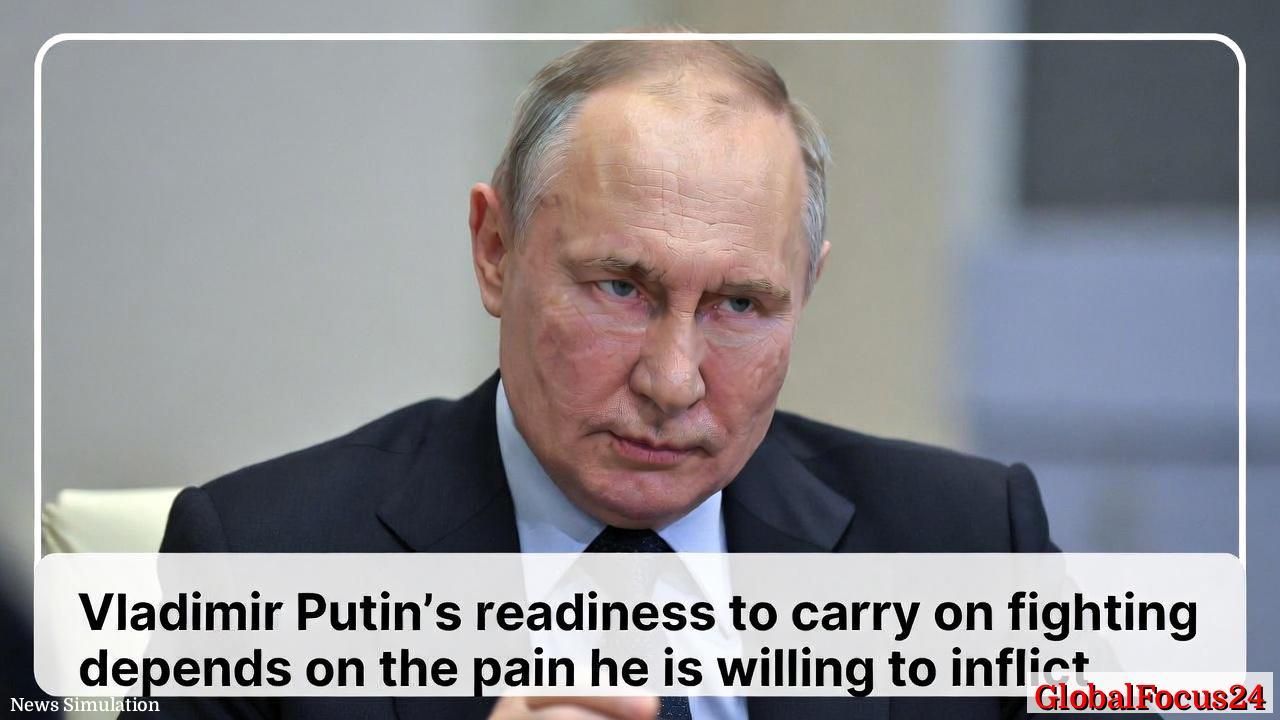
Vladimir Putin Trapped in Self-Made Dilemma Amid Ongoing Ukraine Conflict
A War Without End
Four years into the war in Ukraine, the conflict shows no clear path to resolution. What many analysts once predicted would be a short, decisive operation has instead hardened into a protracted struggle that has consumed vast human, economic, and political resources. At the center of this enduring turmoil stands Russian President Vladimir Putin — a leader whose unyielding determination has bound his nation to a costly war that increasingly resembles a trap of his own making.
The expectation of a quick victory in early 2022 gave way to fierce Ukrainian resistance and an outpouring of international support for Kyiv. As the months turned into years, Russian forces found themselves bogged down across vast front lines stretching from the Donbas to the southern regions of Zaporizhzhia and Kherson. Progress has been incremental, if not stagnant, while Ukraine continues to adapt its tactics and maintain foreign backing despite widespread destruction.
The ongoing war has reshaped the strategic landscape of Eastern Europe. It has become a test of endurance rather than firepower — one that is draining Russia’s economy, straining its population, and eroding its global standing.
The Economic Toll of Prolonged Conflict
Russia’s economy has endured unprecedented strain. Western sanctions, export restrictions, and the exodus of foreign companies have crippled sectors that once fueled the country’s growth. The Russian ruble has suffered recurring instability, while inflation continues to squeeze ordinary citizens coping with rising prices and limited access to imported goods.
Key industries have been redirected to support the war effort. Defense spending now commands an outsized share of the national budget, diverting funds from social programs, infrastructure, and education. Moscow has sustained spending through a combination of war bonds, elevated oil sales to sympathetic partners, and state intervention, but the long-term viability of such measures remains uncertain.
Meanwhile, the labor market has tightened. Hundreds of thousands of young men have been mobilized or have fled abroad to avoid conscription, leaving gaps across skilled professions and compounding demographic pressures that predate the war. Economists warn that this "brain drain" could set back Russian technological and industrial competitiveness for a generation.
Social Strain and Public Fatigue
Beyond material losses, the social cost is mounting. Soldiers’ families grapple with silence from the front lines, while rising casualty counts challenge the Kremlin’s control over information. State media continues to promote narratives of progress and resilience, yet anecdotal reports from within Russia’s regions point to growing disillusionment.
Public protest remains subdued under tightening restrictions, but subtle indicators — declining morale, increased emigration, and muted dissatisfaction — suggest cracks in the facade of unity. For many Russians, the war no longer feels distant. It intrudes through economic hardship, conscription drives, and the relentless news cycle of destruction.
Strategic Stagnation in Ukraine
On the battlefield, Russia’s early ambitions have given way to defensive consolidation. Cities like Bakhmut and Mariupol, once symbols of decisive advances, now represent the heavy cost of attritional warfare. Ukraine’s access to modern Western equipment, coupled with its soldiers’ experience and morale, has blunted many Russian offensives and prevented Moscow from securing full control of key territories.
For Putin, retreat or stalemate offers no political reward. Declaring victory under current conditions risks widespread disbelief, while negotiating a ceasefire could be interpreted domestically as an acknowledgment of failure. This fear of perceived weakness underpins what analysts describe as Putin’s “strategic paralysis”: a reluctance to alter course despite diminishing returns.
Historical Echoes and Lessons
Russia’s predicament invites comparison to past miscalculations — notably the Soviet Union’s decade-long war in Afghanistan, where a combination of overconfidence and local resistance bled resources and morale. As in the 1980s, today’s conflict exposes the limits of military might in achieving political dominance over a defiant neighbour.
However, the scale of the Ukraine war far exceeds previous entanglements. It involves multiple front lines, advanced weaponry, and a global information environment that amplifies narratives and consequences alike. Unlike Afghanistan, Ukraine borders Russia directly, tightening the psychological and strategic stakes for Moscow.
Ukraine’s Enduring Resilience
Ukraine’s society has undergone a profound transformation. Cities rebuilt under bombardment, volunteer networks supplying the front, and a steadfast leadership under President Volodymyr Zelensky have strengthened national identity. The war has knit together regional divisions that once defined Ukrainian politics, creating a sense of purpose rooted in survival and sovereignty.
Western support — military, financial, and humanitarian — remains crucial. Despite occasional fatigue among allies, Ukraine’s resilience continues to generate global sympathy and sustain aid. European countries, in particular, have deepened their energy independence from Russia while expanding defense coordination, a shift that may redefine Europe’s security architecture for decades to come.
International Isolation and Realignment
Moscow’s international standing has eroded sharply. Once a dominant player in global diplomacy, Russia now leans heavily on a narrowed circle of partners, including China, Iran, and North Korea. Energy exports to Asia have cushioned some economic losses but come with concessions in pricing and leverage, signaling Russia’s weakened negotiating position.
In contrast, former Soviet neighbors such as Kazakhstan and Armenia have sought to diversify their alliances, wary of being drawn deeper into Moscow’s orbit. The geopolitical map of Eurasia is shifting, with fault lines widening between Russia and its traditional partners.
The Dilemma at the Kremlin’s Core
For Putin, the core dilemma is now stark. Achieving victory appears increasingly implausible, yet acknowledging defeat risks destabilizing his rule. The narrative of strength and inevitability, cultivated over more than two decades in power, leaves little room for retreat without reputational collapse. Domestic propaganda maintains the illusion of control, but even loyal officials face the difficult reality of dwindling options.
This self-imposed deadlock mirrors what military theorists describe as “strategic overextension” — when the pursuit of ambition exceeds a state’s capacity to sustain it. In Putin’s case, the drive to project dominance over Ukraine has transformed into a long-term liability, undermining the very stability he sought to preserve.
The Ripple Effects Across Europe
The war’s economic and humanitarian consequences extend far beyond Russia’s borders. Europe faces persistent inflation driven by energy disruptions, while millions of Ukrainian refugees have settled across the continent, reshaping labor markets and public services. NATO’s expansion, marked by Sweden and Finland’s accession, reflects a profound shift in regional security perception — a development directly catalyzed by Russia’s invasion.
These realignments have also reinforced democratic cooperation among Western nations. What began as a defensive response to aggression has evolved into a broader effort to sustain European unity amid global instability.
What Lies Ahead
As the war enters its fifth year, few signs suggest a decisive turning point. Both Russia and Ukraine appear entrenched in a conflict of attrition, each waiting for the other to break. For Russia, the cost of persistence grows heavier by the month — in treasure, in lives, and in legitimacy.
The next phase will likely depend on external pressures: economic fatigue within Russia, evolving Western support for Ukraine, and the unpredictable dynamics of internal politics in Moscow. Yet for now, one outcome remains clear. The invasion designed to assert Russia’s strength has instead revealed its vulnerabilities, binding its leader to a war that may ultimately define his legacy not through conquest, but through consequence.
Putin’s dilemma is thus not only political but existential. Having built his authority on control and victory, he now faces a conflict that offers neither. Each path forward — escalation, negotiation, or withdrawal — carries the risk of unraveling what he has spent decades constructing. And as the war grinds on with no resolution in sight, the question is no longer when it will end, but how much Russia will lose before it does.