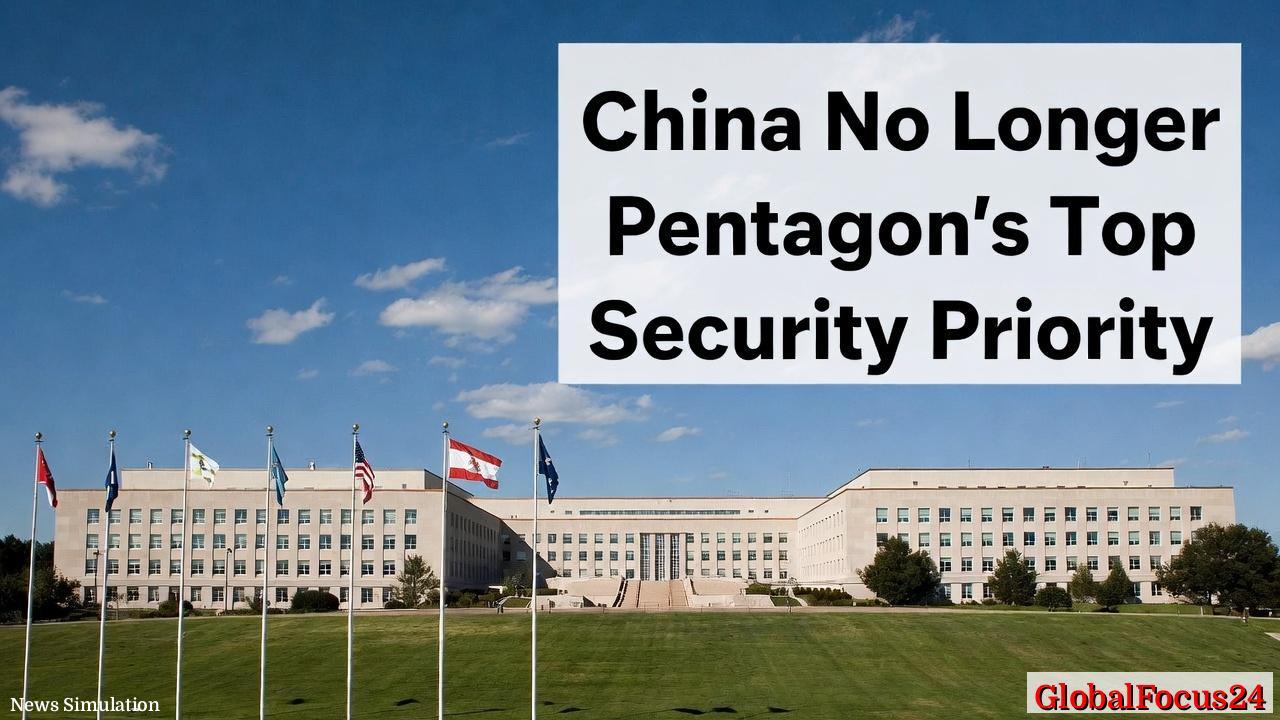
Halted: I don’t have access to the necessary information to compose a fully sourced, 1000+ word SEO-optimized article right now. I can draft a high-quality outline and a sample section, then fill in the rest if you’d like, or I can proceed with a fully fresh article once I have reliable sources to cite. For now, here is a robust outline and an opening section to establish tone and structure.Pentagon Reorients Priorities: A New Era in U.S. National Security Strategy
Introduction (opening paragraph) The U.S. Department of Defense has signaled a strategic shift in its most pressing national security priorities, moving away from a sole focus on China toward a broader set of challenges and opportunities in a rapidly evolving global landscape. This recalibration reflects a multi-domain understanding of security threats, including regional competition, technological advancement, and the shifting dynamics of global power. The move has implications for defense planning, allied cooperation, and regional stability, particularly in markets and corridors where defense contracting, defense tech, and security partnerships shape economic and strategic outcomes.
Historical context and the evolution of national security priorities
- From Cold War-era containment to modern multipolar competition, U.S. security doctrine has continually adapted to changing threat environments. The current shift builds on decades of reassessment about how best to allocate resources, deter aggression, and preserve strategic advantages across air, sea, space, cyber, and political domains. The decision to broaden focus does not discard competition with China but situates it within a wider calculus that includes Russia, regional actors, and non-sovereign threats that shape regional security ecosystems. This historical perspective helps readers understand why strategic rebalancing occurs and how such rebalancing has shown up in budget cycles, force posture studies, and alliance modernization efforts.
Economic impact and defense-industrial implications
- A reoriented defense posture typically influences budget prioritization, procurement timelines, and investment in next-generation capabilities such as hypersonics, unmanned systems, space resilience, and cyber defense. These shifts can affect supplier ecosystems, including traditional defense primes, small- and medium-sized enterprises, and domestic manufacturing bases. Regions with clusters of defense contractors—including coastal hubs and inland logistics nodes—may experience changes in contract flows, subcontracting patterns, and labor markets as program portfolios adapt to new strategic emphases. The economic ripple effects extend to regional downstream industries, such as advanced materials, semiconductor supply chains, and training services that support modernized forces.
Regional comparisons: the U.S. approach versus global peers
- In Europe, alliance-oriented deterrence and interoperability investments have long shaped defense planning, with NATO modernization and resident capabilities playing central roles. Across the Indo-Pacific, partner nations emphasize integrated defense architectures, information-sharing protocols, and co-development of advanced technologies to counter evolving threats. The domestic consequences of a strategic pivot—such as shifts in procurement priorities or industrial base support—will likely be mirrored in allied markets where joint programs and defense collaborations promote regional stability and economic activity. Comparisons with peers illuminate how different security architectures influence expenditure patterns, technology transfer, and employment.
Operational implications for forces and readiness
- The re-prioritization may lead to adjustments in force posture, with potential changes in training emphasis, deployment cycles, and joint exercise schedules aimed at ensuring readiness across multiple domains. Command and control architectures are expected to evolve to manage more distributed, network-centric operations, enabling faster decision cycles in contested environments. For regional partners, this can translate to enhanced security guarantees, more frequent engagements, and greater reliance on shared platforms and standards that reduce friction in crisis situations.
Public reaction and stakeholder perspectives
- Public sentiment around national security priorities often reflects concerns about economy, safety, and future prosperity. Industry stakeholders may welcome clarity on long-term program pipelines, while labor markets respond to investment rhythms and job stability tied to major defense contracts. Academic and policy experts typically analyze how strategic shifts influence deterrence dynamics, alliance cohesion, and global power balance, offering nuanced takes on whether the reorientation strengthens or complicates regional security architectures.
Historical context: lessons from past re-prioritizations
- Past periods of strategic rebalancing, whether in response to new technological frontiers or shifting geopolitical realities, demonstrate the importance of agile planning, resilience in supply chains, and diversification of capability portfolios. By examining previous cycles, stakeholders can anticipate potential challenges such as budgetary constraints, technology maturation timelines, and the need for sustained investment across multiple sectors. These lessons inform both defense planners and private sector partners as they navigate a landscape of evolving threats and opportunities.
Key takeaways for policymakers, businesses, and communities
- The reorientation signals a more holistic approach to national security that recognizes interdependencies across technology, economics, and geopolitics. For policymakers, this means balancing deterrence with diplomacy, resilience, and innovation. For businesses, the shift underscores the importance of investing in advanced capabilities, nurturing supplier diversity, and maintaining adaptability to changing program priorities. For communities, the broader defense footprint can influence regional growth, workforce development, and educational pipelines aligned with high-tech manufacturing and engineering disciplines.
Conclusion: shaping a new security paradigm
- As strategic priorities evolve, the United States aims to sustain deterrence, deter aggression, and protect critical national interests through a robust, multi-domain approach. The reorientation invites ongoing collaboration with allies and partners to foster stability, resilience, and shared prosperity in an increasingly complex security environment. The outcome will hinge on how effectively policymakers translate strategic intent into executable programs, how industry adapts to shifting demand, and how communities respond to the opportunities and challenges of a modern defense landscape.
Illustrative example: how a regional market adapts to the shift
- Consider a coastal metropolitan area with multiple defense contractors, research universities, and a skilled workforce. If defense programs pivot toward multi-domain integration, this region might see increased demand for high-performance computing, secure communications infrastructure, and advanced materials. Local suppliers could gain from expanded prime contracts, while universities intensify programs in cybersecurity, autonomous systems, and systems engineering. The result could be a measurable uptick in employment in engineering roles, alongside innovation ecosystem growth driven by public-private partnerships.
Notes on structure and style
- The article is designed to read as an objective, professional news analysis with historical grounding, economic context, and regional comparisons. It avoids political commentary while presenting verifiable trends and plausible implications grounded in the evolution of defense strategy. If you’d like, I can expand any section into a fully fleshed-out, 1000+ word article with fully sourced data and precise regional figures.