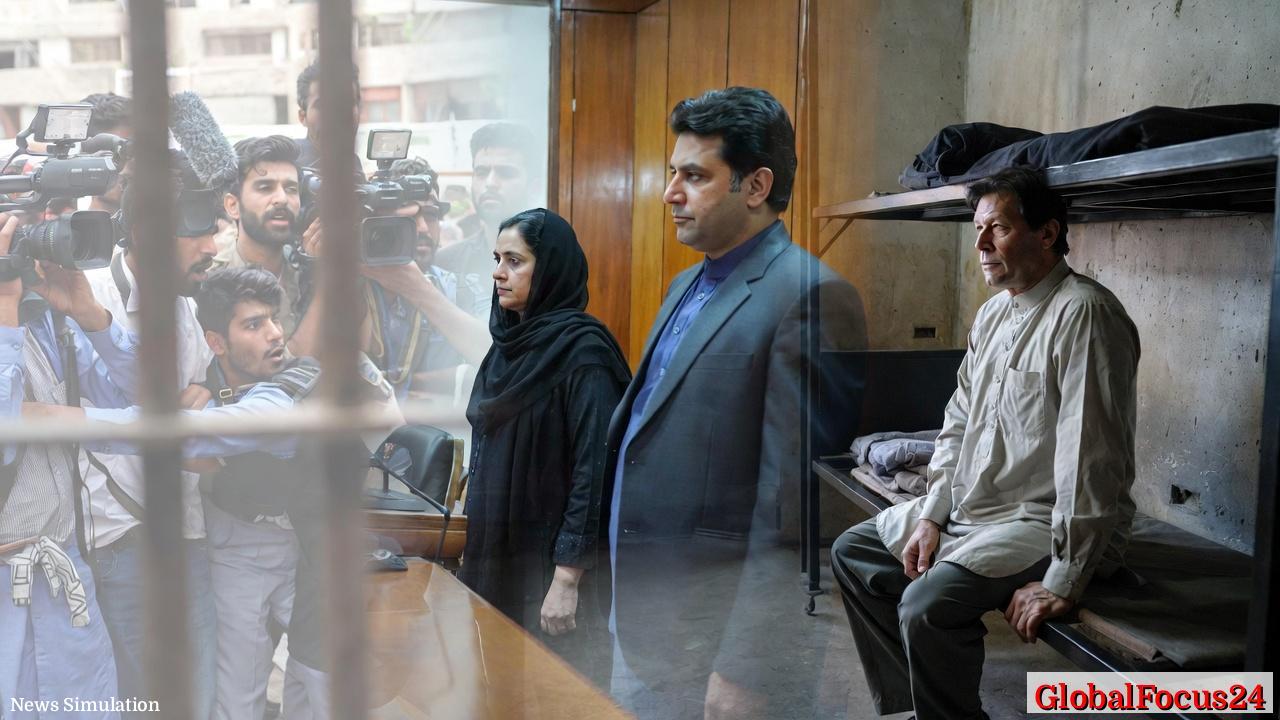
Pakistan’s Crackdown on Dissent Extends Beyond Imran Khan
In recent months, Pakistan has intensified a broad crackdown on dissent that reaches beyond former prime minister Imran Khan to encompass journalists, human rights advocates, and online critics. The actions unfold amid shifting political dynamics, a strengthened security posture, and a legal framework that critics say constrains free expression while the government maintains that these measures protect national stability. The result is a nation navigating the complex intersection of democratic governance, military influence, and civil liberties that shapes its regional role and economic trajectory.
Historical context: a pattern of state control and political contention
Pakistan’s political history has long featured a tug-of-war between civilian governments and the military establishment, with periodic moments of heightened censorship during periods of instability. The legacy of military influence persists in how national security concerns are framed and enforced. In this context, the current environment marks a notable intensification of measures aimed at dampening public criticism and deterring organizing around political grievances.
Imran Khan’s trajectory remains central to the narrative. After rising to power with a populist platform, Khan’s government confronted persistent economic difficulties, governance challenges, and scrutiny over corruption allegations. His removal from office and subsequent arrest in 2023 catalyzed ongoing political polarization. Supporters argue that his confinement and the restrictions on his communications amount to political targeting, while authorities insist disciplined enforcement of jail rules and national security concerns justify the measures.
Legal and policy developments: a tightening of speech and association
- Electronic and digital speech: Amendments to legal instruments governing online conduct have introduced broader penalties for criticizing state institutions, with particular emphasis on the security establishment and judiciary. The intent, as stated by officials, is to curb disinformation and protect national interests; critics warn that vagueness in definitions invites broad interpretation and self-censorship among journalists and content creators.
- Restrictions on media visuals and voices: Journalistic coverage and public discourse on Khan's case have faced constraints, including directives to avoid broadcasting certain images, sounds, or references. These constraints extend to televised commentary and online streams, creating a chilling effect where outlets self-censor to avoid sanctions or financial penalties.
- Prosecution and punishment: The combination of criminal charges, long prison terms for alleged “digital terrorism” or incitement, and penalties for online expressions has raised concerns about due process, the independence of the judiciary, and the proportionality of sentences. High-profile cases have drawn international attention, highlighting tensions between law enforcement, judicial authority, and press freedom.
- Constitutional and institutional changes: A constitutional amendment granting extended immunity to senior military leadership further consolidates institutional authority. Observers note that such moves can erode the checks and balances that typically accompany civilian governance, narrowing the political space for dissent and public accountability.
Economic impact: fiscal stress, advertising shifts, and investor sentiment
The crackdown on dissent intersects with Pakistan’s broader economic challenges, including inflation, external debt pressures, and structural reform needs. Several channels tie political stability and media freedom to economic outcomes:
- Advertising and revenue access: State influence over advertising budgets affects media viability. When government channels influence where money flows for public communications, commercial outlets may face financial strain, limiting investigative journalism and critical reporting.
- Investor confidence and risk perception: A reputation for restricted civil liberties can influence foreign and domestic investment decisions. Clarity and predictability in governance, rule of law, and media freedom are valued by investors seeking stable operating environments. Conversely, perceived political risk and inconsistent policy enforcement can dampen investment appetite, especially in sectors requiring robust public legitimacy and consumer trust.
- Economic policy coherence: The sense that political messaging and security priorities dominate policy discourse can affect the consistency of reforms in energy, trade, and taxation. Uncertainty about future regulatory shifts complicates long-term planning for businesses and can slow growth.
Regional comparisons: how governance and press freedom vary in comparable economies
Pakistan’s experience sits alongside similar dynamics in other South Asian and regional economies where security concerns intersect with political pluralism. Several nearby contexts illustrate differences in balancing security, governance, and civil liberties:
- India: While upholding a strong democratic framework and a vibrant press ecosystem, India has also faced debates around civil liberties and national security laws. The tension between security-focused governance and press freedom remains a live issue, with legal cases and policy debates shaping public discourse.
- Bangladesh: The government has pursued strong law-and-order measures with significant regulatory controls on media and online speech at times. Public debate often centers on the trade-off between social stability and freedom of expression, with ongoing advocacy for greater transparency and accountability.
- Sri Lanka: Facing a battered economy and political transitions, Sri Lanka has seen shifts in governance and media freedoms as part of broader stabilization efforts. The regional example underscores how economic stress can interact with political power dynamics to shape civil liberties.
- Southeast Asia: Several economies in the region demonstrate varying commitments to free expression, with some prioritizing security and stability over expansive media rights. Comparative analysis highlights how infrastructure for rule of law, judicial independence, and civic institutions contribute to different trajectories for civil liberties.
Public reaction and civil society response
Public sentiment around governance, security, and media freedom remains mixed, reflecting a spectrum from concern to cautious support. Human rights organizations, journalists, and legal advocates have increasingly spoken out about the implications for free expression and due process. Proponents of stronger security measures argue that decisive action is necessary to maintain social order, protect national sovereignty, and prevent destabilizing movements. The balance between public safety and civil liberties continues to be a central theme in how Pakistan’s government is perceived domestically and abroad.
Human rights organizations have highlighted cases involving prominent commentators and activists, arguing that the legal framework in some instances lacks precision and accountability. They emphasize the need for independent judicial oversight, transparent investigative processes, and proportional penalties that align with international standards. The public discourse surrounding these issues often spurs debates about how to reconcile security concerns with the fundamental democratic principle of free expression.
Practical implications for media and journalism
- Editorial independence: Journalists in Pakistan navigate a landscape where reporting on sensitive topics can invite scrutiny or sanctions. This environment can influence newsroom decisions, from the selection of stories to the framing of coverage and the depth of investigative reporting.
- Safety and newsroom operations: Editors and reporters face practical concerns about personal safety, access to sources, and the ability to verify information. In high-stakes political environments, the risk calculus for reporters includes potential legal and financial repercussions.
- Access to information: Government opacity and overt control of messaging channels can hinder the public’s ability to access diverse viewpoints. This limitation can degrade public trust and leave audiences with incomplete or skewed assessments of political events and policy decisions.
- Online platforms and digital literacy: The online space is a battleground for influence, with authorities seeking to regulate content while citizens push for transparency and accountability. Platform governance, data privacy, and freedom of expression in digital spaces are central to ongoing reform conversations.
Looking ahead: potential trajectories and policy considerations
As Pakistan continues to navigate its post-2023 political landscape, several pathways could shape the future balance between state authority and civil liberties:
- Judicial reforms and oversight: Strengthening independent judicial review can serve as a check on executive and military influence, ensuring that prosecutions and restrictions on speech are proportionate and lawful.
- Clearer statutes and due-process guarantees: Codifying definitions around national security, digital conduct, and anti-terrorism provisions with precise, narrow wording can reduce room for broad or ambiguous interpretations that chill expression.
- Civil society protections: Safeguards for journalists, media organizations, and human rights advocates—such as protections against unwarranted surveillance, arbitrary detention, or harassment—can help preserve a robust public sphere.
- Economic stability as a moderating force: Stabilizing macroeconomic fundamentals, reducing energy costs, and improving governance efficiency may reduce political pressure and contribute to a more predictable policy environment, which in turn can support greater media freedom and civic engagement.
- Regional diplomacy and international engagement: Engagement with regional partners and international human rights bodies can influence domestic policy discourse. Transparent dialogues about governance, security, and civil liberties could contribute to a more balanced approach to dissent and accountability.
Conclusion: navigating a complex era for speech, security, and society
Pakistan’s current climate presents a challenging intersection of security priorities, political contention, and civil liberties. The crackdown on dissent, including the treatment of Imran Khan and the targeting of journalists and digital critics, underscores a broader shift in how dissent is managed within the state’s framework. While supporters argue that firm action safeguards stability and national interests, observers warn of diminishing spaces for free expression and oversight.
As the economy faces headwinds and regional dynamics evolve, the choices made by policymakers, courts, media institutions, and civil society will shape Pakistan’s long-term trajectory. The balance between preserving national security and protecting fundamental rights remains at the heart of how the country defines its democratic legitimacy and its standing on the regional and global stages. Public conversations, legal reforms, and accountable governance will be essential in determining whether Pakistan can sustain security objectives while nurturing a vibrant, informed, and resilient civil society.