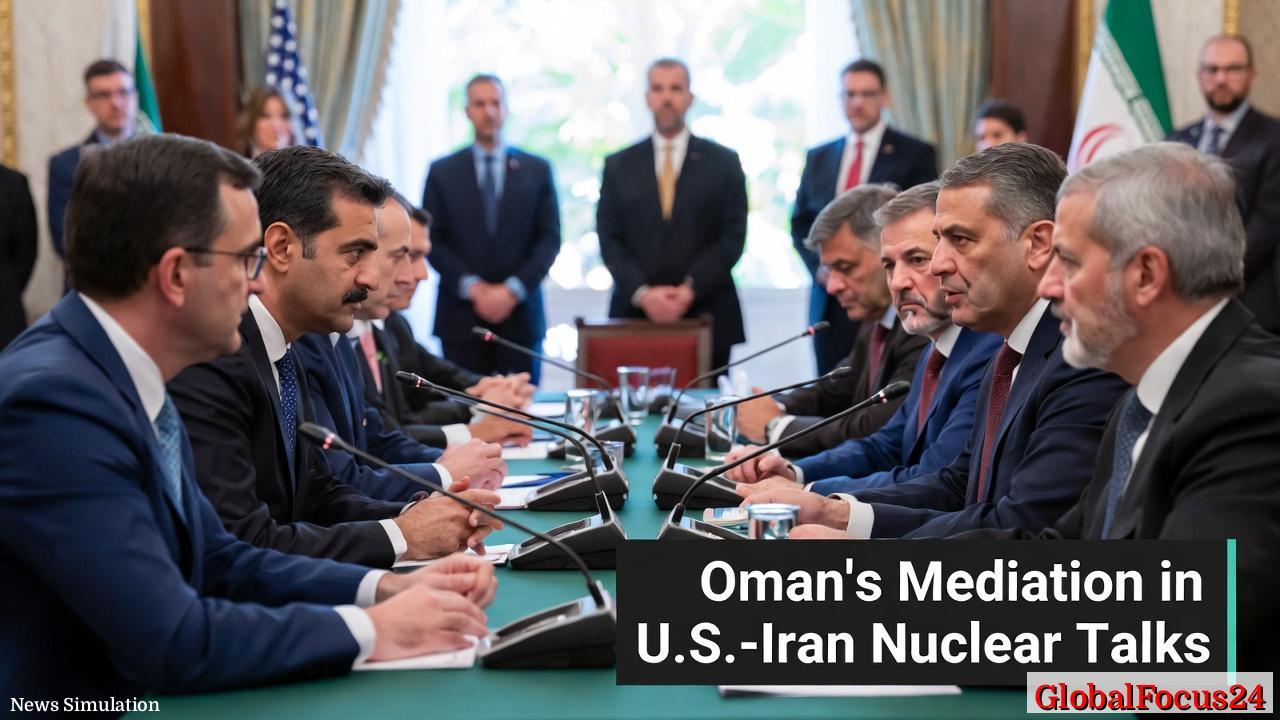
Omani Foreign Minister Reveals How U.S.–Iran Nuclear Diplomacy Collapsed and What Could Revive It
Muscat’s Diplomatic Role in a Collapsing Peace Effort
Oman’s foreign minister has shed new light on one of the most consequential diplomatic breakdowns in recent memory: the derailment of nuclear talks between the United States and Iran. Speaking after months of turmoil in the Middle East, the minister detailed how talks that had inched toward a breakthrough abruptly fell apart following the February 28 military strikes launched by the United States and Israel.
The Omani envoy, whose country has long played a quiet but critical role as a bridge between Washington and Tehran, described the rupture as both predictable and preventable. Twice within nine months, Oman hosted or facilitated discussions that appeared to bring the two adversaries to the threshold of an accord aimed at defusing international concerns over Iran’s nuclear-energy program. Both efforts collapsed under the weight of sudden escalation and mistrust.
By offering insight into behind-the-scenes diplomacy, Muscat seeks to preserve some avenue for renewed mediation, even as military confrontation threatens to eclipse dialogue entirely.
How Talks Advanced Before the February 28 Strike
According to diplomatic officials familiar with the negotiations, the winter round of discussions represented the closest moment to agreement since the 2015 Joint Comprehensive Plan of Action (JCPOA). Back then, Iran had agreed to limits on uranium enrichment in exchange for economic relief.
This latest effort reportedly sought to establish a “limited reset”: a partial easing of sanctions and oil-export restrictions in return for strict new monitoring under International Atomic Energy Agency guidelines. The goal was to stabilize the region economically and politically while giving each side tangible reasons to restrain further provocation.
Sources indicate that the dialogue proceeded quietly, held largely through indirect channels in Muscat, Doha, and Vienna. The Omani foreign minister personally engaged his American and Iranian counterparts to narrow gaps on verification procedures and the sequencing of sanctions relief. Western envoys believed the effort could lead to a durable, if provisional, understanding within weeks.
That optimism vanished when, hours after the final session on February 28, U.S. and Israeli aircraft carried out coordinated strikes that targeted what they described as Iranian-linked military assets in Syria and Iraq. The attack killed several officers of Iran’s Revolutionary Guard Corps and, according to Iranian officials, destroyed facilities Tehran considered vital to counterterrorism operations in the region.
The Immediate Fallout and Retaliation
Iran’s leadership interpreted the strike as a deliberate sabotage of the negotiation process. The following day, Iranian-backed paramilitary groups launched retaliatory attacks across the region, hitting installations identified as “American targets” in neighboring states.
The Omani minister called the chain of events “a collapse of diplomacy in slow motion,” predicting that each step would push both countries further from compromise and deeper into confrontation. “When diplomacy is overtaken by sudden military calculation,” he reportedly said, “each side loses the tools required to protect its own long-term security.”
American officials have not commented publicly on Oman’s characterization but acknowledged that the strikes, and Iran’s response, effectively froze all ongoing diplomatic tracks. Within a week, Iranian negotiators were recalled to Tehran, and the U.S. State Department suspended backchannel communication.
Oman’s History as a Middle East Mediator
Oman has long positioned itself as a neutral diplomatic intermediary in regional crises. Situated strategically on the southeastern tip of the Arabian Peninsula, the nation maintains cordial relations with both Washington and Tehran—a rarity among Gulf states.
It was Oman that secretly brokered the initial U.S.–Iran contacts a decade ago, paving the way for the 2015 nuclear deal. Muscat’s approach has always emphasized discretion, patience, and trust-building. Omani envoys often work behind closed doors, relying on quiet persuasion rather than public pressure.
This tradition of mediation extends beyond the U.S.–Iran axis. Oman has helped facilitate humanitarian arrangements in Yemen, prisoner swaps between rival states, and Gulf Cooperation Council reconciliation efforts. Its consistent preference for diplomacy over confrontation has earned the small sultanate considerable respect among larger powers seeking neutral ground for sensitive dialogue.
Regional Economic and Security Impact
The breakdown of talks has immediate regional consequences. Energy markets reacted sharply in early March, with oil prices climbing amid fears of disrupted Gulf shipping lanes. The Strait of Hormuz—through which about one-fifth of global oil supply passes—briefly saw heightened military patrols and insurance premiums surge for maritime operators.
For oil-dependent economies, renewed tension spells vulnerability. Gulf producers, already balancing investment uncertainty due to global energy transitions, face pressure to reassure buyers that exports will remain uninterrupted. Meanwhile, for Iran—struggling under years of sanctions—the loss of potential economic relief deepens inflation, currency depreciation, and social unrest.
Oman and Qatar, both heavily invested in regional stability, worry that extended conflict will divert resources from economic modernization and infrastructure development. European importers, who had looked to a de-escalation as a pathway to more predictable energy supply, now confront renewed volatility just as global trade attempts to recover from two years of sluggish growth.
Comparisons with Past Breakdowns
Observers note striking parallels with past cycles of rapprochement and collapse. In 2018, the U.S. withdrawal from the JCPOA erased years of diplomatic progress, prompting Tehran to expand nuclear activities previously limited under the deal. Each attempt at revival since then has been undermined by mistrust, political pressures at home, and regional rivalries.
By contrast, the 2015 agreement had spurred temporary economic growth in Iran and stabilized global oil markets. Western companies re-entered the Iranian market, while regional military tensions eased considerably. The rollback of that deal, and subsequent failure to restore it, has cost billions of dollars in lost trade and increased defense spending across the Gulf.
For Oman, the repetition of this cycle underscores a harsh truth: peace initiatives in the Middle East remain acutely vulnerable to kinetic actions that outpace diplomatic momentum.
A Path Forward Suggested by Oman
Despite the bleak outlook, the Omani foreign minister outlined conditions under which diplomacy might still resume. His remarks highlighted three key principles:
- Restoring Communication Channels: Oman proposes re-establishing direct or indirect lines between U.S. and Iranian negotiators under international supervision. The goal would be to prevent misunderstandings from escalating into military confrontations.
- Confidence-Building Measures: Both sides could engage in humanitarian exchanges, such as prisoner releases or assistance in deconflicting maritime operations in the Gulf, as preliminary gestures of goodwill.
- Regional Security Dialogue: The minister emphasized the urgent need for a multilateral forum—potentially involving Gulf Cooperation Council states, Iraq, and Jordan—to discuss broader security frameworks that address shared concerns, including energy transit and counterterrorism.
He argued that without tangible, incremental progress, larger agreements remain impossible. “Diplomacy is not a single meeting,” he said, “but the patient accumulation of trust when conflict appears inevitable.”
International Response and Prospects
The international community has reacted with measured concern. The European Union, traditionally supportive of Oman’s mediation role, called for restraint and reaffirmed its willingness to host follow-up consultations. China urged both parties to “return to rational dialogue,” underscoring its own strategic interest in stable Middle Eastern energy supplies.
Russia, meanwhile, has positioned itself as an alternative facilitator, though analysts doubt Tehran or Washington would genuinely entrust Moscow with neutral oversight given current global rivalries.
For the United States, mired in a conflict increasingly seen as counterproductive, Oman’s message may present both a warning and an opportunity: disengagement from escalating hostilities could reopen the fading door to negotiation. For Iran, re-entering the talks could offer the prospect of economic reprieve and strategic breathing room.
Yet both capitals face domestic constraints. Hardline factions in Tehran view compromise as capitulation after years of sanctions and covert operations. In Washington, the sudden turn to military action has polarized opinion about whether diplomacy remains viable at all.
The Uncertain Road Ahead
The Omani foreign minister’s statement ultimately serves as both analysis and appeal. It captures the fine line between initiative and inertia that defines Middle Eastern diplomacy today—a domain where a single miscalculation can erase months of progress.
With tensions high and diplomatic channels silent, the coming months may determine whether the United States and Iran can step back from confrontation or whether yet another chance at peace will vanish in the smoke of airstrikes.
For Oman, the task remains unchanged: to stand at the narrow intersection of conflict and compromise, offering quiet counsel in a region where silence, at times, speaks louder than war.