U.S. Oil Executives Warn of Deepening Energy Crisis Amid Ongoing Conflict with Iran
Mounting Concerns Over Global Supply Disruptions
American oil executives have raised alarms with senior Trump administration officials about escalating threats to global energy stability as the conflict with Iran continues to ripple through international markets. The warnings come amid mounting disruptions to crude and natural gas shipments through the Strait of Hormuz, a chokepoint responsible for roughly one-fifth of the world’s total oil and liquefied natural gas flows.
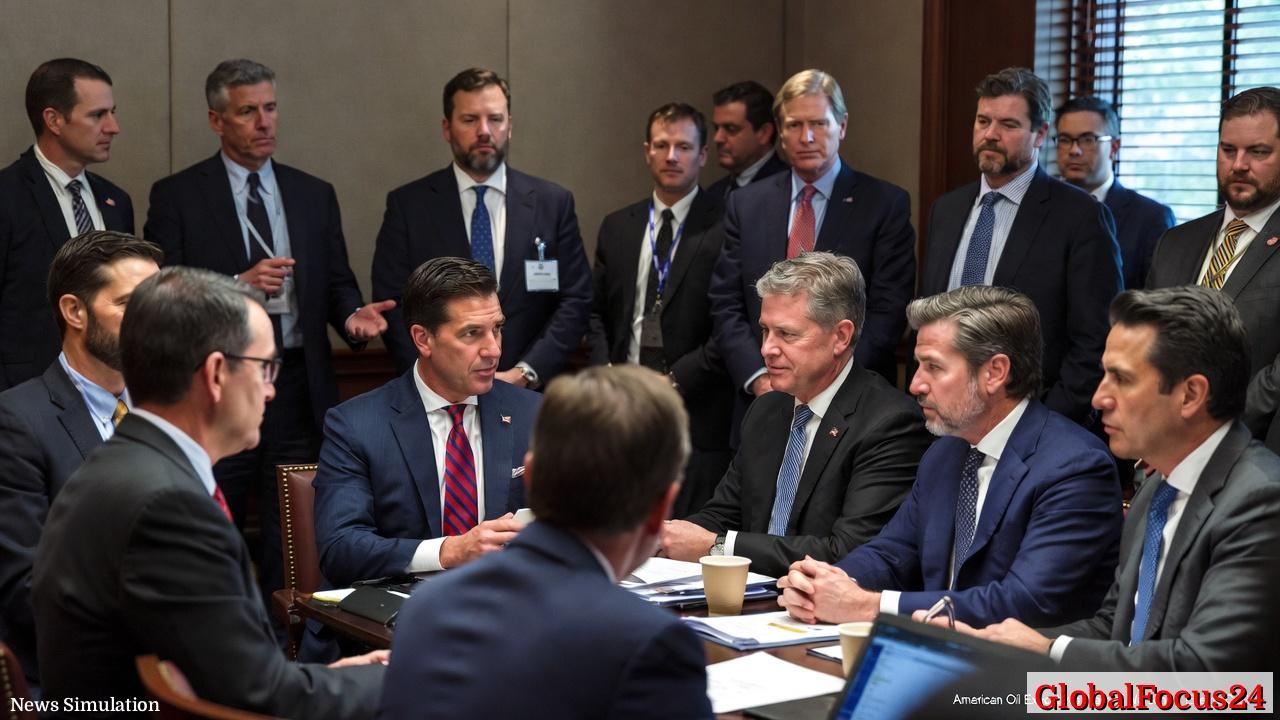
According to individuals familiar with recent meetings at the White House, top executives from Exxon, Chevron, and ConocoPhillips cautioned that the crisis could worsen in the coming weeks if the critical maritime corridor remains constrained. Exxon CEO Darren Woods told officials that “upward pressure on oil prices may intensify as traders and speculators anticipate prolonged instability,” a dynamic that could strain both global fuel inventories and refinery margins.
Chevron CEO Mike Wirth and ConocoPhillips CEO Ryan Lance echoed similar concerns, underscoring that extended disruptions could lead to refined product shortages in North America, Europe, and Asia. The discussions, which involved Energy Secretary Chris Wright and Interior Secretary Doug Burgum, reflect growing tension between energy industry leaders seeking market stabilization and a White House balancing military, political, and economic responses to the conflict.
Soaring Oil Prices and Market Reactions
U.S. benchmark crude prices have climbed sharply in recent days, jumping from $87 per barrel earlier in the week to $99, reflecting both the immediate supply risks and broader uncertainty surrounding global energy transport routes. Traders in London and Singapore report significant volatility, with markets increasingly pricing in the possibility of prolonged instability in the Persian Gulf.
For global consumers, the price spikes translate into higher costs for gasoline, diesel, and jet fuel—pressuring economies already grappling with inflationary pressures. Analysts warn that if the Strait of Hormuz remains partially blocked, benchmark prices could easily breach $110 or even $120 per barrel, a scenario reminiscent of the 1970s oil shocks that reshaped global energy consumption patterns.
“The world does not need $120 oil,” said Steven Pruett, CEO of Elevation Resources. “It’s going to cause economic destruction.” His comment reflects growing industry anxiety that high prices might erode demand, slow global growth, and ultimately lead to supply gluts once the immediate crisis fades.
Administration Measures to Ease Pressure
The Trump administration has been scrambling to contain the fallout and calm markets. Officials are considering several policy responses aimed at expanding short-term supply and preventing runaway price increases. Among the most significant are:
- Releasing up to 400 million barrels from the Strategic Petroleum Reserve to offset lost volumes.
- Easing sanctions on Russian oil exports, allowing limited imports under monitored contracts.
- Granting temporary waivers on the Jones Act, permitting foreign-built tankers to move crude between U.S. ports.
- Encouraging production increases in Venezuela, with U.S. firms exploring technical partnerships to rehabilitate key oil fields.
Energy Secretary Wright described discussions with industry leaders as “productive and ongoing,” emphasizing a cooperative approach. “We’re working closely with the private sector to maintain market stability and ensure energy security for American consumers,” he said.
Yet, many executives remain skeptical that these measures can compensate for the loss of roughly nine to ten million barrels per day currently stranded by limited passage through the Hormuz corridor. They argue that only restoring full maritime flow through the strait will bring lasting relief.
Historical Context: Lessons from Past Crises
The present turmoil has drawn comparisons to earlier oil supply disruptions—most notably the 1973 Arab oil embargo, the 1980 Iran-Iraq War, and the 1988 “Tanker War,” when repeated strikes on vessels in the Gulf sent prices skyrocketing. Each of those episodes revealed the vulnerability of global supply chains to geopolitical tension, particularly in the Middle East.
During the 1970s shocks, U.S. consumers faced rationing lines and surging inflation, prompting massive policy shifts that included fuel efficiency mandates and the creation of the Strategic Petroleum Reserve. Similarly, the 1990 Gulf War temporarily spurred a spike in oil prices before global production stabilized.
Today’s crisis, experts note, differs in one key respect: the U.S. has become the world’s largest oil producer, thanks largely to shale development in Texas, New Mexico, and North Dakota. While this gives Washington greater leverage, it has not insulated the country entirely from global price swings. Energy remains a globally traded commodity, and even domestic consumers are subject to the effects of international supply shocks.
Potential Economic Impact
Economists warn that sustained high oil prices could dampen the post-pandemic recovery and push up inflation across energy-intensive sectors such as transportation, manufacturing, and agriculture. For households, rising gasoline and heating costs would erode real income and consumer spending power.
Businesses face a similar squeeze. Airlines have begun hedging against further increases in jet fuel costs, while logistics firms are adjusting freight surcharges. Power producers that rely on natural gas imports are exploring alternative contract sources in the North American and European markets.
In global terms, a $20 increase in oil prices can shave as much as 0.4 percent off world GDP growth, according to analysts. Countries highly dependent on imported energy—particularly in Asia and parts of Europe—would bear the brunt of the slowdown.
Regional Comparisons and Strategic Shifts
Several nations are reassessing their supply routes and dependencies. China and India, two of Iran’s largest crude customers, have increased drawdowns from strategic reserves and accelerated efforts to diversify suppliers. In Europe, policymakers are urging energy companies to expand imports from the North Sea and the U.S. Gulf Coast.
Meanwhile, Latin American producers such as Brazil, Guyana, and Venezuela are emerging as potential beneficiaries if global refiners pivot toward Western Hemisphere sources. ExxonMobil’s exploration and investment activities in Guyana have turned that small South American nation into one of the fastest-growing oil exporters in the world.
The U.S. government is also exploring investment frameworks to facilitate American participation in Venezuelan crude projects, part of a broader strategy to strengthen hemisphere supply resilience. Chevron, which already maintains joint ventures in Venezuela, recently reported record local output as restrictions eased.
Industry Outlook: Cautious Optimism Amid Uncertainty
Despite immediate challenges, some industry leaders point to near-term opportunities. High prices can lead to stronger quarterly earnings and renewed investor confidence after years of volatile returns. However, executives caution that prolonged instability would undercut long-term investment planning by introducing uncertainty into project economics and capital allocation.
Production ramp-ups in the U.S. shale patch are expected to be modest—constrained by labor shortages, supply chain tightness, and investor discipline. Industry analysts suggest incremental increases of about 400,000 to 500,000 barrels per day this quarter, far below the volumes needed to fully counteract disruptions in the Gulf.
As the situation unfolds, analysts expect the energy industry to prioritize infrastructure resilience, including new pipeline routes, expanded export capacity, and elevated emergency reserves. Geopolitical risk hedging will likely become a larger part of corporate strategy as companies confront a more volatile global landscape.
The Path Ahead
While officials describe ongoing coordination between government agencies and oil producers as steady and constructive, both sides acknowledge that the road to stabilization is uncertain. The reopening of the Strait of Hormuz hinges on diplomatic and military developments largely beyond the control of market participants.
In the meantime, consumers face a tense spring driving season marked by rising fuel costs and nervous markets. For producers, investors, and policymakers alike, the episode underscores a familiar truth: global energy security remains as vulnerable to geopolitics as ever, and strategic chokepoints like Hormuz continue to define the balance of economic power in the twenty-first century.