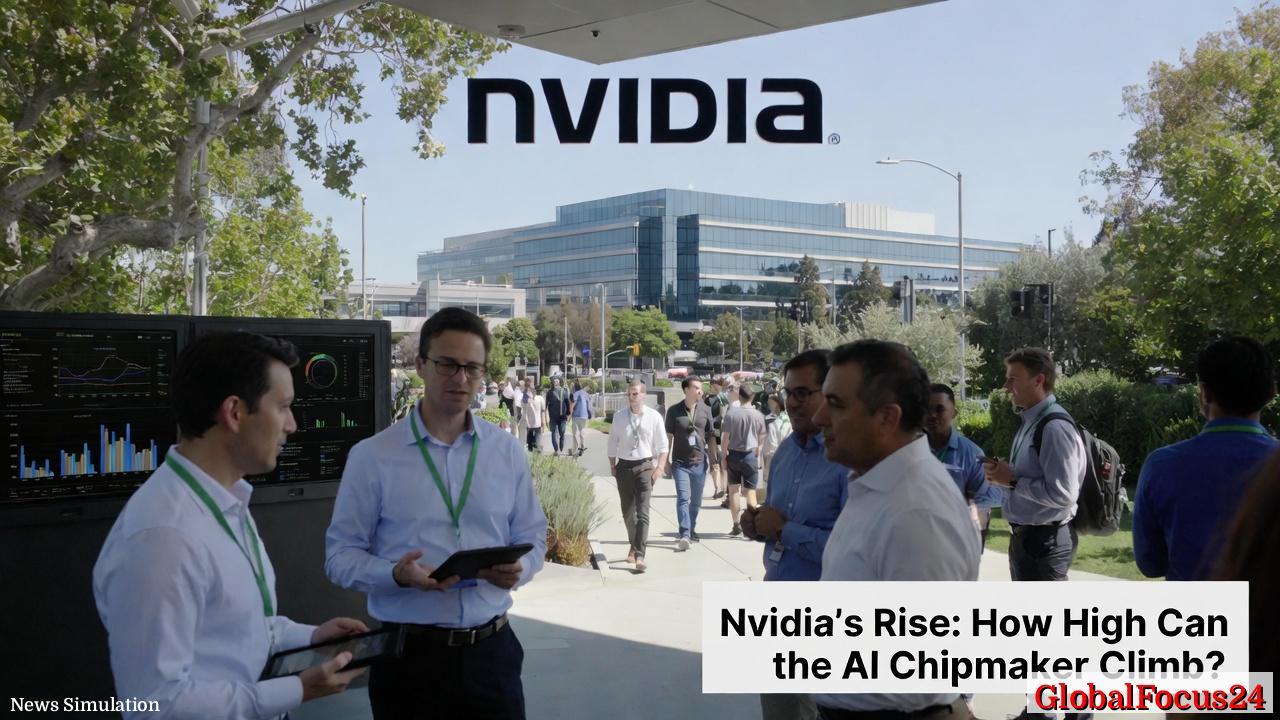
Nvidia’s Ascension: From AI Chips to a Tech Infrastructure Empire
Nvidia’s rise has been extraordinary even by Silicon Valley’s standards. The AI chipmaker is expanding its empire and becoming much more than an AI chip producer as it pushes into new areas of technology and infrastructure. Industry analysts are now questioning how much higher the company can climb amid surging demand for advanced computing power.
Historical Context: The Evolution of a Graphics Giant into an AI Powerhouse Nvidia’s origin lies in graphics processing units designed to render high-definition visuals for gaming. Over time, its GPUs proved adept at handling parallel computing tasks, enabling breakthroughs in data science, machine learning, and simulations. In the early 2010s, the company embraced GPUs as engines of artificial intelligence, capitalizing on the need for massive neural network training. This pivot transformed Nvidia from a hardware vendor into a platform provider, with software frameworks and ecosystems designed to unlock the potential of accelerated computing.
The strategic shift mirrored a broader industry trend: compute is not only about CPUs but about specialized engines that can perform complex workloads more efficiently. Nvidia’s development of CUDA, a parallel computing platform, helped cultivate a sizable developer community and an expansive software stack that amplified the value of its hardware. That suite became the backbone for research institutions, cloud providers, automotive companies, and consumer electronics ecosystems seeking faster, more capable AI workloads.
During the 2010s and into the 2020s, Nvidia’s growth trajectory aligned with the exponential demands of AI research, data centers, and autonomous systems. The company expanded from gaming GPUs to data-center accelerators, AI inference engines, and software offerings that connect hardware to real-world applications. The result was a diversified portfolio that could weather shifts in any single market and supported a broader revenue model built on hardware sales, software subscriptions, and an expanding ecosystem of partners.
Economic Impact: Energizing Data Centers and Regional Tech Clusters Nvidia’s business model has roots in high-performance computing where the cost of processing power scales with workloads. As enterprises migrated workloads to the cloud and then embraced AI-driven insights, demand for powerful accelerators grew. Nvidia’s data-center GPUs became central to training large language models, recommendation systems, scientific simulations, and financial engineering. The company’s products helped data centers achieve higher throughput per watt, a key efficiency metric as energy costs and sustainability considerations rose across industries.
The ripple effects extend beyond the balance sheet. The company’s success accelerated investments in semiconductor fabrication, software development, and AI research hubs in regions with strong tech ecosystems. Local suppliers, engineering talent pools, and university programs benefited from collaboration opportunities and workforce demand. In turn, this created regional densification of expertise around accelerated computing, with notable activity in tech corridors that host cloud providers, hyperscalers, and research institutions.
Global competitiveness in AI infrastructure has consequences for regional players. Nations and regions that cultivate chip manufacturing, software platforms, and AI services can attract investment, job creation, and technology transfer. Nvidia’s market leadership—driven by performance benchmarks, software ecosystem strength, and strategic partnerships—spurred a wave of investments in data-center facilities, edge computing, and AI-enabled services across North America, Europe, and parts of Asia. These dynamics shape how regional economies diversify beyond traditional manufacturing and into knowledge-intensive industries.
Geographic Comparisons: The Americas, Europe, and Asia in the AI Race In North America, Nvidia’s footprint intertwines with the cloud giants that anchor regional tech ecosystems. Data centers, research labs, and AI startups rely on Nvidia’s accelerators to push the boundaries of what is feasible in real-time analytics, robotics, and digital twin simulations. The company’s influence extends to universities where researchers leverage GPU-accelerated computing for climate modeling, material science, and genomics. This synergy between industry and academia sustains a steady stream of talent, patents, and collaboration opportunities that help maintain a competitive edge.
Europe’s AI infrastructure landscape has evolved around a mix of public-private partnerships, semiconductor investment programs, and enterprise adoption of AI tools. Local ecosystems emphasize sustainable data-center design, energy efficiency, and compliance with stringent regulatory standards. Nvidia’s partnerships with European cloud providers and research centers have supported regional AI pilots and large-scale simulations in areas such as automotive engineering, aerospace, and industrial automation. The regional focus on data sovereignty and privacy has influenced how software stacks and hardware are deployed, prompting design choices that balance performance with governance.
In Asia, rapid industrial digitization and manufacturing modernization create fertile ground for accelerated computing. Countries that invest in semiconductor manufacturing capabilities, education pipelines, and industrial AI applications stand to benefit from Nvidia’s platforms. Collaborative initiatives with Asian tech firms and research institutes have driven advances in autonomous systems, medical imaging, and energy-efficient computing. The global supply chain and cross-border collaboration networks around AI hardware contribute to broader regional competitiveness in advanced technology.
Technological Trajectory: From GPUs to Edge AI and Beyond Nvidia’s product evolution demonstrates a relentless push into higher-value computing tiers. Core GPUs remain central for training and inference, but the company has broadened its portfolio with data-center accelerators, networking interconnects, and software frameworks that optimize performance across diverse workloads. The emergence of AI-at-the-edge concepts—deploying intelligent capabilities closer to data sources—has created new demand for compact, power-efficient accelerators. Nvidia has responded with scalable architecture and software layers that enable edge devices, autonomous machines, and smart infrastructure to operate with low latency and high reliability.
Another pillar of Nvidia’s strategy is software-enabled acceleration. The company’s SDKs, libraries, and frameworks reduce the complexity of deploying AI models, which accelerates time-to-value for enterprises. By combining hardware efficiency with developer-friendly software tools, Nvidia creates an integrated platform that appeals to data scientists, engineers, and IT leaders alike. This platform-centric approach helps the company monetize more of the AI value chain, from model development to deployment and ongoing maintenance.
Market Position and Competitive Landscape Nvidia’s ascent has redefined competitive dynamics within semiconductors and AI infrastructure. While other chipmakers compete in GPUs and accelerators, Nvidia has carved a niche as a comprehensive provider of hardware, software, and ecosystem services. The company’s market leadership rests on:
- Superior performance benchmarks across AI training and inference workloads, which attract enterprise customers and hyperscalers seeking efficiency and speed.
- A robust developer ecosystem that extends from research labs to production environments, ensuring a steady inflow of talent and innovation.
- Strategic partnerships with cloud providers, system integrators, and software vendors that facilitate large-scale AI deployments.
- A diversified revenue mix that includes data-center hardware, software platforms, networking products, and professional services.
This combination of performance, ecosystem strength, and strategic alliances has created a durable competitive moat. Yet the sector remains dynamic, with ongoing investments in alternative architectures, memory technologies, and specialized AI accelerators. Competitors are advancing in areas like energy efficiency, training speed, and cost per inference, making continual innovation essential for sustained leadership.
Public Reception and Workforce Momentum As Nvidia expands into new domains, public perception often mirrors the broader tech industry’s sentiment: optimism about transformative capabilities tempered by concerns over market concentration and supply chain resilience. The company’s growth story has energized regional talent pools, attracting engineers, researchers, and developers who want to contribute to cutting-edge AI infrastructure. Universities report increased enrollment in computer science and engineering programs, while startups proliferate around the company’s platforms, driving innovation in healthcare, finance, manufacturing, and creative industries.
Workforce dynamism is complemented by investments in manufacturing and design facilities. Local and national policymakers scrutinize supply chain strategies, ensuring resilience against disruptions and geopolitical tensions that could affect access to critical components. The healthy demand for skilled labor bodes well for wage growth in technical fields, though it also underscores the importance of continuing education, retraining, and diversification of career pathways to meet evolving industry needs.
Infrastructure and Sustainability Considerations The expansion into AI infrastructure also raises questions about energy use and environmental impact. Data centers require substantial electrical power, cooling, and advanced materials. Nvidia’s engineering teams emphasize energy efficiency and performance-per-watt as key design criteria. The broader industry response includes partnerships with utility providers, investments in renewable energy, and the adoption of advanced cooling technologies. Sustainable data-center design not only supports cost management but also aligns with corporate and public-sector goals to reduce carbon footprints.
Regional policymakers are increasingly focused on creating favorable conditions for high-tech manufacturing and AI development. Incentives, workforce training programs, and investment in infrastructure can accelerate the establishment of new facilities and the expansion of existing ones. In this context, Nvidia’s activities interact with regional development strategies, potentially shaping long-term economic trajectories and competitive standing.
Operational Highlights: Innovation Through Collaboration Nvidia’s success rests on a collaborative model that blends hardware engineering with software innovation. The company invests in research and development, pursues strategic acquisitions, and cultivates partnerships across hardware manufacturers, software developers, and cloud platforms. This collaborative ecosystem accelerates the translation of research breakthroughs into commercial products and scalable AI services. By bridging the gap between theoretical advances and practical deployment, Nvidia helps organizations realize value from AI initiatives more quickly.
The company’s acquisitions in related technology spaces have expanded its capabilities. By integrating complementary expertise, Nvidia strengthens its ability to deliver end-to-end solutions that span from data processing to intelligent automation. These strategic moves reinforce its position not only as a supplier of chips but as a facilitator of large-scale AI transformation across industries.
Public Policy and Global Supply Chain Considerations In an era of global tech competition, Nvidia’s trajectory intersects with policy debates on security, supply chain resilience, and international cooperation. Governments seek to diversify semiconductor supply chains to mitigate risk from geopolitical volatility and to ensure access to critical technologies. Nvidia’s global footprint—encompassing design centers, fabrication partnerships, and regional offices—illustrates how policy choices can influence the pace and direction of technological adoption. Industries and policymakers alike are weighing incentives for domestic manufacturing, investment in R&D, and measures to sustain strategic autonomy in AI infrastructure.
Despite potential policy headwinds, the demand for AI capabilities is unlikely to abate. Enterprises across sectors—from healthcare to finance to manufacturing—depend on accelerated computing to unlock insights, optimize operations, and deliver personalized experiences. Nvidia’s products and platforms are positioned to benefit from this ongoing demand, provided the company maintains supply chain resilience and continues to innovate with an eye toward efficiency and modular scalability.
Future Outlook: Navigating Growth and Technological Change Looking ahead, Nvidia’s path will likely hinge on its ability to scale hardware production, deepen software ecosystems, and expand geographic reach. The company’s success in deploying AI accelerators at scale will depend on manufacturing capacity, memory bandwidth, and interconnect efficiency. As computational demands grow with more sophisticated models and real-time analytics, Nvidia’s architecture choices will need to strike a balance between performance, power consumption, and cost.
Regional uptake of AI technologies will influence the company’s growth trajectory. Areas with strong digital infrastructure, skilled workforces, and favorable regulatory environments are well-positioned to accelerate adoption of Nvidia’s platforms. Conversely, regions facing supply chain instability or restrictive data policies may slow momentum, highlighting the importance of diversified manufacturing strategies and adaptable software solutions.
A final takeaway is the broader economic implication of Nvidia’s journey. The company’s expansion from a chipmaker into a holistic AI infrastructure provider underscores a broader shift in the tech industry toward integrated platforms. This transformation has the potential to reshape industries by enabling faster experimentation, shorter development cycles, and more scalable deployment of AI solutions across sectors. As Nvidia continues to push the boundaries of what is technically possible, its influence on global technology ecosystems will likely intensify, prompting a reevaluation of how organizations plan their digital futures.