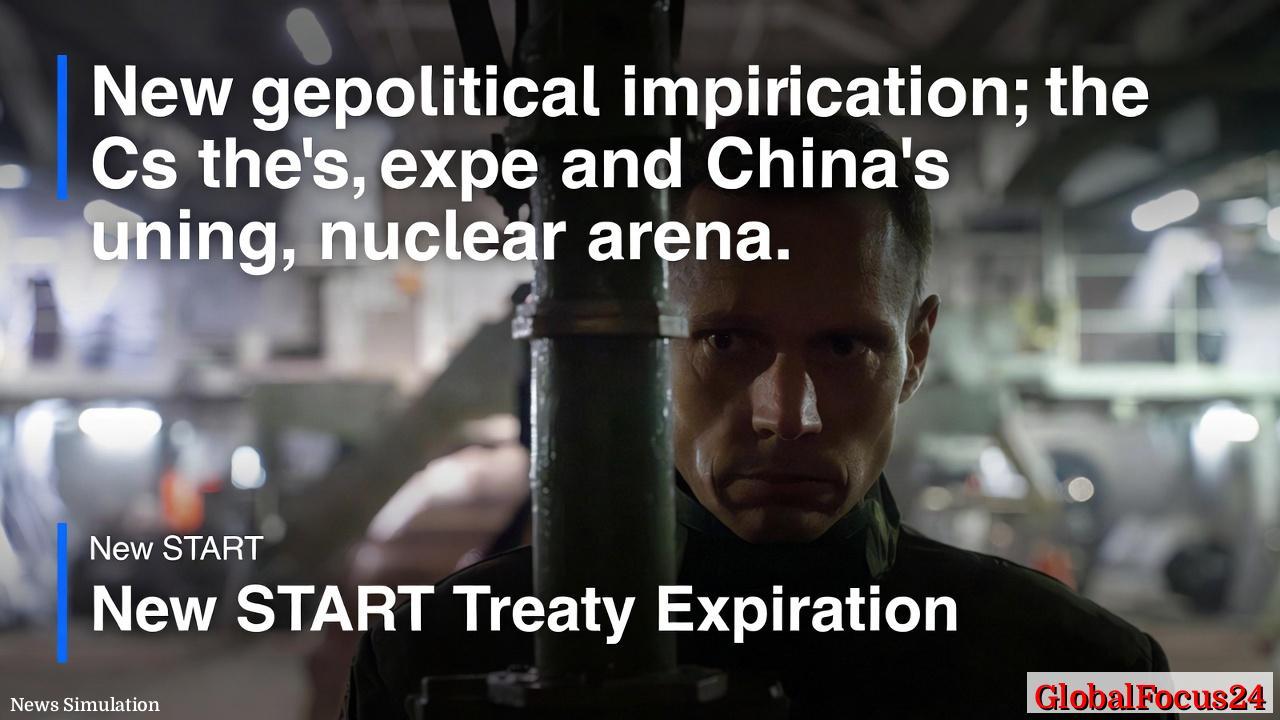
Nuclear Arms Landscape Shifts as START Treaty Nears Expiration and China Emerges as a Key Player
The expiration of the New START treaty marks a critical juncture in global strategic stability, with implications reverberating across the United States, Russia, and a rising China. As negotiators and defense analysts assess next steps, the balance between deterrence and arms control faces renewed pressures from evolving capabilities, shifting alliances, and regional security dynamics. This article provides historical context, analyzes potential economic and regional impacts, and offers comparative perspectives to understand how the end of New START might reshape the nuclear landscape in the coming years.
Historical context: from détente to renewed competition
- The New START treaty, signed in 2010 and extended in 2021, capped the number of deployed strategic nuclear warheads and delivery systems for the United States and Russia, providing a transparency framework that helped reduce misperceptions and enhance crisis stability .
- The era of strategic arms control has long depended on verifiable limits, inspections, and shared understandings about strategic force postures. When those mechanisms weaken or lapse, questions arise about how each side might respond—whether through unilateral modernization, renewed arms racing, or the pursuit of new frameworks .
- Across decades, regional security considerations have repeatedly influenced treaty dynamics. In the post–Cold War period, the United States and its allies pursued reductions, while Russia’s modernization programs and China’s ascent as a nuclear power introduced new variables that complicate any prospective agreement .
China’s rise and the potential for strategic realignment
- China’s expanding nuclear arsenal and modernization of delivery systems have shifted regional deterrence calculations in Asia, prompting debates about parity, transparency, and the design of future arms-control architectures. Analysts warn that without inclusive negotiations, tensions could intensify as capabilities evolve .
- Regional dynamics in East Asia—where surveillance, missile defenses, and advanced long-range weapons intersect with alliance commitments—could influence how China, the United States, and its regional partners calibrate their posture in a post–New START environment .
- The possibility of a broader “nuclear modernization cycle” emerges when traditional arms-control constraints loosen. Countries may accelerate development of missiles, submarines, and bomber fleets to maintain strategic leverage, potentially increasing the risk of miscalculation during crises .
Economic impact: defense budgets, industrial ecosystems, and regional costs
- Extended or renewed arms-control frameworks historically affect defense procurement planning and budget allocations. When limits are in flux, government agencies may reassess long-term investment in next-generation missiles, test ranges, and associated infrastructure, with downstream effects on defense contractors and regional suppliers .
- The aerospace and defense sectors in the United States and allied economies are closely tied to modernization programs. Shifts in treaty status can influence contract awards, supply chain resilience, and innovation pipelines that support both strategic systems and conventional capabilities .
- In regions with robust defense ecosystems, the economic ripple of potential arms races includes not only direct spending on capabilities but also intangible factors like research and development intensity, workforce training, and regional geopolitical risk insurance—factors that can impact labor markets and commercial technology spillovers .
Regional comparisons: incentives, constraints, and exposure
- United States and Russia: The long-standing bilateral framework offered predictable ceilings and verification measures. Its potential erosion could reintroduce strategic ambiguity, making crisis stability harder to manage without new verification or normalization arrangements .
- Europe: NATO members have historically relied on a mix of deterrence assurances and arms-control diplomacy. A lapse in START-style commitments could prompt renewed discussions about European missile defense, conventional balance, and allied nuclear sharing, affecting regional security calculations .
- Asia-Pacific: The intersection of U.S.-China competition with Japan, South Korea, and Australia creates a complex web of extended deterrence commitments and potential perceptions of encroaching threats. Any strategic realignment might influence regional risk assessments, alliance cohesion, and defense modernization trajectories .
What happens if New START expires?
- Deterrence posture: A formal expiration could leave a vacuum in verification and transparency, elevating uncertainty about stockpiles, basing rights, and modernization timelines. Without formal limits, both sides may pursue parallel investments, potentially raising the threshold for crisis stability unless new agreements emerge to replace the framework .
- Crisis stability and signaling: The absence of verifiable ceilings can increase incentives for preemptive or rapid modernization, prompting heightened alert levels, more frequent readiness postures, or accelerated testing programs in some regions, unless new norms or verification approaches are established .
- Diplomatic dynamics: Expiration could become a catalyst for broader arms-control negotiations or, conversely, a pretext for regional power projections. The outcome will likely depend on geopolitical signals, leadership priorities, and the willingness of major powers to negotiate a successor framework that accommodates emerging capabilities .
Public reaction and societal considerations
- Public concern about nuclear risk tends to rise during periods of strategic uncertainty. Communities near basing facilities, missile defense sites, and testing ranges often monitor developments closely, seeking transparency about risk mitigation, emergency preparedness, and environmental stewardship .
- Community adaptations can include engagement with policymakers, regional economic planning, and education on crisis response protocols. In places with a high concentration of defense-related employment, workers may seek retraining opportunities to navigate shifting demand in a post–New START environment .
Implications for diplomacy and global stability
- Multilateral engagement becomes increasingly important as the strategic landscape evolves. While the United States and Russia have been central to arms-control efforts, inclusive frameworks that incorporate China and other key regional actors could offer pathways to verifiable reductions, transparency measures, and risk-reduction measures that mitigate arms racing dynamics .
- Confidence-building measures, even in the absence of formal ceilings, may play a vital role in preventing misperception-driven spirals. Practical steps could include regular data exchanges, hotlines for crisis management, and joint risk-reduction exercises that build mutual understanding among major powers .
Historical context reinforces the stakes
- The arc of arms-control history shows that negotiated limits have provided stability during periods of technological change and geopolitical tension. As strategic capabilities evolve, the challenge lies in designing mechanisms that are robust, adaptable, and acceptable to a broad set of stakeholders, while maintaining a clear focus on deterrence and global security .
- Comparative studies of past treaties demonstrate that verification, transparency, and mutual benefits are crucial for sustaining any new agreement. Absent these elements, even well-intentioned efforts can falter in the face of strategic mistrust or conflicting national priorities .
Conclusion: navigating an uncertain but consequential horizon
- The expiration of the New START framework signals a pivotal moment for strategic security and regional stability. The path forward will hinge on whether major powers can forge a successor arrangement that reconciles modernization imperatives with credible verification and risk-reduction measures, all while addressing the evolving role of China in the global nuclear landscape .
- Stakeholders—from policymakers and defense planners to regional partners and the public—will need to monitor developments closely, weigh economic and security trade-offs, and engage in dialogue focused on practical risk mitigation. The coming years will test the resilience of existing norms and the international community’s capacity to prevent escalation amid rapid technological and geopolitical change .
Note: This article synthesizes historical patterns, regional dynamics, and potential economic and security implications to provide a broad, objective examination of the topic. For readers seeking deeper dives, further research into official policy analyses and expert assessments is recommended to understand the evolving landscape as events unfold.