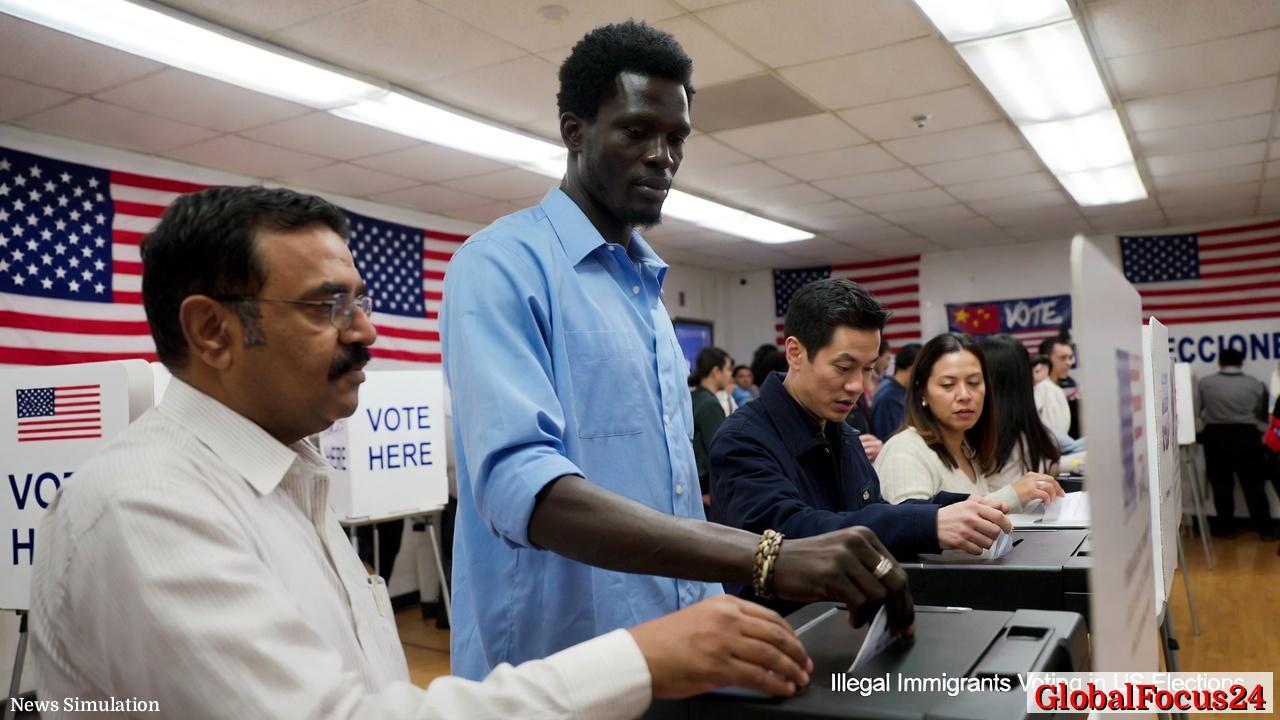
Non-Citizen Voting Allegations Prompt Push for Voter Citizenship Verification
A rising set of prosecutions and investigations involving non-citizens casting ballots has renewed attention on how Americans register to vote and how election authorities verify eligibility. Authorities say individuals from Africa, India, and China have registered to vote through various channels and at times cast ballots in federal and state elections by misrepresenting citizenship or exploiting enrollment processes. The episodes, while not universal, have sparked renewed debate about election integrity, registration systems, and the balance between accessibility and verification.
Historical context: how voter registration evolved In the United States, the modern voter registration system expanded dramatically in the 20th century, with vehicles like motor voter programs designed to ease participation. The National Voter Registration Act of 1993 sought to streamline registration at DMVs and reduce barriers to voting. Over time, additional avenues for enrollment emerged—mail-in forms, third-party voter drives, and event-based registrations. These changes increased registration outreach but also introduced new risks if safeguards were not aligned with citizenship verification and eligibility checks.
The tension between access and verification has long occupied election policy debates. Advocates emphasize expanding participation to strengthen democracy, while critics warn that lax verification can create openings for non-citizens to participate, potentially affecting close races or down-ballot outcomes. The episodes described in recent investigations have amplified those concerns and prompted renewed calls for clearer rules and stronger enforcement mechanisms.
What authorities report According to law enforcement and election officials, a series of cases involve individuals who are not citizens obtaining the right to vote and, in some instances, casting ballots in federal or state elections. Reported scenarios include:
- A long-term non-citizen with prior removal orders who registered as a Democrat and participated in multiple election cycles.
- An Indian national accused of voting illegally in a recent presidential election.
- A Chinese national and former university student charged with illegal voting in a recent election, who subsequently fled the United States but remains on some voter rolls in active status.
- Other cases involving non-citizens linked to different countries who reportedly registered and voted across party lines.
Officials note that several of these cases were uncovered through investigations, audits, or reviews of enrollment records. In some instances, non-citizens are believed to have encountered prompts or solicitations at events, while in others, glitches or procedural gaps in enrollment systems were identified. Pennsylvania officials acknowledged a software or process issue that contributed to about 100,000 non-citizens appearing to be eligible to register, highlighting how technical weaknesses can intersect with policy design.
What the data suggests Experts caution against extrapolating from individual cases to broad conclusions. Non-citizen voting remains, by most estimates, a rare phenomenon in the overall U.S. electoral landscape. Independent researchers and election integrity organizations caution that a handful of incidents should not be conflated with widespread fraud. Nevertheless, even isolated cases carry political and public policy implications because they touch questions of legitimacy, trust, and the proper functioning of the electoral system.
Legal framework and accountability U.S. election law places the core burden of eligibility on voters, with states maintaining voter rolls and enforcing eligibility rules. Federal elections require U.S. citizens to vote, and state and local jurisdictions often administer registration. In practice, states implement a mosaic of procedures, including citizenship verification checks, document requirements for certain forms of registration, and motor voter interfaces that connect identity data with voter eligibility. When non-citizens are identified, prosecutions can follow under statutes against voting by ineligible persons, possession of fraudulent documents, or registration fraud.
Policy proposals and political dynamics The recent cases have intensified discussions around policy measures designed to prevent non-citizen registration and voting. A prominent proposal is the SAVE Act, which would require explicit proof of U.S. citizenship to register for federal elections, such as a passport, birth certificate, or enabled state-issued credentials like enhanced driver’s licenses. The bill has cleared the House but awaits Senate advancement, where a filibuster barrier has stalled passage in recent sessions.
Supporters of heightened verification argue that such measures are essential to protect the integrity of citizen voting and to reassure the public that the electoral process is accurate. They contend that even a small number of non-citizen ballots could undermine confidence in election outcomes and distort representation. Critics, however, warn that such requirements may disenfranchise eligible voters, particularly in populations with inconsistent access to documentation or administrative hurdles. They also point to evidence suggesting non-citizen voting is rare and that polling indicates broad public support for broader participation with targeted safeguards rather than exclusion.
Regional comparisons and implications Variations in registration practices and enforcement across states create a diverse landscape of risk and resilience. States with robust identity verification protocols and rigorous cross-checks between immigration and election records tend to report fewer non-citizen voting incidents. Conversely, jurisdictions that rely heavily on self-attestation or that operate motor voter systems without strong citizenship checks have been singled out in investigations as spots where vulnerabilities could exist.
Economic implications of safeguarding elections extend beyond the ballot box. Ensuring accurate voter rolls requires investment in technology upgrades, personnel training, and data-sharing agreements between agencies. For local economies and regional administrations, the cost of maintaining robust, auditable registration systems is weighed against the cost of potential adjudication, legal challenges, or lost public trust stemming from perceptions of compromised electoral integrity.
Public reaction and cultural dimensions Public sentiment around election integrity remains a potent driver of policy discussions. Communities respond with varying degrees of concern, particularly when high-profile cases surface. Some voters express anxiety about the possibility of foreign or non-citizen interference, while others emphasize that the vast majority of legitimate ballots are cast by eligible citizens. Media coverage and political discourse can amplify perceived risks, underscoring the importance of transparent, evidence-based communication from election authorities.
What this means for voters and communities For everyday voters, the core takeaway is that election administrators are actively reviewing and strengthening enrollment processes to safeguard the integrity of the vote. Voter education remains critical: understanding what documents are needed, how to verify eligibility, and where to seek help can reduce errors that might otherwise lead to disenfranchisement. Citizens should stay informed about local registration rules, as procedures can differ by state and even by county.
In the longer term, the discussions surrounding non-citizen voting intersect with broader themes of democratic participation, immigration policy, and the governance of public records. As systems evolve with technology and data-sharing capabilities, policymakers face the challenge of balancing open access with robust verification. The goal is a registration system that is accessible to eligible residents while minimizing opportunities for ineligible individuals to participate.
Key takeaways for policymakers and stakeholders
- Strengthen verification at the point of registration without creating undue barriers to participation for eligible residents.
- Invest in interoperability between agencies to reduce errors and enable accurate cross-checks of citizenship status with voter registration databases.
- Ensure transparency in how findings are reported, including the methodology used to identify non-citizen registrations and the scope of investigations.
- Communicate clearly with the public about safeguards, findings, and any corrective actions to maintain trust in the electoral process.
- Monitor and evaluate the impact of proposed legislation like the SAVE Act, considering potential unintended consequences for eligible voters and administrative workload.
Historical context underscores that registration reforms have always been a balance between accessibility and accuracy. The contemporary focus on non-citizen voting highlights that even in an era of advanced data systems, the integrity of voter rolls hinges on precise, verifiable processes and ongoing oversight. As investigations continue and policy debates unfold, voters can expect a continued emphasis on robust safeguards, transparent reporting, and careful consideration of how best to preserve the integrity of elections while sustaining broad civic participation.
If you’d like, I can tailor this article to a specific region or add expert quotes and data from recent official reports to further ground the narrative.