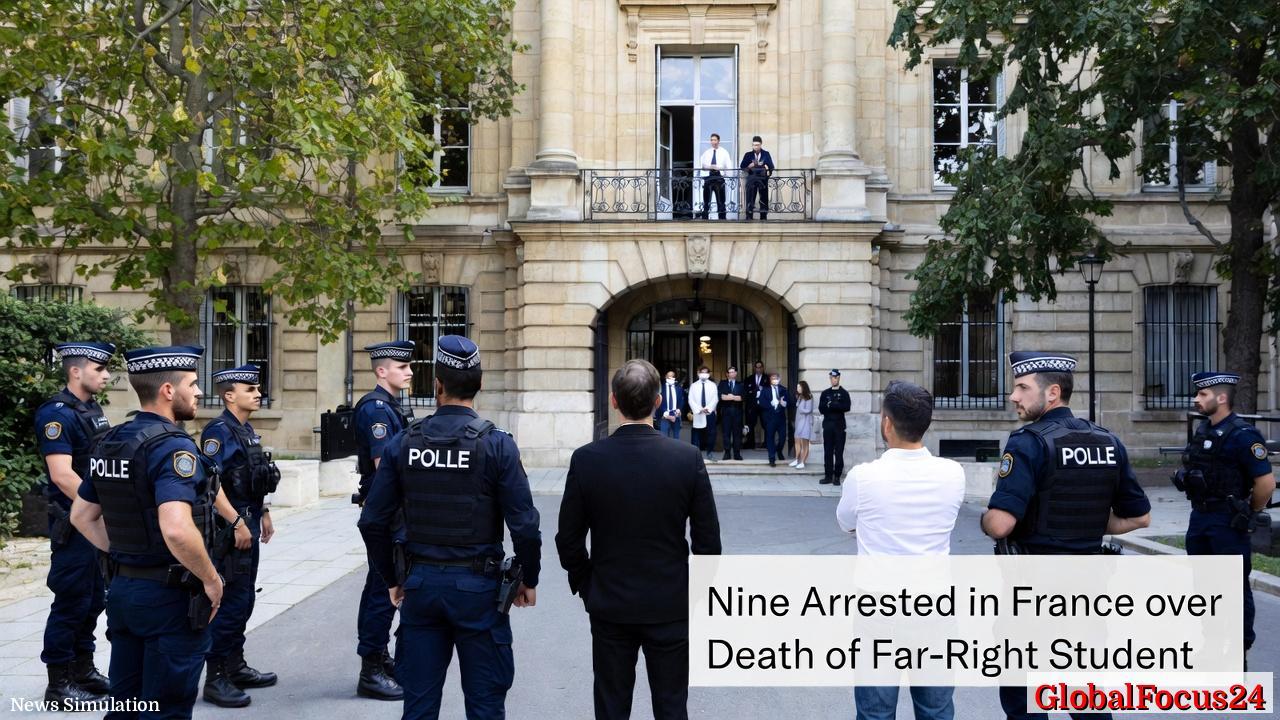
France Faces Reckoning as Nine Arrested in Far-Right Student’s Death
An unfolding case in France has drawn national attention as police authorities announced the arrest of nine individuals in connection with the death of a far-right student. The developments have sparked a nationwide conversation about political violence, youth extremism, and the safety of campus communities, while also prompting a careful examination of the legal process and public reaction across regions.
Historical Context: Political Tides and Campus Activism in France To understand the significance of the latest arrests, it helps to situate the incident within a broader history of campus activism and political violence in France. The country has long wrestled with the intersection of political identity, student life, and public safety. In recent decades, periods of heightened political tension have often coincided with elections, social movements, and debates over national identity, immigration, and law enforcement. Universities and student unions have frequently been microcosms of larger political currents, where passionate advocacy can evolve into confrontations with lasting consequences.
The far-right movement in France has grown and reconfigured over time, leveraging digital networks, organized events, and public demonstrations to advance its agenda. While the vast majority of supporters contribute to civic life peacefully, security services monitor pockets of radicalization where extremist ideologies can intensify. The current case has intensified scrutiny of how youth involvement in such movements is channeled, monitored, and addressed by institutions, families, and law enforcement.
Economic Context: Local Impact and Resource Allocation Beyond the courtroom, the incident reverberates through local economies and public services. Cities and regions with dense academic populations often balance campus vitality with the costs of security and incident response. When a high-profile event triggers arrests and investigations, municipal budgets may face reallocation—prioritizing policing, campus safety programs, and community outreach to reassure students, faculty, and residents.
Businesses near university districts monitor foot traffic and sentiment in the wake of rising concern about safety and stability. Local media coverage of arrests can influence perceptions and, indirectly, consumer confidence as families plan housing, commuting, and daily routines around campus life. Law enforcement agencies typically respond by increasing patrols, coordinating with university security, and offering channels for reporting threats or suspicious activity. The economic effect extends to ancillary sectors such as student housing, retail, and transportation, where the mood of the community can affect demand and investment.
Regional Comparisons: How France's Regions Are Responding France’s regional diversity shapes how communities interpret and respond to such incidents. In metropolitan France, major urban centers with prominent universities often see swift official statements and robust media coverage, along with a high degree of public mobilization. Rural and peri-urban areas, meanwhile, may experience different pressures, where local authorities aim to balance civil dialogue with the need to maintain public order.
By contrast with other European democracies facing similar challenges, France’s approach emphasizes procedural safeguards and transparent investigations. Police disclosures, judicial proceedings, and public briefings are structured to maintain due process while addressing public concern. Some neighboring countries have adopted more centralized rapid-response models, whereas France tends to emphasize a layered approach: local precincts, regional investigative units, and national coordination as required by the complexity of the case.
What the Nine Arrests May Signify The nine arrests suggest a coordinated effort by investigators to piece together a case that spans several organizational layers, from individuals who allegedly participated in or facilitated actions linked to the death, to others who may have provided support or materials. Information released by authorities indicates that investigators are examining digital communications, physical evidence, and behavioral patterns that could shed light on motive, planning, and timelines.
Analysts caution that arrests, while significant, are just the beginning of a legal process. The public often seeks quick answers, but the investigative phase is critical for establishing facts, verifying connections, and building a credible case that stands up in court. As the proceedings move forward, the judicial system will balance transparency with the rights of the accused, a principle that remains central in French criminal procedure.
Public Reaction: Community Resilience and Debates on Safety Public reaction to the arrests has been mixed, reflecting a spectrum of emotions from concern and grief to insistence on accountability and due process. Student groups, faculty members, and family members of victims may advocate for enhanced safety measures on campuses, additional mental health resources for students, and clearer channels for reporting radicalization and threats. At the same time, many residents emphasize the importance of upholding civil liberties and avoiding broad generalizations about any political ideology or demographic group.
In social discourse, the incident has reignited conversations about how societies confront extremism without compromising democratic values. Advocates for inclusive dialogue argue that preventing violence requires targeted counter-extremism initiatives, community programs that foster critical thinking, and robust support systems for young people navigating identity and belonging. Security professionals underscore the need for proportional responses that deter violence while preserving the rights of all citizens.
Law Enforcement and Legal Proceedings: What Comes Next The investigative trajectory will determine the pace and direction of the case. Authorities will continue to collect evidence, interview witnesses, and analyze digital footprints, financial transactions, and travel records that could establish links among suspects. The judiciary will determine charges, evaluate the strength of the evidence, and guide the subsequent steps, including potential trials, plea agreements, or further detentions if necessary.
France’s criminal justice system emphasizes evidence-based adjudication, with protective measures to ensure fair trials. prosecutors and defense teams will present arguments, call witnesses, and challenge each other’s interpretation of the facts. The public can expect ongoing updates through official channels, as well as independent reporting that contextualizes developments within broader legal standards and human rights considerations.
Regional Economic Signals: Potential Shifts in Investment and Policy While the case dominatess, policymakers may use the moment to re-examine campus safety funding, youth outreach programs, and partnerships between universities and local authorities. Investment in mental health services, conflict-resolution education, and anti-violence training could become focal points for municipal and regional budgets. Additionally, the case might influence visa and policing policies, as national conversations about security and civil rights continue at a high tempo.
Comparative Insight: International Perspectives On the international stage, countries facing analogous challenges have pursued a mix of deterrence, prevention, and rehabilitation. Some nations have expanded surveillance and enforcement powers, while others have prioritized education, community policing, and digital literacy as long-term strategies to reduce radicalization. The French experience contributes to this global dialogue by illustrating how a mature democracy handles a complex intersection of extremism, youth culture, and public safety, with a strong emphasis on due process and proportional response.
Key Takeaways for Stakeholders
- Public safety remains a paramount concern for campuses and cities, requiring sustained investment in security, emergency preparedness, and mental health support.
- Legal processes will unfold with careful attention to evidence, rights, and transparency, ensuring legitimacy of outcomes.
- Community engagement, dialogue, and education are essential to preventing violence and addressing the root causes that can drive vulnerable individuals toward extremism.
- Regional differences in France influence how communities perceive risk, respond to incidents, and allocate resources, underscoring the need for tailored policies that respect local contexts.
Contextual Background: Safety, Society, and the Open Society In democratic societies, incidents that involve violence pose a critical test for values such as freedom of expression, assembly, and the rule of law. France’s approach to handling the aftermath of such events—balancing rigorous investigation with an unwavering commitment to civil liberties—reflects a broader, long-standing effort to preserve an open society even when confronted with threats to safety and social cohesion. The unfolding case serves as a reminder that a resilient community confronts hardship through informed dialogue, evidence-based policy, and collective responsibility.
Public Education and Media Literacy: Building Resilience A key dimension of ongoing responses involves public education and media literacy. As information circulates rapidly in the digital age, communities benefit from programs that teach critical evaluation of sources, recognition of misinformation, and constructive engagement with differing viewpoints. Schools and universities can play a pivotal role by integrating curricula that address radicalization, online safety, and the social dynamics that can lead to violence. By fostering resilience among young people, communities can curb cycles of extremism while preserving constitutional rights and inclusive participation in civic life.
Conclusion: A Moment for Deliberate, Humane Justice The nine arrests mark a significant development in a case that has captured national attention. As investigators assemble the facts and the judiciary advances its procedures, the central expectation remains clear: ensure accountability without sacrificing due process, uphold public safety while safeguarding civil liberties, and support communities as they navigate grief and uncertainty. The path forward will require transparent communication, careful policy calibration, and sustained efforts to address the underlying social factors that can give rise to violence. In the weeks and months ahead, observers will watch how France, like many democracies, translates a troubling incident into concrete actions that reinforce safety, justice, and cohesion across regions.