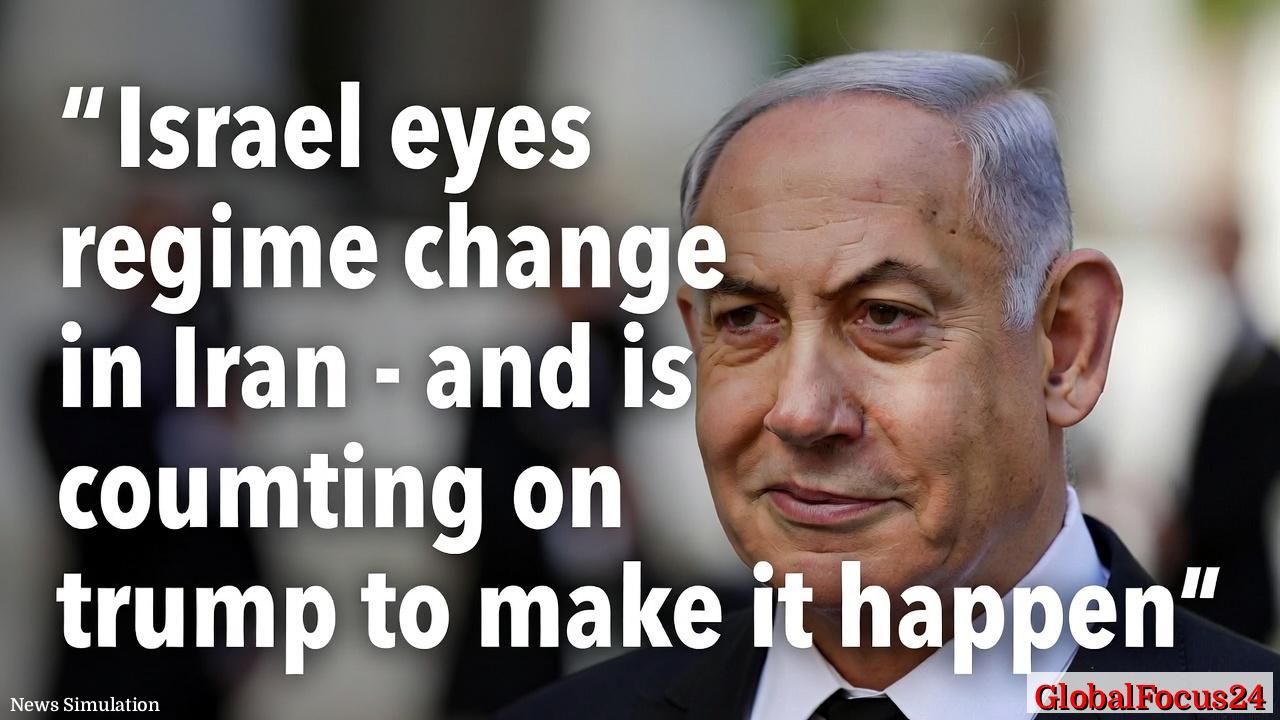
Israel’s High-Stakes Strategy in Iran: Regional Implications and Economic Ramifications
Israel’s evolving approach to Iran has long occupied a central position in the region’s security calculus, but recent developments underscore a renewed emphasis on regime-change dynamics and broader strategic objectives. While the subject remains highly sensitive and subject to rapid change, observers are paying close attention to how leadership calculations in Jerusalem interact with Washington’s posture, regional alliances, and global markets. This article examines the historical context, current strategic currents, potential economic impacts, and regional comparisons that help illuminate what could unfold in the coming years.
Historical Context: A Long Arc of Containment and Deterrence
Since the 1979 Iranian Revolution, Israel has treated Tehran’s ascent as a fundamental strategic threat, particularly given Iran’s missile program, regional proxies, and focus on foreign influence across the Middle East. The relationship between Israel and Iran has repeatedly oscillated between covert rivalry and overt tension, from covert actions against Iranian nuclear activities to high-stakes diplomatic signaling. In the 1990s and 2000s, Israel’s security doctrine centered on preventing Tehran from achieving a nuclear breakout while leveraging international pressure, economic sanctions, and regional partnerships to discourage escalation.
The 2010s saw a shift toward a multi-faceted campaign against Iran’s nuclear and missile programs, with Israel advocating for robust pressure from global partners. Economic sanctions, cyber operations, and targeted strikes became components of a broader strategy to raise the cost for Iran to advance its capabilities. In parallel, regional dynamics evolved as Arab states, once wary of Iran’s reach, began aligning more closely with Israel and the United States in response to shared security concerns. The emergence of formal and informal security arrangements signaled a broader regional framework in which Tehran’s influence could be challenged through coordinated action.
In this context, discussions about regime change—even though not the official objective of many policymakers—have periodically resurfaced as a lens through which to assess risk and strategy. Analysts emphasize that regime-change rhetoric can complicate diplomatic channels, provoke unpredictable actor responses, and affect alliance cohesion. Historical patterns show that external efforts toward regime change often produce unintended consequences, underscoring the importance of careful calibration and realistic goals.
Current Strategic Dynamics: A Renewed Focus on Deterrence and Pressure
In the current moment, Israel’s leadership faces a confluence of factors shaping national security calculations. These include Iran’s continuing advances in nuclear enrichment capabilities, its regional footprint through allied militias and allied groups, and the broader strategic environment in which the United States weighs its own commitments and options. While no single country operates in isolation, Israel’s leadership appears to be weighing a combination of intensified deterrence, diplomatic mobilization, and a willingness to press for stronger pressure mechanisms on Tehran.
Analysts point to several interlocking strands of this approach:
- Enhanced deterrence posture: Israel seeks to deter Iran from any rapid escalation by signaling readiness for decisive action if retaliatory measures threaten core security interests. This deterrence is reinforced by intelligence sharing with Western partners, advanced missile defense schematics, and the readiness of special operations and airpower to respond to perceived threats.
- Pressure through allied coordination: A linchpin of the strategy is maintaining a coalition that supports pressure on Iran’s economy, its nuclear program, and its external networks. Sanctions enforcement, coordinated penalties on Iran’s financial sector, and synchronized export controls are elements of a broader effort designed to raise Tehran’s costs for bad behavior and reduce its strategic room to maneuver.
- Proxy and covert activity: While public statements emphasize restraint, intelligence assessments often acknowledge the persistent role of covert actions aimed at delaying or complicating Iran’s nuclear or strategic capabilities. The objective, as framed by several regional and Western observers, is to keep Iran from achieving a rapid threshold while preserving avenues for diplomacy and de-escalation when possible.
- Regional security architecture: The integration of security arrangements among Israel, Gulf states, and other partners creates a common framework for responding to Iranian activity. This architecture emphasizes information sharing, joint training, and coordinated responses to emergent threats—an approach that may influence both deterrence and crisis management in the region.
Economic and Market Implications: Costs, Opportunities, and Global Ripples
Geopolitical risk has a way of weaving into economies, affecting energy markets, investment flows, and consumer prices. The Iran dynamic, given its potential to influence regional stability and energy supply, can create spillover effects that extend well beyond the Middle East.
- Energy markets and energy security: The Middle East remains a critical hub for global energy flows. Instability or heightened risk in the region can lead to volatility in crude oil and natural gas prices, particularly if sanctions or military actions disrupt supply routes. Markets monitor risk premia, hedging costs, and potential disruptions to shipping lanes as early indicators of broader economic impact.
- Global investment sentiment: Uncertainty around geopolitical hotspots can temper investment in affected regions. Even when direct exposure is limited, risk aversion can influence capital allocation, project timelines, and financing costs for energy, infrastructure, and technology ventures. A cohesive and predictable policy environment tends to support more stable investment climates.
- Defense industry dynamics: Increased attention to deterrence and potential conflict scenarios can influence defense spending and procurement patterns. High-tech systems—detection, precision strike capabilities, and cyber resilience—may see heightened demand, particularly among allied nations seeking to bolster regional deterrence.
- Regional economic integration: The Gulf cooperation and other regional developments aimed at diversifying economies and reducing reliance on fossil fuels can interact with security dynamics. If security relationships deepen, they may accelerate cross-border investment in technology, logistics, and energy transition projects, while political tensions could complicate such collaborations.
- Sanctions and financial system risk: Iran-specific sanctions have long implications for banks, multinational corporations, and international trade. The global financial ecosystem remains vigilant about sanctions compliance, anti-money-laundering measures, and the broader reputational costs of doing business in high-risk environments. Compliance costs and regulatory scrutiny are likely to shape corporate risk calculations.
Regional Comparisons: Lessons from Neighboring Geopolitics
To understand how Israel’s Iran strategy might play out, it helps to compare with adjacent regional dynamics and historical case studies.
- Comparative security deterrence: In neighboring regions, states have used a mix of deterrence, sub-threshold engagement, and strategic ambiguity to navigate dangerous theaters. Some cases show that credible threats paired with well-defined red lines can deter escalation, while others reveal the downside of misperception and accidental conflict. The balance of aggression, restraint, and diplomacy often hinges on the credibility of signaling and the reliability of bilateral and multilateral channels.
- Economic resilience amid conflict: Regions facing persistent tensions frequently adapt by building resilient supply chains, diversifying energy sources, and investing in domestic productivity. The cases where economies rebounded quickly after shocks illustrate the importance of stable policy environments, diversified energy portfolios, and robust financial systems to weather episodic disruption.
- Diplomatic channels and crisis management: In situations with potential for rapid escalation, the presence of established crisis communication mechanisms can help avert misinterpretations and reduce the risk of premature or disproportionate responses. Real-time intelligence sharing, hotlines, and agreed de-escalation protocols are widely viewed as essential tools for crisis management.
Geopolitical Insights: Strategic, Not Spectacular
Observers emphasize that a strategic approach to Iran—one that emphasizes long-term containment, consistent messaging, and resilient regional partnerships—offers a more reliable path than episodic, high-stakes actions. The aim is not to spark a regional conflagration but to sustain a stable deterrence that discourages rapid escalation while maintaining the option of calibrated responses to clear red lines. This approach requires disciplined diplomacy, transparent coordination with allies, and careful risk management to prevent unintended consequences.
Public Reaction and Societal Implications
In regions watching this trajectory, public sentiment often reflects a mix of concern, cautious optimism, and fatigue over prolonged security tensions. Communities near strategic flashpoints may experience elevated anxiety, especially if warnings about potential incidents enter daily discourse. At the same time, segments of the public may view robust security measures as necessary to safeguard prosperity and prevent destabilization. Media coverage, public briefings, and civil society engagement all shape how societies interpret and respond to evolving security scenarios.
Operational Realities: What a High-Stakes Strategy Entails
Turning strategic concepts into action involves a complex array of operational decisions, military planning considerations, and logistical challenges. Decision-makers must balance competing imperatives, including the risk of escalation, the potential for miscalculation, and the consequences for civilian populations. The orchestration of intelligence, surveillance, and reconnaissance capabilities, along with precision-strike options and risk-limiting measures, requires rigorous oversight and interagency coordination. Crisis planning and scenario exercises help ensure readiness without crossing into reckless or disproportionate responses.
Regional Economic Landscape: Comparative Metrics
From a regional economic standpoint, several benchmarks provide context for assessing the potential impact of shifts in Iran-related security policy:
- Energy dependence and diversification: Regions with diverse energy portfolios and resilient, interconnected grids tend to be more insulated from single-point shocks. Investments in renewables, storage, and cross-border energy trade can dampen volatility stemming from geopolitical risk.
- Trade openness and sanctions tolerance: Economies with robust legal frameworks and transparent sanction-compliance regimes can maintain functional financial and trade systems even amid heightened tensions. Jurisdictional clarity and predictable administrative processes support smoother cross-border activity.
- Innovation ecosystems and defense tech: Areas investing in defense technologies and dual-use innovations may experience growth driven by demand for advanced capabilities. Public-private collaboration and export controls shape the pace and direction of such advancements.
What to Watch Next: Signals That Could Shape the Near Term
Several indicators will be important barometers of how this strategic situation evolves:
- Diplomatic signaling from major powers: Statements from the United States, allied governments, and regional partners will influence expectations about possible diplomatic openings, sanctions adjustments, or military contingencies.
- Intelligence assessments and public briefings: Updates on Iran’s enrichment capabilities, breakout timelines, and external networks will inform policy decisions and risk assessments.
- Economic policy shifts: Changes in sanctions regimes, financial sector enforcement, and energy market responses will reveal how markets price the risk associated with the Iran dynamic.
- Regional security engagements: The pace and depth of regional security cooperation—joint exercises, intelligence sharing, and defense procurement—will signal the sustainability of deterrence and crisis management tools.
- Public sentiment and civil society input: Public reactions, protest movements, and civil society advocacy can influence policymakers’ choices by highlighting humanitarian considerations and the societal costs of escalation.
Conclusion: Navigating a Complex and Volatile Landscape
The Iran challenge remains one of the most intricate and consequential security issues in the Middle East. While discussions about regime-change topics populate some analyses, the broader, more enduring objective for many regional and international actors is to deter destabilizing activity, constrain proliferative efforts, and maintain strategic stability. The path forward requires disciplined diplomacy, resilient economic frameworks, and careful management of escalation risks. The regional economy, as well as global markets, will respond to how effectively leaders align deterrence with diplomacy, ensuring that measures taken today do not undermine long-term peace and prosperity in a volatile, interconnected world.
Follow-up reflection: If you’d like, I can tailor the piece to emphasize a specific aspect—such as the timeline of nuclear policy, energy security implications for a particular country, or a deeper comparison with a neighboring region. Would you prefer a tighter focus on economic impacts, or a broader historical overview with more regional case studies?