Births to Unauthorized Immigrant Mothers Reach Nearly 10 Percent of U.S. Total in 2023 as Supreme Court Weighs Citizenship Rules
Record Share of U.S. Births Linked to Unauthorized Immigration
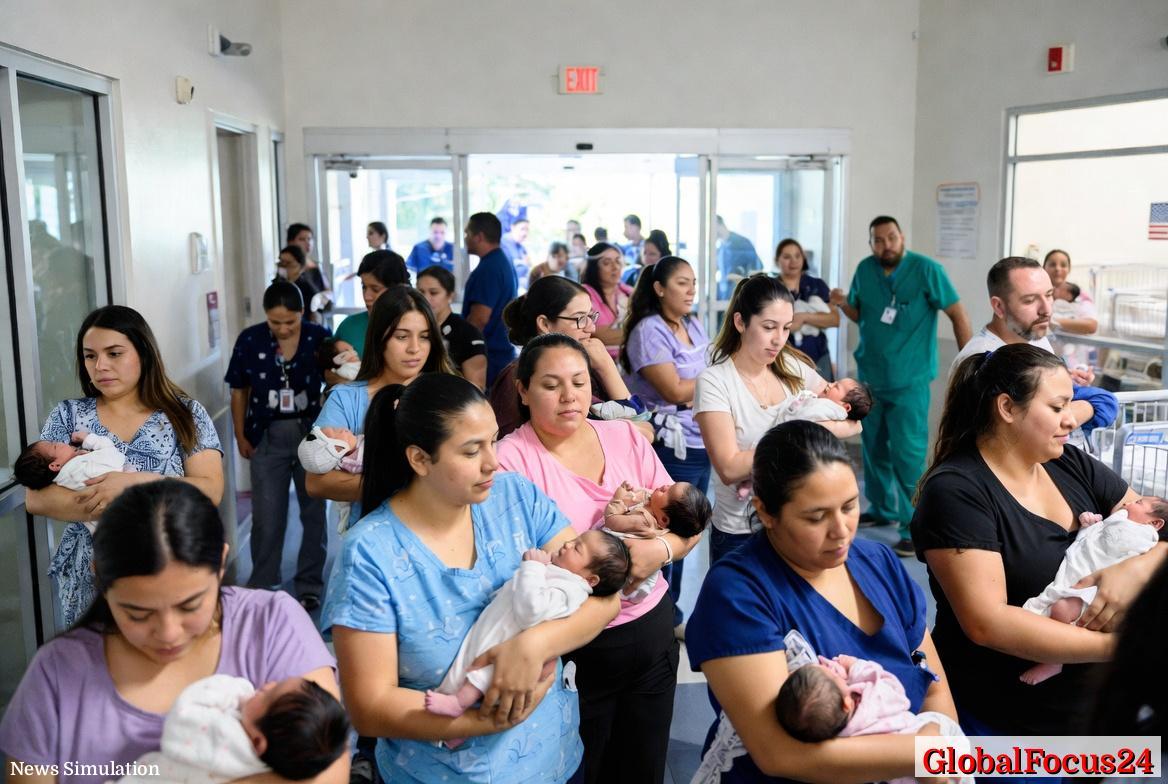
Nearly one in ten babies born in the United States in 2023 had mothers living in the country without legal status, according to newly compiled demographic data. The figures indicate that approximately 320,000 of the nation’s 3.6 million births were to these mothers, marking the highest total recorded in more than a decade.
The data reflects a steady upward trend. After declining through much of the early 2010s, births associated with unauthorized immigrants have increased for three consecutive years, returning to levels not seen since 2010, when 325,000 such births were recorded.
Demographers note that these figures capture a complex intersection of migration patterns, economic conditions, and long-standing constitutional interpretations governing citizenship at birth.
Breakdown of Births by Parental Status
A closer look at the data reveals significant variation in household composition among these births:
- Approximately 245,000 babies were born to two parents who both lacked legal immigration status.
- Around 60,000 births involved mothers without legal status and fathers who were U.S. citizens or lawful permanent residents.
- An estimated 15,000 births were to mothers with temporary legal status and fathers who were neither citizens nor permanent residents.
These distinctions highlight the diverse family structures within immigrant communities, as well as the differing legal implications for children born into each category.
Historical Context of Birthright Citizenship
The issue of citizenship for children born on U.S. soil traces back to the 14th Amendment, ratified in 1868 following the Civil War. The amendment established that “all persons born or naturalized in the United States” are citizens, a principle known as birthright citizenship.
For more than a century, this provision has been interpreted broadly to include nearly all individuals born within U.S. territory, regardless of their parents’ immigration status. Legal precedent, including the 1898 Supreme Court case United States v. Wong Kim Ark, reinforced this interpretation.
Over time, the policy has played a central role in shaping the country’s demographic landscape, contributing to population growth and the integration of immigrant communities.
Rising Numbers Reflect Shifting Migration Trends
The recent increase in births to unauthorized immigrant mothers coincides with evolving migration patterns across the Western Hemisphere. After a period of reduced migration in the mid-2010s, border encounters and asylum claims began rising again in the early 2020s.
Several factors have contributed to this shift:
- Economic instability and limited job opportunities in parts of Latin America.
- Political unrest and security concerns in certain regions.
- The lingering effects of the COVID-19 pandemic on global mobility and labor markets.
As migration flows have rebounded, so too has the number of families settling—temporarily or permanently—within the United States, contributing to higher birth rates among noncitizen populations.
Economic Impact and Labor Force Implications
Births to immigrant families, including those without legal status, carry long-term economic implications. Children born in the United States have historically played a key role in sustaining population growth and supporting the labor force as native birth rates decline.
Economists point out that:
- The U.S. fertility rate has fallen below replacement level, increasing reliance on younger populations to maintain workforce stability.
- Immigrant families tend to have slightly higher birth rates, helping offset demographic aging.
- Over time, children born in the U.S. contribute to tax revenues, consumer demand, and workforce participation.
At the same time, short-term fiscal impacts can vary by region, particularly in areas with higher concentrations of immigrant populations, where demand for healthcare, education, and social services may increase.
Regional Comparisons Across the United States
The distribution of births to unauthorized immigrant mothers is not uniform nationwide. States with larger immigrant populations—such as California, Texas, Florida, and New York—account for a significant share of these births.
In California, for example, longstanding immigrant communities and established labor markets have historically attracted both documented and undocumented migrants. Texas, with its proximity to the southern border, has also seen sustained levels of such births.
By contrast, some Midwestern and Southeastern states have experienced more recent increases, reflecting shifting migration patterns and new economic opportunities in industries such as agriculture, construction, and manufacturing.
These regional differences influence how local governments and institutions respond, particularly in areas such as healthcare access and public education.
Legal Debate Reaches the Supreme Court
The issue has gained renewed attention as the Supreme Court considers a case challenging an executive order that seeks to limit the scope of birthright citizenship.
Oral arguments began on April 1 in the case, which centers on whether children born in the United States to parents without legal status should automatically receive citizenship under the 14th Amendment.
If upheld, the policy could significantly alter longstanding legal interpretations and affect future birth statistics. Legal experts note that the case raises complex constitutional questions, including how to interpret the phrase “subject to the jurisdiction” of the United States.
The outcome could have far-reaching implications not only for immigration policy but also for administrative systems governing citizenship documentation and eligibility.
Public Reaction and Policy Implications
Public response to the data and the ongoing legal case has been varied, reflecting broader national discussions about immigration and demographic change.
Some analysts emphasize the role of immigrant families in sustaining economic growth and cultural diversity, while others focus on the legal and administrative challenges associated with current policies.
Healthcare providers and educators in high-impact regions have also noted the practical realities of serving diverse populations, regardless of immigration status, particularly in maternal care and early childhood education.
International Comparisons
The United States is among a relatively small group of countries that grant automatic citizenship based on birthplace alone, a principle known as jus soli.
Other nations, including Canada and several countries in the Americas, maintain similar policies, though some have introduced restrictions in recent years. In contrast, many European and Asian countries primarily follow jus sanguinis, or citizenship based on parentage.
These differing approaches reflect varying historical, legal, and demographic contexts, and they shape how countries manage immigration and population growth.
Looking Ahead
As the Supreme Court deliberates, the latest data underscores the scale and complexity of births tied to unauthorized immigration in the United States.
The intersection of legal frameworks, demographic trends, and economic factors ensures that the issue will remain a focal point in national discussions. The court’s eventual ruling is expected to provide clarity on a constitutional question that has shaped American identity for more than a century, while potentially redefining how citizenship is conferred for future generations.