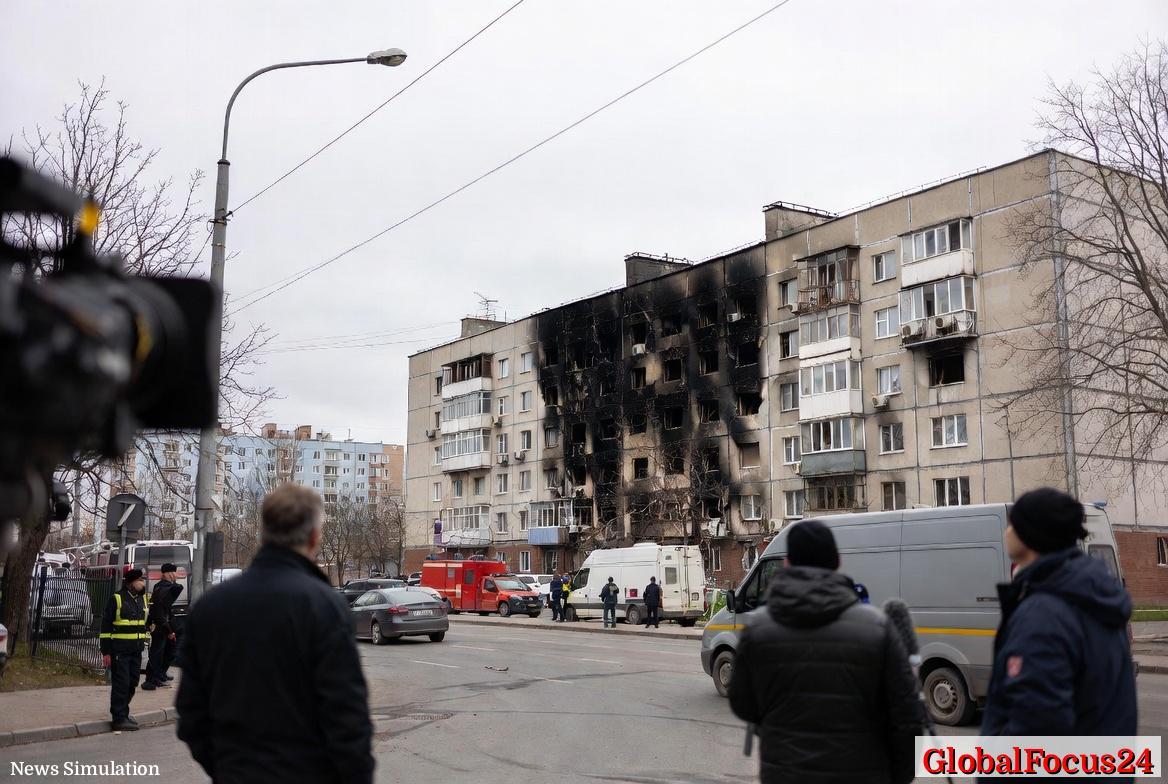
New York City Declines Federal Detainer Request in Deadly Queens Arson Case
Deadly Queens Fire Leaves Community in Shock
A devastating apartment fire in Queens has intensified scrutiny of public safety policies and interagency coordination after city officials declined a federal request to detain a suspect accused of one of the borough’s deadliest recent arson attacks. The March 16 blaze in a three-story residential building on Avery Avenue in Flushing killed four people, including a three-year-old child, and left seven others injured, according to prosecutors.
Authorities have charged Roman Amatitla, 38, of Maspeth, with eight counts of second-degree murder and first-degree arson. Prosecutors allege the attack was deliberate and random, describing a sequence of actions that culminated in a fire set in a shared stairwell area. Witnesses and emergency responders described a chaotic scene as flames and thick smoke spread rapidly through the building, forcing residents to flee or attempt escape through windows.
The Queens District Attorney’s office characterized the act as intentional and lethal, citing evidence that the suspect remained nearby as the fire escalated, observing the unfolding tragedy.
Allegations Detail Timeline of Events
According to investigators, Amatitla entered and exited the building multiple times in the hours leading up to the fire. Authorities say his behavior appeared erratic, including reportedly loitering in common areas and outside apartments. Surveillance footage and witness accounts form a key part of the prosecution’s case.
Prosecutors allege that after leaving the building, Amatitla went to a nearby gas station, where he purchased one alcoholic beverage, took another without payment, and obtained matches after refusing to buy a lighter. He then returned to the building, ignited a piece of paper, and placed it among combustible materials near the stairwell—an area critical for evacuation.
Fire officials have long warned that stairwells in older residential structures can act as vertical channels for flames and smoke, accelerating the spread and reducing escape time. In this case, early reports indicate the fire quickly engulfed shared access points, complicating rescue efforts.
Federal Detainer Request and City Response
Following Amatitla’s arrest, U.S. Immigration and Customs Enforcement issued a detainer request to the New York City Department of Correction, asking that he be held for potential transfer into federal custody. City officials declined the request, citing established municipal policies governing cooperation with federal immigration authorities.
The Department of Homeland Security confirmed that Amatitla is believed to be in the United States without legal status, though details regarding his entry remain unclear. Federal officials expressed concern that failure to honor detainer requests could limit their ability to take custody of individuals facing serious criminal charges.
City agencies, however, have maintained that their policies are designed to ensure compliance with local laws and court rulings while prioritizing due process within the criminal justice system. The suspect remains in custody under state charges as the case proceeds through the courts.
Sanctuary Policies and Legal Framework
New York City’s approach to detainer requests stems from a broader set of policies commonly referred to as sanctuary laws. These policies generally limit local law enforcement cooperation with federal immigration enforcement unless specific legal criteria are met, such as judicial warrants.
The legal framework behind such policies has evolved over decades, shaped by court decisions and legislative actions. Courts have ruled in various jurisdictions that holding individuals solely on administrative immigration detainers—without a warrant—can raise constitutional concerns, particularly under the Fourth Amendment.
As a result, many cities, including New York, have established protocols requiring additional legal justification before honoring detainer requests. Supporters argue these policies help maintain trust between immigrant communities and local law enforcement, while critics contend they may complicate coordination in cases involving serious crimes.
Historical Context of Urban Fire Incidents
The Queens fire adds to a long history of deadly residential fires in New York City, where densely populated neighborhoods and aging building infrastructure can increase risk. From the Bronx apartment fire in 2022 that killed 17 people to earlier tragedies such as the Happy Land social club fire in 1990, fatal fires have periodically prompted changes in building codes, fire safety regulations, and public awareness campaigns.
In many cases, investigations have highlighted the role of factors such as inadequate fireproofing, blocked exits, or malfunctioning alarms. The Flushing incident is expected to undergo a detailed forensic analysis to determine how quickly the fire spread and whether safety systems functioned as intended.
Fire safety experts note that stairwell fires are particularly dangerous because they can compromise the primary evacuation route. In older buildings without modern fire suppression systems, even a small ignition source can escalate rapidly under the right conditions.
Economic Impact on the Community
Beyond the tragic loss of life, the fire has had a measurable economic impact on residents and the surrounding neighborhood. Displaced families face immediate housing challenges in one of the nation’s most expensive rental markets, where vacancy rates remain low and costs continue to rise.
Local businesses near the site reported temporary disruptions due to emergency response operations and ongoing investigations. In neighborhoods like Flushing, where small businesses form the backbone of the local economy, even short-term closures can have lasting financial consequences.
Insurance claims, building repairs, and potential legal proceedings are also expected to generate significant costs. Property owners may face scrutiny regarding compliance with fire safety regulations, while tenants may seek compensation for lost belongings and relocation expenses.
Urban economists point out that such incidents can ripple outward, affecting property values, insurance premiums, and municipal resource allocation. Emergency response costs, including fire department deployment and medical services, add another layer of financial impact borne by public agencies.
Regional Comparisons and Policy Differences
New York City is not alone in navigating the complexities of detainer requests and local enforcement policies. Across the United States, jurisdictions vary widely in how they respond to federal immigration authorities.
- Cities such as Los Angeles and Chicago have policies similar to New York’s, generally limiting compliance with detainer requests without judicial warrants.
- Other jurisdictions, including some counties in Texas and Florida, mandate cooperation with federal immigration enforcement under state laws.
- Regional differences often reflect legal interpretations, court rulings, and legislative priorities rather than a single national standard.
These variations can lead to differing outcomes in similar cases, depending on where an arrest occurs. Law enforcement experts note that coordination between local and federal agencies remains a complex issue shaped by overlapping authorities and evolving legal standards.
Public Reaction and Community Response
In the aftermath of the Queens fire, community members gathered for vigils to honor the victims, including the young child whose death has drawn particular attention. Local leaders and advocacy groups have called for increased fire safety education and support for affected families.
Residents in the area expressed a mix of grief and concern about building safety and emergency preparedness. Some called for more frequent inspections of older residential structures, while others emphasized the need for accessible fire safety resources in multiple languages to serve diverse communities.
Emergency response teams have also faced scrutiny, though initial reports indicate that firefighters responded quickly and worked under challenging conditions to rescue residents and contain the blaze.
Ongoing Investigation and Legal Proceedings
The criminal case against Amatitla is expected to proceed through the New York court system, where prosecutors will present evidence supporting the charges of second-degree murder and first-degree arson. If convicted, the charges carry the potential for severe penalties, including lengthy prison sentences.
Legal experts note that arson cases involving fatalities are among the most complex to prosecute, often requiring detailed forensic analysis, expert testimony, and reconstruction of events leading up to the fire.
Meanwhile, federal authorities continue to monitor the case, though the immediate focus remains on the state-level prosecution. The interplay between local and federal jurisdictions is likely to remain part of the broader discussion as the case unfolds.
Broader Implications for Urban Safety
The tragedy in Flushing underscores the persistent risks associated with urban residential fires and the importance of coordinated emergency response systems. It also highlights ongoing challenges in aligning local policies with federal enforcement priorities, particularly in cases involving serious criminal allegations.
As investigations continue, officials and community leaders alike are expected to examine both the immediate causes of the fire and the broader systems that shape public safety outcomes in one of the nation’s largest cities.