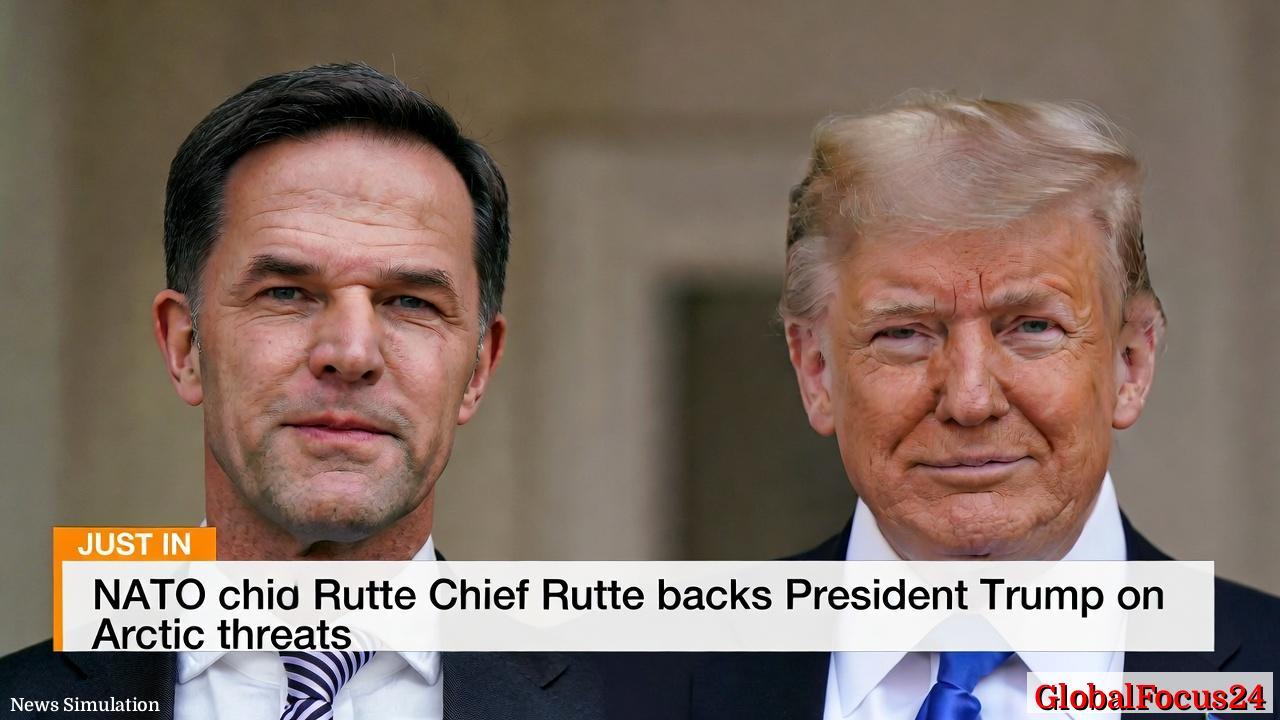
NATO Chief Warns of Arctic Escalation as China and Russia Expand Arctic Footprint
The Arctic landscape is shifting from a cold frontier of science and shipping to a theater of strategic competition, as rising activities by China and Russia prompt alarms among allied capitals and regional communities. In a climate of accelerating geostrategic recalibration, NATO members and Arctic stakeholders are weighing economic implications, historical context, and regional resilience while avoiding partisan commentary and focusing on verifiable developments.
Historical backdrop and evolving stakes
- The Arctic has long been a region of scientific collaboration, indigenous sovereignty, and resource potential. In the 20th century, Cold War dynamics framed the neighborhood as a frontier of strategic balance, with coastal states establishing governance over fisheries, navigation, and later, oil and gas exploration. The post-Cold War era broadened cooperation through Arctic councils and joint research initiatives, yet competing interests persisted over sovereignty, security guarantees, and environmental stewardship.
- In recent years, the pace of Arctic change has intensified. Melting sea ice, longer shipping seasons, and expanding search-and-rescue obligations have pushed Arctic governance toward more robust infrastructure, surveillance, and incident-response planning. The emergence of non-Arctic actors engaging in Arctic logistics, science, and military posturing has added layers of complexity to a region once dominated by a handful of regional states.
Geopolitical dynamics and regional implications
- China’s interest in the Arctic, framed by its “Polar Silk Road” policy, underscores a broader strategy to secure new maritime routes and diversify supply chains. This involves investments in ice-capable vessels, port facilities, and scientific partnerships that extend influence beyond traditional allies. Russia’s Arctic portfolio remains central to its national strategy, leveraging vast frozen frontiers for energy development, military modernization, and periodic demonstrations of endurance in extreme environments.
- For Arctic states, the convergence of commercial opportunity and security concerns necessitates coordinated approaches to domain awareness, environmental resilience, and emergency response. NATO member nations with Arctic coastlines emphasize integrated defense planning, alliance interoperability, and joint exercises designed to deter coercive behavior while preserving freedom of navigation and lawful resource development.
- Regional economies face both opportunities and risks. Resource development, port expansions, and increased vessel traffic can drive employment, technology transfer, and local revenue. Simultaneously, heightened militarization, environmental sensitivities, and supply-chain disruptions can affect fisheries, tourism, and Indigenous livelihoods, highlighting the need for balanced, transparent governance.
Economic impact and infrastructure momentum
- Arctic infrastructure investments are expanding, including port upgrades, LNG terminals, and cold-weather supply chains that support mining, oil, and offshore activities. The economic footprint extends beyond extractive sectors to shipbuilding, scientific instrumentation, and Arctic-service industries such as search-and-rescue and weather monitoring. These developments can bolster regional employment but require careful assessment of environmental risks and community consent.
- Shipping dynamics in the Arctic are evolving as climate realities shorten transit times between major markets. While opening faster routes can reduce fuel usage for some itineraries, the broader economic calculus must consider ice navigation costs, insurance considerations, and the regulatory framework governing Arctic waterways. The result is a diversified set of fiscal impacts for Arctic communities and port hubs, with potential long-term benefits if managed through sustainable planning.
- Investment patterns reflect a mix of state-backed capital and private-sector engagement. Governments often pair infrastructure funding with regulatory reforms, environmental safeguards, and local workforce development programs. For Arctic economies, success hinges on transparent permitting processes, competitive tendering, and robust partnerships with Indigenous groups to ensure equitable benefit-sharing.
Regional comparisons and policy considerations
- Compare Arctic governance models: Nordic countries have emphasized comprehensive social-market economies, high governance standards, and community-based resource management in the Arctic. This contrasts with scenarios in which external actors focus primarily on strategic advantage, underscoring the value of multi-stakeholder diplomacy and adherence to international law.
- Economic resilience and diversification: Regions dependent on natural resources often pursue diversification to mitigate price volatility. Arctic communities that couple energy or minerals development with tourism, fisheries, and digital services tend to exhibit more resilient economic profiles. Public investment in education, healthcare, and infrastructure strengthens long-term adaptability in the face of climate and geopolitical shifts.
- Environmental stewardship as a policy core: The Arctic’s sensitivity to climate change makes environmental safeguards essential. Regions prioritizing clean energy, sustainable fisheries, and habitat protection can maintain ecological integrity while pursuing sustainable growth. International cooperation on pollution control, wildlife management, and Arctic monitoring remains a cornerstone of responsible development.
Public reaction and societal implications
- Communities across Arctic states are watching developments with a mix of concern and cautious optimism. Local populations frequently emphasize the importance of preserving cultural heritage and ensuring that development respects Indigenous rights and traditional livelihoods. Public discourse often centers on balancing security imperatives with environmental protection and economic opportunity.
- The broader public in neighboring regions may experience heightened awareness of Arctic dynamics as media coverage highlights strategic calculations and infrastructure investments. This awareness can influence citizen attitudes toward energy policy, climate action, and international cooperation.
Strategic outlook and precautionary measures
- Alliance cohesion and interoperability are likely to remain central themes for NATO and Arctic partners. Efforts to harmonize surveillance, intelligence sharing, and defense postures can enhance deterrence while enabling legitimate economic activity in the region.
- Risk mitigation focuses on supply chain resilience, environmental safeguards, and transparent governance. Measures include robust Arctic search-and-rescue collaborations, standardized environmental impact assessments, and clear lines of communication among Arctic stakeholders to prevent misperceptions and escalation.
- Long-term projections suggest that Arctic dynamics will continue to evolve as technology, climate policy, and international diplomacy intersect. Sustained investment in research, infrastructure, and inclusive governance will be essential to navigating these changes while maintaining stability in a rapidly changing region.
Conclusion: navigating the Arctic frontier with balance and prudence As China and Russia expand their Arctic footprint, regional actors must balance economic opportunity with security and environmental integrity. The Arctic’s unique synthesis of indigenous stewardship, international law, and growing global interest demands thoughtful collaboration, transparent decision-making, and sustained investment in resilient ecosystems and communities. In this evolving landscape, the path forward hinges on cooperation that honors local realities, adheres to lawful norms, and promotes sustainable growth that benefits all residents of the Arctic and its neighboring regions.