U.S. Rocket Scientist’s Mysterious Disappearance Casts New Light on Vanished Air Force General
A Scientist Vanishes in the Angeles National Forest
The disappearance of Monica Reza, a 60-year-old rocket scientist and advanced materials expert, is drawing renewed attention after a retired Air Force general connected to her work vanished under strikingly similar circumstances eight months later.
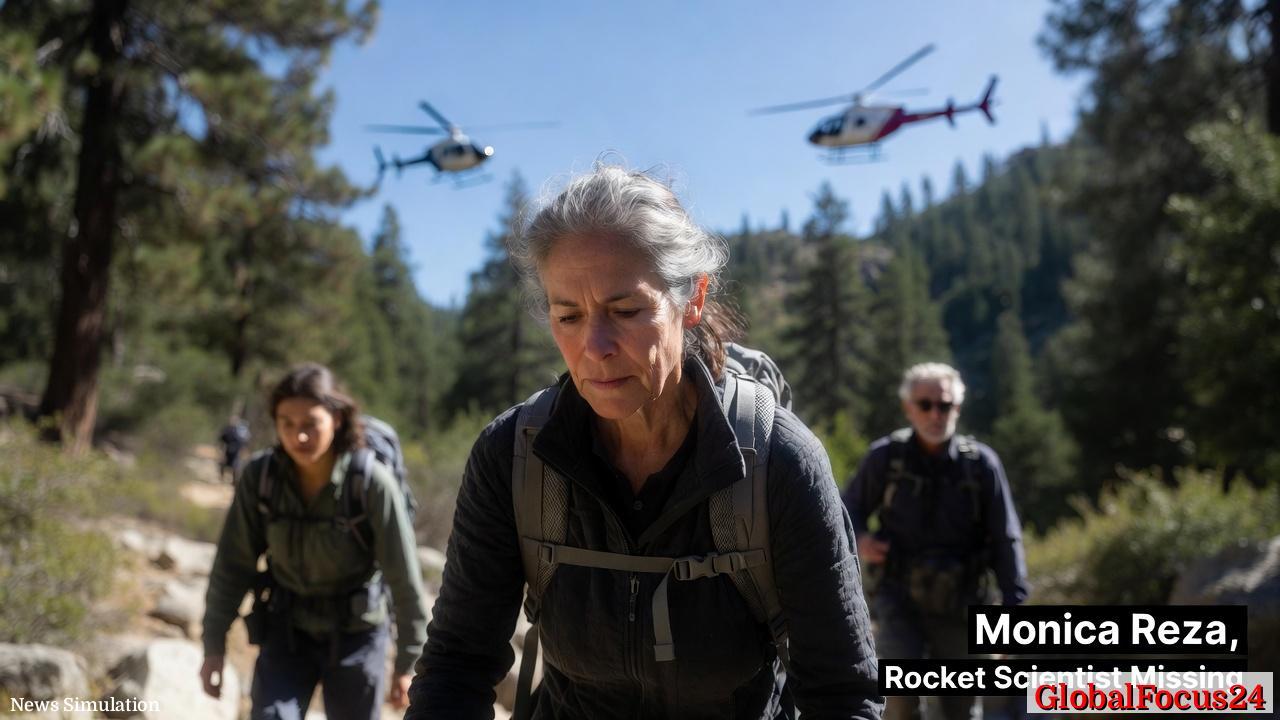
Reza, who worked under the professional name Monica Jacinto, went missing on June 22, 2025, while hiking the Mount Waterman Trail in the Angeles National Forest northeast of Los Angeles. Despite extensive ground and air searches, no trace of her has been found. She remains listed as a missing person with the Los Angeles County Sheriff’s Department.
Her case, already unusual due to its complete lack of physical evidence, has taken on new significance following the February 27, 2026, disappearance of retired Air Force Gen. William McCasland from his home in Albuquerque, New Mexico. Both figures played key roles in cutting-edge aerospace and propulsion research and shared a direct professional connection through funding for advanced rocket materials.
Authorities in both states have not announced any formal link between the two cases. Still, the overlapping timelines, similar outdoor settings, and shared research background are fueling public interest and concern within the aerospace community.
The Day on Mount Waterman
On a clear early-summer day in the San Gabriel Mountains, Reza set out with two experienced hiking companions along the Mount Waterman Trail, a popular route known for its pine forests, rocky ridges, and sweeping views toward the Mojave Desert. The area, roughly a 90-minute drive from central Los Angeles, attracts day hikers, climbers, and nature photographers, particularly on weekends.
According to accounts provided to investigators, the small group stayed on established trails and did not attempt any technical climbs. The companions reported that Reza was properly equipped for a day hike, including water and standard gear, and did not indicate any physical distress.
At some point along the trail, Reza became separated from the other hikers. The precise circumstances of that moment have not been publicly detailed, but within a short span of time, she could no longer be located. What began as a routine outing quickly turned into a search-and-rescue operation in a region that has seen its share of lost hikers, but few with such enduring mystery.
A Search With No Clues
The response was swift and substantial. Volunteers, search-and-rescue teams, and the Los Angeles County Sheriff’s Department coordinated an intensive effort in the steep, forested terrain. The operation included:
- Helicopter overflights scanning ridgelines, ravines, and clearings
- Ground teams combing trails, side canyons, and off-trail slopes
- Trained search dogs deployed to follow any scent traces
- Radar and aerial imaging tools to identify possible signs of movement or heat
Despite the scale and duration of the search, investigators reported no confirmed tracks, discarded gear, clothing, or other physical evidence. There were no reliable sightings from other hikers that could place Reza on a different trail or suggest she left the area by vehicle.
Search leaders eventually scaled back active operations but kept the case open. Reza’s status remains that of a missing person, with periodic reviews of the file as new tips or technological tools become available. For family members, colleagues, and friends within the aerospace community, the absence of answers has been particularly painful.
A Career at the Edge of Rocket Technology
Behind the case is the story of a scientist whose work helped enable the extreme performance demanded by modern rocket engines. Reza served as a materials scientist at Aerojet Rocketdyne, a major U.S. propulsion manufacturer whose engines power a range of launch vehicles and defense systems.
Her signature contribution was the development and patenting of Mondaloy, a nickel-based super-alloy engineered to withstand the intense heat, pressure, and thermal cycling inside high-performance rocket engines. Such alloys, designed for turbine blades, combustion chambers, and nozzles, must survive temperatures that approach or exceed the melting point of many conventional metals, while maintaining structural integrity during repeated launches.
Mondaloy, according to technical descriptions associated with her work, was tailored to:
- Operate in extreme thermal environments
- Resist creep, cracking, and deformation under sustained stress
- Extend engine component life and reduce maintenance demands
Projects like this are often key to improving engine reliability and enabling more ambitious missions, from national security payloads to deep-space exploration. As launch providers seek to reduce costs and increase cadence, durable materials play a crucial role in reusability and lifecycle economics.
The Air Force Connection: Funding and Oversight
Reza’s research did not take place in isolation. In the early 2000s, development work on Mondaloy received funding from the Air Force Research Laboratory (AFRL), the U.S. Air Force’s primary hub for space and aerospace innovation. At that time, Gen. William McCasland held dual roles within that institution:
- Materials wing director for the lab’s Space Vehicles Directorate
- Commander of the Phillips Research Site at Kirtland Air Force Base in New Mexico
In those positions, McCasland oversaw programs that supported advanced aerospace materials, reusable space vehicles, and emerging propulsion concepts. Funding decisions made under his authority helped shape which technologies progressed from laboratory research into prototypes and eventually into operational use.
The professional connection between Reza and McCasland therefore stems from overlapping involvement in the same research pipeline: she as a developer and patent-holder at a leading propulsion company, he as a senior Air Force officer directing investment in enabling technologies. While such relationships are common in defense and aerospace contracting, the later disappearances of both individuals under unusual circumstances has drawn renewed scrutiny from observers.
A Second Disappearance: Gen. McCasland Leaves Home and Vanishes
On February 27, 2026, McCasland, 68, left his home in Albuquerque carrying only a backpack and a .38 caliber revolver. According to initial reports, he did not take his wallet or cell phone, leaving behind items that most people consider essential for travel or extended outings.
An experienced hiker familiar with New Mexico’s high desert and mountain landscapes, McCasland had been known to spend time on trails and in remote outdoor areas. After he failed to return and could not be reached, local authorities launched a search effort that included:
- Ground teams focusing on common hiking areas he was known to visit
- Aerial assets, including thermal drones, scanning for heat signatures
- Coordination with nearby agencies in case he had traveled beyond Bernalillo County
As with Reza’s case, the searches have not produced a confirmed sighting or physical clue, at least in information released to the public. The missing revolver has added a layer of concern but has not clarified his intended destination or state of mind. He is currently listed as missing, with investigators appealing for tips and information.
Parallel Cases, Open Questions
The similarities between the two disappearances have not gone unnoticed:
- Both individuals were closely associated with advanced aerospace and propulsion research
- Both were experienced in outdoor environments, including hiking
- Both cases involve departures with limited belongings
- Both search operations used advanced tools, including aerial and thermal imaging, without locating them
At the same time, the cases differ in location, circumstances, and precise timelines. Reza went missing in a heavily visited mountain forest in California, accompanied by other hikers. McCasland left his suburban home in New Mexico alone, with a firearm and without common personal items.
Law enforcement in Los Angeles County and Albuquerque have not publicly announced any joint investigation or shared evidentiary link between the cases. Officials typically avoid speculation in such sensitive situations, emphasizing instead the need for verifiable leads.
Historical Context: Missing Persons in Remote Landscapes
Disappearance in wilderness settings has long been a feature of life in the American West, where vast public lands, changing weather conditions, and complex terrain can quickly turn routine trips into emergencies. The Angeles National Forest, which spans roughly 700,000 acres in the San Gabriel Mountains, has seen periodic high-profile search-and-rescue operations over the decades.
Several factors make investigations in such areas challenging:
- Rugged topography, including steep ravines, loose scree, and thick forest
- Sudden weather changes that reduce visibility and erase tracks
- Wildlife activity and natural erosion that can disturb or conceal evidence
- Large search areas relative to available personnel and daylight
Similarly, New Mexico’s mountains and high desert can be unforgiving, with sharp temperature swings and remote trails where hikers may go hours without encountering others. Over time, missing-person cases in these environments sometimes remain unresolved despite extensive effort.
What distinguishes the Reza and McCasland cases is the combination of their technical prominence and the complete absence of traceable clues. In most wilderness disappearances, investigators eventually recover gear, clothing, or remains. When searches conclude with no physical findings, questions about what happened linger more sharply.
Economic and Strategic Stakes of Advanced Aerospace Research
Beyond the human tragedy, the disappearances touch on a sector that carries significant economic weight and strategic importance for the United States. Advanced rocket engines, reusable launch systems, and high-performance materials form the backbone of national security space capabilities and commercial space ventures.
Materials such as Mondaloy help:
- Increase engine efficiency and reliability
- Enable higher operating temperatures for greater performance
- Support reusability by resisting fatigue and thermal damage
Improvements in these areas can reduce launch costs, expand payload capacity, and open new markets for satellite operators, scientific missions, and private spaceflight. The global space economy has grown into a multi-hundred-billion-dollar domain, with competition among nations and private firms driving constant innovation.
In that context, the careers of specialists like Reza and senior leaders like McCasland illustrate how individual expertise contributes to larger technical ecosystems. While there is no public evidence connecting their disappearances to their work, their roles underscore how intertwined personal stories can be with broader technological and economic currents.
Regional Patterns and Public Reaction
The Angeles National Forest has become a focal point of concern in Southern California, where residents closely follow search-and-rescue updates and news about missing hikers. Local observers have noted that increased recreational use of mountain areas, combined with drought cycles, wildfire scars, and shifting trail conditions, may be contributing to risk. The Reza case has intensified attention on safety, preparedness, and the complexity of locating individuals in the forest’s deep canyons.
In New Mexico, McCasland’s disappearance reverberates strongly given Albuquerque’s ties to Kirtland Air Force Base, Sandia National Laboratories, and a dense cluster of aerospace and defense contractors. The city’s identity is closely linked to advanced research and national security programs, and a missing senior officer with decades of service has prompted concern and speculation.
Online, discussion forums and social media platforms dedicated to hiking, missing persons, and aerospace technology have circulated timelines and maps for both cases. While law enforcement consistently warns against drawing unsupported conclusions, public efforts to crowdsource information have become a familiar feature of high-profile disappearances.
Ongoing Investigations and the Search for Answers
As of late March 2026, both investigations remain open. Authorities urge anyone with information about Reza’s last known movements in the Mount Waterman area, or McCasland’s activities and possible destinations before leaving his Albuquerque home, to contact local law enforcement.
In California, periodic patrols and recreational activity in the Angeles National Forest continue to generate occasional tips, though none have yet produced a breakthrough. In New Mexico, search planning adjusts as time passes, incorporating patterns from previous missing-person cases and available data on common hiking routes and remote access points.
For now, the twin disappearances stand as unresolved chapters in the intersecting worlds of wilderness recreation and high-stakes aerospace research. Families, colleagues, and communities in two states are left waiting for developments that may finally explain how a rocket scientist on a sunny mountain trail and a retired general stepping out his front door could both simply vanish, leaving only questions behind.