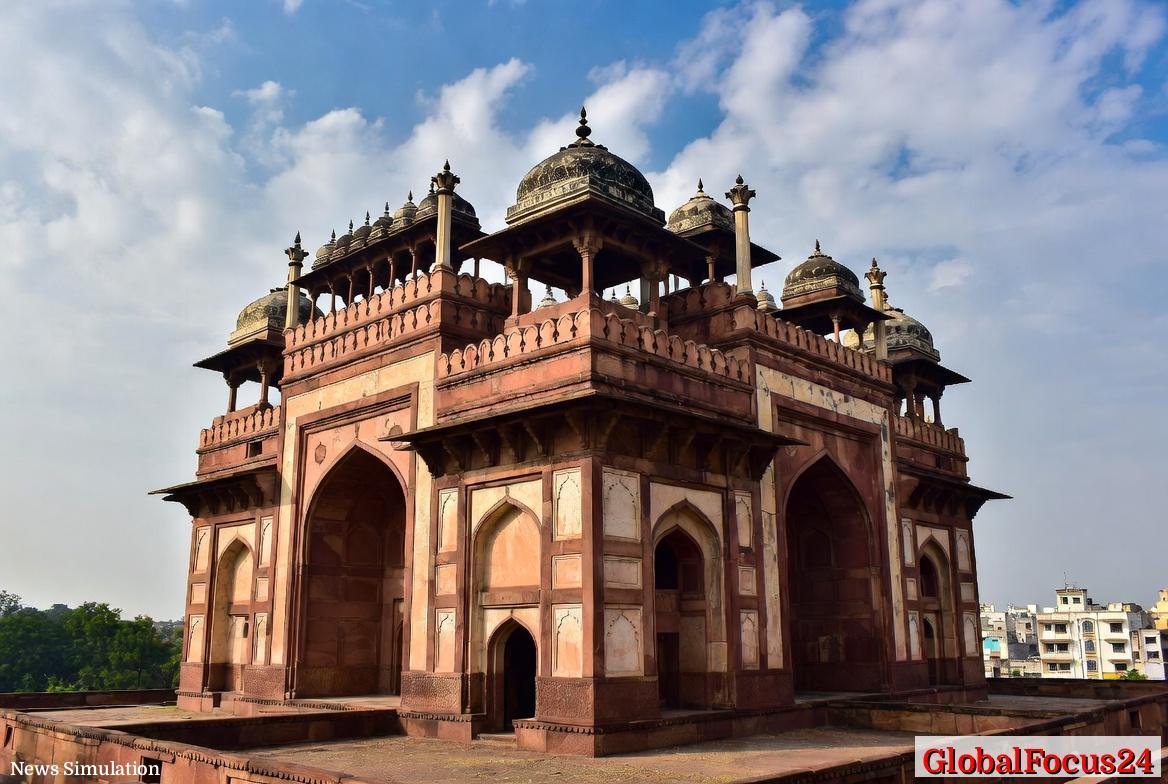
500 Years After Panipat: The Mughal Legacy and Its Enduring Impact on India
The Battle That Changed a Subcontinent
On April 21, 1526, a decisive clash on the plains of Panipat in northern India altered the trajectory of South Asian history. Babur, a Central Asian ruler with lineage tracing to both Genghis Khan and Tamerlane, defeated Ibrahim Lodi, the last sultan of the Delhi Sultanate. This victory marked the beginning of the Mughal Empire, a dynasty that would dominate much of the Indian subcontinent for more than three centuries and shape its cultural, economic, and political foundations in lasting ways.
The First Battle of Panipat was notable not only for its outcome but also for its tactics. Babur’s use of field artillery and mobile cavalry formations represented a shift in warfare on the subcontinent. These innovations allowed a smaller, disciplined force to overcome a numerically superior army, setting a precedent for future military engagements in the region.
The Rise of a Global Power
Following Babur’s victory, the Mughal Empire expanded steadily under successive rulers, including Akbar, Jahangir, Shah Jahan, and Aurangzeb. By the 17th century, it had become one of the world’s most powerful and prosperous states, encompassing vast territories that included much of present-day India, Pakistan, and Bangladesh.
At its peak, the Mughal economy was among the largest globally, accounting for a significant share of world GDP. Agricultural productivity formed the backbone of this wealth, supported by sophisticated irrigation systems and administrative reforms. The empire also thrived on trade, exporting textiles, spices, and precious goods to markets across Asia, Europe, and the Middle East.
Urban centers such as Delhi, Agra, and Lahore flourished as hubs of commerce and culture. The Mughal court attracted merchants, artisans, and scholars from across the world, contributing to a cosmopolitan environment that encouraged innovation and exchange.
Cultural Synthesis and Lasting Influence
One of the defining characteristics of the Mughal era was its cultural syncretism. While the empire’s founders were of Central Asian origin, they gradually adopted and integrated local traditions. This blending of influences produced a distinctive Indo-Islamic culture that continues to shape modern India.
Architecture stands as one of the most visible legacies of this period. Monuments such as the Taj Mahal, Red Fort, and Fatehpur Sikri reflect a fusion of Persian, Central Asian, and Indian design elements. These structures remain global symbols of artistic achievement and draw millions of visitors each year.
Language also evolved under Mughal influence. The development of Urdu, which combined elements of Persian, Arabic, and local dialects, illustrates the cultural intermingling that defined the era. Similarly, culinary traditions were enriched by the introduction of new ingredients and cooking techniques, giving rise to dishes that remain staples of Indian cuisine today.
Music and art flourished as well. The Mughal court patronized classical music traditions and miniature painting, fostering artistic expression that blended regional and foreign styles. This period saw the emergence of works that continue to be studied and celebrated for their aesthetic and historical value.
Governance and Administrative Innovation
The Mughal Empire introduced administrative systems that influenced governance in South Asia long after its decline. Under Emperor Akbar, a centralized bureaucracy was established, featuring standardized taxation and land revenue systems. The “mansabdari” system, which organized military and civil officials into a structured hierarchy, provided a model of governance that balanced authority with accountability.
These administrative practices contributed to relative stability and economic growth. They also facilitated integration across a vast and diverse territory, allowing the empire to function cohesively despite its scale.
Economic Impact and Global Trade Networks
The Mughal period coincided with the early stages of globalization, as European trading companies began to establish a presence in Asia. Indian textiles, particularly cotton and silk, became highly sought after in international markets. Ports such as Surat emerged as key nodes in global trade networks.
The wealth generated during this era attracted foreign interest, including that of the British East India Company. Over time, commercial engagement evolved into political influence, eventually leading to colonial rule. This transition underscores the economic significance of the Mughal Empire and its role in shaping global economic patterns.
Compared to contemporaneous empires such as the Ottoman and Safavid states, the Mughals maintained a similarly diverse and expansive economic base. However, internal challenges and external pressures would later weaken their position, making them more vulnerable to rising European powers.
Decline and Transition
By the early 18th century, the Mughal Empire began to fragment. Regional powers asserted independence, and internal conflicts strained the central administration. The reign of Aurangzeb, while marking territorial expansion, also exposed the limits of imperial control over a vast and diverse population.
As the empire weakened, European trading companies expanded their influence. The British East India Company gradually consolidated power, culminating in formal colonial rule following the Indian Rebellion of 1857. The last Mughal emperor, Bahadur Shah II, was deposed, bringing an end to the dynasty.
This transition marked a significant shift in India’s political and economic landscape. Colonial policies reshaped industries, trade patterns, and governance structures, leaving a legacy that would influence the country well into the modern era.
Historical Memory and Modern Narratives
The Mughal period remains a subject of active discussion in contemporary India. Historical interpretations vary, reflecting differing perspectives on the empire’s legacy. Some emphasize its contributions to culture, architecture, and economic development, while others focus on aspects of conquest and conflict.
Prime Minister Narendra Modi has, on multiple occasions, referred to a long history of foreign domination, including the period of Mughal rule, as shaping India’s national consciousness. This perspective resonates with broader discussions about identity, heritage, and historical memory.
At the same time, many historians highlight the integrative nature of the Mughal state, noting its role in fostering cultural exchange and administrative cohesion across diverse communities. This duality underscores the complexity of interpreting a past that continues to influence present-day discourse.
Regional Comparisons and Global Context
The Mughal Empire’s trajectory can be compared to other major empires of its time. Like the Ottoman Empire in the Middle East and the Safavid Empire in Persia, the Mughals combined military strength with cultural patronage. Each of these empires contributed to regional stability and economic growth while also navigating challenges of diversity and governance.
In contrast to European states, which were beginning to industrialize and expand overseas, the Mughal economy remained largely agrarian, though highly productive. This difference would later influence the balance of power, as industrialization provided European nations with technological and military advantages.
Within Asia, the Mughal Empire stood out for its scale and wealth. Its cities rivaled those of China in population and economic activity, and its cultural achievements had a lasting impact across the region.
Enduring Legacy
Five centuries after the Battle of Panipat, the legacy of the Mughal Empire remains deeply embedded in India’s landscape and identity. From architectural landmarks to linguistic and culinary traditions, the influence of this period is visible in everyday life.
The empire’s history also serves as a reminder of the interconnectedness of cultures and the ways in which societies evolve through exchange and adaptation. As India continues to navigate its place in the modern world, the echoes of its Mughal past remain a significant part of its story.