Misspelled Learning Center Tightens Scrutiny Over $4 Million in State Funding
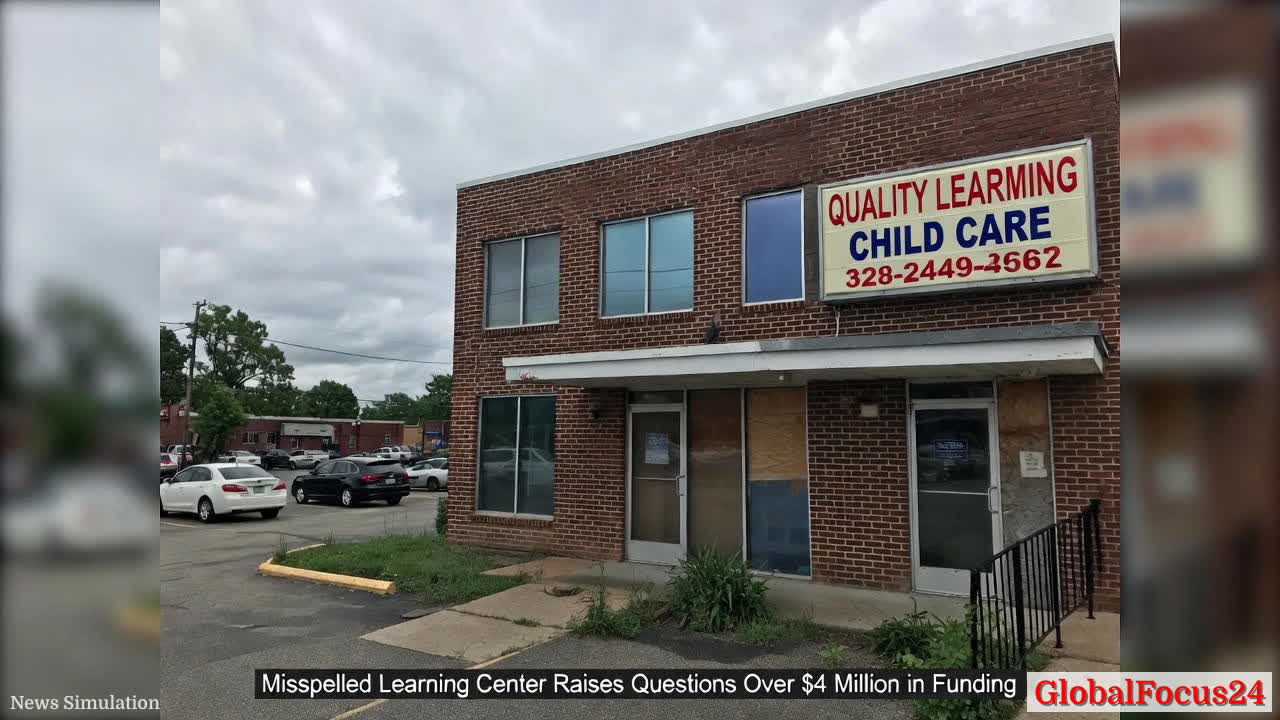
A recently spotlighted daycare facility, whose storefront sign bears a conspicuous misspelling, has become a flashpoint in a broader inquiry into how public funds are allocated for early-childhood programs. The center, branded as a childcare operation, displays a sign reading “Quality Learming Child Care” alongside a contact number. Local officials are demanding explanations about the large infusion of state money into a building that appears inactive, raising questions about the integrity of the funding process and the oversight mechanisms designed to prevent misallocation of taxpayer funds.
Background and immediate concerns
Public funding for early-childhood education and related childcare initiatives is typically justified by demonstrable needs: the availability of affordable care, workforce participation, and regional demand for quality early-learning services. In many jurisdictions, grants or subsidies are contingent on milestones such as licensure, progress toward development plans, occupancy, or evidence of actual operation. When a facility with little visible activity receives millions, observers understandably ask how decisions were made, who authorized disbursements, and what oversight exists to detect and prevent misallocation.
The case at hand centers on a building that, at first glance, presents a paradox: a substantial financial commitment to a site that appears idle. News and community sources have reported the presence of a misspelled sign and a lack of evident programming or enrollment activities. While official records and contracts would normally illuminate the reasoning behind funding awards, the public response emphasizes the urgency of transparency. Taxpayers and community members seek clear timelines, stated objectives, and measurable outcomes tied to the expenditure.
Economic implications for the regional market
Allocations of state funds to early-childhood ventures carry a ripple effect across local economies. Cash infusions can stimulate construction activity, spur payrolls for administrators and instructors, and potentially attract private investment as partners observe program viability. Conversely, if funds are perceived to be misdirected or mismanaged, the affected community risks donor fatigue and reduced confidence in future programs. In regions with a high reliance on public support for childcare, credibility is essential to sustaining enrollment, attracting employers seeking dependable labor pools, and encouraging entrepreneurship in related services, such as transportation and after-school programs.
Historical context and patterns in funding practice
Public investment in early-childhood education has expanded in many parts of the country over the past two decades, reflecting research on long-term social and economic benefits. Studies have linked access to quality early learning with improved educational attainment, better lifetime earnings, and reduced remedial program costs in later years. This body of evidence has helped justify broad programmatic expansions, even as oversight mechanisms have evolved to address concerns about cost efficiency, program fidelity, and accountability.
Past cases where funding exceeded immediate program milestones have, in some instances, prompted reforms. In response, agencies often implement enhanced due diligence, require phased disbursements tied to verifiable progress, and establish independent monitoring to verify construction, licensing, and operational milestones. These measures aim to balance the imperative to support early-childhood access with the need to steward public resources prudently.
Regional comparisons and benchmarks
A comparative look at similar regions reveals a spectrum of outcomes in early-childhood funding programs. Some jurisdictions report strong alignment between grant disbursements and measurable readiness indicators, such as licensed capacity, occupancy rates, and documented staffing levels. Others have faced heightened scrutiny after disproportionate funding followed by slow or incomplete project execution. In several cases, communities with robust transparency practices—clear contracting terms, public posting of milestones, and accessible audit reports—have maintained higher levels of public trust even amid challenging discoveries.
In the current scenario, observers are drawing comparisons to nearby districts with proactive disclosure policies. By examining timelines for licensing, facility readiness, and service initiation, analysts can better assess whether the process aligns with best practices for program integrity. These benchmarks help illuminate whether the misalignment observed here is an outlier or indicative of systemic gaps that need to be addressed.
Operational dynamics and stakeholder roles
A funding program of this scale typically involves a network of actors: state legislators or agencies that authorize the award, grant administrators who manage disbursements, contractors hired to construct or outfit facilities, licensing boards that confirm compliance with safety and care standards, and, crucially, the community members who rely on accessible services. Each party bears responsibility for ensuring funds are used as intended and that the program achieves its stated aims.
Public reaction has often centered on the tension between speed and thoroughness. In urgent situations where there is a recognized need for childcare capacity, expediency can seem paramount. Yet speed must not compromise accountability. Transparent processes—documented decision rationales, clear performance metrics, and timely progress reporting—help maintain legitimacy and public confidence.
Quality and branding considerations in early-childhood facilities
Beyond the financial and regulatory questions, the incident raises concerns about branding accuracy and quality control in early-childhood facilities. A misspelled sign may reflect broader issues in how a program communicates with families, investors, and regulators. While a single typographical error on a sign is unlikely to determine program viability, it can become a symbolic cue for observers who are evaluating the overall professionalism of a venture that handles sensitive work with young children.
Efforts to improve quality typically encompass standardized training for staff, consistent licensing and inspection routines, and careful marketing that accurately reflects services and qualifications. When public funds back facilities for early education and care, maintaining rigorous branding and messaging standards becomes part of safeguarding trust and ensuring that families feel confident in the care their children will receive.
The broader public safety and oversight framework
Public funding for childcare must dovetail with robust safety and quality oversight. Facilities are subject to health, safety, and staffing regulations, background checks, caregiver-to-child ratios, and ongoing inspections. Oversight also extends to financial controls: ensuring that expenditures align with budgets, preventing misappropriation, and requiring regular audits. A failure to meet these standards can trigger corrective actions, competitive procurements for future awards, or, in extreme cases, the withdrawal of funds.
The event qualifies as a test case for the resilience of the oversight framework governing early-childhood investments. If probes reveal gaps—whether in the application review process, contract management, or post-award monitoring—policymakers may respond with reforms designed to strengthen accountability without stifling program momentum. The balance between efficient service delivery and rigorous scrutiny remains a central challenge for governance in the sector.
Public reaction and community implications
Residents and families typically express concern when public funds appear to support underused facilities. Local forums, town halls, and social media discussions often become venues where questions are raised about the stewardship of tax dollars and the timing of program milestones. In communities that rely on childcare access to enable parental employment, delays or uncertainties related to funded facilities can have real-world consequences, including impacts on workforce participation and economic mobility.
At the same time, public scrutiny can drive improvements. The presence of questions about a particular investment can prompt faster disclosures, more transparent reporting, and the adoption of stronger safeguards for future disbursements. Citizens may also rally around the principle that public money should translate into tangible services, measurable outcomes, and clear, verifiable progress toward stated objectives.
Next steps and ways forward
In situations like this, the most constructive path combines transparent disclosure with meticulous verification. Key steps typically include:
- Releasing a detailed project timeline that outlines milestones related to licensing, site readiness, program development, and enrollment targets.
- Providing line-item funding disclosures, including the sources of funds and the specific purposes for each expenditure.
- Initiating independent audits or third-party reviews to assess compliance with contract terms and regulatory requirements.
- Establishing a public-facing dashboard that tracks progress and highlights any deviations from planned milestones.
- Clarifying roles and responsibilities of agencies, contractors, and partners to prevent ambiguity in future disbursements.
By implementing these measures, authorities can bolster confidence in the funding process while maintaining the momentum needed to expand access to high-quality early-childhood services. For families seeking care, the assurance that funds are being used effectively translates into more predictable options and the potential for improved outcomes over time.
Historical lessons and future implications
Looking back, the history of public investment in early education shows that success hinges on a combination of prudent governance, stakeholder engagement, and disciplined execution. When oversight mechanisms work in concert with program design, communities reap benefits in educational readiness and long-term economic vitality. The current episode underscores the importance of maintaining a robust framework that can adapt to evolving needs, while ensuring rigorous accountability remains a non-negotiable component of any public investment.
As the region contemplates reforms, several themes emerge as critical:
- Clarity in contract terms and performance milestones.
- Timely, transparent communication with the public.
- Independent verification of progress toward stated objectives.
- Mechanisms to protect against waste, fraud, and abuse without hampering service delivery.
These considerations will guide policymakers, administrators, and community advocates as they work to strengthen the integrity and effectiveness of public funding programs for early-childhood services.
Public policy and governance takeaway
The intersection of rapid childcare needs and rigorous public accountability is at the heart of the ongoing dialogue surrounding this funding decision. While the ultimate objective remains clear—expanding access to affordable, high-quality care—the path to achieving it must be marked by transparent governance, measurable outcomes, and steadfast stewardship of taxpayer resources. The broader implication for public policy is a reaffirmation that speed in delivering services should never outpace the essential guardrails that safeguard trust, efficiency, and accountability in public spending.
In the end, the community’s confidence will hinge on the clarity, speed, and thoroughness of the forthcoming disclosures. As officials respond to questions about the $4 million allocation and the status of the Misspelled Learning Center, observers will be watching not only for answers, but for the demonstration that every dollar is driving tangible improvements in early-childhood access, quality, and outcomes.
Follow-up takeaways for readers
- Be attentive to how funding milestones align with visible program progress and licensing status.
- Look for transparent disclosures that detail fund allocation, contracting terms, and audit results.
- Monitor whether independent reviews confirm compliance and effectiveness of the funded initiative.
- Consider the broader context of regional childcare demand and how public investments support workforce participation.
Note: This article presents contextual analysis, historical parallels, and public-interest perspectives without asserting conclusions beyond the information publicly available. As investigations progress, official findings will refine the understanding of the funding decision and its implications for the community.