)
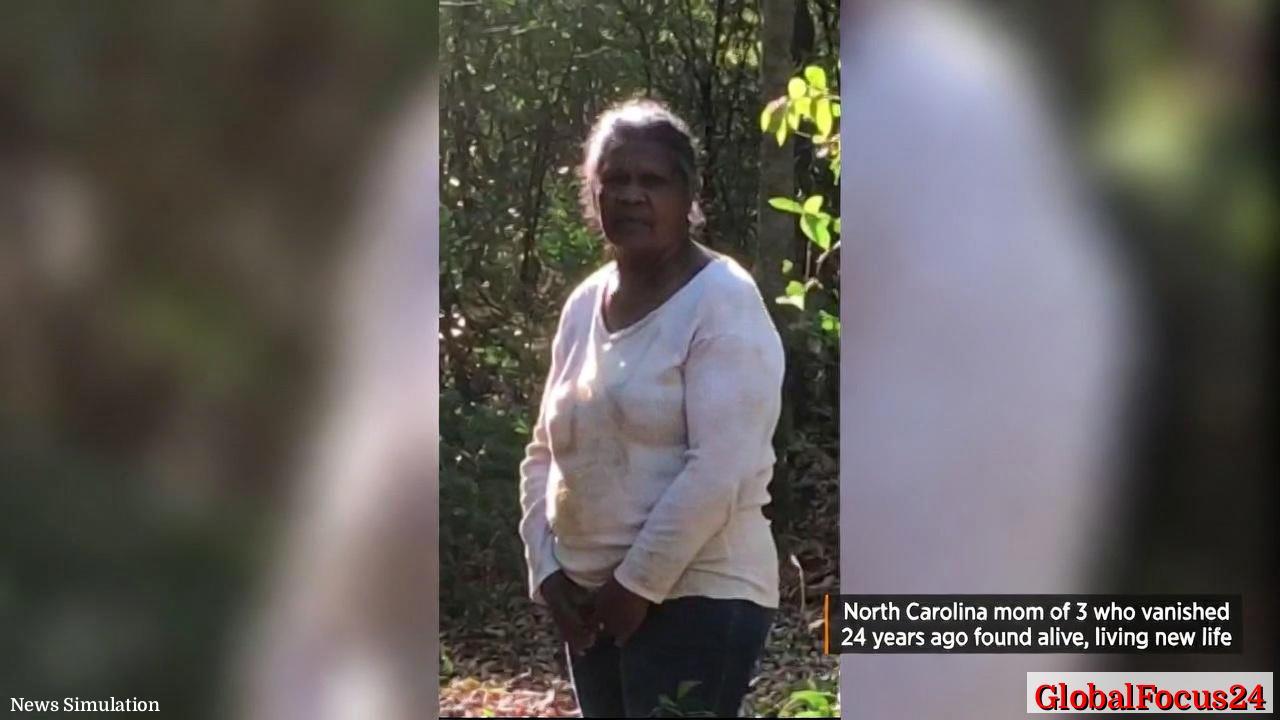
North Carolina Mother Of Three Missing For 24 Years Found Alive, Building Quiet New Life
A Cold Case Breaks Open After Two Decades
A North Carolina mother of three who vanished 24 years ago has been found alive, closing one of the state’s most haunting missing-persons chapters and reshaping the narrative for a family that had long lived with uncertainty and grief. The woman, who disappeared in the early 2000s, has been located living under a new identity and building a modest, quiet life far from the community where she was last seen.
Authorities have confirmed that she is physically safe and not in immediate danger, and that her children — now adults — have been notified of the discovery. Law enforcement officials say the case is shifting from a presumed crime investigation into a complex inquiry involving questions of identity, consent, and what it means to disappear in an era before smartphones, social media, and ubiquitous digital footprints.
While the woman’s name and exact location are being withheld to protect her privacy, the breakthrough is already resonating across North Carolina, raising difficult questions about how a parent can vanish, what drives such departures, and how families and communities cope with decades of unanswered questions.
Disappearance In An Earlier Era Of Missing-Persons Investigations
The mother’s disappearance dates back to a period when missing-persons investigations relied far more heavily on paper records, landline calls, and community word of mouth than on the digital tools that define modern policing. In the late 1990s and early 2000s, many local departments lacked robust databases, integrated interstate information-sharing systems, and instant access to surveillance footage that are now standard in many jurisdictions.
Friends and relatives reported her missing after she failed to return home and could not be reached at work or through extended family. At the time, investigators canvassed neighborhoods, checked hospitals and local shelters, and issued bulletins to nearby law enforcement agencies. The search stretched on for months, then years, before gradually cooling. With no verified sightings, no recovered personal belongings, and no confirmed financial or digital trail, the case was eventually classified as a cold case — open, but dormant, awaiting a new lead.
The early 2000s saw a growing public focus on missing children and high-profile abductions, but adult disappearances, especially those involving women who could legally choose to leave, often received less sustained attention. For many families, this created a painful paradox: adults have the right to walk away, yet loved ones are left without closure or clarity.
The Breakthrough: Modern Technology Meets A Long-Dormant File
The renewed momentum in the case appears to reflect broader national trends in how long-term disappearances are resolved. Over the past decade, advances in data matching, identity verification, and interagency coordination have transformed what is possible in cold-case work. Routine procedures such as cross-checking old case files against newer government records, health system databases, or other administrative paperwork can surface unexpected matches that would have been far more difficult to uncover two decades ago.
Investigators reviewing historical cases reportedly identified inconsistencies and patterns suggesting that the missing mother may have been living under another name. Once officials located a woman whose basic biographical details and approximate age aligned with the missing person, they moved carefully to confirm her identity. That process can involve a combination of documentary evidence, interviews, and in some cases biometric or genetic confirmation, depending on the circumstances and the level of cooperation involved.
After verification, authorities contacted her immediate family, some of whom had long suspected she might still be alive, while others feared the worst. For relatives, the discovery marks the end of one form of uncertainty and the beginning of another: the emotional and practical work of understanding why she left and what, if anything, comes next.
The Family’s Long Wait And Lingering Questions
For three children who grew up without their mother, the past 24 years have likely been defined by a mixture of hope, anger, grief, and unanswered questions. Families of the missing often describe living in what feels like suspended time — unable to fully mourn, unable to fully move on.
In this case, those children are now adults, many with families of their own, careers, and lives shaped in subtle and overt ways by their mother’s absence. The notification that she has been found alive introduces a new set of emotional challenges:
- Whether to seek contact and under what conditions.
- How to reconcile decades of pain with the knowledge that she may have chosen to leave.
- How to integrate this new information into their own identities as parents, partners, and community members.
Mental health professionals note that reunions after such long separations can be unpredictable. Some families embrace the chance to reconnect. Others maintain distance, seeing the disappearance as a breach of trust that cannot easily be repaired. Many navigate a middle path, seeking information and limited contact while protecting themselves from renewed emotional upheaval.
Living Under A New Name: A Second Life In Plain Sight
The discovery that the woman has been living under a new identity points to the complexities of adult disappearances. Unlike cases involving clear signs of foul play, some missing adults choose to step away from their previous lives due to financial strain, relationship breakdown, domestic abuse, mental health crises, or a combination of personal pressures.
In many such situations, the individual may relocate to another region, change their name through legal or informal means, and gradually establish new work, social, and community ties. Over time, neighbors and colleagues may know them only through their adopted identity, unaware of any past history.
This kind of reinvention is more difficult in today’s hyper-connected world, where background checks, digital records, and social media make it harder to leave old identities behind. Two decades ago, however, it was more feasible to move across state lines, find work in sectors with minimal screening, and slowly build a new life with limited digital trace.
Authorities now face sensitive questions: whether any laws were broken during the disappearance, whether the woman left voluntarily or under duress, and how to balance the public’s interest in the case with her right to privacy and autonomy.
Historical Context: Missing Adults Before The Age Of Smartphones
The case highlights how much the landscape of missing-persons investigations has changed since the early 2000s. At that time:
- Cell phones were not yet ubiquitous, and many did not have GPS capabilities.
- Social media platforms that now help spread alerts quickly either did not exist or were in their infancy.
- Many local agencies lacked integrated digital records, making cross-jurisdictional searches more cumbersome.
- Public awareness campaigns tended to focus more heavily on missing children than missing adults.
Historically, there has also been a legal distinction in how missing adults are treated. Adults are presumed to have the freedom to relocate or cut ties without notifying relatives, so law enforcement must weigh their autonomy against family concerns. This has sometimes led to cases being closed quickly if there is no immediate suspicion of a crime, leaving families to conduct their own searches or push for renewed investigations.
Over the past two decades, federal and state authorities have worked to strengthen databases, standardize reporting procedures, and improve coordination between agencies. National missing-persons registries, advances in forensic science, and growing use of digital footprints have all changed how cold cases are approached. The rediscovery of this North Carolina mother stands at the intersection of those historical shifts.
Economic And Social Impact On Families And Communities
The economic impact of long-term missing-persons cases often falls most heavily on families. When a primary caregiver or wage earner vanishes, households can face immediate financial strain. In the years following the mother’s disappearance, her relatives likely had to absorb childcare, housing, and daily living costs that she once helped shoulder. They may also have faced legal expenses in dealing with custody issues, estate questions, and the bureaucratic complexities that arise when a person is missing but not legally declared deceased.
Beyond household finances, there are broader community costs:
- Local police departments can devote substantial time and resources to searches, canvassing, and follow-up work, particularly in the months following a disappearance.
- Social services may become involved if children require support or placement, adding pressure to already stretched systems.
- Community organizations, churches, and volunteer groups often organize searches, fundraisers, or awareness campaigns, pooling time and money to assist the family.
When a missing person is later found alive, the economic narrative becomes more complicated. On one hand, the resolution can bring a sense of closure that allows public resources to be redirected. On the other, families may revisit the financial and emotional toll of years spent searching, questioning whether anything could or should have been done differently.
Comparisons With Other Regional Cases
Across the American South, several high-profile cases have emerged in which long-missing individuals were later discovered living under new identities or in unexpected circumstances. While each case is unique, regional patterns highlight common themes:
- Strong community networks often mobilize quickly when someone disappears, especially in small towns and tight-knit neighborhoods.
- Rural geography can complicate searches, with wooded areas, back roads, and wide distances hampering early investigative efforts.
- Economic pressures, including job instability and housing insecurity, sometimes contribute to decisions to relocate abruptly or sever ties.
In North Carolina specifically, law enforcement agencies have devoted increasing attention to cold cases and missing-persons investigations over the past decade, reflecting national efforts to standardize reporting and improve technology. Despite these advances, older cases — particularly those dating back to the late 20th century and early 2000s — remain challenging, in part because records may be incomplete and memories have faded.
Compared with neighboring states, North Carolina’s mix of urban centers, suburban sprawl, and rural communities creates a varied investigative landscape. Cases that begin in a small town may end hundreds of miles away, in a city where the missing individual can blend into a larger population and rebuild a life in relative anonymity.
A New Chapter For A Once-Lost Mother
For the woman at the center of this story, the public discovery of her continued existence marks the beginning of a new chapter as much as an end to the mystery of her disappearance. Officials indicate that she has been living a stable, low-profile life, working and integrating into her community while keeping her past private. Neighbors may now be learning that the person they know by one name is connected to a decades-old missing-persons file in another part of the country.
Her decision to remain or relocate again — and whether to reconnect with her children — will be deeply personal. Adult missing-persons cases can pivot on questions of trauma, safety, and personal history that are not immediately visible to outsiders. In some instances, individuals leave to escape violence or intense personal hardship; in others, the reasons remain known only to them.
The revelation challenges public assumptions about what it means when someone vanishes for decades. It underscores that not all long-term disappearances end in tragedy, though the emotional impact on families can be profound regardless of the outcome.
Policy And Public-Safety Questions Moving Forward
The resolution of this case is likely to spur renewed discussion among policymakers, advocates, and law enforcement about how to handle missing adults, especially parents of young children. Among the questions that may gain traction:
- Should there be clearer protocols for revisiting older cases as technology improves?
- How should authorities balance an adult’s right to privacy with a family’s desire for information?
- What additional support systems can be put in place for children left behind by a suddenly absent parent?
Some experts argue that stronger mental health and social support networks could reduce the number of voluntary disappearances by addressing crises before they reach a breaking point. Others emphasize the importance of public education, encouraging families to document key personal information and maintain open lines of communication to ease searches when someone goes missing.
At the same time, this case may encourage families still waiting for answers to push for renewed attention to their loved ones’ files. For them, the discovery of a North Carolina mother living quietly after 24 years will be both a powerful symbol of hope and a reminder of the complex realities behind the word “missing.”
Closure, But Not The End
The story of the North Carolina mother of three who vanished and was found alive after nearly a quarter-century is not a neatly resolved narrative. It offers closure in one sense: the central question of life or death has been answered. Yet it opens a host of new questions about choice, identity, trauma, and the passage of time.
For her children, for the community that once searched for her, and for the investigators who kept her file open, this development marks a turning point rather than an endpoint. The case illuminates how advances in technology, shifts in investigative practice, and the enduring determination of families can converge to resolve long-standing mysteries — even as it underscores that the emotional work of understanding and healing may only just be beginning.