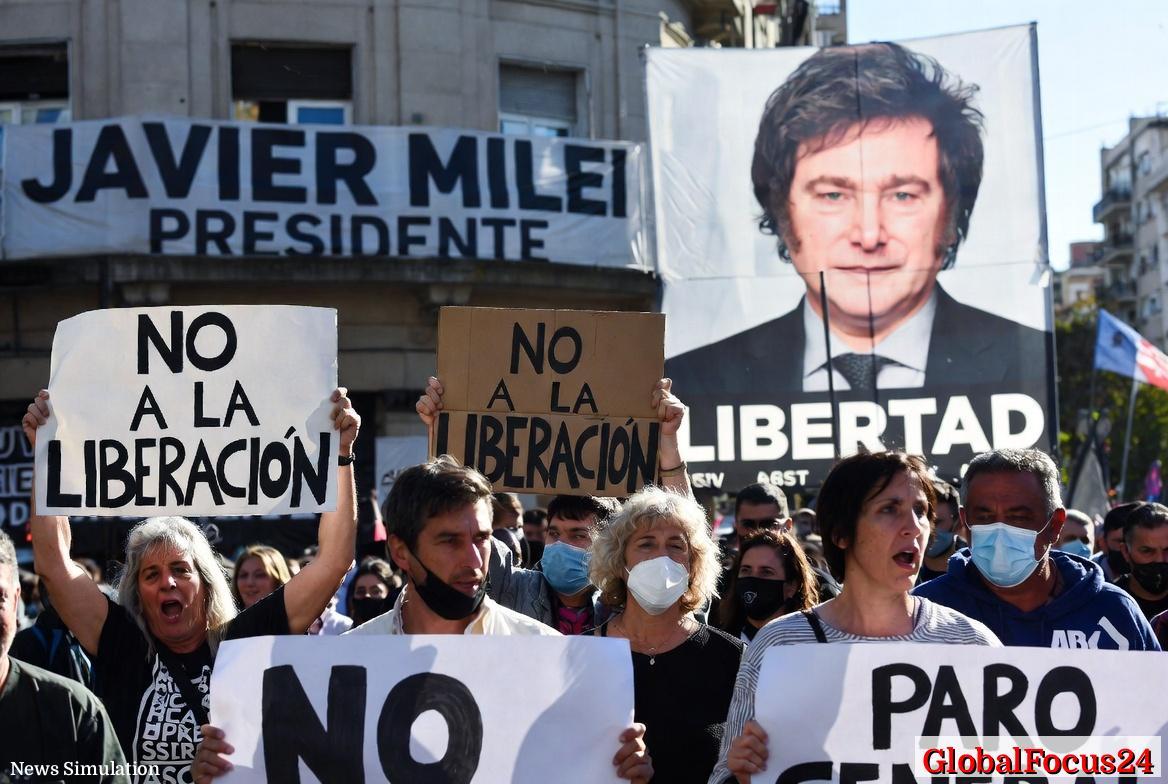
Argentina’s Free-Market Shock Therapy Faces Mounting Resistance as Economic Gains Bypass Households
Economic Overhaul Delivers Stability but Strains Society
Argentina’s ambitious free-market overhaul under President Javier Milei is entering a critical phase, as early macroeconomic gains collide with mounting social pressures and political constraints. After taking office with a pledge to dismantle decades of interventionist policies, Milei has implemented sweeping austerity measures, slashed public spending, and pursued aggressive deregulation. These moves have yielded measurable progress in stabilizing inflation and attracting foreign investment, yet they have also exposed structural weaknesses that continue to weigh heavily on households and businesses.
Inflation, once entrenched at triple-digit levels, has dropped to roughly 30 percent, marking one of the most significant disinflation efforts in the country’s recent history. The peso has stabilized after years of volatility, and fiscal deficits have narrowed sharply following a reduction in real public expenditure of approximately 30 percent. These developments have bolstered confidence among international investors and multilateral institutions.
However, for many Argentines, the benefits remain largely abstract. Wages have struggled to keep pace with price adjustments, unemployment has edged higher, and domestic consumption remains subdued. The economy is increasingly characterized by a divide between a dynamic export-oriented sector and a stagnant internal market, creating uneven growth patterns that risk deepening inequality.
Export Boom Masks Weak Domestic Demand
One of the defining features of Argentina’s current economic landscape is the strength of its export industries, particularly in energy and mining. The Vaca Muerta shale formation has emerged as a major driver of oil and gas production, with output reaching record levels. Simultaneously, the country’s vast reserves of lithium and copper—critical components in global energy transition supply chains—have attracted renewed interest from international investors.
These sectors are generating foreign currency inflows and helping to stabilize external accounts, a longstanding vulnerability in Argentina’s economy. Yet their capital-intensive nature means they create relatively few jobs compared to traditional industries, limiting their ability to absorb displaced workers from other sectors.
Manufacturing and services, historically key sources of employment, continue to face headwinds. High borrowing costs, reduced government support, and weak consumer demand have dampened investment. Small and medium-sized enterprises, which form the backbone of the domestic economy, report declining sales and tightening credit conditions.
This divergence has effectively split the economy into two parallel systems: a globally competitive export sector and a struggling local economy. Analysts warn that without stronger linkages between these segments, the current growth model may prove unsustainable.
Historical Context of Reform Cycles
Argentina’s economic trajectory has long been shaped by cycles of reform and reversal. From the liberalization efforts of the 1990s to the subsequent return of state-led policies in the 2000s, each phase has produced both gains and setbacks. Milei’s approach represents one of the most radical shifts toward market-oriented policies in decades, drawing comparisons to earlier attempts at structural adjustment.
Previous reform efforts often faltered due to social resistance, political fragmentation, and external shocks. The current administration faces similar challenges, particularly given its limited representation in Congress and reliance on executive decrees to advance its agenda. Legal challenges and institutional pushback have slowed the implementation of key reforms, underscoring the difficulty of sustaining rapid transformation in a complex political environment.
Economists note that structural reforms typically require sustained commitment over multiple years to deliver broad-based benefits. The compression of adjustment into a short timeframe, while effective in stabilizing macroeconomic indicators, can intensify short-term hardship and erode public support.
Legal and Political Obstacles Emerge
Milei’s reform program has encountered increasing resistance from both the judiciary and organized labor. Recent court rulings have suspended parts of labor legislation aimed at increasing flexibility, including provisions that extended the workday. These decisions have introduced uncertainty for businesses and investors, complicating planning and delaying project timelines.
Unions have mobilized against perceived erosion of worker protections, staging protests and strikes that disrupt economic activity. At the same time, the administration has secured legislative approval for measures to expand mining activity in environmentally sensitive regions, reflecting a pragmatic effort to sustain investment momentum.
The absence of a congressional majority remains a significant constraint. While executive decrees have enabled swift initial action, they are more vulnerable to legal challenges and lack the durability of legislation passed through broader consensus. Analysts emphasize that long-term policy stability will depend on building alliances across the political spectrum.
Corruption Allegations Add Pressure
Compounding these challenges are corruption allegations that threaten to undermine the administration’s credibility. A controversy surrounding the cryptocurrency Libra has drawn particular attention. Milei publicly endorsed the digital asset shortly before its value surged and then collapsed, wiping out millions of dollars in investor funds.
Prosecutors are investigating potential insider trading and have identified the president as a person of interest, though no charges have been filed. The case has been further complicated by reports of communication between Milei, his sister, and individuals linked to the project during its launch. The president has denied any wrongdoing, stating that his involvement was limited to promoting a private উদ্যোগ.
Separately, allegations involving a senior government official have intensified scrutiny of the administration’s internal practices. While corruption is not currently the top concern for most voters, such controversies risk eroding trust and reinforcing perceptions of political vulnerability.
Public Sentiment and Political Outlook
Public opinion has shifted noticeably as the economic adjustment has taken hold. Approval ratings for the president have declined to their lowest levels since he assumed office, reflecting growing dissatisfaction with living standards. Surveys indicate that a majority of Argentines are concerned about employment prospects and income stability, with many expressing a desire for political change in the coming years.
Despite this decline, the opposition remains fragmented, limiting its ability to capitalize on discontent. Milei retains a degree of support among voters who prioritize inflation control and fiscal discipline, viewing these as prerequisites for long-term recovery.
The administration has urged patience, emphasizing that the current hardships are part of a necessary transition toward a more stable and competitive economy. Whether this message resonates will depend largely on the pace at which tangible improvements reach households.
Regional Implications and Comparisons
Argentina’s policy shift is being closely watched across Latin America, where debates over the role of the state in economic management continue to evolve. Several countries in the region, including Chile, Paraguay, and Ecuador, have adopted more market-friendly approaches in recent years, while others face pivotal elections that could reshape their policy მიმართულ.
The United States has signaled support for Argentina’s reform efforts, extending a substantial currency-swap line aimed at reinforcing financial stability. This backing reflects broader strategic interests in promoting economic models aligned with open markets and investment flows.
Comparisons with neighboring economies highlight both opportunities and risks. Chile’s experience with mining-driven growth underscores the importance of institutional stability and social consensus, while Brazil’s diversified economy illustrates the benefits of balancing export strength with robust domestic demand.
Argentina’s challenge lies in bridging these elements—leveraging its resource wealth while fostering inclusive growth that benefits a wider segment of the population.
Investment Climate and Future Prospects
Investor sentiment toward Argentina remains cautiously optimistic. The combination of fiscal discipline, regulatory reforms, and resource potential has improved the country’s attractiveness, particularly in energy and mining. However, legal uncertainties, political volatility, and social tensions continue to temper enthusiasm.
Key factors shaping the outlook include:
- The durability of inflation reduction and currency stability.
- The resolution of legal disputes affecting labor and regulatory frameworks.
- Progress in addressing social impacts, particularly employment and income levels.
- The outcome of ongoing investigations and their effect on political stability.
Analysts suggest that sustained investment will depend on clearer policy signals and stronger institutional backing. Without these, the risk premium associated with Argentina may remain elevated, limiting capital inflows.
A Critical Juncture for Reform
Argentina stands at a निर्णing moment as it navigates the complexities of economic transformation. The initial phase of stabilization has demonstrated that rapid policy shifts can yield measurable results, but the broader challenge lies in translating these gains into improved living standards.
The coming months will test the resilience of the reform agenda and the administration’s ability to maintain public support amid ongoing hardship. Success will likely require a recalibration of policies to address social concerns while preserving macroeconomic stability.
As the 2027 election horizon approaches, the trajectory of Argentina’s economy—and the perception of its progress—will play a decisive role in shaping the country’s political and economic future.