Mexico and Spain Move to Repair Diplomatic Rift Rooted in Colonial Legacy
Leaders Signal Reset in Bilateral Relations
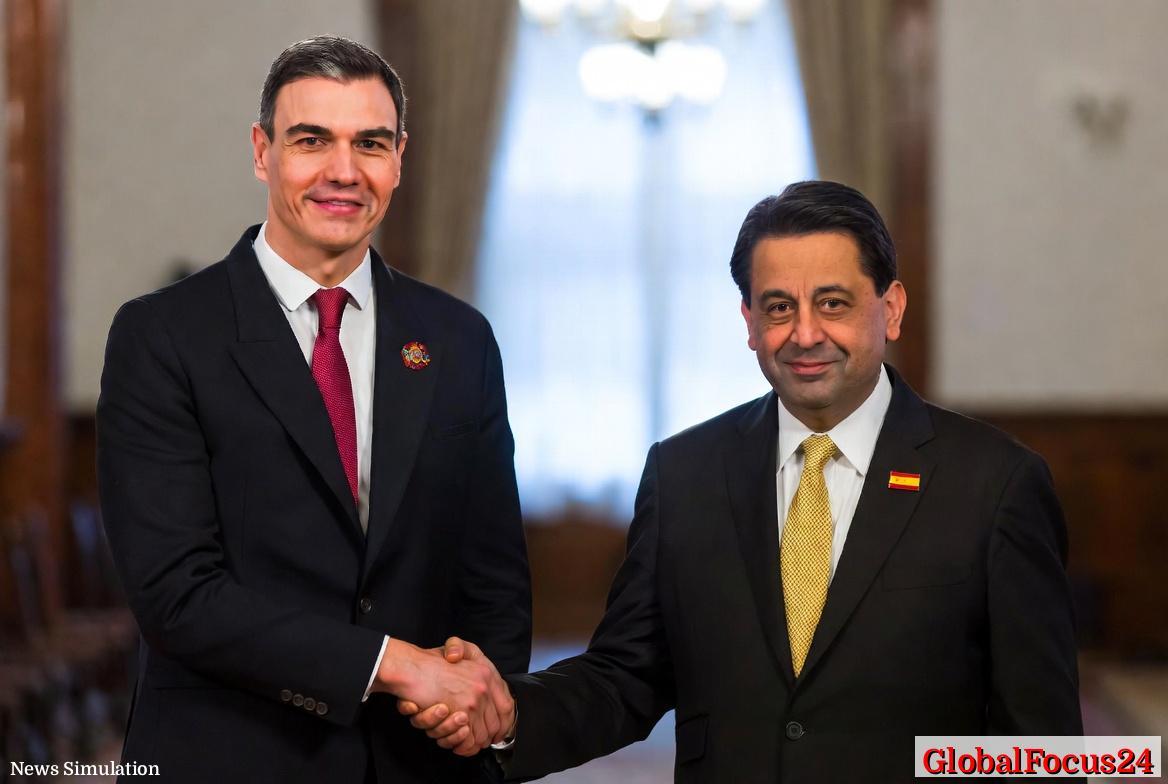
BARCELONA, Spain — Mexico and Spain have taken a significant step toward restoring strained diplomatic relations, as Mexican President Claudia Sheinbaum and Spanish Prime Minister Pedro Sánchez met face-to-face and publicly signaled a renewed commitment to cooperation after years of tension tied to historical grievances.
The meeting took place on the sidelines of the IV Meeting in Defense of Democracy, a multinational summit focused on addressing the global rise of authoritarian tendencies. In a brief but symbolically important exchange, the two leaders shook hands, marking the first visible gesture of reconciliation since a dispute over Spain’s colonial past disrupted ties between the countries.
Speaking upon arrival, Sheinbaum emphasized that the situation had been overstated. She noted there was no formal diplomatic rupture but stressed the importance of acknowledging historical injustices, particularly those suffered by Indigenous communities during the Spanish conquest of Mexico. Her remarks underscored the delicate balance between historical recognition and forward-looking diplomacy.
Origins of the Dispute
The roots of the disagreement stretch back to 2019, when then-Mexican President Andrés Manuel López Obrador sent formal letters to Spain’s King Felipe VI and to Pope Francis. The letters called for an official acknowledgment of abuses committed during the conquest of the Aztec Empire in the early 16th century, a period marked by violence, forced conversion, and systemic disruption of Indigenous societies.
Spain declined to issue such an apology, arguing that contemporary governments should not be held accountable for actions carried out centuries ago. That refusal led to a cooling of diplomatic engagement, though trade and cultural ties continued largely uninterrupted.
Tensions intensified in 2024 when Sheinbaum, newly elected as Mexico’s first female president, chose not to invite King Felipe VI to her inauguration. The decision broke with longstanding protocol, as Spain typically sends high-level representation to such ceremonies in Latin America, reflecting deep historical and cultural links.
Spain responded by not sending any official delegation, further highlighting the diplomatic chill. The absence was widely noted in both countries and raised concerns among business leaders and diplomats about the potential long-term consequences for bilateral relations.
A Shift in Tone from Spain
A turning point came in March, when King Felipe VI publicly acknowledged that the conquest of the Americas involved abuses against Indigenous populations. While the statement stopped short of a formal apology, it represented a notable shift in tone and opened the door for renewed dialogue.
The Mexican government responded by extending an invitation to the Spanish monarch to attend a World Cup match scheduled to take place in Mexico this summer. The gesture was interpreted by analysts as a pragmatic move aimed at rebuilding trust without forcing either side into politically sensitive concessions.
Saturday’s meeting between Sheinbaum and Sánchez built on that momentum. According to Sánchez, the leaders held a private discussion lasting nearly an hour, covering global challenges as well as opportunities to deepen cooperation between Mexico and the European Union.
Economic Stakes and Trade Ties
Beyond symbolic gestures, the normalization of relations carries substantial economic implications. Spain is one of the largest European investors in Mexico, with significant stakes in sectors such as banking, telecommunications, energy, and infrastructure.
Spanish companies, including major financial institutions and energy firms, have long viewed Mexico as a strategic gateway to Latin America. Conversely, Mexico benefits from access to European markets and capital through its relationship with Spain and the broader European Union.
Bilateral trade between Mexico and Spain has grown steadily over the past two decades, reflecting the integration of global supply chains and shared economic interests. Analysts note that prolonged diplomatic tension could have introduced uncertainty for investors, particularly in industries requiring long-term commitments.
The renewed dialogue is expected to reinforce investor confidence and potentially accelerate joint ventures, especially in renewable energy and digital infrastructure—two sectors where both countries have expressed strong interest.
Cultural and Historical Connections
Mexico and Spain share deep cultural ties rooted in language, religion, and centuries of migration. Spanish is the dominant language in Mexico, and cultural exchange between the two nations remains robust, spanning literature, film, education, and tourism.
However, these shared connections are also intertwined with a complex historical legacy. The Spanish conquest of Mexico in 1521 reshaped the region’s political, social, and cultural landscape, leading to the establishment of colonial rule that lasted for three centuries.
In recent years, there has been a growing movement within Mexico to reassess that history, with increased attention to Indigenous perspectives and calls for recognition of historical injustices. Similar debates have emerged across Latin America, reflecting a broader global trend of reevaluating colonial legacies.
Spain, for its part, has faced its own internal discussions about how to address its imperial past. While some officials advocate for acknowledgment and dialogue, others caution against revisiting historical events through a modern political lens.
Regional Comparisons and Broader Context
The diplomatic friction between Mexico and Spain is not unique. Across Latin America, several countries have sought acknowledgment or reparations from former colonial powers, including Portugal, France, and the United Kingdom.
For example, Caribbean nations have pursued formal reparations discussions related to slavery and colonial exploitation, while countries such as Bolivia and Peru have emphasized Indigenous rights in their national narratives. These efforts often intersect with contemporary political and economic priorities, shaping how governments approach historical issues.
In Europe, responses have varied. Some countries have issued formal apologies for aspects of their colonial past, while others have opted for symbolic gestures or educational initiatives rather than official statements of responsibility.
Against this backdrop, the Mexico-Spain reconciliation reflects a pragmatic approach that prioritizes forward-looking cooperation while allowing space for historical dialogue. By avoiding rigid positions, both governments appear to be seeking a balance that acknowledges sensitivities without disrupting strategic partnerships.
The Role of Multilateral Engagement
The setting of the meeting—the IV Meeting in Defense of Democracy—also highlights the importance of multilateral forums in facilitating diplomatic breakthroughs. Bringing together leaders from 15 countries, the summit provided a neutral environment for discussions that might be more difficult to conduct in a bilateral context.
Sánchez indicated that the conversation with Sheinbaum extended beyond historical issues to include global challenges such as economic stability, democratic governance, and international cooperation. These shared concerns create common ground that can help bridge differences.
Sheinbaum’s proposal to host the next edition of the summit in Mexico signals an effort to position the country as an active participant in global democratic dialogue. It also reinforces the idea that Mexico seeks to strengthen its international partnerships, including with European nations.
Public Reaction and Future Outlook
Public reaction to the meeting has been cautiously optimistic in both countries. In Mexico, some observers view the renewed engagement as a pragmatic step that allows the government to maintain its emphasis on historical recognition while advancing economic and diplomatic interests.
In Spain, the meeting has been interpreted as a sign that relations with Latin America’s second-largest economy are returning to a more stable footing. Business groups and policymakers alike have welcomed the prospect of reduced tensions.
Looking ahead, several factors will shape the trajectory of Mexico-Spain relations:
- Continued dialogue on historical issues, potentially through cultural or academic initiatives.
- Expansion of economic cooperation, particularly in emerging industries.
- Strengthened collaboration within multilateral frameworks such as the European Union and international summits.
- Increased cultural exchange and tourism, reinforcing people-to-people connections.
While challenges remain, the handshake between Sheinbaum and Sánchez represents a tangible step toward rebuilding trust. By addressing the past while focusing on shared interests, both countries appear poised to move beyond a dispute that, while rooted in history, has clear implications for the present and future.