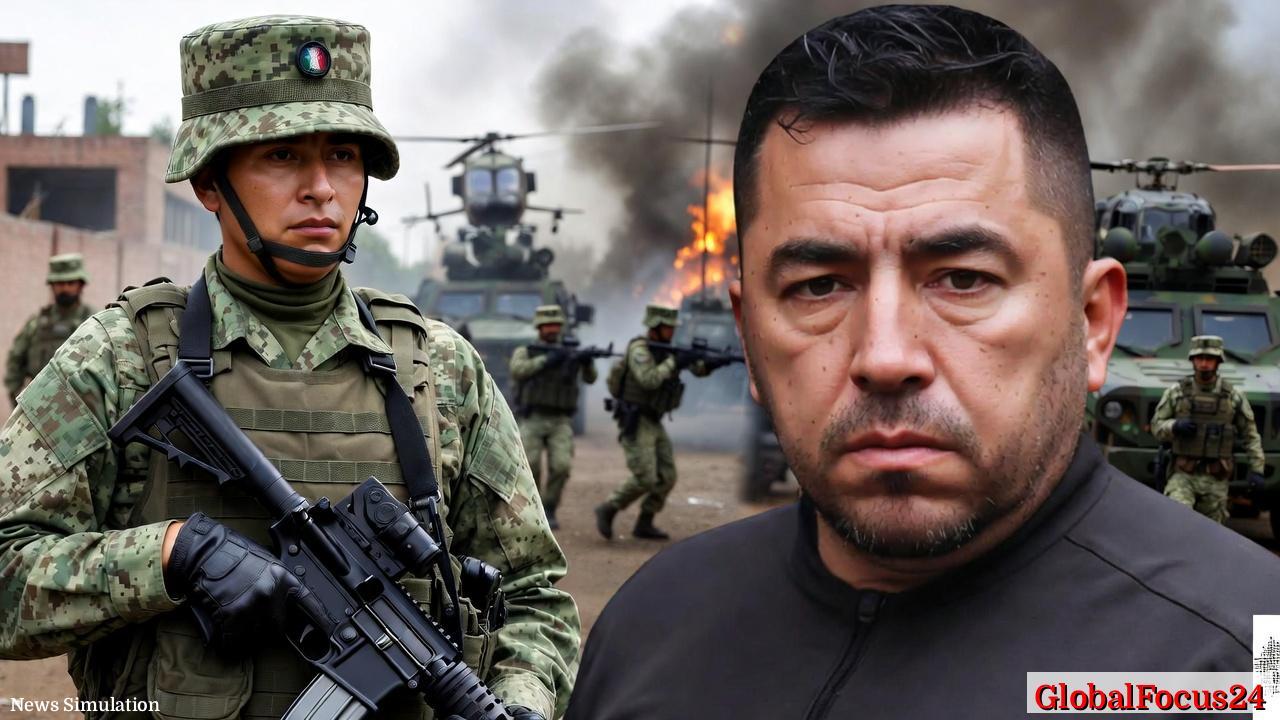
Mexican Army Kills Notorious Cartel Leader ‘El Mencho’ in Jalisco Operation
Military Operation Ends Decades-Long Manhunt
Mexican security forces have confirmed the death of Nemesio Oseguera Cervantes, better known as “El Mencho,” leader of the Jalisco New Generation Cartel (CJNG), one of the most powerful and violent criminal organizations in Latin America. The Defense Ministry announced that Oseguera was killed during a coordinated military operation early Saturday morning in Tapalpa, a mountainous area in the western state of Jalisco, long recognized as a CJNG stronghold.
Officials reported that the operation was the result of months of intelligence gathering, surveillance, and collaboration among Mexico’s armed forces and federal law enforcement. El Mencho, who had managed to elude authorities for more than two decades, died in the ensuing gunfire after resisting capture. His death marks a major milestone in the Mexican government’s ongoing campaign to dismantle organized crime networks that have undermined public security nationwide.
A Long Pursuit Comes to a Close
Oseguera’s rise to infamy began in the late 1990s. Born in Michoacán in 1966, he initially worked as a local police officer before turning to the drug trade. After a brief stint in the Milano Cartel, he helped found the Jalisco New Generation Cartel in the early 2010s, following the disintegration of the Millennium Cartel. Under his leadership, the CJNG transformed into one of Mexico’s most powerful trafficking syndicates, controlling significant portions of the country’s methamphetamine and fentanyl production.
The United States Drug Enforcement Administration (DEA) considered El Mencho one of its most wanted fugitives, offering a $10 million reward for information leading to his capture. His ability to evade security forces, despite numerous operations targeting him, earned him a near-mythic status within organized crime circles. Authorities say he maintained control through secrecy, mobility, and a brutal enforcement network that included militarized cells distributed across various Mexican states.
The hunt for El Mencho spanned multiple administrations, often straining Mexico-U.S. security cooperation. His death, officials say, represents a symbolic victory but also raises urgent questions about how the CJNG will respond and who will take control of its extensive operations.
Violent Aftermath Across Jalisco
Within hours of the government’s confirmation, violence erupted across Jalisco and neighboring Colima and Guanajuato, exposing the cartel’s capacity for swift retaliation. Reports from Tapalpa, Autlán, and the tourist hub of Puerto Vallarta described road blockades, burning vehicles, and gunfire exchanges between suspected cartel members and police.
In Puerto Vallarta, plumes of smoke rose over the city as several vehicles were torched near major highways, disrupting access to the airport and trapping tourists and residents in hotels and resorts. Local authorities issued red alerts, urging civilians to remain indoors until security was restored.
Jalisco’s governor condemned the attacks, pledging to “restore order and protect citizens.” Reinforcements from the National Guard and Defense Ministry have been deployed to secure major transportation routes, while the military continues to monitor CJNG communication channels for signs of further coordinated action.
The Legacy of El Mencho and the Power of the CJNG
Under El Mencho, the CJNG expanded beyond Mexico’s borders, operating in more than two dozen Mexican states and establishing connections in the United States, Europe, and Asia. The cartel’s influence grew by combining traditional drug trafficking routes with diversification into extortion, fuel theft, and arms smuggling.
The organization’s hallmark was its discipline and military-like structure. Members often wore tactical gear, used armored convoys, and carried high-caliber weapons typically reserved for combat zones. The CJNG also became notorious for staged displays of violence, including public executions, kidnappings, and attacks on police convoys designed to intimidate both rivals and state forces.
Experts have frequently compared the CJNG’s power to that of earlier cartels like the Sinaloa Cartel, led by Joaquín “El Chapo” Guzmán. However, while Sinaloa relied on long-standing alliances, CJNG operated through fear and efficiency, often clashing with both rival groups and community militias.
El Mencho’s death, while significant, does not necessarily mark the end of the CJNG. Analysts warn that without clear succession plans, the organization could fragment, leading to a surge in local conflicts as factions compete for territory. Previous cartel collapses, such as that of the Gulf and Zetas cartels, show that leadership voids often lead to spikes in violence rather than immediate stability.
Economic and Social Fallout in Western Mexico
The immediate economic repercussions of the operation are already being felt in western Mexico, a region reliant on tourism, agriculture, and trade. Puerto Vallarta, one of Mexico’s most visited coastal cities, saw widespread transportation disruptions after the blockades. Several airlines delayed or canceled flights, and businesses temporarily shuttered amid fears of renewed violence.
In Guadalajara, Jalisco’s capital and Mexico’s second-largest city, businesses expressed concern about the potential for extended unrest. The Jalisco state economy, which contributes nearly 7% of Mexico’s total GDP, could face short-term challenges if violence persists. Economists note that even brief periods of instability tend to drive investors toward safer markets, particularly in the manufacturing and logistics sectors that have flourished in the region.
For residents in smaller municipalities like Tapalpa and Tecolotlán, the military presence brought mixed feelings. Many locals welcomed the crackdown on cartel operations, but others feared that instability could lead to new waves of violence as power vacuums emerge. Community leaders have called for federal programs aimed at rebuilding trust, improving local policing, and providing alternative livelihoods to counter the social roots of organized crime.
International Reactions and Security Implications
The announcement of El Mencho’s death quickly drew responses from international observers. The U.S. Department of Justice praised Mexico’s efforts, highlighting long-standing joint operations targeting fentanyl and methamphetamine trafficking networks linked to the CJNG. American officials emphasized that continued cooperation will be essential in preventing successor groups from consolidating control.
Across Latin America, security analysts pointed to the event as another turning point in Mexico’s decades-long struggle against organized crime. The drug war, which formally began in 2006 under then-president Felipe Calderón, has claimed more than 400,000 lives by official estimates, with thousands more missing. While major cartel leaders have been captured or killed over the years—such as El Chapo in 2016 and Héctor Beltrán Leyva in 2014—the underlying criminal economies have proven resilient.
Neighboring countries like Guatemala and Colombia have also expressed concern about potential shifts in trafficking routes. Historically, the death of a major cartel leader often triggers changes in the international drug trade, as rival groups scramble to control supply chains spanning from Central America to the U.S. border.
Comparing Historical Parallels
The fall of El Mencho invites comparison to earlier moments when Mexico’s security forces achieved rare victories against dominant cartels. When Joaquín “El Chapo” Guzmán was arrested in 2016, widespread predictions of stability were quickly dashed as internal feuding within the Sinaloa Cartel escalated. Similarly, the 1997 death of Amado Carrillo Fuentes, known as “The Lord of the Skies,” led to the fragmentation of the Juárez Cartel and a spike in regional violence.
Experts note that these patterns underscore the cyclical nature of Mexico’s cartel conflicts: one figure’s removal often provides temporary relief, but without simultaneous institutional reforms and anti-corruption measures, new actors quickly rise to fill the void.
El Mencho’s death could therefore mark not an end, but the beginning of a transitional phase within the CJNG. Possible successors include his relatives and key lieutenants operating in central and western Mexico, though intelligence sources suggest internal rivalries could lead to splintering, similar to what occurred after El Chapo’s downfall.
Public Sentiment and Future Outlook
In the immediate aftermath of the operation, public reaction has been one of cautious optimism interlaced with fear. Many Mexicans see El Mencho’s death as a long-overdue act of justice. Yet, after years of cyclical crackdowns that yielded brief relief followed by renewed turmoil, confidence in lasting peace remains fragile.
Human rights organizations have reiterated calls for broader reforms addressing poverty, corruption, and judicial inefficiency, noting that cartel leaders thrive in regions where law enforcement is underfunded and local governance is weak. Without meaningful investment in community resilience, experts warn, the vacuum left by El Mencho could quickly invite new threats.
For now, Mexico faces a delicate balancing act: consolidating security gains while preventing escalation. The Defense Ministry has vowed to maintain heightened vigilance throughout western Mexico, while intelligence teams continue to monitor communications to preempt retaliatory operations.
A Pivotal Moment in Mexico’s Drug War
The death of Nemesio Oseguera Cervantes closes a chapter in one of Mexico’s most protracted criminal manhunts. It delivers a significant, if symbolic, victory to the country’s armed forces and underscores their growing operational capability. Yet the broader challenge—dismantling the multi-billion-dollar criminal networks that fuel the narcotics trade—remains as formidable as ever.
As Mexico prepares for potential aftershocks, from economic disruptions to territorial battles, one truth prevails: the fall of El Mencho may reshape the balance of power among the cartels, but the underlying conflict that has gripped Mexico for nearly two decades is far from over.