Cuba Power Grid Collapse Leaves Millions Without Electricity as Energy Crisis Deepens
Nationwide Blackout Disrupts Daily Life
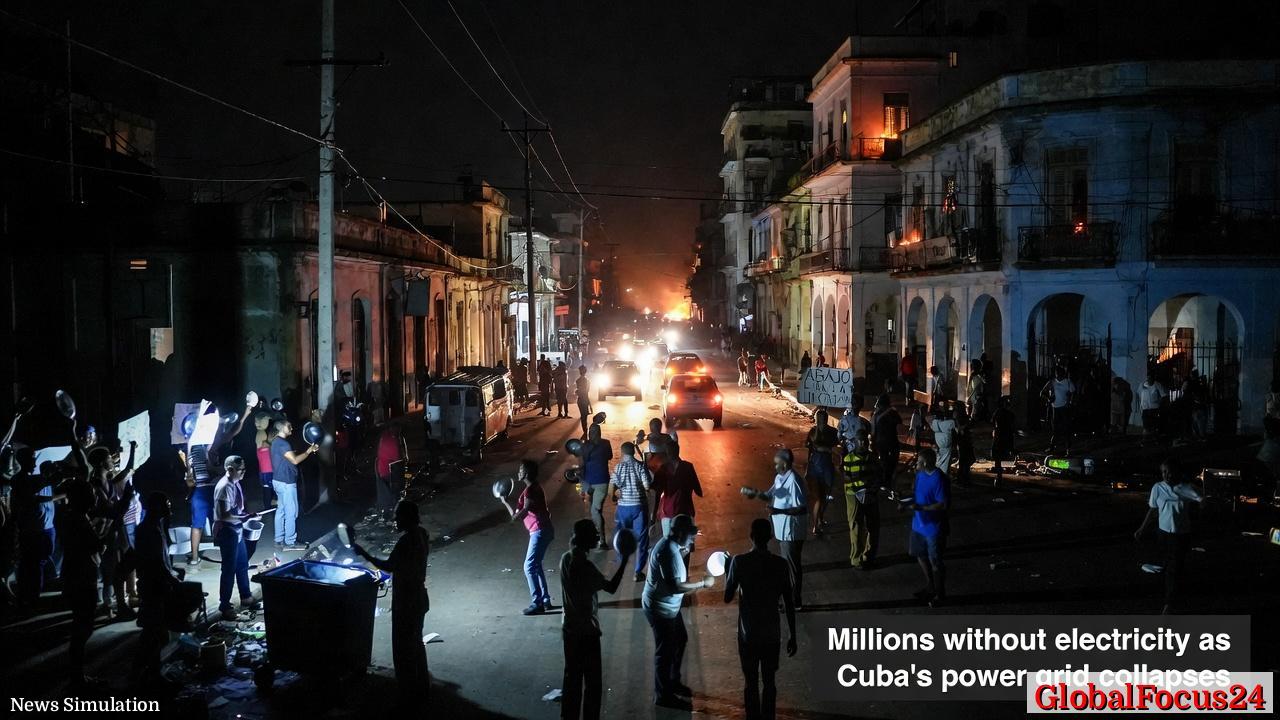
A sweeping collapse of Cuba’s national electricity grid has left millions without power, plunging much of the island into darkness and intensifying an already fragile energy situation. The outage, which began Monday, affected major urban centers including Havana, where streets were illuminated only by vehicle headlights and scattered battery-powered lamps.
By early Tuesday, authorities reported that electricity was gradually being restored in several provinces, though full recovery remained uncertain. The blackout disrupted transportation, communications, water supply systems, and commercial activity, underscoring the extent to which modern Cuban life depends on an increasingly strained electrical network.
Residents across the island described a sudden halt to daily routines. Without electricity, water pumps stopped functioning in many areas, leaving households without running water. Refrigeration failures raised concerns about food spoilage, while businesses dependent on consistent power faced immediate losses.
Aging Infrastructure Under Pressure
Cuba’s electrical grid has long been vulnerable due to decades-old infrastructure and limited access to replacement parts. Much of the country’s power generation relies on thermoelectric plants built in the 20th century, many of which now operate beyond their intended lifespan.
Maintenance challenges have compounded over time. Limited investment, logistical hurdles, and restricted access to international markets have slowed modernization efforts. As a result, the grid has become increasingly susceptible to cascading failures, where a single disruption can trigger widespread outages.
Energy analysts note that Cuba’s grid operates with minimal redundancy, meaning there are few backup systems to absorb shocks. When generation capacity drops suddenly—whether due to fuel shortages or equipment failure—the system can collapse rapidly, as seen in the latest incident.
Fuel Shortages Drive Energy Instability
A critical factor behind the blackout is Cuba’s ongoing fuel shortage. The island depends heavily on imported oil to generate electricity, and recent disruptions in supply have strained its ability to meet demand.
For years, Venezuela served as Cuba’s primary oil supplier, providing tens of thousands of barrels per day under preferential agreements. However, recent geopolitical shifts have reduced these shipments significantly, leaving Cuba with a substantial energy deficit.
Compounding the issue, global shipping constraints and financial restrictions have made it more difficult for Cuba to secure alternative fuel sources. This has forced authorities to ration electricity through scheduled blackouts in recent months, particularly outside major cities.
The latest grid collapse reflects the cumulative impact of these shortages. Without sufficient fuel to sustain stable generation, power plants operate intermittently, increasing the risk of system-wide failure.
Economic Impact Across Key Sectors
The blackout’s economic consequences are both immediate and far-reaching. Small businesses, which have expanded in recent years as part of Cuba’s limited private sector reforms, are particularly vulnerable. Many rely on refrigeration, lighting, and electronic payment systems to operate.
When electricity fails:
- Restaurants and food vendors lose perishable inventory.
- Retail shops face interruptions in sales and supply chains.
- Transportation costs rise as goods must be moved under less efficient conditions.
- Tourism services, a major source of foreign revenue, experience disruptions that can deter visitors.
The tourism sector, already under pressure from reduced international travel and infrastructure challenges, faces additional strain when hotels and services cannot guarantee consistent power. Even brief outages can damage Cuba’s reputation as a destination, particularly among travelers seeking reliability.
Industrial production also suffers. Manufacturing facilities require stable electricity to maintain output, and repeated interruptions can damage equipment and delay orders. This has downstream effects on employment and export capacity.
Public Reaction and Social Strain
The blackout has sparked visible public frustration, particularly in Havana and other densely populated areas. Residents have expressed concern not only about the loss of electricity but also about the broader shortages affecting daily life.
Access to food, medicine, and fuel remains inconsistent, and the power outage has intensified these challenges. Without electricity, refrigeration and storage become difficult, worsening existing supply issues.
In some neighborhoods, groups of residents gathered to voice dissatisfaction, using traditional forms of protest such as banging pots and pans. These demonstrations highlight the growing strain on households navigating prolonged economic hardship.
Despite the risks associated with unauthorized gatherings, such expressions of discontent have become more frequent during periods of extended blackouts. The government has historically maintained strict controls on public demonstrations, adding another layer of tension to the situation.
Government Response and Recovery Efforts
Authorities have focused on restoring electricity as quickly as possible while addressing underlying energy shortages. Grid operators reported incremental progress in reconnecting regions, prioritizing critical infrastructure such as hospitals and water systems.
In recent months, the government has taken steps to diversify energy sources and reduce dependence on imports. These efforts include:
- Expanding domestic oil and natural gas production.
- Increasing investment in solar energy projects.
- Implementing energy-saving measures across public institutions.
- Encouraging more efficient electricity use among consumers.
While these initiatives represent a shift toward greater energy resilience, they have yet to produce enough capacity to stabilize the grid fully. Renewable energy projects, in particular, require time and infrastructure development before they can significantly offset shortages.
Historical Context of Cuba’s Energy Challenges
Cuba’s energy vulnerabilities date back decades, shaped by both internal and external factors. Following the 1959 revolution, the island reoriented its economy and energy partnerships, relying heavily on support from allied nations.
During the Cold War, the Soviet Union provided substantial oil supplies, allowing Cuba to maintain relatively stable energy production. After the Soviet collapse in the early 1990s, Cuba entered a severe economic crisis known as the “Special Period,” marked by widespread blackouts and fuel shortages.
Although conditions improved in subsequent years through new partnerships and limited reforms, the underlying structural challenges remained. The current crisis echoes aspects of that earlier period, with recurring outages and constrained resources.
Regional Comparisons in the Caribbean
Cuba is not alone in facing energy challenges, but the scale and frequency of its blackouts set it apart within the Caribbean region. Many island nations rely on imported fuel, making them vulnerable to global price fluctuations and supply disruptions.
However, several neighboring countries have invested heavily in diversifying their energy mix. For example:
- The Dominican Republic has expanded natural gas infrastructure and renewable energy capacity.
- Jamaica has increased its use of wind and solar power to reduce dependence on oil.
- Puerto Rico, despite its own grid challenges, has pursued significant federal funding for modernization and resilience.
Compared to these efforts, Cuba’s transition has been slower, constrained by financial limitations and restricted access to international investment. This has left its grid more exposed to shocks, particularly during periods of reduced fuel availability.
Long-Term Outlook for Energy Stability
The recent blackout underscores the urgency of modernizing Cuba’s energy system. Experts emphasize that addressing the crisis will require a combination of infrastructure upgrades, diversified energy sources, and improved grid management.
Key priorities include:
- Replacing aging thermoelectric plants with more efficient technology.
- Expanding renewable energy capacity to reduce reliance on imported fuel.
- Strengthening grid resilience to prevent cascading failures.
- Improving maintenance and access to spare parts.
While short-term recovery efforts focus on restoring power, long-term stability will depend on sustained investment and structural reform. The challenge lies in balancing immediate needs with the resources required for systemic change.
Daily Life in the Aftermath
As electricity gradually returns to parts of the island, many Cubans continue to navigate uncertainty. Households remain cautious, anticipating further outages and adjusting routines accordingly.
Generators, batteries, and alternative cooking methods have become essential tools for coping with unreliable power. Communities often share resources, reflecting a collective approach to managing hardship.
For many residents, the blackout is not an isolated event but part of a broader pattern of disruption. The resilience of daily life persists, but so does the expectation that outages could recur at any time.
The restoration process continues, but the underlying challenges facing Cuba’s energy system remain unresolved, leaving the nation at a critical juncture in its efforts to secure reliable electricity for its population.