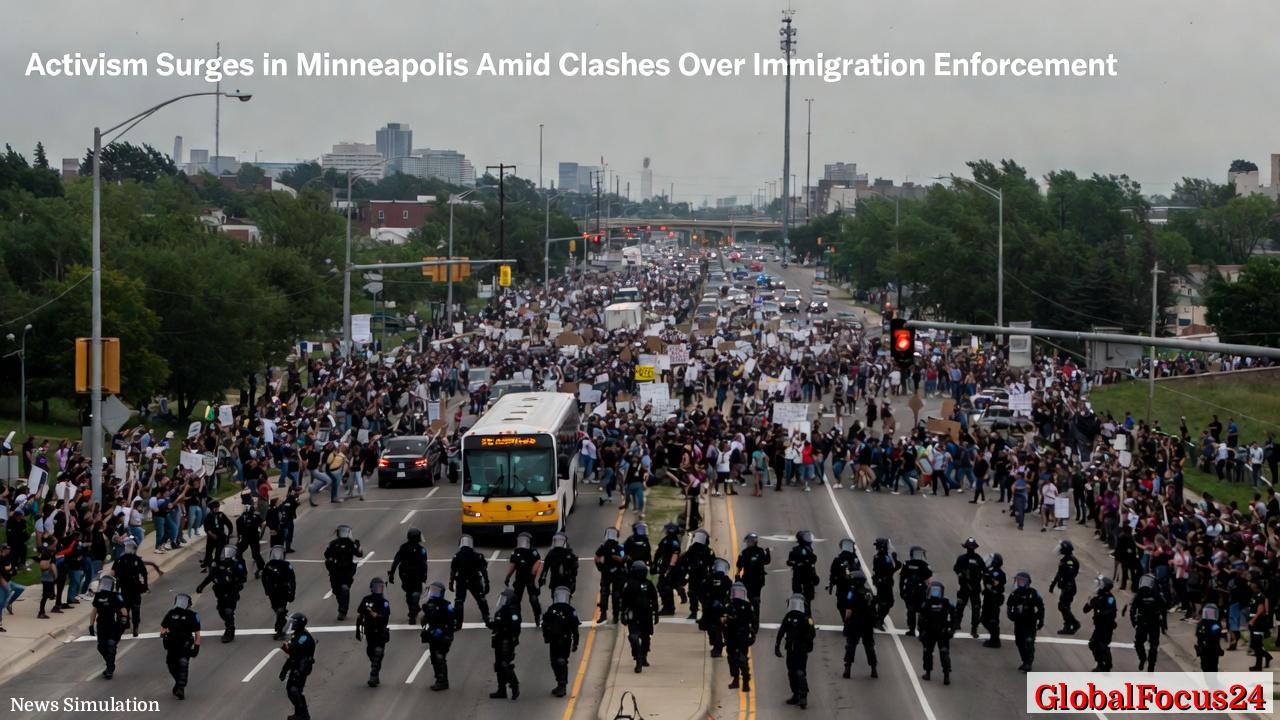
Activism Surges in Minneapolis Amid Clashes Over Immigration Enforcement
Minneapolis, Minnesota — A growing national conversation around immigration enforcement has taken on new urgency in Minneapolis, where a wave of organized activism is reshaping the city’s civic landscape. In the weeks since a series of federal enforcement actions intensified, residents, workers, and local officials have mobilized to monitor, protest, and, in some cases, disrupt operations associated with Immigration and Customs Enforcement (ICE). The developments combine historical echoes with contemporary policy debates, creating a complex portrait of regional dynamics, economic implications, and public reaction.
Historical context: a city shaped by labor and reform movements Minneapolis has long been a stage for social mobilization. In the early 20th century, labor activism helped redefine urban life during the Great Depression, while the 1930s era remains a touchstone when discussing large-scale work stoppages and collective action. The current wave of activism arrives with a different set of actors and technologies, yet it resonates with Minneapolis’ historical identity as a city where organized citizens push for accountability and policy reform. Immigrant communities have contributed to the city’s growth for decades, often facing policy shifts that compel both adaptation and resilience. The present moment situates local organizers within a broader national conversation about immigration reform, public safety, and civil liberties.
Economic impact: local disruption, broader market signals The surge in activism has begun to influence the city’s economic rhythms in tangible ways. Large-scale street actions and road blockages have temporarily altered commuting patterns, affecting small businesses, transit routes, and service delivery. In sectors such as manufacturing, logistics, and hospitality, even brief interruptions can ripple through supply chains and labor costs, prompting business owners to reassess contingency plans. City authorities have emphasized coordination with emergency services and transportation agencies to minimize long-term disruption, while acknowledging that public demonstrations inherently carry risk to workers and customers.
Analysts note that sustained demonstrations can affect regional investment sentiment, particularly in sectors sensitive to workforce availability and regulatory policy. If enforcement patterns evolve in response to local activism, employers may adjust hiring practices, compliance strategies, and risk management protocols. Conversely, heightened civic engagement can attract attention to immigrant-owned businesses and community-led economic development initiatives, potentially unlocking new funding avenues, partnerships, and community restoration projects.
Regional comparisons: echoes in other Midwest and urban centers Minneapolis’ experience mirrors a broader pattern across several urban areas where immigration enforcement intersects with local activism. In nearby Twin Cities communities and other Midwest metros, stakeholders have pursued a mix of legal advocacy, community organizing, and public dialogue to influence policy outcomes. Comparisons reveal a common tension between federal enforcement priorities and city-specific concerns about public safety, human rights, and economic vitality. While some cities have seen escalations in demonstrations and formal political debates, others have sought to channel activism into policy proposals, such as enhanced sanctuary-city collaborations, clearer reporting mechanisms for civil rights concerns, and targeted support for immigrant workers.
Public reaction: residents weigh security, compassion, and civic duty Across neighborhoods, residents express a spectrum of viewpoints. Many applaud community watchdog efforts that aim to prevent abuses and ensure transparency in enforcement operations. They describe a desire for accountability, clearer communication from federal authorities, and more humane approaches to immigration policy that consider families and workers who contribute to the local economy. Others emphasize the importance of public safety and the rule of law, urging careful balance between enforcement and civil liberties. The public discourse reflects a city-wide reckoning with how to reconcile national policy with local values and practical consequences for everyday life.
Policy responses: leadership, dialogue, and practical steps City leaders have publicly stressed the importance of safeguarding residents and maintaining essential services. The mayor has criticized specific enforcement actions, calling for greater oversight and transparency. The governor has engaged in discussions with federal counterparts, signaling a willingness to facilitate dialogue while avoiding unilateral policy shifts. In parallel, several lawmakers have proposed ideas to refine enforcement logistics, including regional coordination to minimize unintended harms and to reduce the risk of unintended confrontations in densely populated urban areas.
At the operational level, authorities have explored adjustments to enforcement tactics, such as enhanced notification practices, clearer security protocols for bystander safety, and coordination with local law enforcement to prioritize public safety while respecting constitutional rights. Legal scholars and civil rights advocates have urged robust oversight mechanisms, transparent reporting on incidents, and independent investigations of any fatalities or injuries related to enforcement actions. The evolving policy landscape underscores the importance of safeguarding human rights alongside public order.
Human impact and community resilience: stories behind thes Beyond statistics and policy debates, individual narratives illustrate the human cost and resilience driving the movement. Families affected by enforcement actions describe fear, disruption to schooling and employment, and the stress of navigating an uncertain legal landscape. Community centers, faith institutions, and nonprofit organizations have stepped up to provide legal aid, counseling, and practical support for affected households. Volunteers have organized mutual aid networks, offering meals, transportation assistance, and opportunities for neighbors to participate in peaceful demonstrations or civic dialogues.
Educational and cultural implications also emerge. Schools, universities, and cultural organizations have hosted forums to discuss immigration policy in accessible terms, helping residents understand the complexities of federal decisions and their local ramifications. Arts and media initiatives have surfaced to document experiences, amplify marginalized voices, and foster cross-cultural understanding—a reminder of how public policy interacts with culture in shaping a city’s collective memory.
Safety considerations: balancing rights with responsibilities As activism intensifies, safety becomes a central concern. Organizers emphasize peaceful demonstrations, de-escalation training, and adherence to local ordinances. Law enforcement officials reiterate their commitment to protecting both the public and those exercising constitutionally protected rights, while acknowledging the need for careful incident reporting and accountability. The public placing of safety at the forefront helps maintain a constructive atmosphere, enabling civic participation without compromising the well-being of residents, workers, and visitors.
Future outlook: what comes next for Minneapolis and beyond Looking ahead, the Minneapolis movement could influence national conversations about immigration policy and local governance. If activism continues to gain traction, policymakers may face renewed pressure to craft comprehensive reforms that address border security, asylum procedures, labor rights, and pathways to legal status. Local jurisdictions could experiment with new models of community oversight, public engagement, and service delivery that balance the aims of safety, dignity, and economic stability.
In the near term, expect continued public demonstrations, legal analysis, and media coverage as stakeholders assess the efficacy of various advocacy strategies. The moment presents an opportunity for constructive collaboration among community groups, business leaders, labor unions, and policymakers to design solutions that reflect the city’s diverse perspectives while preserving its economic vitality.
Conclusion: a pivotal moment for civic engagement and policy discourse Minneapolis stands at a crossroads where activism, policy, and daily life intersect. The current wave of mobilization highlights the enduring questions about how a city can uphold public safety and human rights in the face of federal enforcement actions. The outcomes will depend on sustained dialogue, transparent governance, and the willingness of communities to engage in solutions that respect both legal frameworks and human dignity. As Minneapolis navigates this period, the city’s approach may offer lessons for other urban centers confronting similar tensions between national policy and local realities.