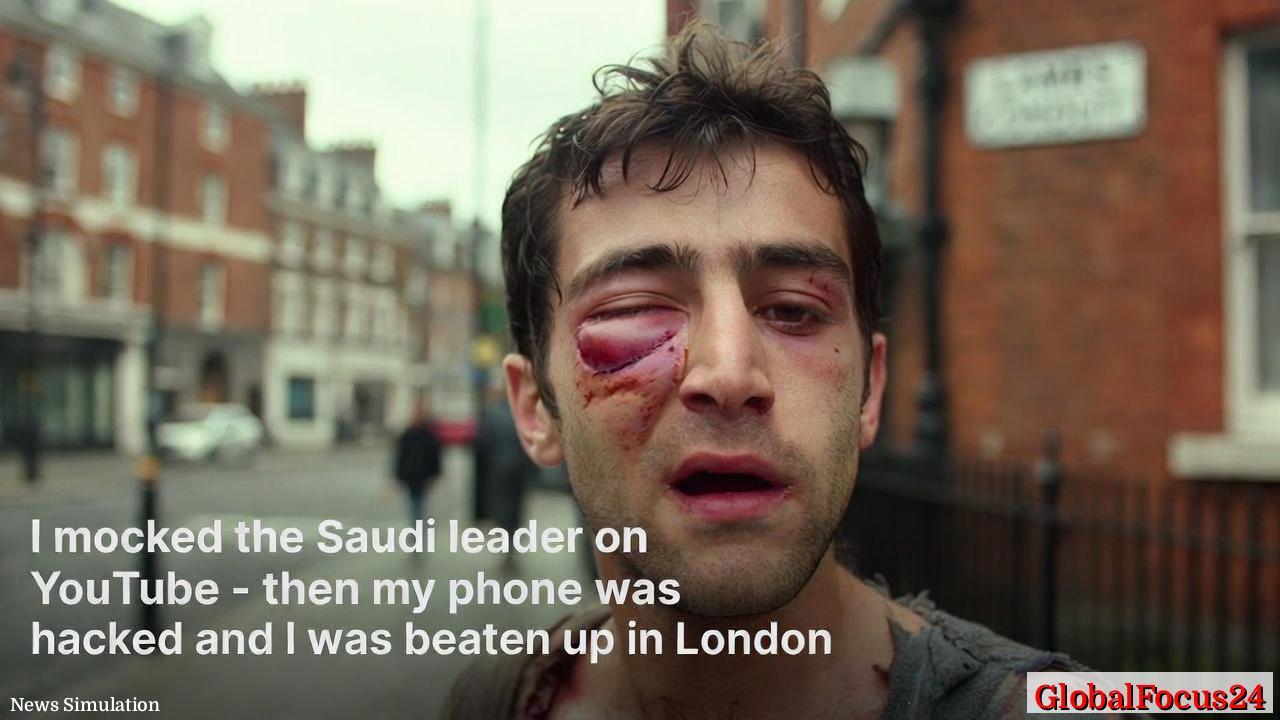
Man Arrested for Digital Intrusion and Violent Assault in London After Mocking Saudi Leader on YouTube
A complex incident unfolding in London highlights the growing intersection of online expression, digital security breaches, and real-world violence. A man who publicly mocked the Saudi leadership on YouTube reports that his phone was hacked before he was physically assaulted in the British capital. The sequence of events—digital intrusion followed by a brutal street attack—has drawn attention to the risks faced by content creators who exercise bold commentary about high-profile foreign leaders, while also underscoring broader questions about privacy, cybersecurity, and the safety of online voices in public spaces.
Historical context and the evolution of online expression In the early days of online publishing, creators enjoyed a relatively unencumbered environment to share opinions, insights, and satire. Over time, as the internet evolved into a global news and entertainment ecosystem, challenges emerged around accountability, harassment, and the unintended consequences of online rhetoric. The incident in London brings into focus how digital platforms, international politics, and local safety protocols intersect in real-world outcomes. For content creators, this era demands heightened awareness of digital footprints, data protection, and the potential for online activity to translate into physical risk.
The cyber-physical link: from hacking to real-world harm The assertion that a phone was hacked prior to a physical assault points to a troubling pattern where digital security breaches can precede or accompany violent encounters. Experts emphasize that compromised devices can reveal location data, messaging history, and other sensitive information that, in some cases, could escalate tensions or trigger targeted wrongdoing. While investigations are ongoing, the case illustrates how cybersecurity and personal safety are no longer siloed issues. Businesses, journalists, and ordinary users alike must consider layered protections—from strong device encryption and multi-factor authentication to regular account audits and cautious sharing of location metadata.
Economic impact and implications for digital content ecosystems Incidents that fuse digital harassment with physical violence can have ripple effects across the broader online economy. For content creators, such events can influence audience behavior, channel policies, and moderation practices. Platforms may face pressure to balance free expression with safety measures, potentially driving demand for more robust security features, better incident reporting tools, and clearer guidelines for handling content that targets public figures or foreign leaders. Advertisers, industry analysts, and policymakers closely watch how such incidents affect trust in online media, user engagement, and the viability of independent commentary as a sustainable career path.
In regional terms, the United Kingdom’s media landscape has long emphasized a robust press freedom tradition combined with vigilant protective measures for individuals who participate in public discourse. London, as a media hub, hosts a wide spectrum of voices—from investigative reporters to satirical presenters—whose work can provoke strong reactions. The economic ecosystem surrounding digital content in the UK includes a mix of independent creators, traditional media partnerships, and global platforms, all navigating evolving data protection laws, platform policing, and the economics of audience monetization. The London incident thus sits at the crossroads of these dynamics, prompting discussions about how to support resilient online voices while maintaining public safety.
Regional comparisons and safety frameworks Across major global cities, the balance between safeguarding free expression and ensuring personal security has become a central concern for creators and audiences alike. In comparable contexts—urban centers with bustling digital cultures and high concentrations of online communities—the combination of digital manipulation, surveillance concerns, and street-level violence has prompted a spectrum of responses:
- In some European capitals, law enforcement agencies emphasize rapid incident response, digital forensics, and cross-border cooperation to deter cyber-enabled harassment that spills into the physical realm.
- In North American markets, tech platforms often deploy layered moderation policies, alert systems, and user education campaigns designed to reduce risk while preserving open discourse.
- In Asia-Pacific regions, authorities sometimes prioritize public safety protocols and digital literacy initiatives that equip creators with practical steps to protect themselves online and offline.
The London incident adds a distinct case study to these regional patterns, illustrating how a digital attack can be followed by a tangible assault, prompting a reevaluation of personal cybersecurity practices and community safety norms in major metropolitan hubs.
What happened, what investigators are examining According to the account provided, the individual who posted content mocking a high-profile leader alleges that his device was compromised before he faced an assault in central London. Authorities have initiated an inquiry into both the cyber intrusion and the violent incident, examining potential links between the two events, the timeline of digital access, and any evidence suggesting targeted wrongdoing. Investigators are likely to scrutinize data from the suspect’s devices, communication records, and security logs, alongside surveillance footage and witness testimonies from the immediate vicinity of the assault.
While many specifics remain under inquiry, the case underscores the importance of rapid, coordinated responses to incidents that straddle the internet and the streets. For residents and visitors, the episode reinforces practical safety messages: maintain updated device security, use strong passwords and multi-factor authentication, enable encryption, and remain aware of surroundings when engaging in online influence campaigns or high-stakes commentary in public spaces.
Public reaction and the role of platforms Public reaction to incidents that involve mocking or criticizing powerful figures often reveals a mix of admiration for fearless commentary and concern about personal safety. In this evolving media environment, audiences tend to value transparent reporting, credible sources, and a sense of proportionality in how such situations are discussed. Social platforms, in particular, play a pivotal role in shaping the narrative—providing channels for rapid dissemination, community responses, and, at times, amplification of harassment. The ongoing discussion around platform policies highlights a tension between enabling free expression and mitigating real-world risk for individuals who create provocative content.
From a policy perspective, stakeholders are examining how better security guidance can be integrated into creator workflows. Potential measures include education on device hygiene for content creators, clearer reporting routes for suspected cyber intrusions, and improved collaboration between tech platforms and law enforcement to address cyber-enabled violence. While no jurisdiction can guarantee immunity from harm, a comprehensive approach that combines personal security practices with organizational safeguards stands out as a practical path forward.
Lessons for creators, audiences, and policymakers
- Prioritize digital hygiene: Regularly update software, use encrypted messaging where appropriate, and enable two-factor authentication across all accounts. Review who has access to your devices and consider limiting location-sharing features when producing provocative or high-profile content.
- Build a safety plan: For creators who frequently publish bold or sensitive material, develop a personal safety plan that includes offline meeting protocols, secure transport arrangements, and a clear escalation path if threats arise.
- Strengthen platform partnerships: Platforms can support creators by offering security resources, rapid incident response channels, and transparent enforcement of policies that protect individuals from violent retaliation without stifling legitimate discourse.
- Foster informed public discourse: Audiences can contribute to safer online spaces by engaging respectfully, avoiding doxxing or harassment, and supporting constructive, fact-based conversations around geopolitically sensitive topics.
- Encourage cross-border cooperation: Given the international dimensions of many high-profile cases, cooperation among law enforcement agencies across jurisdictions remains essential for addressing cyber-enabled violence that crosses national boundaries.
Safety considerations and ongoing coverage As investigations proceed, it is important to monitor official updates for any new information about the attacker’s motives, the nature of the digital intrusion, and the broader implications for security protocols in urban environments. The incident also invites broader dialogue about digital sovereignty and the responsibilities of individuals and platforms in maintaining a safe arena for public expression. While the precise outcomes of this case remain to be determined, the situation serves as a reminder that the digital realm and the physical world are increasingly intertwined, and safeguarding both requires proactive, coordinated efforts from individuals, technology companies, and authorities alike.
Regional implications for media resilience For metropolitan centers that host a diverse array of voices and viewpoints, the London episode underscores the necessity of resilient media ecosystems that can withstand digital threats while preserving open communication. Newsrooms and independent creators alike benefit from investing in cybersecurity training, establishing incident response playbooks, and collaborating with regional cybersecurity agencies to ensure rapid containment and recovery when devices or accounts are compromised. In the long run, such preparedness contributes to a healthier, more sustainable environment for critical commentary that informs the public and enriches democratic discourse.
Conclusion The incident involving a man who publicly mocked a foreign leader on YouTube, followed by a reported phone hacking and a violent assault in London, brings into focus the evolving dynamics of online expression, cybersecurity, and personal safety in contemporary urban life. As investigations unfold, the case is likely to influence how creators protect themselves online, how platforms monitor and mitigate risks for outspoken voices, and how policymakers think about the balance between free speech and security in the digital age. In a world where digital actions can quickly become physical realities, the message is clear: robust cybersecurity and thoughtful safety planning are essential for anyone who uses the internet to comment, challenge, or provoke—especially when that commentary reaches audiences across borders.