Loyola University Student Fatally Shot in Chicago Park; Suspect Identified as Venezuelan National with Prior Arrests
Tragic Shooting in North Side Park
CHICAGO — A Loyola University student was fatally shot early Thursday morning in a city park, in what authorities describe as a senseless and unprovoked act of violence. The suspect, identified as 26-year-old Jose Medina-Medina, a Venezuelan national who allegedly entered the United States illegally, was taken into custody after an hours-long manhunt.
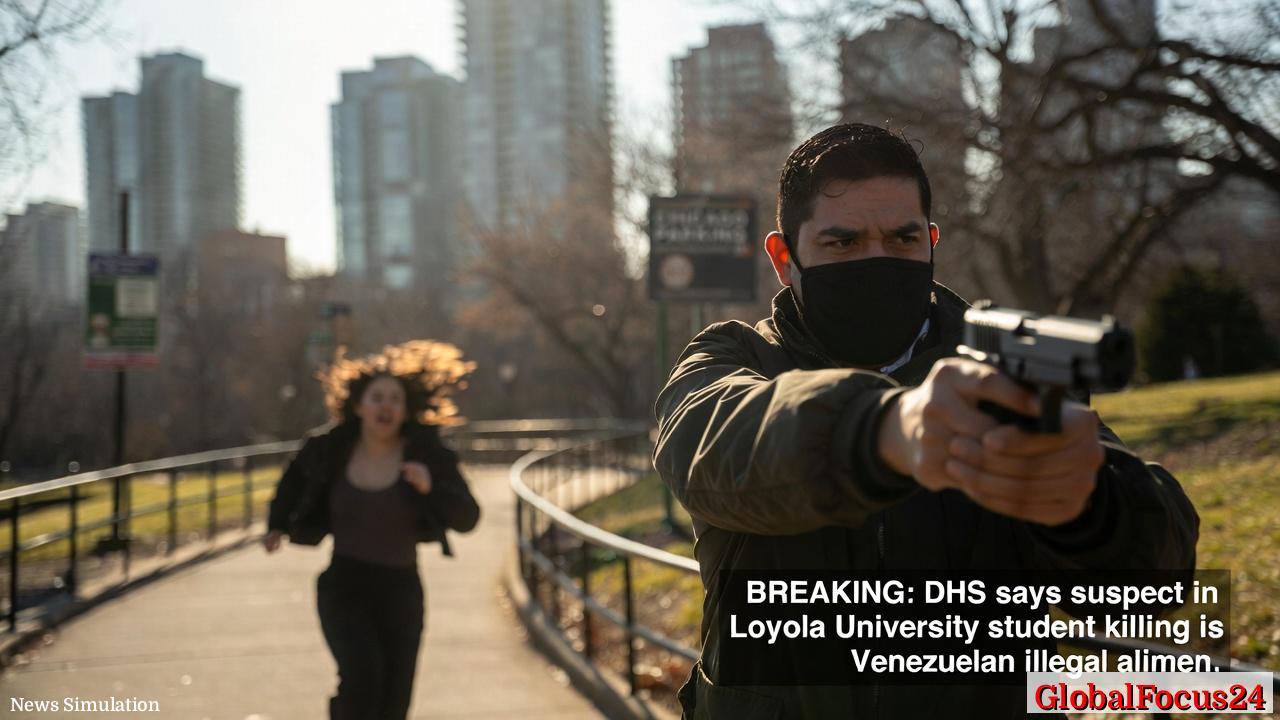
According to officials, Medina-Medina approached 21-year-old Sheridan Gorman, a sophomore at Loyola University Chicago, while she was walking through a small neighborhood park near the Rogers Park area just after midnight. Witnesses reported that he was wearing a mask and carrying a handgun. When Gorman attempted to run, the suspect opened fire, striking her in the upper body. She died at the scene despite immediate emergency response efforts.
The incident has shaken the North Side neighborhood and reignited local debate over public safety, immigration policy, and the city’s growing concerns about violent crime.
Suspect’s Immigration and Criminal Background
Federal and local authorities confirmed that Medina-Medina entered the United States through the southern border in May 2023 and was released pending immigration proceedings. Officials from the Department of Homeland Security (DHS) stated that the suspect had been previously detained but was not deemed a high-priority case at the time.
In late 2024, Chicago police arrested Medina-Medina on a shoplifting charge at a North Side retail store. Court documents show he was released within 24 hours under the city’s standard bond policy. Law enforcement sources said there were no outstanding warrants or detainers at the time of his release.
Critics of the system point to the case as an example of procedural gaps in communication between federal immigration authorities and local law enforcement agencies. Immigration experts note that these cases often involve complex coordination challenges and limited federal detention capacity.
Loyola University and Community Response
Loyola University Chicago confirmed Gorman’s death in a campus-wide statement, calling her a “bright, compassionate student whose commitment to social justice exemplified the Loyola spirit.” Classes were not canceled, but vigils and support sessions were organized across campus on Friday.
Students gathered at Madonna della Strada Chapel, lighting candles and leaving flowers in Gorman’s memory. Friends described her as enthusiastic about urban community development and known for volunteering with neighborhood outreach programs.
Chicago Mayor’s Office expressed condolences to the victim’s family and pledged cooperation with police and federal authorities in the ongoing investigation. “We mourn with the Loyola community and every resident affected by this devastating crime,” the statement read.
Rising Concerns About Violent Crime in Chicago
The shooting comes during a period of heightened concern over violent crime in Chicago. Although official data from the Chicago Police Department (CPD) indicates that overall homicides declined by roughly 8% in 2025, brazen acts of violence in public places continue to cause alarm among residents.
Parks and lakefront areas—long viewed as safe community spaces—have seen a small but notable increase in overnight incidents. City data shows a 12% increase in violent activity in public recreation zones compared with the prior year.
Local criminologists attribute the problem to a combination of persistent gang activity, economic pressure, and limitations in street-level policing resources. Public safety experts have called for improved park patrols, lighting upgrades, and expanded youth engagement programs to deter nighttime crime.
Historical Context: Crime and Urban Borders
Chicago’s complex history with crime and immigration has often mirrored broader national patterns. In the late 19th and early 20th centuries, waves of European immigrants settled in working-class neighborhoods, sometimes blamed—unfairly—for spikes in crime during periods of social transition.
In modern decades, however, researchers highlight that immigrant communities, including Latin American newcomers, often experience lower crime rates than native-born populations. Sociologists emphasize that isolated cases like this should not define entire groups but instead prompt evaluation of administrative and procedural systems that failed to prevent tragedy.
Historically, violent crimes involving foreign nationals have triggered intense public debate. From the San Francisco Kate Steinle case in 2015 to more recent incidents in cities such as New York and Philadelphia, questions about local cooperation with federal immigration enforcement have recurred, leading policymakers to reassess how public safety intersects with humanitarian and legal obligations.
The Immigration Enforcement Dilemma
The DHS report revealing Medina-Medina’s immigration status underscores ongoing national challenges in managing an overwhelming number of asylum seekers and border crossers. Federal data shows that more than 2.4 million encounters were recorded at the southern border in 2025, the second-highest annual total on record.
Once released pending hearings, many migrants remain in the U.S. for months or years as immigration courts operate under heavy backlogs. The most recent government figures indicate a case backlog exceeding 3 million nationwide.
Analysts argue that this strain contributes to inconsistent detention and supervision outcomes, leaving municipal authorities with limited insight into who remains in their jurisdictions. While immigration enforcement lies primarily with federal officers, local police departments often have to navigate between community trust and federal requests for cooperation, leading to gaps such as those seen in Medina-Medina’s prior arrest.
Economic and Social Effects on Urban Communities
Beyond the tragedy itself, incidents like this can have ripple effects on city life and local economies. Chicago’s North Side, home to Loyola University, relies heavily on its reputation for safety to sustain its mix of students, families, and small businesses.
Real estate analysts have noted that highly publicized violent crimes can temporarily depress residential interest and property values in affected neighborhoods. Local merchants report increased anxiety among customers and employees following high-profile incidents, potentially influencing foot traffic and evening sales.
City economists caution that Chicago’s recovery from pandemic-era shocks remains fragile. As tourism and downtown business activity rebound, recurring violence can deter investment and weaken consumer confidence, particularly among suburban visitors and prospective university applicants evaluating campus safety.
At the same time, social service organizations warn against letting fear undermine support for immigrant integration. Community leaders advocate for balanced approaches that address public safety while maintaining humane treatment of migrants and asylum seekers, who often face dire circumstances in their home countries.
Public Safety and Policy Implications
In response to the shooting, Chicago Police Superintendent Larry Snelling announced intensified patrols around university campuses and public parks. He also urged residents to report any suspicious activity immediately. “Our priority is preventing another needless loss of life,” Snelling said during a Friday press briefing.
City Council members from North Side wards have proposed exploring technology-based safety measures—improved lighting, remote surveillance in parks, and more emergency call boxes—to bolster existing patrols.
At the federal level, immigration officials say they are reviewing Medina-Medina’s case to determine how he fell through enforcement and detention protocols. Homeland Security representatives have publicly reiterated that the government’s current focus remains on high-risk or violent offenders, though critics argue that enforcement definitions can miss potentially dangerous individuals with emerging behavioral patterns.
National and Regional Comparisons
Chicago is not alone in facing the intersection of violent crime and immigration system lapses. In New York City, similar concerns arose after a suspect released from federal custody was later charged in a serious assault. In Texas border towns, local authorities report strains on resources as rising migrant crossings stretch law enforcement’s capacity to screen and track arrivals.
Comparatively, cities such as Los Angeles and Miami have invested heavily in community policing and immigration coordination programs designed to build communication among agencies. Those models emphasize proactive monitoring and resource-sharing—approaches that experts suggest might help prevent tragedies like the one that occurred this week in Chicago.
Urban policy researchers say it is vital to distinguish between systemic administrative failures and community-level resentment, arguing that sustainable public safety depends on efficient data sharing, consistent enforcement standards, and continued engagement between local and federal authorities.
Remembering Sheridan Gorman
As Chicago mourns, the focus remains on honoring the life of a promising young student whose future was cut short. Friends recalled Gorman’s optimism, passion for social advocacy, and dedication to her studies. Her professors described her as an “extraordinary thinker” with aspirations to work in community planning after graduation.
A memorial fund in her name has been established by Loyola University to support students committed to urban justice and neighborhood revitalization.
While investigators continue to piece together the events leading up to the shooting, residents across Rogers Park and beyond have begun calling for both justice and accountability—hoping that Gorman’s death will prompt lasting improvements in public safety oversight and interagency communication.
Continuing Investigation
Authorities remain cautious about releasing further details as the investigation continues. Medina-Medina is being held at the Cook County Jail without bond and faces multiple charges, including first-degree murder and unlawful possession of a firearm. Federal officials have initiated separate immigration proceedings.
Chicago police confirm that additional surveillance footage is under review and that multiple witnesses have been interviewed. Prosecutors are expected to present the case to a grand jury in the coming weeks.
For now, the tragedy in the park stands as a painful reminder of how quickly a moment of ordinary life in a peaceful neighborhood can turn devastating—and how a series of administrative oversights can converge with fatal consequences for a city still striving for security and trust.