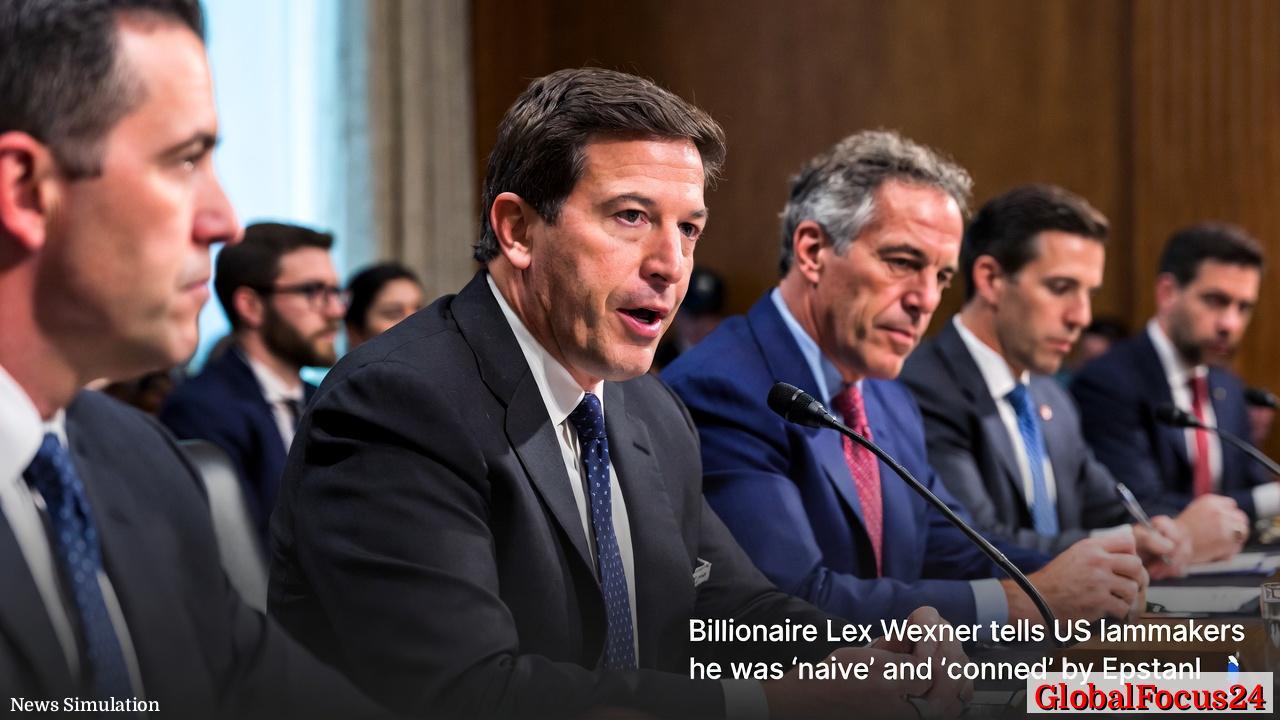
Lex Wexner Tells U.S. Lawmakers He Was “Naive” and “Conned” by Jeffrey Epstein
A Rare Public Reckoning from a Billionaire Retail Pioneer
Billionaire retail magnate Leslie “Lex” Wexner, the longtime force behind brands such as Victoria’s Secret and Bath & Body Works, appeared before U.S. lawmakers this week to address his past ties to disgraced financier Jeffrey Epstein. In a hearing marked by tension and apology, Wexner acknowledged that he had been “naive” and “conned” by Epstein, describing their decades-old relationship as “the most embarrassing and regrettable chapter” of his professional life.
The hearing, convened by a congressional committee investigating how financial elites enabled Epstein’s activities, marked the first time Wexner has testified publicly about the scandal. His appearance came amid mounting scrutiny from both federal investigators and the public, who have long questioned how the financier’s influence extended into some of the most powerful corners of American business and philanthropy.
The Rise and Fall of a Retail Visionary
Lex Wexner, now 88, built a multibillion-dollar retail empire from humble beginnings in Columbus, Ohio. In 1963, he opened a small women’s apparel shop called “The Limited,” named for its small but curated selection of skirts and blouses. By the 1990s, Wexner’s company, L Brands, had become one of the most successful retail corporations in the United States, controlling household names such as Victoria’s Secret, Bath & Body Works, Express, and Abercrombie & Fitch.
Under Wexner’s leadership, Victoria’s Secret defined American lingerie culture for decades, marrying aspirational marketing with mainstream accessibility. Bath & Body Works, another of his creations, grew into a leading personal care retailer recognized for affordable luxury. Wexner’s influence extended far beyond retail, transforming central Ohio into a hub of corporate innovation, philanthropy, and suburban growth.
Yet the same ambition that built his fortune would also prove a vulnerability. In the late 1980s, Wexner hired Jeffrey Epstein, a former teacher turned financial consultant, to manage parts of his personal fortune. Epstein would go on to secure sweeping control over Wexner’s finances and properties, an arrangement that raised eyebrows even within the close-knit circles of American business elites.
“I Was Deceived”: Wexner’s Testimony
Before Congress, Wexner testified that he placed “an extraordinary level of trust” in Epstein. “He managed aspects of my personal finances, my household staff, and certain family charitable foundations,” Wexner said. “I believed he was loyal and capable. I was mistaken.”
He described his personal and financial separation from Epstein in 2007 as the culmination of years of growing discomfort. “When I learned of his misconduct,” Wexner said, “I severed all ties. The betrayal was personal as much as financial.” He paused before adding, “I was deceived. I was conned.”
Lawmakers pressed Wexner on how much he knew about Epstein’s activities during their two-decade association. Some questioned whether such a powerful businessman could truly have been unaware of his advisor’s actions. Wexner maintained that he had no knowledge of Epstein’s criminal behavior before his 2008 conviction for sex offenses involving minors.
“That failure of judgment will haunt me for the rest of my life,” he told the panel. “I believed that wealth and intellect could insulate me from deceit. I could not have been more wrong.”
The Financial and Reputational Fallout
The Epstein scandal dealt a severe blow to Wexner’s otherwise carefully managed reputation. Once celebrated for his philanthropy—particularly the Wexner Foundation, which focuses on leadership development in the Jewish community—he found his name repeatedly linked tos describing Epstein’s crimes and elite connections.
While no legal charges have been brought against Wexner, the association tarnished his legacy and cast a long shadow over the retail empire he created. L Brands, already facing financial headwinds from changing consumer habits and the rise of e-commerce, underwent a dramatic restructuring. In 2021, the corporation split in two, with Bath & Body Works emerging as an independent company and Victoria’s Secret rebranding under new leadership.
Stock analysts noted that both brands have since regained stability, though investor confidence took years to rebuild. In particular, Victoria’s Secret’s effort to distance itself from the hypersexualized marketing of its earlier decades mirrored Wexner’s own attempt to rehabilitate his public image.
Philanthropy Under Scrutiny
Wexner’s extensive philanthropic network, once a cornerstone of his legacy, also faced renewed criticism. His namesake Wexner Foundation suspended certain projects in the wake of continued questions about Epstein’s past involvement.
In his testimony, Wexner addressed these concerns, emphasizing that none of his foundation’s funds were ever directed or controlled by Epstein. “Every dollar has gone toward educational and cultural programs,” he said. “Nevertheless, I recognize that association cast doubt on noble work.”
His statement reflected the dilemma faced by many wealthy donors tied, however indirectly, to Epstein’s network: how to maintain public trust in charitable work while being transparent about past affiliations.
Broader Economic and Ethical Implications
The congressional hearing is part of a wider national effort to understand how Epstein leveraged his wealth, charm, and access to powerful figures across finance, academia, and politics. Experts in corporate governance describe the Wexner case as a study in the dangers of concentrated financial control and unexamined personal loyalty.
According to analysts, Wexner’s relationship with Epstein exemplified a broader issue in American business culture—a tendency among the ultra-wealthy to rely on a small circle of trusted advisors, often without sufficient oversight. Such dynamics can enable financial misconduct or even criminal exploitation, particularly when personal trust substitutes for institutional accountability.
The economic impacts extend beyond individual reputations. Epstein’s network included significant philanthropic and investment entities, some managing billions of dollars. The subsequent dissolution of those relationships triggered a reevaluation of risk management among family offices and high-net-worth individuals.
“After Epstein, due diligence has become far more rigorous,” said one New York-based wealth manager. “There’s an understanding now that power without transparency breeds exploitation.”
Comparing Global Reactions
The scandal has reverberated globally, with several countries reexamining their regulatory frameworks around private wealth management. In the United Kingdom, where Epstein maintained ties to aristocratic circles, lawmakers called for greater scrutiny of financial intermediaries. Similarly, Switzerland and Singapore—both major banking hubs—introduced stricter client verification processes.
In comparison, the United States has moved more slowly, relying largely on civil lawsuits and congressional inquiries rather than new financial legislation. Economists note that while the U.S. remains a leading jurisdiction for private wealth management, reputational risk has become a stronger deterrent than before. Clients and institutions alike are increasingly sensitive to public perception, particularly in the age of digital exposure.
Public Reaction and the Court of Opinion
Public response to Wexner’s testimony has been mixed. Some praised his willingness to appear before Congress after years of silence, seeing in his words a measure of accountability rarely shown by billionaires. Others viewed his statements as too little, too late—a carefully crafted apology intended more to safeguard legacy than to illuminate truth.
Victims’ advocates expressed frustration that, despite renewed attention, many of the systemic failures that enabled Epstein’s crimes remain unresolved. “Acknowledgment is not accountability,” said one attorney representing survivors. “But if powerful men like Lex Wexner begin to speak openly, maybe the culture of complicity will start to break.”
In Ohio, Wexner’s hometown legacy remains complicated. His name still adorns major hospitals, art centers, and university buildings, yet conversations about philanthropy now carry undertones of moral reckoning. For some residents, his testimony marked a necessary step in confronting an uncomfortable past.
The Changing Image of an Empire
Since stepping down as chairman of Victoria’s Secret and L Brands, Wexner has maintained a lower public profile. Those close to him describe a man still deeply involved in philanthropy but more private, reflective, and guarded.
As retail markets continue to evolve, the empire he built is undergoing its own transformation. Victoria’s Secret has redefined its image around inclusivity and body positivity, while Bath & Body Works remains a market leader in personal care. Both successes trace their roots to Wexner’s original business acumen, underscoring the paradox of his legacy—a visionary entrepreneur undone by misplaced trust.
Looking Ahead
Wexner’s testimony will likely not be the last chapter in the broader congressional inquiry into Epstein’s financial network. Lawmakers have indicated that additional witnesses, including former associates in finance and philanthropy, could be called in the months ahead.
For Wexner, the hearing offered both a personal confession and a public reckoning. “If my experience can serve as a warning,” he concluded, “then perhaps some good can still come from this pain.”
His words captured a hard truth about power and responsibility: even among the most accomplished figures in American business, trust remains a gamble—and sometimes, it costs everything.