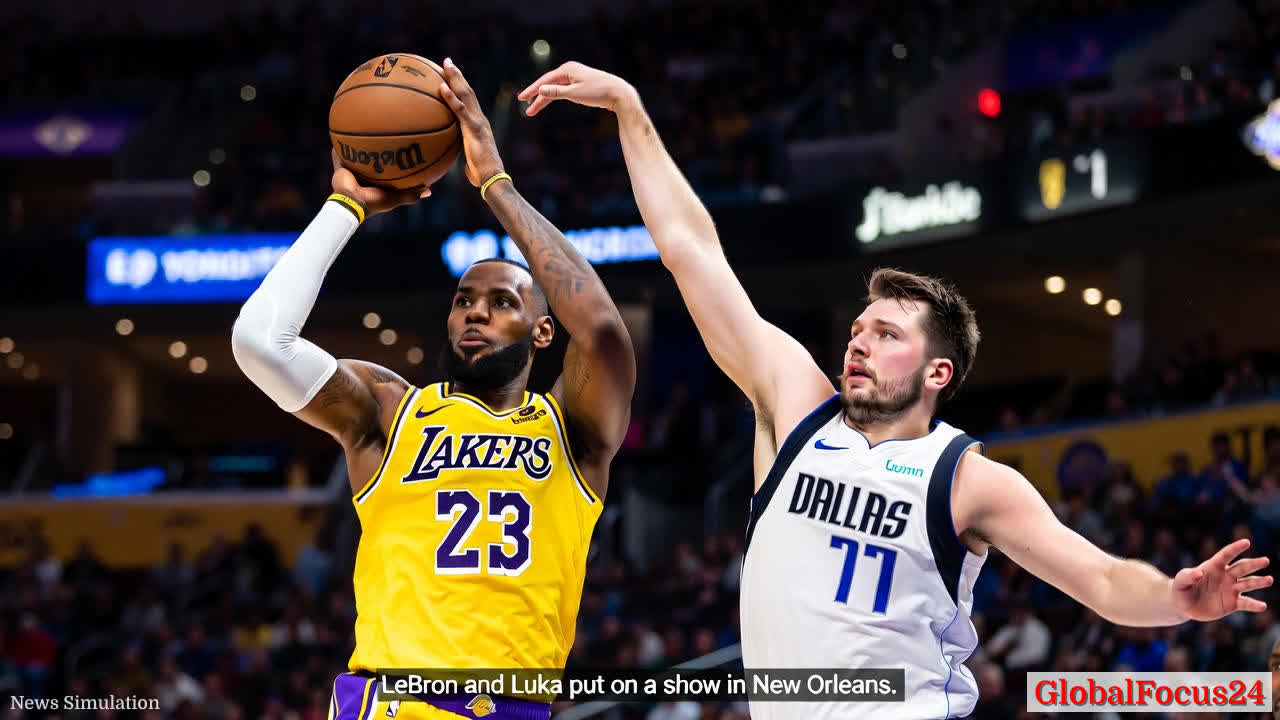
Lakers Rally Past Pelicans as James and Doncic Lead 111-103 Victory
A high-stakes Tuesday night in New Orleans delivered a dramatic final frame as the Los Angeles Lakers overcame a stubborn New Orleans Pelicans squad to secure a 111-103 win. LeBron James and Luka Dončić both poured in 30 points to pace the Lakers, who surged in the fourth quarter to erase a late deficit and push their winning streak to three games. The result added another chapter to what has been a season defined by star-driven performances, versatile depth, and the ongoing evolution of a Lakers roster reimagined around three dynamic playmakers.
Historical context: star-led teams in a modern NBA landscape
Basketball history is replete with nights when a pair of transcendent scorers carry an otherwise balanced team to victory. The 2025-26 NBA season has underscored how teams maximize efficiency by pairing elite offensive engines with multi-dimensional supporting casts. LeBron James, now in his late 30s, continues to defy the aging curve by combining elite playmaking with scoring efficiency, while Luka Dončić — a relentless creator who blends scoring, playmaking, and court vision — remains one of the league’s most impactful do-it-all guards. Their collaboration in Los Angeles represents a contemporary version of high-variance, star-centric lineups that stretch defenses and force opponents into late-game decision-making that can tilt a game in a single stretch.
The Pelicans, led by a breakout night from Trey Murphy III, illustrate another facet of modern basketball: the rise of young wings who can shoulder heavy shot creation loads. Murphy’s career-high 42 points underscored his emergence as a legitimate scoring threat, capable of igniting offense even when evenings are not perfectly efficient across the board. New Orleans has built a roster that blends veteran leadership with rising talent, aiming to translate early-season momentum into sustained postseason contention. Tuesday’s result, however, extends an uneven stretch that has seen the Pelicans endure an eighth consecutive defeat, highlighting how fragile win streaks can be in a league defined by parity and bright, up-and-coming stars.
Game flow and notable sequences
The game unfolded as a back-and-forth affair through three quarters, with the Pelicans maintaining a slim edge as fans witnessed a gritty, physical contest characterized by balanced scoring and timely stops. The Lakers’ offense found its footing late, led by James and Dončić, whose synergy anchored a decisive 32-17 fourth-quarter outburst. James contributed 30 points, eight rebounds, and eight assists, while Dončić added 30 points and ten assists, reinforcing the two-way impact of their partnership. Deandre Ayton added 18 points and 11 rebounds, providing a reliable interior presence that helped stabilize the Lakers on both ends of the floor.
From the Pelicans’ side, Murphy’s heroics carried the load for much of the night. His 42-point personal performance marked a career-high and represented a remarkable scoring outburst that briefly tilted momentum in New Orleans’ favor. The rest of the Pelicans’ roster faced the challenge of synchronizing ball movement and shot selection against a Lakers defense that intensified its pressure in the fourth quarter. The late surge by Los Angeles underscored the value of late-game discipline, space creation, and the ability to convert possessions into points when it mattered most.
Economic and organizational implications
At the macro level, professional basketball franchises operate within a complex ecosystem of broadcasting rights, sponsorship deals, sponsorship-driven revenue streams, and local media attention. A marquee matchup featuring two of the league’s most marketable stars tends to yield heightened fan engagement, premium viewership, and increased monetization opportunities in local markets. The Lakers’ third consecutive win in a high-profile matchup adds a positive narrative thread for the franchise, contributing to sustained ticket demand, merchandise sales, and sponsorship visibility. In markets such as Los Angeles and New Orleans, where teams command sizable regional fan bases, performances like this can reinforce brand loyalty and engagement across cross-platform channels.
Regional comparisons illuminate how different markets respond to star-led performances. In larger media markets, the aura around a game featuring Dončić and James can amplify national and international interest, driving viewers who might not regularly follow the league to tune in for late-game drama. For New Orleans, a city with a passionate basketball culture and a strong following for both Murphy and the Pelicans’ developing core, the game provided a showcase of resilience and potential, even in defeat. Across the league, teams that can rely on a mix of veteran leadership and rising talent often achieve better balance and longer-term competitive trajectories, a balance the Lakers have sought to optimize with their current roster construction.
Sustainability and long-term outlook
Looking ahead, the Lakers’ adaptability and the continued growth of Dončić as a primary engine of offense will be critical to sustained success. The partnership between James and Dončić offers a platform for offensive versatility, enabling the team to attack defenses through pick-and-roll action, off-ball movement, and quick decision-making in transition. The Lakers’ bench depth, versatility in wing positions, and the interior presence from Ayton will be under scrutiny as the season progresses, with coaching decisions increasingly focused on optimizing minutes, preserving energy, and maximizing matchup advantages.
For the Pelicans, Murphy’s 42-point night underscores a high-ceiling capability that can anchor future campaigns. The challenge for New Orleans lies in sustaining offensive efficiency and defensive consistency when adjustments by opponents become more sophisticated. The development of role players who can reliably contribute when the primary scorers are not at their peak will determine how quickly the Pelicans translate talent into consistent wins. In the broader context of a competitive Western Conference, incremental improvements in defense, transition defense, and ball movement could unlock a more resilient path to the postseason.
Fan experience and public reaction
The atmosphere in New Orleans reflected a city energized by basketball culture. Fans remained engaged through a game that featured high-intensity defense, long-range shooting, and late-game drama. Murphy’s performance sparked a wave of social media attention and postgame discussion among fans and analysts, highlighting the Pelicans’ potential to unlock scoring versatility as the season unfolds. Lakers supporters celebrated a win that reinforced the team’s identity as a resilient, star-driven squad capable of closing out contests with precision. The public reaction to such performances typically centers on the drama of late-game decisions, the dynamic interplay between veteran leadership and youthful energy, and the ongoing narrative of two of the league’s most celebrated players delivering when it matters most.
Statistical snapshot and momentum indicators
- James: 30 points, 8 rebounds, 8 assists
- Dončić: 30 points, 10 assists
- Ayton: 18 points, 11 rebounds
- Murphy: 42 points (career high)
- Fourth-quarter score: Lakers 32, Pelicans 17
- Overall: Lakers outscored Pelicans in the final period to secure the win
The fourth-quarter turnaround stands as the defining moment of the game. The Lakers converted a higher percentage of their possessions in the closing period, converting opportunities into points with better shot selection and increased pace. Defensive pressure late in the game disrupted the Pelicans’ rhythm, forcing mismatches and creating turnovers that the Lakers converted into scoring opportunities. This combination of efficient offense and timely defense typifies how elite teams close out tight games in today’s NBA.
Conclusion: a moment that echoes broader trends
Tuesday’s Lakers-Pelicans matchup encapsulated several enduring themes in contemporary basketball: the enduring value of superstar duos in driving offense, the importance of depth and versatility in supporting casts, and the critical role of timely execution in the late stages of games. James and Dončić demonstrated why they remain among the most consequential players in the league, with each contributing a substantial scoring impact and facilitating teammates in critical moments. For Murphy and the Pelicans, the night highlighted a capacity for explosive scoring that, if harnessed within a cohesive system, could propel the team toward more consistent success as the season advances.
As the season continues, observers will monitor how these dynamics evolve. The Lakers’ offensive toolkit, featuring a combination of isolation, pick-and-roll, and off-ball movement, will be tested against top-tier defenses, while the Pelicans will look to tighten their rotation and improve execution in late-game situations. In regions across the country, fans will discuss how star power intersects with strategic depth to shape outcomes, drive ratings, and influence the broader narrative of a league defined by constant movement and opportunity.
Note: This article presents a neutral, analytically driven view of the game, focusing on performance data, strategic implications, and broader industry context without endorsing any political perspectives.