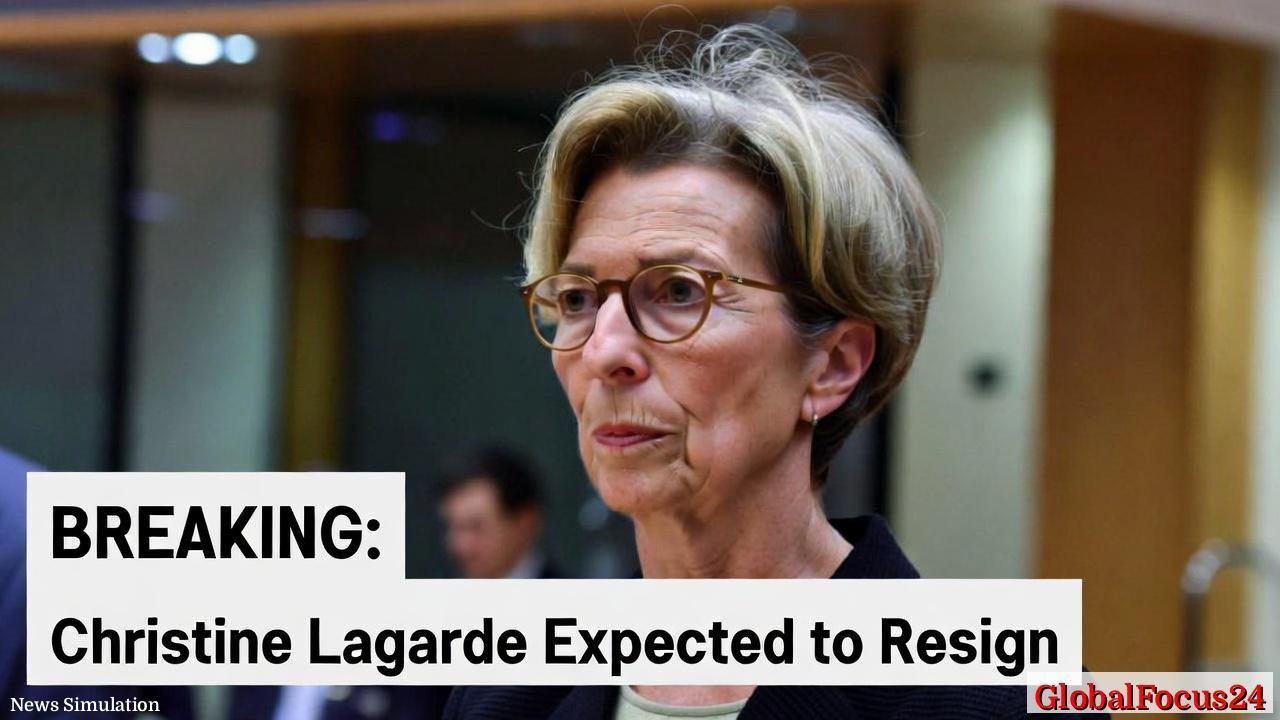
ECB Leader’s Expected Resignation: Implications for European Monetary Policy and Market Stability
The European Central Bank (ECB) faces a pivotal moment as speculation intensifies about the possible resignation of its president, Christine Lagarde, before the end of her current eight-year mandate. With the term ending in 2027, market participants and policymakers are weighing the potential impact of an early departure on European monetary policy, financial stability, and broader economic outlooks across the euro area. If Lagarde were to step down ahead of schedule, the transition would carry significant implications for the leadership dynamic within the ECB and for the European Union’s economic governance, with attention focusing on succession pathways, policy continuity, and regional economic resilience.
Historical Context: The ECB’s Leadership and Policy Trajectory
To understand the potential repercussions, it helps to recall the ECB’s recent history and the role its leadership has played in guiding the eurozone through periods of turbulence. Since its founding in 1998, the ECB has operated with a mandate to preserve price stability while supporting the union’s economic objectives. Christine Lagarde, who took the helm in 2019, arrived after a period of extraordinary monetary accommodation during the aftermath of the global financial crisis and the sovereign debt crisis. Under her leadership, the ECB navigated a complex landscape that included unprecedented monetary support, structural reforms in member economies, and evolving risk assessments tied to global supply chains, geopolitical tensions, and the ongoing effects of the Covid-19 pandemic.
Lagarde’s tenure has been characterized by careful calibration of stimulus measures, inflation targeting strategies, and a focus on ensuring that euro-area governance remains credible and robust. The bank’s decisions during this period have had far-reaching consequences beyond the borders of the 19 euro-area countries, influencing global financial conditions, cross-border lending, and investor confidence in European assets. A potential early departure would, therefore, not merely mark a change in leadership but could catalyze shifts in market expectations, policy signaling, and the timing of future rate adjustments.
Economic Impact: Transmission Mechanisms and Market Repercussions
Monetary policy in the euro area operates through a complex set of transmission channels, including interest rate guidance, asset purchases, and forward guidance about the path of policy rates. Any leadership transition at the ECB would intersect with these channels in several ways:
- Policy continuity and credibility: Markets value predictability. If Lagarde’s successor adheres to a similar policy framework and inflation-targeting approach, the transition could be smooth, with minimal disruption to financial markets. Conversely, a signal of policy pivot or a louder emphasis on near-term inflation risks could prompt volatility in bond and equity markets as participants recalibrate expectations for the pace of rate normalization or further stimulus.
- Forward guidance and market pricing: The ECB’s forward guidance helps shape expectations about future rate moves. A new president might refine or reinterpret communications strategy, affecting how investors price central-bank signals into yields on government bonds, corporate debt, and currency movements. Short-term volatility could arise around key policy review dates or regional economic data releases.
- Asset purchases and balance sheet management: The central bank’s approach to asset purchases—together with its balance-sheet normalization plan—plays a crucial role in financial conditions. Changes in leadership could influence the tempo or sequencing of asset holdings adjustments, with potential effects on liquidity conditions in European fixed-income and equities markets.
- Banking sector stability: The ECB’s supervisory arm integrates monetary policy with financial stability oversight. A change at the top could influence risk assessment priorities, liquidity stress testing, and capital-m adequacy frameworks that affect banks’ lending capacity and risk appetite, ultimately impacting credit availability for households and small-to-medium enterprises (SMEs).
Regional Comparisons: How Europe Stacks Up Against Global Counterparts
In considering the potential implications of an early leadership transition, it is helpful to compare Europe’s monetary policy environment with other major central banks:
- United States: The Federal Reserve operates in a larger, more diversified economy with a distinct inflation dynamic and financial integration both within the U.S. and globally. A leadership transition has historically influenced market sentiment, but the Fed’s policy framework emphasizes independent governance and a robust inflation-targeting regime. The euro area, by contrast, must harmonize 19 distinct economies with divergent growth trajectories, which can complicate the policy path. Any shift at the ECB could reverberate through global currency markets, particularly for the euro against benchmark currencies.
- United Kingdom: The Bank of England manages a relatively open economy with unique domestic factors, including energy prices and labor-market dynamics. While the UK is outside the euro area, UK financial markets are highly sensitive to ECB signals due to cross-border trade and financial linkages. A credible ECB transition would help anchor euro-area stability, which, in turn, influences the broader European financial ecosystem.
- Japan and emerging markets: As a global investor complex, the ECB’s stance affects global capital flows, especially for risk assets and fixed-income securities in developing economies that hold euro-denominated debt. A smooth transition would help preserve relative stability in cross-border investment channels and risk premia.
Implications for the European Economy: Growth, Inflation, and Investment
A potential leadership change at the ECB intersects with several macroeconomic variables that shape the European economy:
- Inflation dynamics: European inflation pressures have been shaped by supply shocks, energy prices, and domestic demand factors. The new leadership would need to interpret evolving inflation trajectories and respond with calibrated policy signals that balance price stability with economic growth objectives. The timing and magnitude of any adjustments to policy rates or asset purchases would likely reflect updated projections for the euro area’s inflation path.
- Growth prospects: Euro-area growth has been uneven across member states, with divergence in productivity, labor markets, and structural reforms. The ECB’s policy stance can influence investment decisions, access to credit, and the cost of capital. A credible transition would help maintain investor confidence and support continued investment in infrastructure, technology, and green initiatives that align with Europe’s long-term competitiveness.
- Financial markets: The perception of a stable transition affects bond yields, stock valuations, and currency volatility. A smooth succession process that preserves policy consistency would contribute to orderly markets, while signs of policy divergence or uncertainty could trigger short-term fluctuations in euro-denominated assets.
Public Reaction and Behavioral Dynamics
Public sentiment toward the ECB and its leadership often reflects broader attitudes toward economic well-being, job security, and the region’s future trajectory. In periods of policy uncertainty, households and businesses monitor central-bank communications for signals about interest rates, loan availability, and financial resilience. A leadership transition could evoke a mix of cautious optimism and concern, depending on how the market interprets the incoming governor’s stance and the anticipated policy roadmap. Banks may adjust lending standards in response to revised risk viewpoints, while savers could reassess savings returns and retirement planning in the context of evolving interest-rate expectations.
Policy Pathways and Succession Scenarios
If Christine Lagarde were to resign before her term ends, several plausible succession scenarios could emerge:
- Continuity candidate: The European Council might nominate a candidate with a mandate to preserve the existing policy framework, prioritize price stability, and maintain a gradual normalization path. This scenario would likely minimize disruption and reinforce market confidence in a smooth transition.
- Reformist candidate: A successor advocating a more aggressive stance on inflation targeting or a faster normalization could signal a shift in policy emphasis. Markets would closely evaluate how such a shift would affect the tempo of rate hikes, balance-sheet adjustments, and the central bank’s approach to growth and employment objectives.
- Regional balance: Given the EU’s political dynamics, considerations about geographic and national balance in leadership (for example, a candidate with a strong European track record from a country with a prominent role in the euro system) could shape the selection process. The European Council would weigh governance, experience, and policy temperament in choosing a leader capable of steering monetary policy through evolving macroeconomic conditions.
Strategic Considerations for the EU and Markets
Several strategic considerations would influence how Europe navigates a transition at the ECB:
- Legislative and institutional framework: The appointment process for the ECB president involves the European Council selecting a nominee, who must then be approved by the European Parliament. The timeline and procedural steps would be closely watched by financial markets, as any delays or contentious debates could inject additional uncertainty.
- Economic convergence: The euro area relies on structural reforms and macroeconomic coordination to foster convergence among member states. A leadership transition could provide momentum for policy alignment, particularly in areas such as banking union, fiscal coordination, and digital or green transitions.
- Public-private collaboration: A new leader could emphasize stronger collaboration with financial institutions, supervisory authorities, and national central banks. This collaboration would aim to strengthen resilience against shocks, improve risk management, and support sustainable lending to support growth.
Background: The Role of Central Banks in a Modern Economy
Central banks today operate at the intersection of monetary policy, financial stability, and macroprudential oversight. Their decisions influence nearly every aspect of the economy, from mortgage rates and loan terms to business investment and consumer confidence. The ECB’s policy choices affect exchange rates, trade competitiveness, and cross-border capital flows. As such, leadership transitions at the bank are inherently consequential, not only for euro-area countries but for global financial markets that monitor Europe’s policy signals.
Regional Economic Comparisons: Euro Area Versus Neighboring Economies
The euro area stands in a unique position within the European economy. Its member states share a common currency but retain diverse economic profiles. When considering how a leadership transition might affect regional dynamics, it’s helpful to compare:
- Northern vs. Southern Europe: Northern economies, often characterized by higher productivity and stronger public balance sheets, may respond differently to monetary policy normalization than Southern economies, which have faced higher debt levels and structural challenges. A new ECB leader would need to manage expectations across these divergent conditions.
- Core vs. Periphery: Core economies with robust industrial bases may experience a faster recovery from shocks, while peripheral nations could require more targeted support. The policy approach would need to balance normalization with social and economic equity across member states.
- Urban-rural divides: Regional disparities within countries influence inflation and employment dynamics. The ECB’s communication and policy signals would need to reflect these nuances to maintain broad credibility and effectiveness.
Conclusion: Navigating a Crucial juncture for Europe’s Economic Future
Any potential resignation of Christine Lagarde would mark a significant turning point in European monetary policy and the euro-area’s broader economic strategy. While leadership transitions carry inherent uncertainties, they also present an opportunity for renewed focus on resilience, structural reform, and strategic investments that sustain growth and price stability. The coming months would likely feature heightened attention on candidate qualifications, policy continuity, and the central bank’s readiness to steer euro-area economies through evolving macroeconomic conditions.
As Europe anticipates the next chapter of its monetary governance, market participants, policymakers, and the public will watch closely for signals about the future direction of interest rates, asset purchases, and financial stability measures. The objective remains clear: to preserve price stability while supporting sustainable growth across diverse economies, ensuring the euro remains a robust and trusted pillar of global finance. The outcome of this leadership question will shape not only the ECB’s trajectory but the region’s economic confidence, investment climate, and long-term competitiveness in a rapidly changing global environment.