Iran’s Supreme Leader Reportedly Killed Amid Joint U.S.-Israeli Strikes: Regional Tensions Reach Historic Flashpoint
Conflicting Reports Over Ayatollah Khamenei’s Death
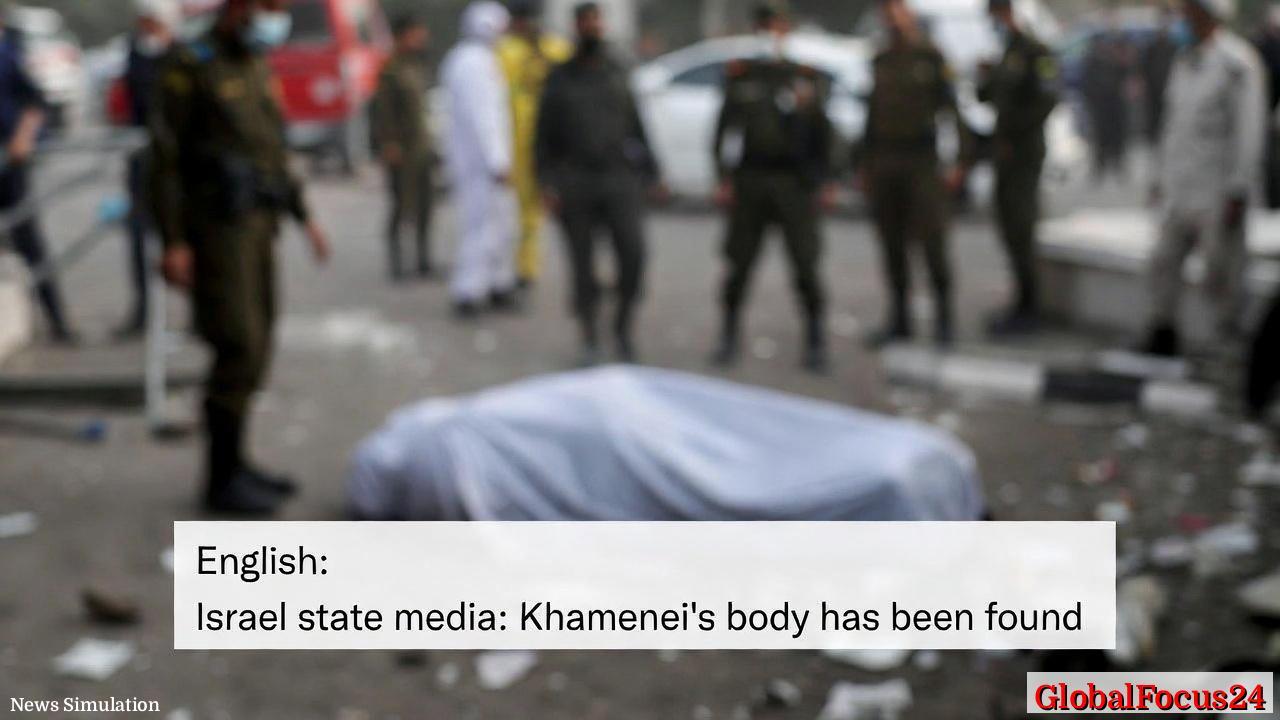
Reports emerging from Israeli state media claim that Iran’s Supreme Leader, Ayatollah Ali Khamenei, has been killed following coordinated U.S.-Israeli strikes overnight. The reports state that the 86-year-old leader was found dead amid widespread bombing raids targeting Iranian military and government facilities. Iranian state media, however, has not confirmed the claim, issuing conflicting statements suggesting that Khamenei remains in command of the Islamic Republic.
As uncertainty persists over the veracity of the reports, state television in Tehran has gone offline in several provinces, and communication irregularities have been observed across central Iran. Meanwhile, witnesses in the capital have described scenes of panic and anger, with thousands gathering outside key military installations and government buildings as rumors spread through social media networks now operating under heavy restrictions.
A Leadership Void in the Islamic Republic
If confirmed, Khamenei’s death would mark the most consequential leadership vacuum in the Islamic Republic since its founding in 1979. Having succeeded Ayatollah Ruhollah Khomeini in 1989, Khamenei served as Iran’s Supreme Leader for nearly four decades—an era defined by religious consolidation of power, geopolitical defiance toward the West, and the expansion of Iran’s regional influence through proxy forces.
Iran’s political system vests ultimate authority in the Supreme Leader, a position overseeing the military, judiciary, and major policy decisions. Under the Iranian constitution, succession is to be determined by the Assembly of Experts, an 88-member clerical body. However, any sudden or violent transition risks deep internal divisions, particularly amid the backdrop of ongoing military conflict and political unrest.
Potential successors—such as President Ebrahim Raisi, or Khamenei’s influential son Mojtaba Khamenei—may face resistance from both reformist factions and hardline clerical networks. Analysts warn that the absence of a clear, uncontested successor could trigger institutional paralysis or even a leadership struggle within the ruling elite.
Historical Precedent and Political Shockwaves
Iran’s last leadership transition followed the 1989 passing of Khomeini, which occurred during relative calm compared to today’s fractured political landscape. Then, the West viewed the shift as an opportunity for cautious engagement. In contrast, current circumstances appear far more combustible, with multiple fronts of confrontation—spanning Iraq, Syria, Lebanon, and the Red Sea—already active.
Never before has Iran faced the possible simultaneous loss of its top leadership and large-scale bombardment by foreign powers. The incident evokes comparisons to watershed moments such as the 2003 fall of Saddam Hussein or the 2011 death of Libya’s Muammar Gaddafi, both of which unleashed prolonged instability. However, Iran’s size, centralized governance, and extensive military apparatus make direct comparisons imperfect. Experts caution that the ramifications could be even more far-reaching.
Economic and Energy Market Repercussions
Global markets reacted sharply to the initial reports. Brent crude oil surged past $130 per barrel within hours, driven by fears of extensive supply disruptions across the Persian Gulf. Iran holds the world’s fourth-largest proven oil reserves and plays a pivotal role in global energy transit through the Strait of Hormuz, where roughly one-third of seaborne petroleum passes daily.
Financial analysts noted that even partial confirmation of Khamenei’s death could propel sustained volatility across energy and currency markets. The Iranian rial, already under pressure from sanctions, plunged further in offshore trading, while neighboring Gulf states moved to bolster reserves.
In Tehran, long queues formed outside banks as residents sought to withdraw cash amid collapsing consumer confidence. Inflation—already exceeding 50 percent annually—may accelerate further if instability spreads, according to early estimates released by regional economists.
Beyond oil, investors are also watching potential ripple effects in neighboring economies. Turkey, Iraq, and Pakistan rely heavily on trade and energy ties with Iran; any disruption could stall regional growth. Moreover, Chinese and Russian interests—both substantial stakeholders in Iran’s energy and defense sectors—face new uncertainty regarding contracts and investment projects.
Global Diplomatic Response and U.S. Statement
U.S. President Donald Trump confirmed in an official statement that the strikes represented “the single greatest opportunity for the Iranian people to reclaim their country.” The White House has not released operational details of the mission but stated that air and cyber components were involved “to neutralize imminent threats.” No comment was offered regarding civilian casualties.
European Union officials called for immediate restraint and an emergency meeting of the United Nations Security Council “to prevent uncontrolled escalation.” In Moscow, the Russian Foreign Ministry condemned the operation as a breach of international law, warning that the move could “ignite the entire Middle East.”
Israel has remained largely silent beyond initial reports, though Defense Minister Yoav Gallant described the operation as “a decisive defensive measure.” Regional intelligence officials suggest the strikes were coordinated with precision targeting of command centers, missile bases, and Revolutionary Guard Corps facilities in multiple provinces.
Regional Fallout and Security Risks
Iranian-backed militias across the Middle East have vowed retaliation if Khamenei’s death is confirmed. In Lebanon, Hezbollah leader Hassan Nasrallah reportedly convened emergency talks, while in Yemen, Houthi forces announced renewed missile threats against maritime traffic in the Red Sea. Iraq, already host to numerous pro-Iranian militias, has tightened security around Baghdad’s Green Zone, fearing reprisal attacks against Western embassies.
International airlines have begun rerouting flights to avoid Iranian airspace, and insurance rates for Gulf shipping routes have surged. U.S. naval carrier groups in the region have been placed on high alert, and early satellite imagery shows increased movement at key Iranian missile bases. Intelligence agencies are monitoring whether Iran’s Revolutionary Guard or any surviving elements of its leadership might retaliate with asymmetric attacks on regional infrastructure.
Domestic Reaction Inside Iran
In Tehran, residents describe a “state of disbelief” as rumors of Khamenei’s death continue to circulate. Despite official silence, a heavy security presence has been reported around government buildings and media headquarters. The Iranian Revolutionary Guard reportedly deployed armored units to secure key intersections, while internet connectivity remains sporadic.
Public sentiment appears sharply divided. Some citizens express fear of further chaos and foreign occupation, while others view the potential end of Khamenei’s rule as the possible dawn of political transformation. The state apparatus, long characterized by centralized control and ideological rigidity, may struggle to maintain cohesion without its unifying figurehead.
Regional Comparisons and Historical Context
The situation recalls past moments when sudden leadership changes altered regional dynamics. The 2011 uprisings during the Arab Spring, for example, produced transitions that reshaped alliances and power structures across North Africa and the Middle East. However, Iran’s hardline theocratic foundation and entrenched security services make it unique among its regional counterparts.
Where Egypt or Tunisia transitioned to new governing systems within months, Iran’s clerical framework leaves little precedent for a transparent succession. Moreover, Iran’s deep integration into regional proxy networks—extending from Hezbollah in Lebanon to militias in Iraq and Syria—means any leadership vacuum could reverberate beyond its borders.
Regional capital cities—Riyadh, Ankara, and Doha—are reportedly holding high-level consultations, wary of the potential for border instability, refugee flows, or insurgent spillovers. Western intelligence agencies fear that fractured command among Iran’s security services might lead to unilateral retaliation by individual commanders without central coordination.
Uncertain Road Ahead
Whether Ayatollah Khamenei is confirmed dead or remains missing, Iran now stands at a precipice. The regime faces simultaneous challenges: external military assault, potential loss of leadership, and internal social unrest. Even if government control endures, the aura of continuity that defined Khamenei’s long reign appears irreparably shaken.
For the wider region, the next days may determine whether this marks the end of an era—or the beginning of a deeper, more volatile confrontation. With information still scarce and official Iranian confirmation withheld, international observers remain fixated on Tehran for clarity.
Regardless of the immediate truth behind the reports, the episode underscores how fragile the balance of power in the Middle East has become. A single night’s bombardment, if it indeed claimed the life of one of the region’s most enduring leaders, could reorder the political landscape for a generation to come.