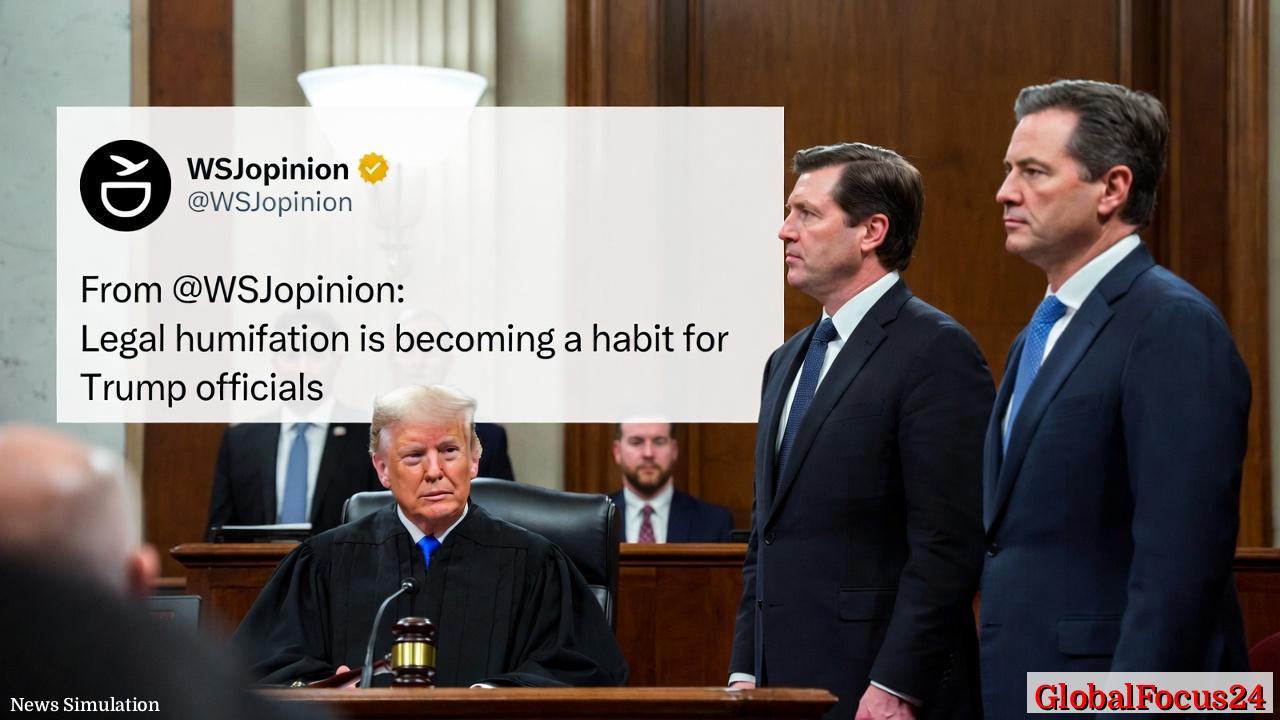
Federal Judge Blocks Defense Secretary’s Action Against Senator Mark Kelly
A federal judge has issued a preliminary injunction to stop Defense Secretary Pete Hegseth from disciplining Senator Mark Kelly over comments criticizing administration policies. The ruling marks a decisive moment in the ongoing balance between executive authority and congressional oversight, underscoring the contours of free speech within the military and the broader health of the American system of checks and balances.
Context and Background
- Who is involved: Senator Mark Kelly, an Arizona Democrat, is a retired Navy captain who serves in a congressional oversight capacity. Secretary Pete Hegseth is the head of the Defense Department’s leadership challenging or disciplining military personnel for conduct deemed prejudicial to good order and discipline.
- The trigger: Kelly participated in a video with other members of Congress that advised military officers they could refuse illegal orders. The video addressed concerns surrounding the administration’s bombing campaign against suspected drug trafficking vessels in the Caribbean.
- The government response: Hegseth issued a letter of censure against Kelly for conduct described as unbecoming an officer and prejudicial to good order and discipline. He also initiated a retirement-grade action that could potentially strip Kelly of his captain’s rank and related pension benefits.
Legal and constitutional implications
- First Amendment protections: U.S. District Judge Richard Leon ruled that Kelly’s remarks are protected speech under the First Amendment. The judge emphasized that while active-duty personnel face speech limitations designed to preserve order and discipline, those restrictions do not automatically extend to retired service members who later serve in Congress and participate in oversight activities.
- Distinction between active and retired status: The decision hinges on a crucial distinction—retired servicemembers who transition into legislative roles retain a different speech posture than those still on active duty. The ruling frames congressional oversight as an essential component of the constitutional system, limiting the executive branch’s capacity to retaliate against critics who are now lawmakers.
- Potential consequences for executive action: The injunction signals judicial backing for the notion that the executive branch cannot weaponize disciplinary mechanisms to punish political speech or policy critique by legislators. The stance protects the physician-like duty of congressional oversight and the public’s right to hear diverse viewpoints on defense policy.
Historical context
- Civil-military relations in the United States have long revolved around maintaining a nonpartisan, professional military while allowing robust civilian oversight. The relationship is shaped by a tradition of deference to civilian leadership coupled with a strong protection for dissent within constitutional limits.
- Past disputes have periodically tested the boundaries of military discipline when criticism comes from members of Congress or former service members who transition into political roles. Historically, courts have tended to safeguard free speech for retired officers and civilian lawmakers, particularly when their commentary touches on policy at a high level rather than direct operational instructions.
Economic impact and regional considerations
- Public confidence and defense budgeting: High-profile disputes over executive discipline versus legislative speech can influence public perception of national security governance. When questions about policy direction and strategic choices arise, markets and defense contractors monitor how decisively the administration can defend its policies while respecting constitutional rights.
- Regional implications in the Southwest: Senator Kelly’s district in Arizona—and the broader Western defense and border-security conversations—intersect with regional economic interests tied to defense contracting, veteran services, and federal workforce impact. Positive signals from the judiciary reinforcing civil-military norms may stabilize local expectations for governance and federal program continuity.
- Comparative regional analysis: In other leading defense hubs, similar tensions have surfaced in different forms—where oversight bodies press for transparency while the executive branch seeks to constrain or rebuke critics. The consistent judicial pattern across regions has generally favored robust speech protections for legislators and retired officers who influence policy discourse.
Security policy and oversight dynamics
- Oversight as a constitutional function: Congressional oversight serves as a check on executive actions, including military campaigns and procurement decisions. The ruling reinforces that oversight voices must be protected, ensuring that lawmakers can question strategy without fear of punitive retaliation.
- Public communications and accountability: The case highlights the importance of transparent dialogue about military operations, including controversial campaigns. Public statements by lawmakers and retired officers contribute to informed debate and accountability, reinforcing the public’s ability to scrutinize defense policy.
- Implications for military culture: While the ruling protects speech, it also underscores the need to balance candid discourse with professional standards within the armed forces. The decision clarifies that the protections extend to those outside active duty who nonetheless carry influence over policy through elected office.
Historical parallels and lessons
- Free speech in government oversight: The case resonates with precedents where courts protected the right of members of Congress to engage in political speech about government operations, even when such speech was strongly critical of policy decisions.
- The risk of retaliatory actions: Legal scholars often point to the danger of retaliatory measures undermining the functioning of representative government. Retaliation against lawmakers could erode trust and reduce public engagement in crucial defense debates.
- The role of the judiciary: The decision illustrates how courts can act as a necessary counterweight to executive actions that might otherwise chill legislative inquiry and public discourse on matters of national security.
Public reaction and broader narrative
- Public emphasis on constitutional rights: Observers widely recognize the importance of safeguarding both the speech rights of elected officials and the professional integrity of the armed forces. A functioning democracy relies on open dialogue about how best to defend the nation.
- Media and transparency: The ruling has intensified discussions about how information related to military operations should be disclosed, and how lawmakers should communicate with service members and veterans in a way that informs the public without compromising security.
What this means going forward
- Implications for future disciplinary actions: The injunction may set a legal precedent that makes it harder for defense secretaries to discipline lawmakers for public commentary, particularly when that commentary relates to oversight and policy critique.
- Potential statutory considerations: Lawmakers and defense policy experts may seek clarifications or reforms to ensure that speech protections for retired military personnel who engage in public governance remain clear and durable, while still preserving military discipline where necessary.
- Ongoing court role: As cases intersecting civil-military relations advance, the judiciary could continue to define the boundaries between executive authority and legislative freedoms, maintaining a careful balance that supports both national security goals and democratic accountability.
Regional comparisons and global perspective
- Looking at similar democracies: Many democracies balance civil-military relations through strong civilian oversight and protections for political speech. Courts in other jurisdictions have similarly protected the right of political actors to critique defense policy, while highlighting the importance of preserving military professionalism.
- Global trends in defense governance: Across regions, the trend toward transparent policymaking and robust oversight has gained momentum. The ability of legislators to question and challenge defense strategies without facing punitive actions is increasingly viewed as essential to maintaining resilient and accountable defense institutions.
Key takeaways for readers
- The First Amendment remains a strong shield for speech by lawmakers and retired service members engaged in policy dialogue about defense matters.
- The judiciary’s stance reinforces the importance of a healthy feedback loop between the executive and legislative branches in national security governance.
- Economic and regional implications center on stability in defense policy discourse, public confidence, and the continued integrity of military and veterans’ communities.
In summary, the injunction against Defense Secretary Hegseth’s disciplinary actions against Senator Mark Kelly underscores a pivotal principle: that robust, legally protected speech by legislators and former military leaders who influence policy is a cornerstone of accountable government. The case reinforces that democratic governance thrives when oversight and executive action operate within clearly defined constitutional boundaries, allowing the public to receive timely, insightful information about national security decisions without fear of reprisal.