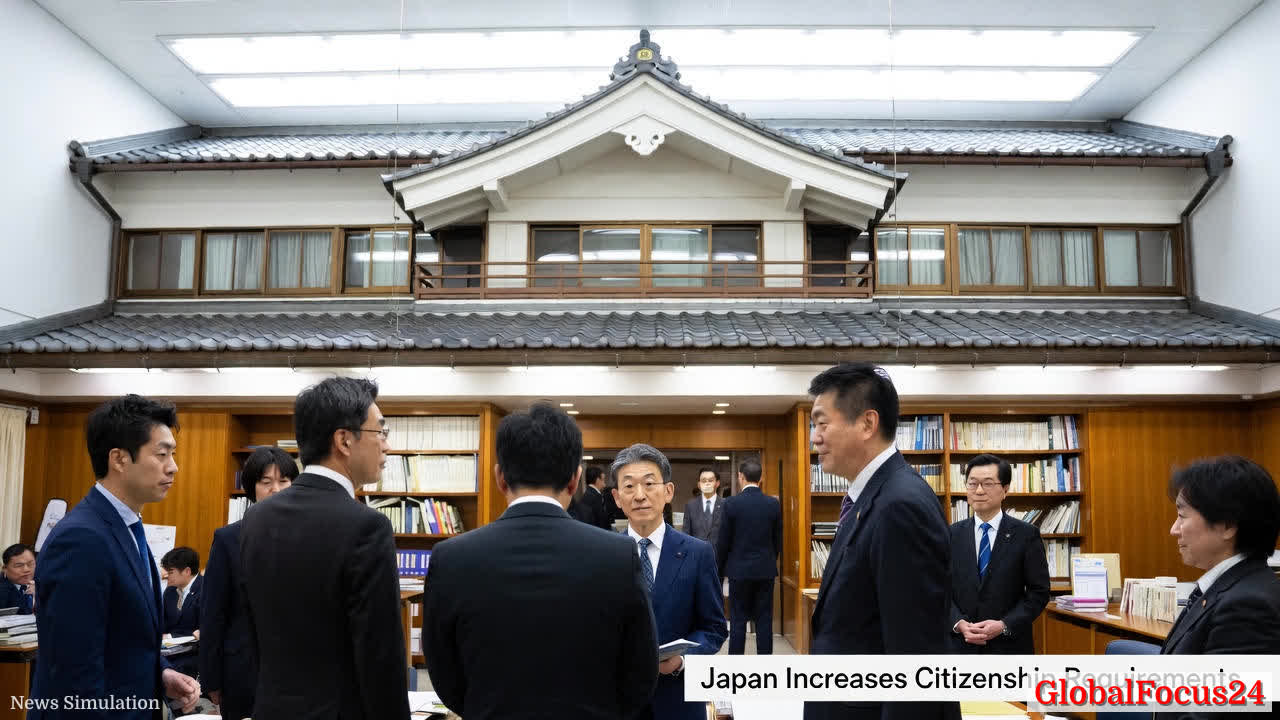
Japan Tightens Path to Citizenship with Longer Residency and Language Proficiency Requirements
In a move poised to reshape immigration policy and long-term demographic planning, Japan announced a forthcoming overhaul of its citizenship criteria. The government intends to raise the residency requirement for naturalization from five years to ten and to mandate demonstrable proficiency in the Japanese language. The policy shift, framed as a measure to deepen integration into Japanese culture and society, signals a strategic recalibration of how the country balances openness to long-term residents with concerns about social cohesion and national identity.
Historical context: Japan’s citizenship framework and immigration history Japan’s approach to citizenship has long reflected a cautious stance toward naturalization. The current framework requires a minimum period of residence, typically five years, and a demonstration of good conduct, financial stability, and a certain degree of cultural assimilation. Over the decades, Japan has welcomed skilled workers and foreign residents in a labor market that ages rapidly and faces shrinking population projections. Yet the path to citizenship has historically been narrow, with many long-term residents choosing to maintain permanent residency rather than pursue full citizenship.
The proposed ten-year residency threshold aligns with broader global trends where countries seek more substantial ties before granting full civic status. Language proficiency has also emerged as a central criterion in several immigration systems, underscoring the link between daily life integration, civic participation, and voter or public- service eligibility. In Japan’s case, the policy aims to ensure that individuals seeking naturalization demonstrate sustained engagement with Japanese institutions, language of daily communication, and an understanding of local norms and customs.
Economic impact: implications for labor markets, entrepreneurship, and consumption From an economic standpoint, the policy shift could influence multiple facets of Japan’s economy. A longer residency requirement may incentivize foreign residents to focus on stabilizing their status and investing in long-term ties within communities. For employers, this could affect the availability of potential citizens who might assume leadership or dual-identity roles within firms with international operations. Companies that rely on a stable, globally connected workforce may adjust recruitment and retention strategies, placing greater emphasis on residency duration and language training as prerequisites for career advancement or eligibility for certain roles.
Language proficiency requirements could indirectly stimulate demand for language education and integration programs. Institutions offering Japanese language instruction, professional language courses, and cultural orientation services may experience increased enrollment, particularly among skilled workers in sectors with chronic labor shortages. Public and private sector partners might expand funding for language and civics curricula, recognizing that a more linguistically capable workforce can contribute to productivity gains, reduced miscommunication, and smoother compliance with regulatory standards.
Regional comparisons: how neighboring Asian economies handle naturalization Japan’s approach sits within a broader regional landscape of naturalization policies in East Asia. In many neighboring economies, naturalization pathways exist but are often selective, with varying residency prerequisites and language or cultural requirements. For example, some regional countries offer expedited routes to citizenship for individuals with strong economic contributions, unique skill sets, or family ties, while maintaining rigorous screening processes. The ten-year threshold, paired with language mandates, places Japan in a group of jurisdictions that emphasize long-term commitment and cultural alignment as prerequisites for full citizenship.
Comparative analysis suggests that nations facing aging populations and labor shortages increasingly view citizenship policy as a lever for talent retention and social integration. While some countries have implemented more egalitarian routes to citizenship for long-term residents, others continue to balance openness with national cohesion and civic participation. Japan’s proposed policy could influence regional discussions on immigration, dual citizenship, and the integration pathways available to foreign workers who contribute to local economies over time.
Social and cultural considerations: integration, identity, and public sentiment Policy debates surrounding citizenship often tread into sensitive social and cultural terrain. Proponents of stricter naturalization criteria argue that longer residence and language mastery foster deeper social cohesion, reduce cultural friction, and promote a shared civic ethos. Opponents contend that more onerous requirements risk creating a two-tier system that marginalizes long-term residents who have built communities, families, and professional roots in Japan, potentially undermining social equity and the diverse fabric of urban life.
Public reaction to the proposed changes typically reflects a mix of pragmatism and concern. Many residents acknowledge the importance of language fluency and cultural literacy for effective participation in civic life, while others worry about barriers that could complicate family unity, career progression, and the ability of foreign workers to commit long-term to Japanese society. Policymakers are often tasked with balancing these considerations against the practical needs of a dynamic labor market and the social stability that can accompany well-integrated communities.
Policy design and implementation: what the changes entail in practice The proposed reform would raise the required period of continuous residence for naturalization from five to ten years. In addition, applicants would need to demonstrate a specified level of proficiency in the Japanese language, typically through standardized testing or proven functional language ability aligned with daily life and professional contexts. The exact benchmarks and assessment methods are expected to be detailed in implementing regulations, with potential transitional arrangements for those who are already on a path to citizenship or hold permanent residency.
Other elements commonly present in citizenship determinations—such as conduct, financial stability, and comprehension of civic duties—are likely to be reaffirmed, though the emphasis may shift to ensure that language and sustained social engagement are central to eligibility. Because naturalization processes often touch on sensitive questions of national identity, the government may also publish guidance on how to document and verify language proficiency and community integration, including civic knowledge components and participation in local institutions.
Urban and rural dynamics: regional impact within Japan Japan’s demographic and geographic landscape presents a complex backdrop for any citizenship reform. Urban areas, with larger immigrant populations and more accessible language-learning resources, may experience smoother adjustments, while rural regions, where immigrant communities can be more dispersed, could face challenges in delivering integrated programs and ensuring consistent language exposure. Policymakers may consider targeted support for remote communities, including language education, mentorship programs, and incentives for long-term residency alignment with local revitalization goals.
Additionally, the regional distribution of foreign residents varies by sector. Industries such as technology, manufacturing, healthcare, and hospitality often rely on a steady influx of skilled workers and temporary specialists. A longer naturalization timeline could influence recruitment strategies in these sectors, pushing employers to invest more in language training and cultural orientation as part of retention efforts. Local governments might partner with educational institutions and industry associations to create cohesive pathways from initial residency to potential citizenship, emphasizing mutual benefits for both residents and communities.
Implementation challenges and policy coordination As with any major policy revision, several operational challenges are anticipated. Verifying language proficiency across applicants, ensuring consistency in evaluation, and coordinating between national immigration authorities and local government offices will require robust administrative processes. Streamlining documentation requirements, setting clear timelines, and providing accessible language assessment options will be critical to avoiding bottlenecks that could deter potential applicants.
Interagency coordination will also play a crucial role. Government ministries handling immigration, education, social welfare, and regional development will need to align their programs to support longer-term integration. Public communication strategies will be essential to clarify the rationale behind the changes, outline available support services, and set realistic expectations for prospective citizens. Transparent metrics and regular reporting on progress could help build public trust and demonstrate the tangible benefits of a more pronounced language-centric naturalization framework.
Public guidance and support mechanisms To ease the transition, government and partner organizations may offer a suite of support mechanisms. These could include subsidized Japanese language courses tailored to adult learners, workplace-oriented language training, and cultural orientation sessions that cover civic processes, electoral participation, and local governance structures. Mentorship programs pairing new residents with established citizen peers may help bridge cultural gaps and foster social networks that accelerate integration. Accessibility considerations, including multilingual resources and remote or online learning options, will be important to ensure that all applicants have equitable opportunities to meet the new requirements.
Broader implications for immigration policy Japan’s potential shift toward stricter naturalization criteria does not occur in a vacuum. It intersects with ongoing debates about immigration, labor force participation, and demographic resilience. While the policy could discourage some applicants from pursuing citizenship, it may also encourage greater commitment from those who do undertake the process, ensuring that naturalized citizens have demonstrated long-term residency and linguistic competence. This could lead to more stable, civically engaged populations in communities with significant foreign-born residents, potentially contributing to social cohesion and economic continuity.
Historical parallels reveal how naturalization rules often reflect a country’s priorities in response to shifting population dynamics. In Japan’s case, the emphasis on deeper integration through language and extended residency mirrors similar strategies in other nations grappling with aging demographics and the need for skilled labor. The balance between openness to talent and the preservation of national identity remains a central theme in policy discussions across advanced economies.
Conclusion: charting a deliberate, forward-looking pathway The proposal to extend the residency requirement and mandate language proficiency for citizenship represents a calculated effort to strengthen social integration while sustaining Japan’s competitive economy. By emphasizing long-term commitment and linguistic readiness, Japan aims to cultivate a citizenry that can actively participate in civic life, contribute to social stability, and support the country’s ambitious development goals. As policymakers finalize the regulations, stakeholders across business, education, local government, and immigrant communities will be watching closely to understand how these changes will shape the future fabric of Japanese society.
Public interest will hinge on clear communication about the practical steps, available resources, and realistic timelines for meeting the new criteria. The outcome of this policy shift could influence not only the trajectory of individual lives but also broader regional comparisons in Asia, where nations continually refine their approaches to citizenship as they navigate the pressures of modernization, globalization, and demographic change. The road ahead for prospective citizens and for Japan’s communities will require thoughtful implementation, ongoing evaluation, and a commitment to ensuring that integration remains a mutual, two-way process that benefits the country as a whole.