Israeli Airstrike Near Tehran Kills Iran’s Top Security Official Ali Larijani and Basij Commander Gholamreza Soleimani
A Sudden Strike Shakes the Iranian Capital
An overnight airstrike near Tehran has killed Ali Larijani, Iran’s top security official and longtime intelligence chief who served as secretary of the Supreme National Security Council. The strike, confirmed by Israeli officials early Tuesday, also claimed the life of Gholamreza Soleimani, commander of Iran’s Basij paramilitary force—a move that analysts describe as one of the most consequential targeted killings in years.
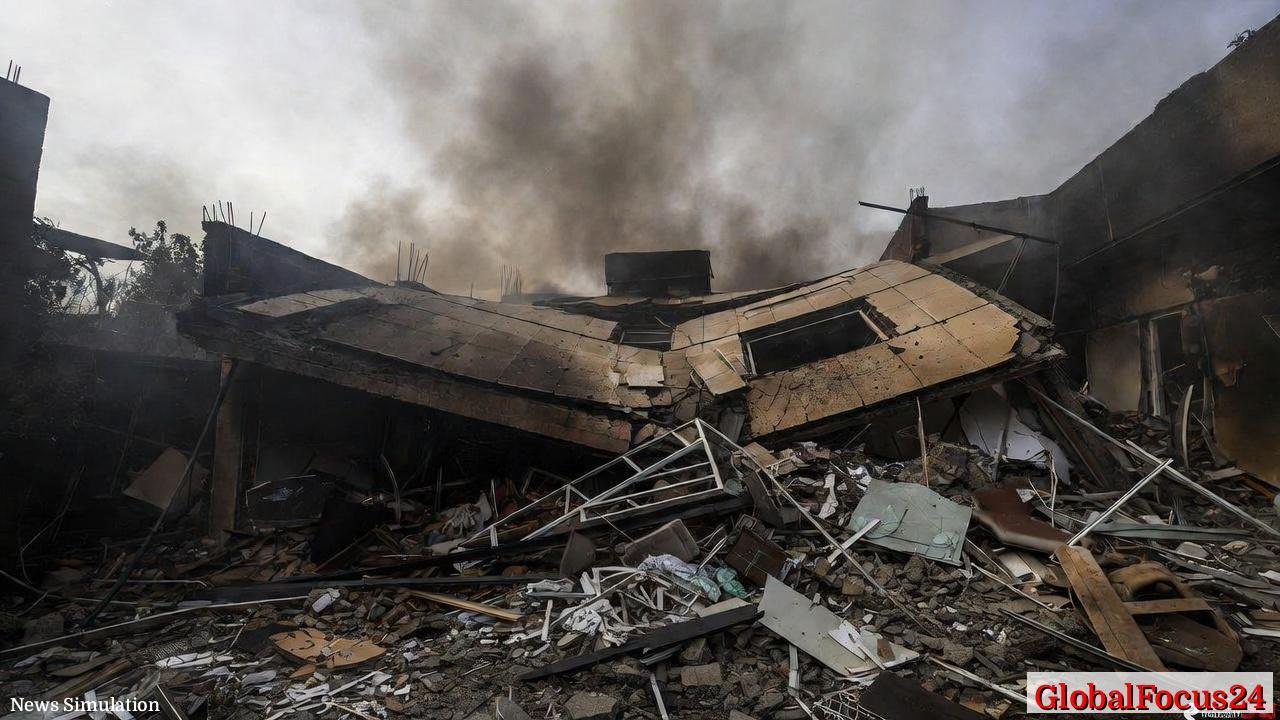
The attack occurred on the outskirts of Tehran, sending shockwaves through the city and raising immediate alarms about potential retaliation. Witnesses reported a series of explosions shortly after midnight, followed by a heavy security presence and restricted access to key areas of the capital. Footage circulating on local networks appeared to show columns of smoke rising from what authorities initially described as an “industrial complex.”
A Blow to Iran’s Security Establishment
Larijani’s death represents a severe setback for Iran’s national security apparatus. Known for his strategic influence and close ties to the country’s top leadership, Larijani had become the public face of Tehran’s intelligence and security policy following years of internal upheaval and external pressure. He served as the secretary of the Supreme National Security Council, coordinating defense, intelligence, and nuclear policy—a role that placed him at the center of Iran’s national decision-making.
Gholamreza Soleimani, head of the Basij, was likewise a critical figure in maintaining domestic order and supervising paramilitary operations linked to the Islamic Revolutionary Guard Corps (IRGC). His death disrupts one of the main pillars of Iran’s internal security network, which has long been instrumental in both civil enforcement and regional military activities.
Historical Context: A Pattern of Targeted Operations
The strike recalls earlier high-profile assassinations of Iranian military and intelligence figures. In 2020, the U.S. carried out a drone strike in Baghdad that killed General Qassem Soleimani, head of the IRGC’s Quds Force, sparking a surge in U.S.-Iran tensions. Israel has also been accused of conducting covert operations inside Iran, including the 2021 attack on a nuclear facility in Natanz and a series of assassinations targeting nuclear scientists.
However, the targeting of a figure as senior as Larijani marks a significant escalation. Historically, Israel’s actions have focused on curbing Iran’s nuclear ambitions or limiting the activities of proxy militias across Syria and Lebanon. By striking at the top of Iran’s political-security chain, Israel appears to have shifted from containment to direct disruption.
Tehran’s Silence and Public Reaction
By morning, Iranian state media had yet to issue an official statement, while semi-official outlets published conflicting accounts. The government’s silence stood in stark contrast to the intensity of public speculation spreading through Tehran and major cities. Many Iranians awoke to images of heavy smoke and military vehicles moving through cordoned-off neighborhoods. Social media platforms, despite partial restrictions, filled with messages of disbelief, grief, or outrage depending on political alignment.
Some residents described the atmosphere as tense but resigned, reflecting a familiar rhythm of shock and adaptation in a nation long accustomed to confrontation. Crowds reportedly gathered outside Larijani’s family residence in north Tehran, lighting candles and chanting tributes late into the night.
Implications for Regional Stability
The killing has immediate implications for regional security, particularly in an already volatile Middle East landscape. Israel’s decision to confirm responsibility signals a deliberate show of strength, underscoring its declared intent to counter Iranian influence directly rather than through proxy engagements. The move could unsettle ongoing diplomatic efforts involving Gulf states seeking to stabilize relations through cautious dialogue.
Strategically, the elimination of Larijani and Soleimani leaves a vacuum within Iran’s security hierarchy. Both men were seen as cohesive forces within a system that has experienced growing fragmentation following years of economic sanctions, domestic unrest, and leadership uncertainty. Analysts suggest the loss could ignite internal rivalries within Iran’s intelligence and military circles as contenders vie to consolidate control over key institutions.
Economic and Political Fallout
For Iran’s struggling economy, already weighed down by extensive sanctions and reduced oil exports, the shock may worsen investor anxiety and currency instability. Early reports indicated that the Iranian rial fell sharply against the U.S. dollar in black-market trading within hours of the news. Businesses with strong government affiliations—particularly in energy, defense, and logistics sectors—could experience short-term disruptions as leadership changes ripple through administrative channels.
Regionally, energy markets reacted swiftly. Brent crude prices climbed above $89 per barrel in early trading in Asia, reflecting fears of supply uncertainty should tensions escalate into broader conflict. Historically, strikes of this magnitude have triggered short-lived spikes in oil futures, but traders now fear a sustained period of instability if Iran retaliates by targeting maritime routes in the Persian Gulf or leveraging allied militias across the region.
Regional Comparisons and Reactions
Neighboring nations offered cautious responses. Saudi Arabia’s Foreign Ministry called for “restraint and the avoidance of steps that could escalate regional tensions,” while the United Arab Emirates urged all sides to “prioritize stability and civilian safety.” In contrast, Israel’s military spokesperson hailed the strike as a “necessary and precise operation,” crediting intelligence coordination that “neutralized the architects of aggression.”
Comparatively, past high-level killings—such as those in Iraq, Syria, and Lebanon—have often triggered limited reprisals before settling into renewed standoffs. However, this episode differs in its proximity to Tehran and the seniority of the targets, making it one of the rare instances where external military action reached deep into the heart of Iranian territory.
Strategic Motivation and Timing
The operation’s timing has attracted particular scrutiny. Over recent months, Iran had accelerated its uranium enrichment activity, approaching weapons-grade levels, according to international inspectors. Parallelly, Tehran deepened security cooperation with allied militias in Lebanon, Yemen, and Syria. Israeli defense officials have repeatedly warned that Iran’s expanding regional influence and its nuclear progress leave “no room for complacency.”
Larijani’s personal role in shaping both Iran’s nuclear strategy and its covert regional networks likely positioned him at the top of Israel’s target list. His removal—alongside that of Gholamreza Soleimani—suggests a strategic intent to decapitate key command links and weaken Iran’s ability to direct coordinated regional operations.
The Broader Geopolitical Landscape
The strike occurs amid a shifting global balance characterized by renewed great-power competition and waning U.S. involvement in Middle Eastern conflicts. While Washington has maintained its official support for Israel’s right to self-defense, recent American policy has sought to reduce direct military engagement in the region. The absence of an immediate U.S. response suggests prior coordination or at least quiet consent, yet analysts caution that Washington may seek to distance itself publicly to avoid broader confrontation.
Russia and China, both key Iranian trade partners, are expected to condemn the strike, citing violations of sovereignty and regional destabilization. Their positions will likely shape upcoming debates at the United Nations, where Iran could seek an emergency session to denounce the attack.
Potential Paths Forward
In the coming days, the critical question will center on Iran’s response. Tehran may opt for symbolic retaliation—such as cyberattacks or missile strikes on Israeli-linked assets in the region—or pursue more covert operations designed to avoid direct confrontation. Alternately, Iranian leadership may focus inward, tightening control and reinforcing security agencies to project resilience.
Analysts warn that a miscalculated response could spiral quickly. Israel’s readiness posture remains elevated, and Iranian proxies, including Hezbollah and the Houthis, have occasionally acted independently of Tehran’s central command. A wider confrontation would not only endanger regional shipping routes but also threaten global energy supply chains, drawing renewed international intervention.
A Turning Point in a Long Shadow Conflict
The consecutive blows to Iran’s senior leadership mark an extraordinary turning point in a shadow conflict that has spanned decades. What began as a covert intelligence war across cyberspace and proxy fronts now appears to be entering a more overt and perilous phase. The precision of the attack and the scale of its targets underline a rapidly evolving doctrine—one in which deterrence is pursued through direct elimination rather than containment.
For the Iranian public, the coming weeks may reveal whether the loss of one of the nation’s most powerful figures ushers in unity or deepens existing fissures within the establishment. For the region, the airstrike injects new uncertainty into already fragile security dynamics, ensuring that the repercussions will extend far beyond the skies over Tehran.