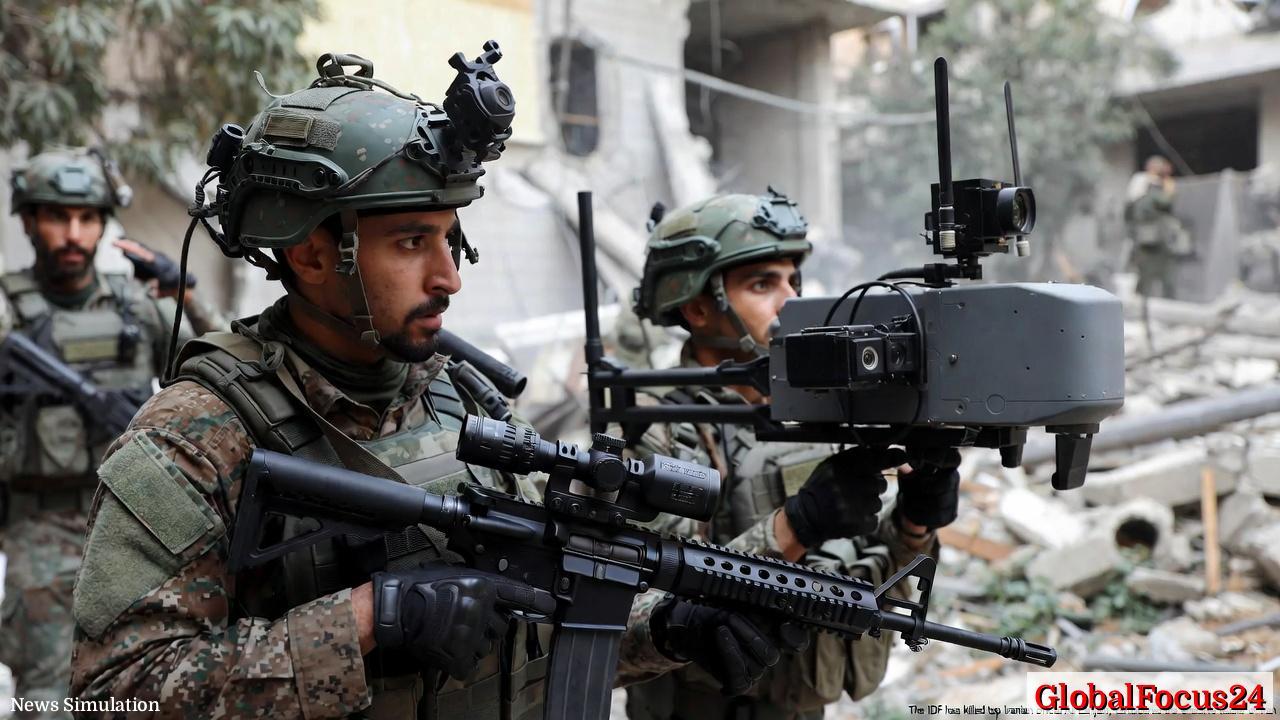
Israeli Strikes Target Senior Iranian Officials in Confrontation Escalation
In a high-stakes escalation that reverberates across the Middle East, Israeli Defense Forces have announced the elimination of Ali Larijani, a longtime Iran figure who served as secretary of Iran’s Supreme National Security Council and was widely regarded as the de facto leader within the Islamic Republic’s power structure. The operation also reportedly claimed the lives of Gholam Reza Soleimani, the chief of the IRGC’s Basij paramilitary forces, his deputy Qasim Qureshi, and what local sources describe as a significant portion of Basij leadership. The outcomes of these strikes, still developing, have immediate strategic and regional implications that will shape the regional security landscape in coming months.
Historical context of strategic influence Ali Larijani’s career spanned decades of Iran’s post-revolutionary governance, with roles that placed him at the center of economic diplomacy, security calculus, and political maneuvering. As head of parliament earlier in his career and later as secretary of the Supreme National Security Council, Larijani was seen by many observers as a stabilizing yet hard-edged broker who could navigate between domestic reform pressures and the regime’s hardline core. His status within the Iranian security establishment reflected a broader pattern in Tehran, where the convergence of political authority and military influence has long been a defining trait of governance.
Larijani’s operational portfolio included oversight of nuclear negotiations, regional security alliances, and the balancing act between technocratic governance and ideological constraint. In the broader arc of Iran’s security apparatus, figures along these lines have been instrumental in shaping both external policy and internal political stability. The apparent removal of such a figure is not merely a tactical setback for Iran’s leadership but also a signal of the intensity with which regional actors are contesting influence in strategic arenas such as the Persian Gulf, the Levant, and wider Central Asian corridors.
Implications for Iran’s security apparatus The reported losses within Iran’s Basij leadership — an organization embedded within the IRGC’s broader security architecture and known for its reserve mobilization and domestic security functions — carry significant implications. The Basij has long been a mobilizing force capable of rapid deployment for internal stability operations, crowd control, and ancillary front-line duties in conflicts elsewhere. The decapitation of its senior leadership could disrupt command-and-control channels and affect the organization’s operational tempo in the near term. For Tehran, the question now centers on how to reconstitute leadership, maintain cohesion among allied factions, and preserve the credibility of the security apparatus amid a rapidly changing regional security environment.
From an economic perspective, the Iranian leadership faces a multilayered challenge. Sanctions and external pressure have historically constrained Tehran’s budgetary flexibility, limiting investment in defense modernization, intelligence capabilities, and regional influence campaigns. The removal of senior security officials could accelerate strategic reevaluation within Tehran’s security and economic ministries as they reassess prioritization of resources toward deterrence, cyber operations, and regional proxy networks. The interplay between internal political stability and external pressure remains a critical dynamic that will shape Iran’s strategic choices going forward.
Regional ramifications and comparisons The event sits within a broader pattern of escalatory moves among regional actors, including rivalries and rival coalition-building across the Middle East. Neighboring governments and regional players monitor such developments closely, as shifts in Iran’s leadership calculus could alter the balance of deterrence, alliance commitments, and security guarantees that underpin regional stability. In neighboring Gulf states, for instance, defense postures have increasingly prioritized resilience against asymmetric threats, with investments in missile defense, air defense systems, and integrated intelligence-sharing networks. The potential reallocation of Iran’s security leadership resources could influence these defense postures, triggering recalibrations in both state-to-state and sector-to-sector security planning.
A comparative lens helps illuminate potential trajectories. In Turkey, for example, security establishments have pursued a strategy of diversified alignments and pragmatic diplomacy to mitigate spillovers from Iran’s regional moves and to secure trade routes. In Saudi Arabia and the United Arab Emirates, security considerations are deeply entwined with energy security, maritime domain awareness, and counter-terrorism cooperation, all of which could be influenced by Iran’s shifting internal dynamics. While direct causal links are complex and subject to many variables, the removal of senior officials on Iran’s side is unlikely to produce an immediate, uniform response across the region. Rather, expect tailored shifts in security policies, regional exercises, and intelligence-sharing arrangements that reflect each country’s risk tolerance and strategic priorities.
Economic impact in the broader region Beyond security implications, the event reverberates through regional economies. The Persian Gulf’s energy corridor remains a barometer of regional stability; any spikes in tension tend to influence oil markets, shipping routes, and insurance costs for maritime travel through critical chokepoints. While oil prices can be volatile in the short term, financial markets typically price in longer-term risk premia when geopolitical events intensify. Investors, insurers, and manufacturers watch for signals about supply chain resilience, including port operations, shipping insurance premiums, and contractual risk assessments.
In adjacent economies, heightened uncertainty can affect capital flows and currency stability. Traders and policymakers may reassess risk exposures in sovereign debt, commodity prices, and cross-border trade agreements. Governments with diversified energy portfolios and robust demand management strategies may mitigate some of the macroeconomic shock, but the region’s interconnectedness means spillover effects are likely to be felt beyond immediate borders. Central banks often respond with calibrated liquidity measures and exchange-rate policies to stabilize markets amid geopolitical risk.
Public reaction and the information environment Public reaction to high-profile security events typically reflects a mix of concern for national security, anxiety about potential escalation, and scrutiny of government narratives. In many regional contexts, social media platforms and independent media outlets contribute to rapid information dissemination and rumor propagation. Authorities may face pressure to provide timely, accurate updates while balancing safety considerations and the risk of inflaming tensions. Community-level responses can include heightened security awareness, increased vigilance, and mutual aid efforts as residents navigate heightened risk perceptions.
Historical parallels offer a cautionary lens. Past incidents involving leadership decapitation or sudden shifts within security ecosystems have produced a range of outcomes—from reinforced resolve and renewed domestic cohesion to strategic over-corrections and temporary paralysis. The nuanced trajectory depends on the ability of leadership to maintain command-and-control, preserve legitimacy, and communicate a coherent path forward to domestic audiences and regional partners.
Strategic considerations for policymakers
- Deterrence and defense posture: Nations in the region may reassess deterrence by shaping credible, visible defensive capabilities, including air defense and early warning systems, while avoiding unnecessary escalations that could jeopardize civilian safety.
- Diplomatic channels: Despite heightened tensions, sustaining back-channel communication and crisis-management mechanisms remains vital to preventing misinterpretations or inadvertent confrontations that could escalate into broader conflicts.
- Economic resilience: Governments will likely prioritize supply chain diversification, energy security, and strategic reserves to cushion potential shocks from heightened geopolitical risk.
- Security governance: The removal of senior security figures can prompt leadership transitions that test regime stability. Observers will monitor factional dynamics, succession processes, and public messaging aimed at maintaining confidence among domestic constituencies and external partners.
Conclusion: a watershed moment with long shadow The reported elimination of Ali Larijani and key Basij leaders represents a watershed moment in the ongoing struggle for regional influence. While the immediate operational gains for the victor in this engagement are clear, the longer-term consequences will unfold over weeks and months as Iran recalibrates its internal governance, security posture, and external strategy. The broader region will watch closely for indicators of how leadership transitions inside Tehran affect security calculations, economic stability, and diplomatic alignments among neighbors and global partners. In an environment where regional resilience is tested daily, actors will probably adjust their tactical calculus while continuing to pursue strategic objectives that define the balance of power in the Middle East.