Israel Confirms Airstrike That Killed Senior Iranian Commander Gholamreza Soleimani
Longtime Head of Iran’s Basij Reportedly Killed in Airstrike
Israel has announced the death of Gholamreza Soleimani, the powerful head of Iran’s Basij paramilitary force, in an airstrike conducted on Monday. Soleimani, aged approximately 61 or 62, had led the Basij, a volunteer wing of the Islamic Revolutionary Guard Corps (IRGC), for six years. His reported killing marks one of the most significant blows to the Islamic Republic’s security establishment since the regional conflict began in late February.
Iranian state media has not confirmed the death, and officials in Tehran have remained silent, fueling uncertainty and speculation about potential retaliation. Nevertheless, regional observers and intelligence agencies have treated the announcement as credible, citing recent troop movements and heightened alert levels in both Iranian and Israeli defense networks.
A Symbol of Internal Control and Repression
Gholamreza Soleimani was regarded as a central figure in maintaining Iran’s domestic security order. The Basij, which operates under the broader command of the IRGC, is tasked with mobilizing civilian volunteers for both military and ideological purposes. Over the past three decades, it has become a cornerstone of the regime’s ability to suppress protests and enforce loyalty to the state.
In recent years, the Basij gained particular notoriety for its heavy-handed response to nationwide demonstrations. Following the death of Mahsa Amini in 2022, which sparked months of unrest, Basij units were deployed across major cities to quell protests through mass arrests and forceful crackdowns. Under Soleimani’s leadership, the organization expanded its surveillance apparatus, coordinating closely with Iran’s intelligence ministry and utilizing digital monitoring systems to identify dissidents.
Experts note that losing a figure of Soleimani’s stature could destabilize internal command structures. His leadership was not only operational but also symbolic, representing the regime’s ability to project power through domestic control.
Escalating Tensions Between Israel and Iran
The airstrike that reportedly killed Soleimani is the latest in a series of Israeli military actions targeting Iranian assets and allied militias across the Middle East. Israeli officials have framed these strikes as preemptive security measures aimed at curbing Tehran’s regional influence and preventing attacks on Israeli territory.
Since the outbreak of fighting on February 28, Israeli forces have conducted multiple precision strikes against suspected IRGC facilities, arms depots, and intelligence outposts. The campaign represents an intensification of long-standing hostilities between the two nations, rooted in decades of mutual enmity and proxy warfare.
Iran has vowed to respond “at a time and place of its choosing,” though it has yet to outline a specific strategy. Military analysts suggest that if confirmed, Soleimani’s death could trigger retaliatory operations through Iran’s network of allied militias in Lebanon, Syria, Iraq, and Yemen. These groups have often acted as Tehran’s strategic extensions, allowing it to apply pressure without direct engagement.
Security Crackdown Within Iran
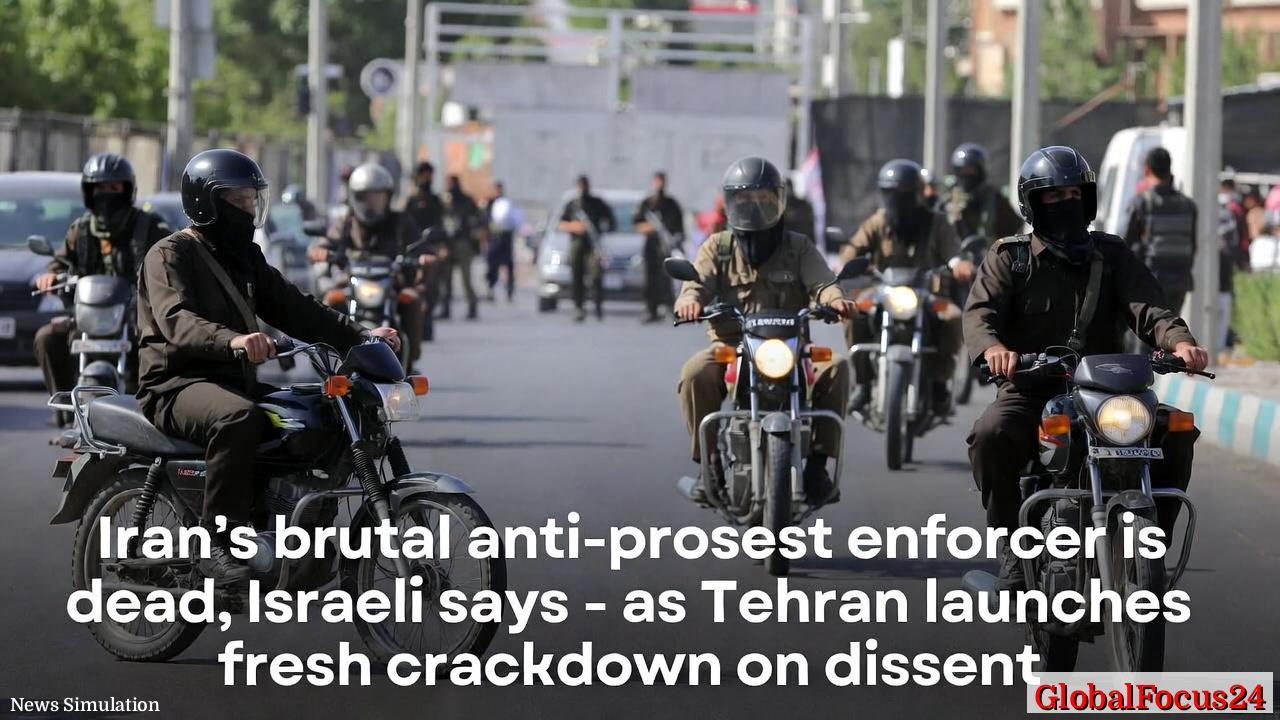
In the aftermath of the airstrike, Iranian security forces have intensified their internal operations. Reports from Tehran and other major cities describe a climate of heightened repression. Heavily armed patrols of men in plainclothes ride through the streets on motorcycles, establishing impromptu checkpoints and monitoring gatherings. Residents are stopped randomly, their phones searched for photos or online activity considered sympathetic to foreign media or opposition groups.
According to human rights monitors, more than 500 individuals have been detained since the start of the conflict. Many have been accused of photographing airstrike sites or sharing videos on social media. Others face charges linked to monarchist sympathies or alleged collaboration with foreign governments. Evidence suggests that judicial processes have been expedited, with trials taking place behind closed doors and without legal representation for the accused.
State television has broadcast repeated warnings against participation in what it calls “psychological warfare,” threatening punishments more severe than those following the mass killings of January 8. In several neighborhoods, authorities have distributed text messages warning of “immediate and decisive action” against any show of resistance.
The atmosphere recalls earlier periods of political unrest in Iran, particularly during the 2009 Green Movement, when security forces launched systematic efforts to crush opposition networks. However, this current crackdown appears broader and more technologically coordinated, drawing on extensive digital surveillance and facial recognition data.
Regional and Economic Implications
The reported killing of Gholamreza Soleimani comes at a time when Iran’s economy remains under strain from international sanctions, high inflation, and widespread unemployment. Any escalation of conflict risks further isolating the country and damaging its fragile recovery efforts.
In Iran’s southern provinces, where oil exports form the backbone of the national budget, tanker traffic has slowed amid fears of targeted strikes. Insurance premiums on shipments through the Strait of Hormuz have surged, echoing similar spikes during periods of tension in 2019 and 2020. Global energy markets have responded with caution, with crude prices rising modestly as traders assess the potential for disruption.
For Israel, the operation underscores its ongoing strategy of containment—a mix of deterrence and surprise action designed to undermine Iran’s regional reach. Analysts note that while the immediate military success may be clear, the political and economic consequences remain uncertain. Israel’s own defense spending has risen sharply since the fighting began, straining its budget as it juggles internal recovery from recent cyberattacks and infrastructure disruptions.
Impact on the Basij and Iran’s Power Structure
The Basij, which claims millions of members nationwide, has long functioned as both a military reserve and an ideological movement. Its members range from university students to retirees, trained to act quickly in crises ranging from natural disasters to political turmoil. Losing its central commander in an external strike is unprecedented and may create uncertainty in command succession.
Within the broader Revolutionary Guard structure, the Basij serves as a crucial link between Iran’s ruling clerical establishment and its security apparatus. Soleimani’s leadership style—marked by loyalty to Supreme Leader Ayatollah Ali Khamenei and relentless emphasis on ideological purity—helped align its units with the regime’s internal priorities.
A new commander, if appointed soon, will inherit an organization under pressure from both internal dissent and external threats. Analysts expect Tehran to promote a figure from within the IRGC hierarchy to ensure continuity and limit morale erosion. However, trust among rank-and-file members may falter if the leadership transition appears uncertain or politically motivated.
International Response and Diplomatic Reactions
Global reaction to the strike has been restrained but watchful. Western governments have called for “maximum restraint,” cautioning against escalation that could destabilize already volatile borders from Iraq to the eastern Mediterranean. European diplomats have urged renewed back-channel communications to prevent open warfare, echoing warnings first raised during earlier flare-ups between the two regional powers.
In contrast, Gulf Arab states have largely maintained silence, reflecting both their strategic caution and complex relationships with Tehran and Tel Aviv. Countries such as the United Arab Emirates and Saudi Arabia, which have cautiously normalized limited diplomatic contact with Iran in recent years, face renewed pressure to clarify their positions if the conflict intensifies.
Russia and China, both of which maintain economic and military ties with Iran, have publicly condemned the strike but stopped short of pledging any direct intervention. Their statements emphasized sovereignty and the need for dialogue, underscoring the delicate balance of alliances shaping the region.
Historical Context: A Pattern of Targeted Killings
Monday’s airstrike fits within a broader pattern of targeted assassinations and precision strikes that have defined Israeli operations against Iranian leadership figures. Since the early 2010s, Israel has systematically targeted scientists, commanders, and logistical networks believed to contribute to Iran’s nuclear and military programs.
Perhaps the most notable precedent was the 2020 U.S. killing of General Qassem Soleimani, the head of the IRGC’s Quds Force, in a Baghdad airstrike. That event similarly shocked Iran’s leadership and led to retaliatory missile attacks on U.S. bases in Iraq. Gholamreza Soleimani’s reported death now extends that lineage of high-profile losses, though his influence centered more on internal control than overseas operations.
Historically, such assassinations have served as flashpoints capable of reshaping Iran’s security priorities. In some cases, Tehran responded with force; in others, it opted for calibrated restraint to avoid full-scale war.
Looking Ahead: Heightened Risk and Strategic Uncertainty
As Israel and Iran continue to test each other’s limits through asymmetric actions, the risk of broader confrontation remains high. The death of a senior Iranian commander adds complexity to an already volatile environment of regional rivalries and economic hardship.
In the short term, Tehran is likely to focus on consolidating internal control—tightening its security apparatus, escalating propaganda efforts, and preventing the emergence of new protests. In the longer term, however, the regime faces a profound challenge: maintaining stability while projecting strength abroad, all under the shadow of ongoing economic pressure and public discontent.
Whether Gholamreza Soleimani’s death becomes a rallying point for unity or a symbol of vulnerability may depend on Iran’s next move. For now, both nations stand at a precarious crossroads, their actions in the coming weeks poised to reshape the balance of power across the Middle East.