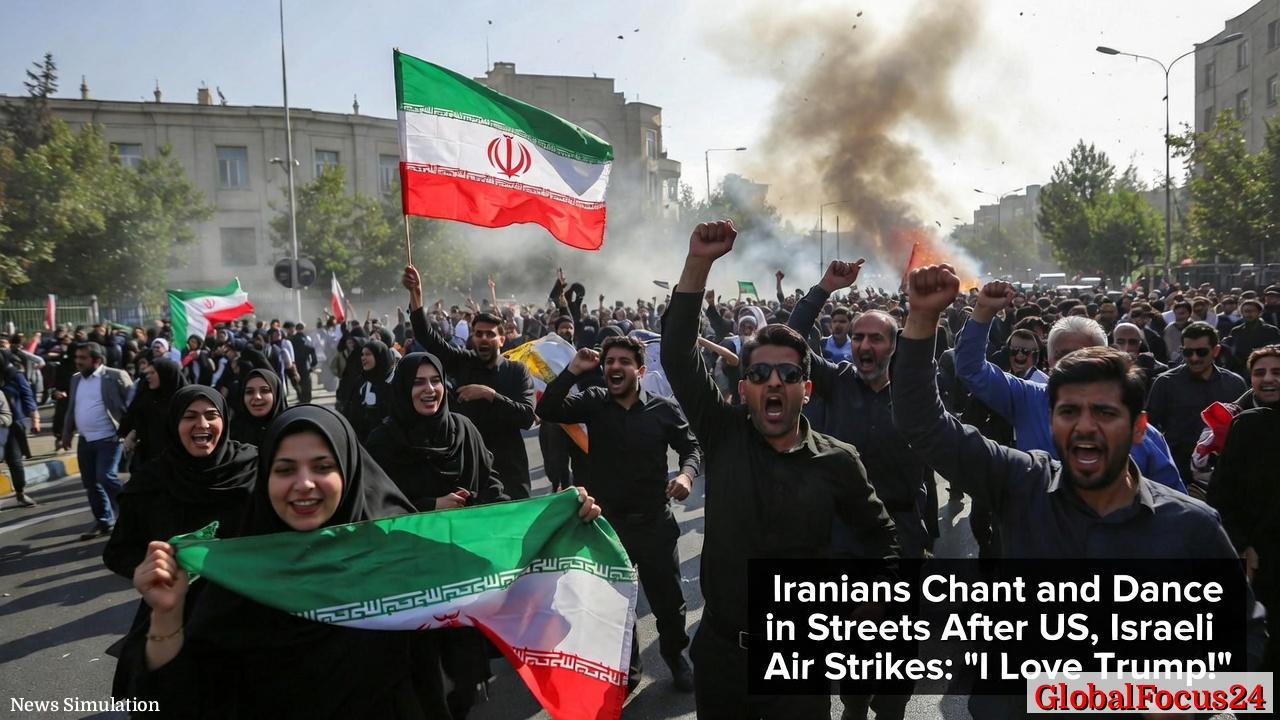
Iranians Celebrate in the Streets After U.S.-Israeli Airstrikes Target Iranian Leadership
Unprecedented Scenes of Public Celebration in Tehran
TEHRAN — Crowds poured into the streets of Tehran and several major Iranian cities early Saturday morning after large-scale airstrikes conducted jointly by the United States and Israel targeted Iran’s top leadership. The strikes, part of “Operation Epic Fury,” hit multiple sites in Tehran, including the compound of Supreme Leader Ayatollah Ali Khamenei. Explosions lit up the night sky, shaking the capital and leaving heavy plumes of smoke visible for miles.
In an extraordinary display of emotion, residents came out in droves, many cheering and dancing despite decades of strict laws forbidding public celebrations. “I love Trump!” shouted one university student as others clapped, sang, and spun to music in the streets. The atmosphere was simultaneously chaotic and euphoric. Women removed their headscarves, waving Iranian flags in symbolic defiance of the Islamic Republic’s hardline rules.
The scenes represented one of the most visible signs of public opposition to the ruling regime since the 1979 Islamic Revolution. Citizens flooded social media with videos of street dancing, cheers, and waving banners calling for freedom. The sound of music mixed with the distant echo of explosions as sirens wailed across the capital.
The Strikes: A Turning Point in U.S.-Iran Tensions
“Operation Epic Fury” came after weeks of failed negotiations over Iran’s controversial nuclear program. U.S. and Israeli intelligence agencies confirmed the operation was intended to cripple Iran’s leadership structure and deter the regime’s nuclear ambitions. Targets included command centers, missile sites, and senior government residences.
American officials described the strikes as a “strategic deterrent measure” following Tehran’s refusal to comply with international disarmament demands. Israeli Prime Minister Benjamin Netanyahu issued a statement declaring the mission a success, adding that it “will create the conditions for the brave Iranian people to take their fate into their own hands.”
President Donald Trump, speaking from Washington, delivered a direct message to the Iranian population: “When we are finished, take over your government. It will be yours to take. America is backing you with overwhelming strength. Now is the time to seize control of your destiny and unleash the prosperous and glorious future that is close within your reach.”
The coordinated offensive marks one of the most significant Western military actions in the Middle East in recent memory. Analysts describe it as potentially transformational — either opening a path toward a post-regime Iran or igniting a larger regional conflict.
Iranian Response and Retaliation
Within hours of the strikes, Iran retaliated with ballistic missile attacks targeting U.S. bases in Iraq, Kuwait, and the Persian Gulf. Several explosions were reported near military facilities hosting American troops. Preliminary reports indicate that Iranian Defense Minister Amir Nasirzadeh and Revolutionary Guards commander Mohammed Pakpour were killed in retaliatory operations, signaling internal turmoil within the Iranian military.
Officials in Tehran condemned the attack as “illegal and unprovoked,” vowing “decisive revenge.” The government temporarily shut down major internet networks, restricted foreign media coverage, and deployed Revolutionary Guard units to suppress demonstrations in the capital. Yet, despite a visible security presence, protests and celebrations continued late into the evening in defiance of curfews.
Public Reaction: A Nation Divided
Reactions inside Iran appeared deeply divided. In the capital and large cities such as Shiraz, Isfahan, and Mashhad, many residents were seen expressing relief that the regime had been dealt a major blow. At Tehran University, students held signs reading “Freedom for Iran” and chanted slogans calling for the end of clerical rule.
Others, particularly in rural regions and areas loyal to the government, condemned the strikes and accused the West of violating Iran’s sovereignty. State-run news agencies attempted to downplay scenes of celebration, focusing instead on damage caused by the missile strikes.
Still, eyewitness accounts describe a rare moment of open defiance. “People are tired of fear,” said a middle-aged shopkeeper in north Tehran. “For once, we feel that change is possible.”
Historical Context: From Revolution to Resistance
The public celebration of Western military action marks a striking reversal in modern Iranian history. Since the 1979 Revolution, Iran’s political identity has been built on staunch opposition to U.S. influence and Israeli presence in the region. Yet, over four decades later, mounting economic crises, political repression, and lack of freedoms have reshaped public sentiment.
Previous uprisings — including the Green Movement of 2009 and the widespread protests of 2022 sparked by the death of Mahsa Amini — revealed a growing generational divide. Today’s Iranian youth, more globally connected and digitally savvy, are increasingly vocal about their desire for secular governance and engagement with the international community.
Experts note that the visible celebrations following Operation Epic Fury symbolize a deeper exhaustion with autocratic rule. “This is not just a reaction to airstrikes,” said Dr. Soraya Makki, an Iranian political historian. “It is the manifestation of decades of suppressed frustration and longing for change.”
Economic Uncertainty and Global Implications
The economic shockwaves of the strikes are already reverberating across the region. Oil prices surged in early trading, with Brent crude briefly topping $107 per barrel — its highest level since mid-2022. Markets reacted nervously, anticipating potential disruptions to Persian Gulf shipping lanes and energy exports.
Iran’s economy, already battered by international sanctions, faces new challenges. Key infrastructure in Tehran and the southern oil hub of Ahvaz reportedly sustained damage. The Central Bank of Iran suspended foreign exchange operations amid fears of capital flight and currency collapse.
Neighboring countries are bracing for humanitarian and economic fallout. Iraq, already struggling with its own political instability, could see an influx of refugees if unrest escalates. The United Arab Emirates and Saudi Arabia have increased border security and military alert levels in response to potential Iranian counterattacks.
Regional Comparisons and Strategic Impact
Comparing this event to past military operations highlights its magnitude. The 2003 U.S.-led invasion of Iraq aimed to dismantle Saddam Hussein’s regime; however, it lacked visible public support within Iraq upon initiation. In contrast, the scenes from Tehran — citizens openly celebrating the targeting of their government — represent an almost unprecedented moment in Middle Eastern geopolitics.
Similarly, Israel’s defensive operations in Gaza or Syria in recent years were typically localized, with limited civilian reaction inside the target nations. Operation Epic Fury differs in scale and in its potential to reshape internal balance within Iran itself.
Western experts suggest that if the Iranian leadership collapses or becomes fragmented, it could trigger a political transformation akin to the fall of Eastern Bloc regimes in the late 1980s. However, others warn that instability might open space for extremist factions or widespread chaos.
The Road Ahead for Iran
As dawn broke over Tehran, the smell of smoke and gunpowder lingered in the cold February air. Fires continued to burn near government buildings, while crowds chanted slogans demanding freedom and democracy. Whether these celebrations represent the first chapter of a new era or a fleeting moment of relief remains uncertain.
Iran’s future now hinges on two parallel pressures — external and internal. Externally, the U.S. and Israel signal readiness to maintain military momentum until Iran’s regime capitulates. Internally, the Iranian people face a crucial decision: whether to seize the opportunity for transformation or endure the familiar cycle of repression and resistance.
The coming days will test not only Iran’s political leadership but the resilience and unity of its citizens. If the images emerging from Tehran are any indication, a historic tide may be turning in one of the Middle East’s most pivotal nations.
As Operation Epic Fury unfolds, Iran stands at a crossroads between past and future, isolation and reinvention. What began as airstrikes may mark the beginning of the most consequential political shift in the region in more than a generation.