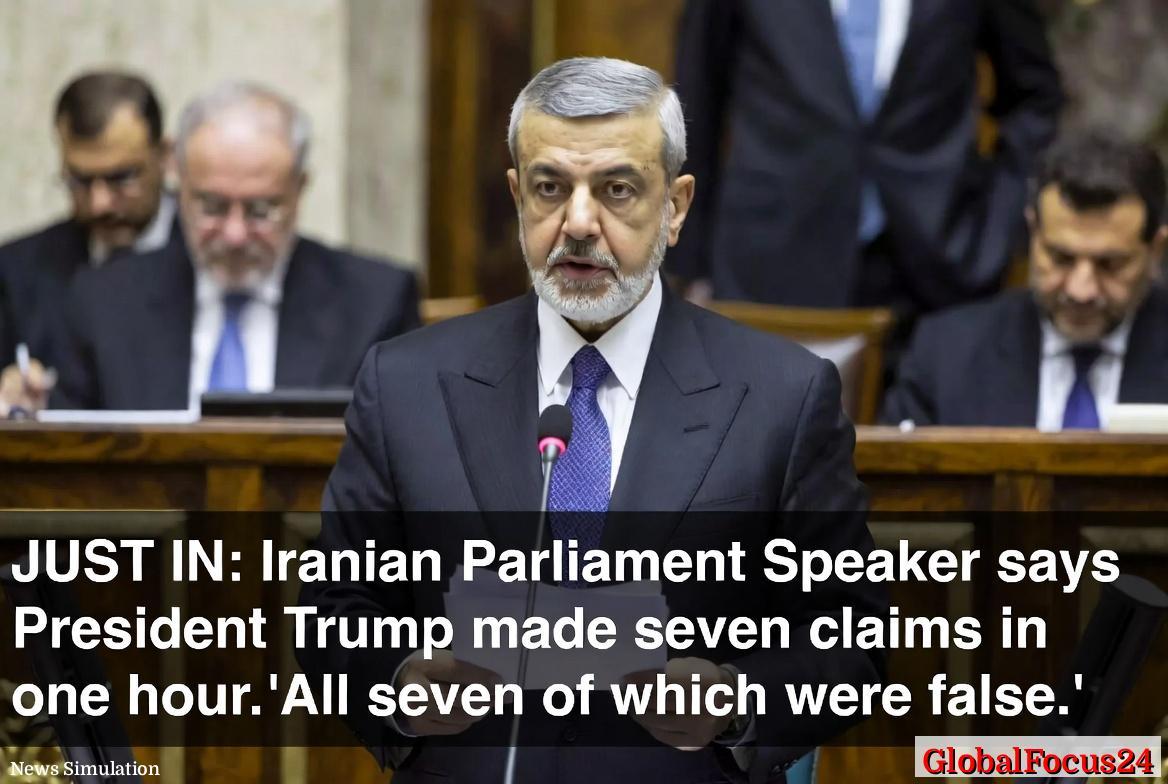
Iranian Parliament Speaker Accuses Donald Trump of Making “Seven False Claims” in One Hour
Escalating Rhetoric Highlights Ongoing U.S.–Iran Tensions
Iran’s Parliament Speaker has publicly accused former U.S. President Donald Trump of making seven false statements within a single hour, describing the remarks as “entirely inaccurate.” The comments, delivered during a recent address, underscore the persistent strain in relations between Washington and Tehran, a dynamic that has shaped geopolitical discourse for decades.
The Iranian official did not mince words, asserting that each of the claims made by Trump misrepresented facts related to Iran’s policies, regional activities, and international agreements. While the specific statements were not fully detailed in the initial remarks, the strong rebuttal reflects a broader pattern of confrontation between the two nations’ political narratives.
Historical Context of U.S.–Iran Disputes
Tensions between the United States and Iran date back to the 1979 Iranian Revolution, which led to the overthrow of the U.S.-backed Shah and the establishment of the Islamic Republic. The subsequent hostage crisis, in which 52 American diplomats and citizens were held for 444 days, marked a turning point in bilateral relations.
Over the decades, disputes have centered on Iran’s nuclear program, regional influence, and economic sanctions. The Joint Comprehensive Plan of Action (JCPOA), signed in 2015, was a landmark agreement aimed at curbing Iran’s nuclear capabilities in exchange for sanctions relief. However, the U.S. withdrawal from the deal in 2018 during Trump’s presidency reignited tensions and led to a renewed cycle of economic and diplomatic pressure.
The latest exchange of accusations fits into this long-standing pattern, where public statements by high-ranking officials often serve as extensions of broader strategic positioning.
Claims and Counterclaims in a Charged Political Climate
According to the Iranian Parliament Speaker, Trump’s remarks included assertions related to Iran’s compliance with international agreements, its regional activities, and its domestic policies. The speaker emphasized that all seven claims were “false,” framing them as part of a broader misinformation effort.
While Trump has frequently criticized Iran in speeches and public appearances, often focusing on security concerns and geopolitical rivalries, Iranian officials have consistently rejected such characterizations, arguing that they distort the country’s actions and intentions.
This exchange illustrates the role of rhetoric in shaping international perceptions. Public statements by influential figures can have immediate ripple effects, influencing diplomatic relations, market reactions, and public opinion.
Economic Implications and Market Sensitivity
The renewed war of words comes at a time when global markets remain sensitive to developments involving Iran, particularly in the energy sector. Iran holds some of the world’s largest proven oil and natural gas reserves, making it a key player in global energy supply dynamics.
Past escalations in U.S.–Iran tensions have led to fluctuations in oil prices, as traders respond to potential disruptions in supply routes, especially through the Strait of Hormuz—a critical chokepoint for global النفط shipments.
Economic sanctions imposed on Iran have also had far-reaching consequences. These measures have significantly reduced Iran’s oil exports, constrained its access to international financial systems, and contributed to domestic economic challenges, including inflation and currency depreciation.
At the same time, businesses and investors worldwide monitor such developments closely, as shifts in U.S.–Iran relations can influence everything from energy costs to shipping insurance rates.
Regional Comparisons and Broader Geopolitical Impact
The situation between the United States and Iran can be compared to other long-standing geopolitical rivalries, such as those involving North Korea or Russia. In each case, public rhetoric often serves as both a signaling mechanism and a tool for domestic political messaging.
In the Middle East, Iran’s relationships with neighboring countries further complicate the picture. Its influence in countries such as Iraq, Syria, and Lebanon has been a point of contention with the United States and its allies. Statements like those attributed to Trump often resonate beyond bilateral relations, affecting regional alliances and security calculations.
By contrast, diplomatic channels in other regions have sometimes managed to de-escalate tensions through sustained negotiation. The absence of consistent dialogue between Washington and Tehran in recent years has made public exchanges more prominent and, at times, more volatile.
Public Reaction and Media Attention
The Iranian Parliament Speaker’s remarks have drawn significant attention both domestically and internationally. In Iran, such statements often reinforce official narratives about external pressures and perceived misinformation from foreign leaders.
Internationally, reactions have been mixed, with analysts emphasizing the importance of verifying claims and understanding the broader context behind political statements. Media coverage has focused on the sharp tone of the exchange, highlighting the enduring friction between the two nations.
Public discourse, particularly on digital platforms, has also amplified the issue, with commentators debating the accuracy of the claims and the motivations behind them. This reflects a broader trend in global politics, where real-time communication can rapidly escalate or intensify disputes.
The Role of Political Messaging in International Relations
Political messaging plays a crucial role in shaping international relations, especially in high-stakes environments like U.S.–Iran interactions. Statements by prominent figures are often crafted to achieve multiple objectives, including influencing domestic audiences, signaling intentions to foreign governments, and shaping global narratives.
In this context, accusations of false claims are not merely about factual disputes; they are part of a larger contest over credibility and influence. Each side seeks to present its version of events as authoritative, while challenging the other’s assertions.
This dynamic is not unique to U.S.–Iran relations but is particularly pronounced given the history and stakes involved. The lack of direct diplomatic engagement in recent years has further elevated the importance of public statements as a primary means of communication.
Looking Ahead: Uncertain Trajectory
The latest exchange between the Iranian Parliament Speaker and Donald Trump highlights the continued volatility in U.S.–Iran relations. While such rhetorical clashes are not new, they serve as reminders of the unresolved issues that continue to shape interactions between the two countries.
Observers note that without renewed diplomatic efforts, similar incidents are likely to persist, contributing to an atmosphere of uncertainty. For global markets, regional stability, and international diplomacy, the implications extend far beyond the immediate exchange of words.
As the situation evolves, attention will remain focused on whether these verbal confrontations translate into concrete policy actions or remain confined to the realm of political rhetoric.