Iranian Official Questions U.S. Military Resolve Amid Escalating Tensions
Rising Rhetoric Signals Deepening Standoff
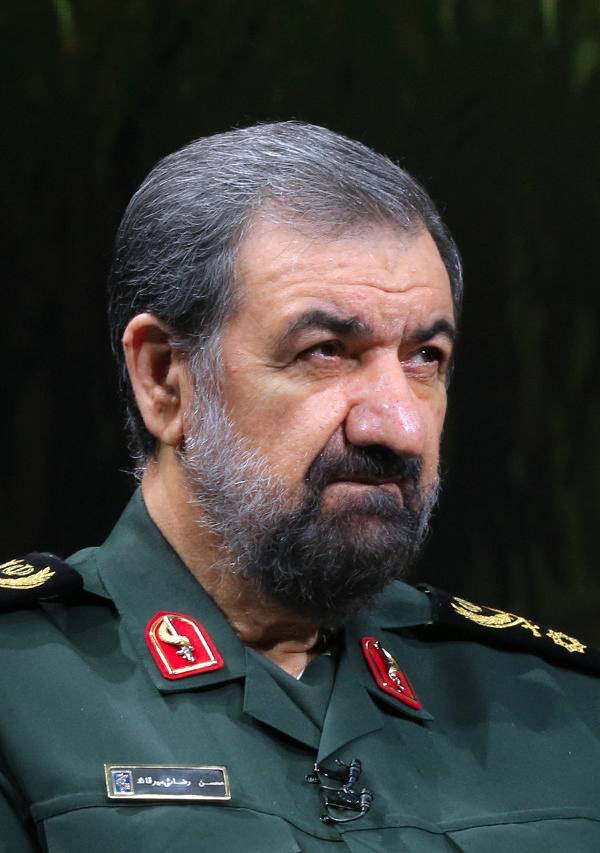
A senior Iranian official has openly challenged the resolve of American troops, adding new intensity to already fraught relations between the United States and Iran. Mohsen Rezaee, a key figure in Iran’s appointed advisory body and a former commander of the Islamic Revolutionary Guard Corps (IRGC), questioned whether U.S. soldiers would be prepared to engage in a potential ground invasion of the region.
“Do American soldiers want to die for Israel?” Rezaee asked publicly. “What do they expect from a ground invasion? We’re waiting.”
His remarks, sharp and confrontational, have drawn international attention at a moment when tensions between Tehran and Washington are approaching their highest level in years. The comments underscore Iran’s growing assertiveness as the broader Middle East faces renewed volatility, driven by conflicts involving Israel, Lebanon, and other regional actors.
Historical Context: A Decades-Long Rivalry
The strained relationship between Iran and the United States has its roots in more than four decades of mistrust. Since the 1979 Iranian Revolution, the two nations have clashed indirectly across the region — through economic sanctions, cyber operations, and proxy conflicts in Iraq, Syria, and Yemen. Periods of diplomatic engagement, such as the 2015 nuclear accord, briefly tempered hostilities but often unraveled amid shifting political winds.
Following the U.S. withdrawal from the nuclear agreement in 2018, relations deteriorated sharply. Washington reinstated sweeping sanctions on Iran’s energy and financial sectors, effectively isolating Tehran from the international banking system and drastically cutting its oil exports. In response, Iran expanded its uranium enrichment, tested missile systems, and deepened its partnerships with non-state groups across the Middle East — acts viewed in Washington as aggressive, and in Tehran as deterrent measures.
Rezaee’s remarks evoke echoes of previous moments of brinkmanship, from the U.S. naval confrontations in the Persian Gulf during the 1980s to the 2020 killing of Iranian General Qassem Soleimani by an American drone strike. Each event has hardened attitudes on both sides, reinforcing a cycle of mistrust and reprisal that continues to shape their geopolitical calculus.
Current Flashpoints in the Middle East
The current round of escalation appears tied to rising regional instability and Iran’s growing confrontation with U.S. interests in the Middle East. Over the past months, American forces stationed in Iraq and Syria have come under intermittent drone and rocket attacks by militias believed to be backed by Tehran. Meanwhile, Washington has deployed naval and air assets to the region in a show of force, emphasizing deterrence while calling publicly for “de-escalation.”
Iranian officials, however, have framed these deployments as provocations. Rezaee’s statement, coming amid reports of intensified U.S. military readiness, suggests that Tehran views talk of a potential ground invasion as both improbable and politically unsustainable within the United States.
Military analysts note that Iran’s geography and military structure present formidable challenges to any hypothetical invasion. The country’s vast territory, rugged mountains, and large population would make a ground operation costly and prolonged. U.S. commanders faced similar realities in Iraq and Afghanistan, where extended conflicts tested American endurance and domestic support.
Strategic Messaging and Psychological Warfare
Observers believe Rezaee’s comments are part of a broader pattern of strategic messaging aimed at both domestic and foreign audiences. By framing U.S. military involvement in moral and political terms — questioning whether Americans would “die for Israel” — Iranian officials appeal to nationalist sentiment while seeking to drive wedges within the Western alliance.
This rhetorical strategy is not new. During previous confrontations, Tehran has often used assertive language to project confidence, deter adversaries, and shore up domestic unity. In the information age, such statements reverberate quickly through global media, shaping perceptions of resolve and deterrence long before any physical confrontation occurs.
Experts caution, however, that heightened rhetoric increases the risk of miscalculation. The escalation of language can raise public expectations, making diplomatic concessions harder to sustain. In recent years, similar exchanges between U.S. and Iranian leaders have been followed by tit-for-tat military incidents, including strikes on bases hosting American personnel and retaliatory operations against militia groups.
Economic and Energy Implications
Beyond the military dimension, renewed U.S.-Iranian friction carries significant economic stakes. Iran sits astride one of the most critical energy corridors in the world, controlling access to the Strait of Hormuz — the narrow passage through which roughly one-fifth of global oil output transits daily. Any disruption or perceived threat to this route can ripple through global markets, driving up energy prices and unsettling investors.
Recent spikes in oil futures suggest traders are already factoring in geopolitical risk. A significant escalation involving Iran could push prices higher, increasing inflationary pressure globally and complicating economic recovery efforts in key markets such as the United States, Europe, and East Asia.
Iran’s own economy, heavily sanctioned and constrained, may seek to capitalize on this uncertainty. Higher oil prices could offer Tehran temporary leverage, particularly as it continues to find alternative buyers for its crude through indirect routes and regional partners. However, the domestic economic picture within Iran remains challenged by high inflation, a declining currency, and limited access to foreign investment.
Regional Comparisons and Diplomatic Reactions
Across the Middle East, governments are watching developments with caution. Gulf Arab states such as Saudi Arabia and the United Arab Emirates — long wary of Iranian influence — have recently pursued limited diplomatic overtures to ease tensions. The prospect of renewed confrontation between Washington and Tehran threatens to unsettle these fragile understandings.
Iraq, which hosts both U.S. military personnel and Iranian-backed militias, remains particularly vulnerable to fallout. Iraqi leaders have repeatedly called for restraint to preserve national security and prevent the country from once again becoming a battleground for foreign powers.
In comparison, Israel views Iran’s posture as confirmation of its long-standing security concerns. Israeli officials have intensified calls for Western unity against Iran’s regional activities, citing Tehran’s missile and drone programs as direct threats. Analysts suggest that Rezaee’s comments may deepen Israeli fears of an emboldened Iran willing to challenge Western resolve.
European governments, invested in preserving the remnants of the nuclear accord, have issued statements urging all sides to avoid escalation. The European Union has emphasized the need to maintain open communication channels with Tehran, though progress remains slow amid ongoing disputes over uranium enrichment and regional proxy activity.
The U.S. Military and Public Perception
Rezaee’s rhetorical question strikes at a sensitive nerve within U.S. public and political discourse: the appetite for new large-scale military interventions. After two decades of conflict in Iraq and Afghanistan, American voters and lawmakers alike have shown skepticism toward deploying troops abroad, particularly in the Middle East. This war-weariness constrains U.S. policymakers, who must balance deterrence with public fatigue.
Military strategists point out that Washington’s contemporary defense doctrine emphasizes technology-driven engagement — air power, intelligence, and precision strikes — rather than traditional ground invasions. The Pentagon’s ongoing realignment toward the Indo-Pacific further limits available resources for a new land-based operation in the region.
Nevertheless, Rezaee’s statement implicitly challenges U.S. credibility. By suggesting that American troops lack the will to fight, Iranian officials may hope to cast doubt on Washington’s deterrent posture. In international politics, perception often shapes reality: if adversaries view deterrence as uncertain, the risk of confrontation can increase.
Looking Ahead: Risks and Diplomatic Off-Ramps
For now, the immediate risk of a direct U.S.-Iranian military confrontation remains limited, though accidental escalation cannot be ruled out. Both sides have generally avoided direct engagement, preferring to act through intermediaries or confined zones of operation. Still, as long as mutual distrust persists and regional violence continues, the potential for missteps remains high.
Diplomatic efforts could still provide an off-ramp. Past precedents — including the 2016 U.S.-Iran prisoner exchange and indirect talks in Oman — demonstrate that crisis management is possible when communication channels remain open. Regional powers such as Qatar and Oman, which maintain working relationships with both Washington and Tehran, may once again play mediating roles.
Ultimately, Rezaee’s comments reflect a broader struggle over deterrence, credibility, and influence in a volatile region. As the United States recalibrates its global military commitments and Iran asserts itself as a regional power, episodes like this one reveal the perils of rhetoric at the brink — words that can either harden positions or, conversely, force renewed reflection on the price of sustained confrontation.
Conclusion: A Question That Resonates
Whether Rezaee’s provocative question was meant as a challenge or a warning, it encapsulates the fragility of the current moment. The balance between deterrence and escalation in U.S.-Iran relations has always hinged as much on perception as on power. As tensions rise, both nations face the same enduring dilemma: how to assert strength without inviting a conflict neither side can afford to fight — or win.