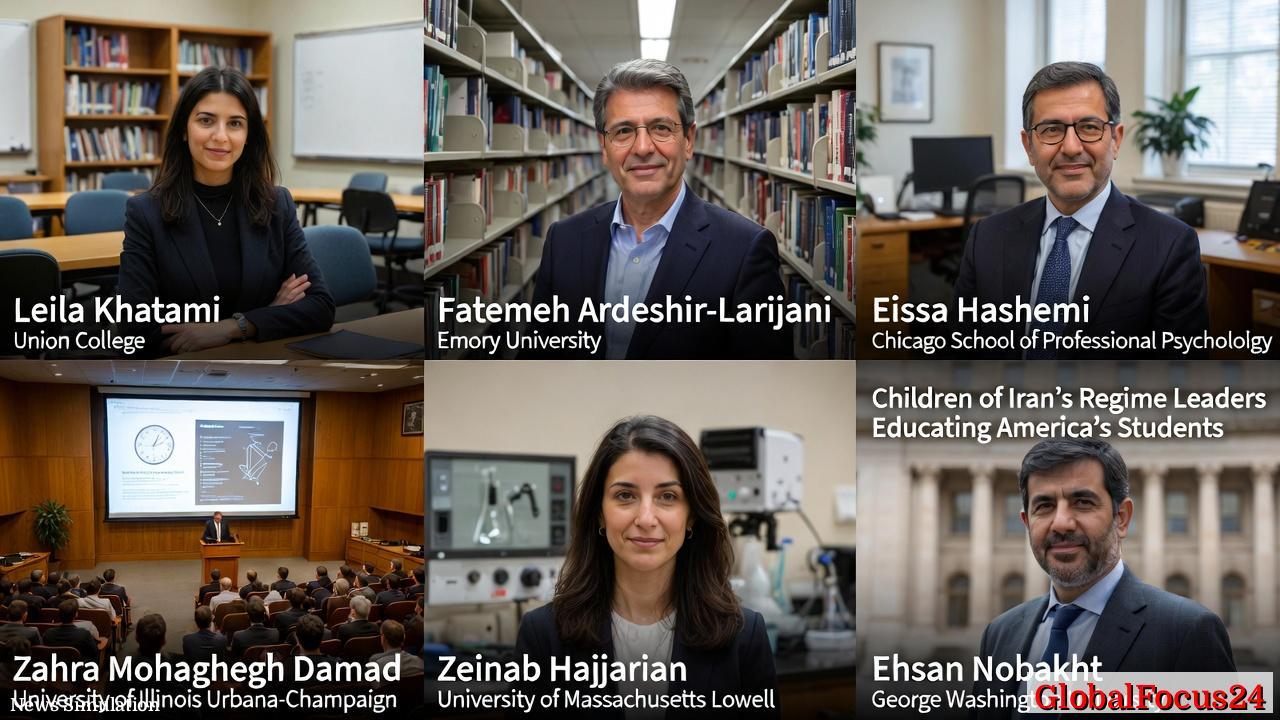
s for Academic Pathways: Iranian Regime Ties in U.S. Higher Education Across the Coast to Coasts
A quiet reverberation runs through American campuses as the children and relatives of prominent Iranian regime figures occupy faculty roles and research leadership positions from New York to California. While universities emphasize academic freedom and the pursuit of knowledge, the presence of these connections has sparked renewed scrutiny about the ways political histories intersect with higher education, funding, and international perceptions. This article examines the historical context, the potential economic implications, and how regional comparisons illuminate broader patterns in academia today.
Historical Context: A Century of Academic Exchange and Political Turbulence The relationship between Iran and Western institutions has long been braided with diplomacy, conflict, and intellectual curiosity. Following the mid-20th century, cultural and educational exchanges grew despite geopolitical tensions, creating networks of students, scholars, and professionals who crossed oceans for study, collaboration, and opportunity. The 1979 revolution and subsequent decades intensified scrutiny of political affiliations in Western universities, shaping admissions, partnership agreements, and governance policies. In recent years, a new chapter has emerged: generations linked to influential Iranian figures pursuing careers in U.S. higher education, often in medicine, engineering, mathematics, and related disciplines.
Academic mobility and the appeal of U.S. research ecosystems contribute to a global talent pool. Universities highlight diverse backgrounds as assets, emphasizing the value of cross-cultural perspectives in teaching, clinical practice, and scientific inquiry. Yet the presence of high-profile familial or ideological ties can complicate reputational considerations, particularly when public attention converges on subjects ranging from international relations to regional security. The evolving landscape reflects a broader trend in which elite education systems attract talent worldwide, while campuses balance openness with governance that safeguards academic integrity and security concerns.
Economic Impact: Talent, Grants, and Regional Ecosystems The movement of scholars and researchers with ties to influential networks has notable economic dimensions. Key impacts include:
- Research funding and collaboration: Faculty with international connections may facilitate cross-border grants, joint laboratories, and multi-institution partnerships. These collaborations can unlock new funding streams, seed advanced projects, and accelerate technology transfer, contributing to regional innovation ecosystems.
- Talent retention and labor markets: Universities compete for highly skilled academics, which can influence salary scales, tenure policies, and recruitment strategies. A diversified workforce with global experiences enriches curricula and strengthens clinical programs, potentially attracting students and industry partnerships.
- Local economies and housing markets: Academic recruitment and the establishment of specialized research centers affect local economies. Universities often drive demand for housing, services, and infrastructure near campuses, shaping urban development and neighborhood dynamics.
- Perceived risk and compliance costs: Institutions face heightened scrutiny over affiliations with individuals tied to political influence. Compliance, risk assessment, and international collaboration policies may incur costs but aim to preserve institutional integrity and public trust.
Regional Comparisons: Coast to Coast Perspectives Across the United States, regional environments shape how universities manage these complex affiliations:
- Northeast and Mid-Atlantic hubs: Institutions in New York, Massachusetts, and Washington, D.C., often emphasize translational research, medical innovation, and high-tech engineering. City-based campuses leverage proximity to government agencies, national labs, and a robust private sector, making governance around international connections particularly salient. Partnerships with hospitals, medical centers, and engineering schools can amplify the impact of faculty and researchers with diverse origins.
- Midwest academic centers: Universities in the Midwest frequently prioritize foundational research, STEM disciplines, and interdisciplinary initiatives. Regions around urban hubs and research corridors offer opportunities for collaboration with industry and government laboratories, where international scholars contribute to large-scale projects in energy, materials science, and health sciences. The local economies benefit from grant activity and talent development, while universities maintain rigorous compliance and ethics programs.
- West Coast innovation ecosystems: California and parts of the Pacific Northwest host a dense concentration of tech-intensive research universities and medical schools. Here, collaboration with Silicon Valley and biotech clusters can magnify the economic ripple effect of faculty research and graduate training. International ties are often leveraged to attract top researchers and to foster cross-border startup creation, though institutions may face heightened attention to export controls, visa policies, and international partnerships governance.
Notable Profiles: A Snapshot of Roles in U.S. Academia The current landscape includes a diversity of disciplines where individuals connected to prominent Iranian figures contribute to U.S. higher education. Examples include mathematics, medicine, biomedical engineering, nuclear engineering, and health sciences. These roles encompass professorships, clinical leadership, and research administration. While the individuals may operate independently of their family histories in day-to-day academic life, public awareness can shape perceptions of institutional priorities and international cooperation.
- Mathematics and science faculties: Professors teach future generations, supervise research, and collaborate on peer-reviewed projects. Their work often intersects with national and international scientific communities, advancing fundamental knowledge and practical applications.
- Medical and biomedical research: Clinicians and researchers contribute to patient care improvements, translational studies, and public health initiatives. Collaboration with hospitals and cancer institutes can bridge laboratory discoveries with clinical outcomes.
- Engineering and technological risk analysis: Scholars in nuclear, plasma, and radiological engineering work on complex systems modeling, safety analysis, and risk assessment. Their research supports energy infrastructure, national security, and disaster resilience planning.
- Biomedical engineering and public health: Departments that focus on medical devices, imaging, and biosystems integrate engineering with clinical insights to address healthcare challenges and innovation pathways.
Public Reaction and Perception: Balancing Openness with Caution Public sentiment around international academic mobility reflects broader questions about openness in higher education. Supporters argue that international scholars and their families contribute essential expertise, enrich campus cultures, and drive innovation. Critics, however, worry about potential conflicts of interest, security concerns, or the appearance of preferential treatment. Universities respond by strengthening grant disclosures, implementing robust conflict-of-interest policies, and maintaining transparent appointment and promotion processes. The outcome is a nuanced balance: fostering global collaboration while upholding rigorous ethical standards and safeguarding institutional integrity.
Implications for Students: Education, Access, and Opportunity For students, the presence of internationally connected faculty can shape academic experiences in several ways:
- Curriculum breadth: Diverse academic backgrounds broaden course offerings, inviting students to engage with global perspectives and cross-disciplinary research topics.
- Mentorship networks: Access to a wider pool of mentors and collaborators enhances research opportunities, internships, and graduate pathways.
- Career readiness: Exposure to international standards, practices, and collaborations prepares students for global careers in academia, industry, and public service.
- Potential geopolitical sensitivities: Students may encounter conversations about global affairs and security that reflect current events. Universities often provide guidance and channels for constructive dialogue and safe, respectful engagement.
Long-Term Trends: Global Talent, Education Policy, and Strategic Autonomy Looking ahead, several trajectories could shape how this dynamic evolves:
- Policy and governance: Higher education institutions may refine transparency measures, international partnership frameworks, and screening protocols to align with evolving regulatory landscapes and national security considerations.
- Global talent flows: As universities compete for top minds, international mobility is likely to intensify, with visa policies, research funding, and collaborative opportunities playing pivotal roles.
- Regional innovation ecosystems: The synergy between universities, industry, and government laboratories will continue to bolster regional competitiveness, particularly in STEM fields, healthcare innovation, and advanced manufacturing.
- Public communication: Institutions may expand efforts to communicate the value of diverse faculty backgrounds while clearly articulating governance standards and ethical commitments to students, staff, and society at large.
Synthesis: Why This Topic Matters in the Modern Campus The movement of individuals connected to influential political figures into U.S. higher education highlights broader themes about globalization, knowledge creation, and the responsibilities of academic institutions. It underscores how universities function as hubs of talent, ideas, and collaboration that transcend borders while navigating the realities of geopolitical scrutiny. The phenomenon invites ongoing dialogue about how to preserve academic freedom and integrity in an interconnected world, where reputational considerations must coexist with the pursuit of discovery and public service.
Conclusion: A Moment of Reflection for Academia and Society As campuses continue to host scholars and educators from diverse backgrounds, the academic enterprise remains a powerful engine of learning, innovation, and cultural exchange. The stories of faculty and researchers tied to broader political legacies remind the public and the academy alike of the delicate balance between openness, accountability, and the enduring mission to expand human understanding. The coming years will test how effectively universities translate this balance into tangible benefits for students, communities, and the world at large.