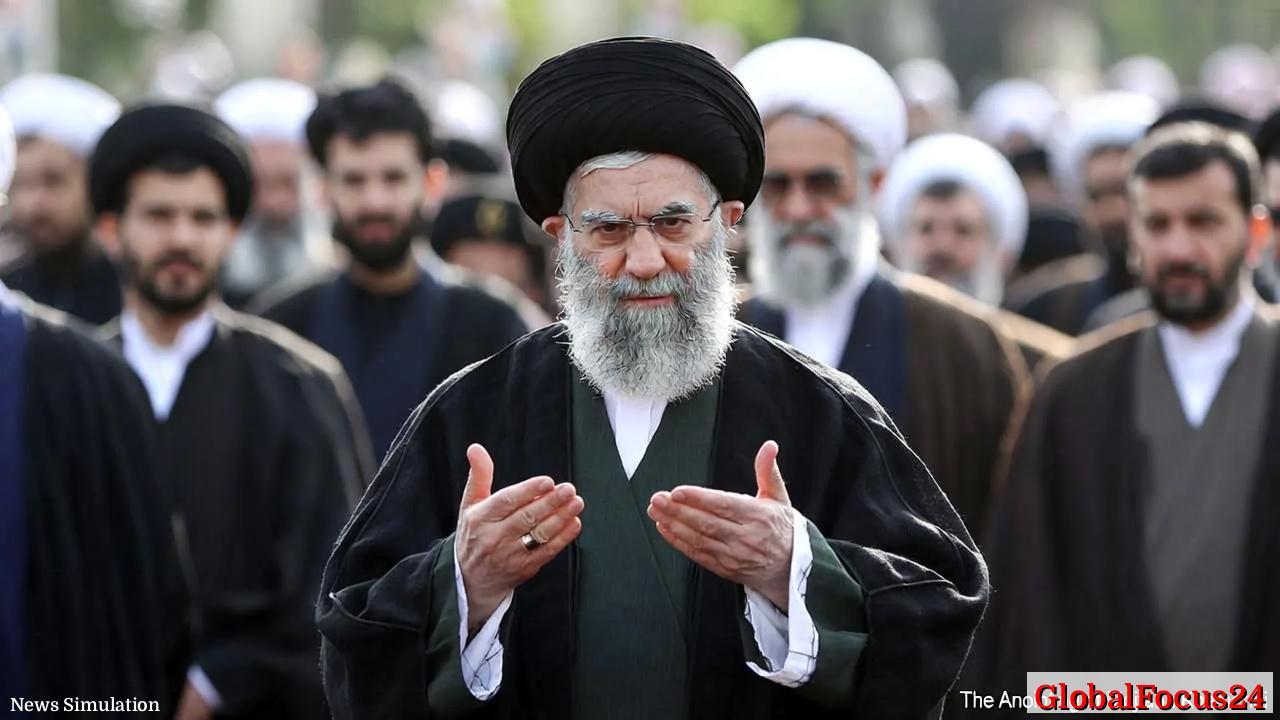
Iran Names Mojtaba Khamenei as New Supreme Leader: Continuity and Controversy Shape a Critical Moment for the Islamic Republic
In a development that immediately reverberated across regional security, energy markets, and global diplomacy, Iran has designated Mojtaba Khamenei, the son of the long-serving former supreme leader, as the nation’s new highest authority. The announcement signals a carefully calibrated transition within the Islamic Republic, one that insiders describe as a move toward continuity rather than reform. As observers assess the implications, markets, allies, and adversaries alike are parsing how this choice might influence Iran’s domestic policy, regional posture, and international engagement in the years ahead.
Historical context: lineage, authority, and the structure of power To understand the significance of Mojtaba Khamenei’s ascent, it helps to review the constitutional and political architecture of Iran. The “supreme leader” in Iran holds the highest political and religious authority, overseeing the armed forces, the judiciary, and the state’s overarching ideology. The position is typically insulated from partisan politics, operates through a blend of religious legitimacy and bureaucratic control, and has historically provided a steadying force through periods of upheaval. The decision to appoint a successor from the Khamenei lineage—building on decades of centralized leadership—underscores a preference for institutional continuity within a system that prizes stability as a core national interest.
The appointment’s timing also matters in a broader historical arc. Iran has endured waves of policy experimentation and international tension since the 1979 revolution, followed by periods of cautious reform and hardline conservatism. The choice of Mojtaba Khamenei, given his place in the leadership ecosystem and intimate familiarity with the regime’s strategic calculations, signals a deliberate attempt to preserve the core competencies of governance—security, political cohesion, and ideological consistency—while navigating evolving domestic and international pressures.
Regional comparisons: how neighboring states approach succession and stability Across the Middle East, leadership succession often intertwines with security calculus, economic realities, and alliance management. In neighboring states, transitions have ranged from gradual, technocratic continuity to abrupt shifts driven by internal or external events. Iran’s method—rooted in a formalized religious-legal framework—offers a contrast to powers that rely more heavily on explicit electoral mandates or dynastic transitions. The Mojtaba Khamenei succession is likely to be evaluated in light of this contrast: will Iran’s leadership era continue to emphasize centralized authority, meshed with a more assertive regional posture? Early signals suggest a prioritization of resilience in the face of sanctions, regional rivalries, and the persistent challenge of balancing domestic demands with foreign policy imperatives.
Economic impact: markets, sanctions, and long-term trajectories The immediate market reaction to leadership signaling in Iran tends to center on expectations for stability versus uncertainty. In the near term, investors watch for how the new leadership will approach sanctions, energy production, and foreign investment. Iran’s economy has long contended with external pressure, limited access to international finance, and structural investment needs. A leadership model that emphasizes continuity could be interpreted by markets as a path to predictable policy, particularly in areas related to energy, petrochemicals, and state-directed investment. However, the global response to Iran’s external posture—through diplomacy, coalition-building, and strategic partnerships—will significantly shape the trajectory of oil and gas export dynamics and currency stability.
Key economic channels to monitor include:
- Energy sector policy and production levels: Iran’s status as a major oil and gas producer means any shifts in production strategy or export terms can influence regional supply chains and benchmark pricing.
- Sanctions environment and financial access: the ability to attract foreign capital hinges on diplomatic progress and the easing or tightening of sanctions regimes.
- Domestic investment climate: investor confidence is affected by regulatory clarity, property rights, and the regime’s capacity to deliver stability amid regional tensions.
- Currency and inflation dynamics: monetary policy effectiveness, exchange rate stability, and import reliance play a central role in consumer prices and macroeconomic planning.
Societal and public reaction: optimism, caution, and the search for clarity Within Iran, public sentiment is multifaceted. Some segments of the population may welcome a leadership figure associated with decades of governance, hoping for continuity that preserves social order and security. Others may fear that an extended era of centralized authority leaves little room for meaningful reform or grassroots initiatives. In the broader region, regional publics and foreign observers are tracking the transition for signals about how Iran will manage its domestic legitimacy, respond to international incentives, and navigate ongoing regional rivalries, including tensions with neighboring states and rival powers.
Security implications: regional balance and defense posture Iran’s leadership transition touches on core security concerns across the region. The new supreme leader is expected to shape policy toward the country’s conventional and asymmetric defense capabilities, the direction of strategic partnerships, and the management of proxy networks across the Middle East. Allies and adversaries alike will be weighing how the leadership’s approach to deterrence, diplomacy, and crisis management could influence the likelihood of escalation in flashpoints such as maritime routes, border disputes, and cross-border operations. Stability in Iran’s internal governance is often closely linked to the region’s broader security equilibrium, which in turn bears on global energy markets and international alliances.
Diplomacy and international engagement: recalibrating alliances and incentives On the diplomatic front, a leadership transition of this kind inevitably prompts recalibration across capital cities, multilateral forums, and negotiating tables. Countries that have pursued closer ties with Tehran—whether for energy security, regional balance, or counterterrorism cooperation—will reassess their calculations in light of the new leadership’s stated priorities and policy signals. Conversely, nations wary of Iran’s regional influence may intensify diplomatic engagement to secure strategic interests, whether through sanctions coordination, sanctions relief discussions, or security guarantees. The net effect for global diplomacy is a nuanced shift rather than a dramatic pivot, with careful messaging and incremental steps likely to characterize early interactions.
Historical context of leadership transitions: lessons from the past Looking back at similar transitions in Iran’s modern history reveals a pattern of deliberate, controlled change designed to preserve the core features of the regime. Experience shows that changes at the top tend to be accompanied by careful messaging about continuity, vigilance against internal dissent, and a focus on national survival amid external pressure. Analysts emphasize the importance of the new leadership’s ability to balance ideological commitments with practical governance, ensuring that policy decisions remain anchored in the regime’s strategic objectives while allowing for limited, selective reform where circumstances permit.
Regional comparisons also highlight that leadership transitions in other states often test a government’s legitimacy in different ways. Some regimes succeed in maintaining broad-based legitimacy through economic performance and societal stability, while others struggle when economic hardships coincide with political discontent. Iran’s leadership, with its unique fusion of religious authority and political power, operates under a different set of legitimacy benchmarks—chief among them continuity, security, and the perceived resilience of the system under pressure.
Long-term outlook: resilience, reform, and the path ahead The long-term implications of Mojtaba Khamenei’s appointment will unfold as the regime navigates domestic challenges and external pressures. Key questions for the period ahead include: How will the leadership balance ideological commitments with the practical needs of the economy and society? Will there be room for gradual, controlled reforms that address governance gaps, or will the regime double down on centralization and security-first policies? How will Iran manage its relationships with major powers, regional neighbors, and global economic partners in a landscape shaped by sanctions, sanctions relief discussions, and shifting geopolitical alliances?
As regional dynamics evolve, Iran’s approach to energy diplomacy, technological development, and civil society engagement will be watched closely. The leadership’s success in maintaining social cohesion while pursuing strategic interests will influence not only Iran’s future but also the broader stability of the Middle East and the global community that engages with Tehran on trade, security, and environmental challenges.
Public policy implications: governance, transparency, and citizen welfare For domestic governance, observers will be paying attention to how policy agendas address governance transparency, administrative efficiency, and public welfare programs. While the regime’s core emphasis remains on maintaining order and national sovereignty, there is ongoing debate about the pace and scope of reforms that could improve public services, education, healthcare, and economic opportunity. Policymakers will need to balance the imperative of societal stability with the demands of citizens for improved livelihoods, all within the framework of the country’s political and ideological constraints.
Environmental and energy transition considerations remain a critical backdrop. Iran’s substantial energy resources place it at the crossroads of regional energy security and global climate commitments. How the leadership positions itself on energy diversification, renewable development, and climate resilience will influence both domestic investment decisions and international cooperation in technology and finance.
Conclusion: a defining juncture with wide-ranging consequences Mojtaba Khamenei’s ascent to Iran’s supreme leadership represents a defining moment for a nation that sits at the intersection of geopolitics, energy, and regional security. The transition is being interpreted through a lens of continuity—an approach designed to preserve core institutions while navigating a complex web of external pressures and internal expectations. The coming months will reveal how the new leadership translates intent into policy, how economic and diplomatic strategies adapt to a shifting global environment, and how Iranian society responds to a leadership model that emphasizes resilience and long-term stewardship of the Islamic Republic’s foundational principles.
For regional observers, policymakers, and global markets, the immediate task is to monitor policy signals across security, energy, and diplomacy. The implications extend beyond Iran’s borders, shaping how neighboring states align their strategies, how energy markets respond to anticipated production and export patterns, and how international partners recalibrate their engagement with Tehran. As the region watches closely, one factor remains clear: continuity in leadership often translates into a measured pace of change, with strategic decisions weighted toward stability and long-term strategic goals. The world will be listening for the next moves that define Iran’s trajectory in a rapidly evolving international landscape.