Iran’s Renewed Strikes Escalate Gulf Crisis as Global Markets React
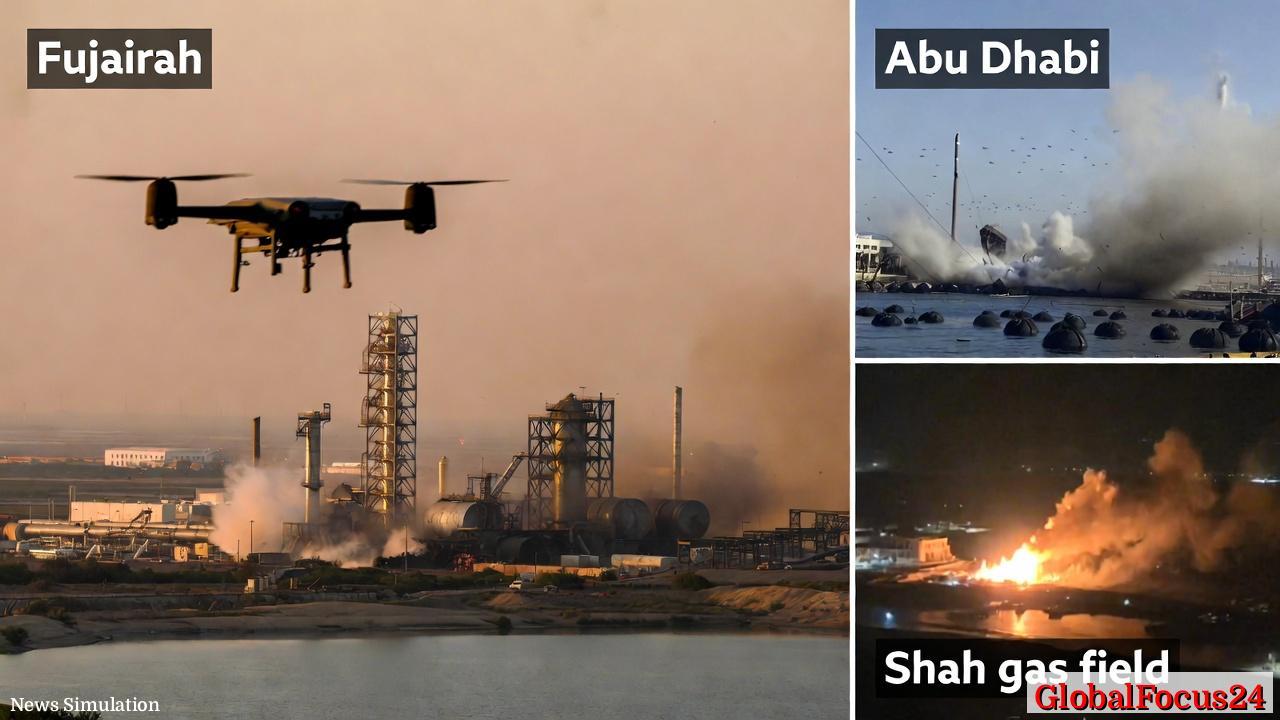
A renewed wave of Iranian attacks against Gulf allies and strategic infrastructure has intensified a regional crisis that already rippled through global energy markets and financial systems. Overnight strikes targeted oil facilities, airspace corridors, and U.S. assets across the United Arab Emirates, Saudi Arabia, Qatar, Bahrain, Kuwait, and Iraq, marking a dangerous intensification in what observers had hoped would be a contained conflict. The consequences are being felt far beyond the immediate battlefields, shaping regional security calculations, economic forecasts, and the daily lives of citizens dependent on stable energy supplies.
Historical context: a region in a long arc of tension To understand the current moment, it helps to recall how the Gulf has repeatedly become a focal point of broader geopolitical rivalries. Since the 20th century, the area’s vast energy resources, strategic shipping lanes, and a patchwork of political regimes have invited external powers, regional antagonists, and alliance blocs to engage in a high-stakes game of deterrence and escalation management. The Strait of Hormuz, the narrow waterway linking the Persian Gulf with the open seas, has long been the chokepoint around which regional security arrangements crystallize. Even fleeting disruptions here can cascade into global energy price swings, supply chain disruptions, and diplomatic recalibrations that reverberate through financial markets.
The current escalation follows a pattern seen in prior cycles: intensified strikes on energy infrastructure and transport hubs, coupled with retaliatory actions targeting military and civilian nodes across multiple theaters. In this episode, the strikes expanded beyond air and sea components to include critical ground-based facilities and urban centers. The confluence of drone, missile, and naval activity underscores a concerted effort to degrade both economic arteries and symbolic power centers. Iran’s leadership has asserted that its offensive capabilities have grown, while opponents warn of the risk of a miscalculation that could broaden the conflict in unpredictable directions.
Economic impact: energy markets, inflation, and policy responses Oil prices immediately reflected the shock of the new round of attacks. A jump of more than 5 percent within a trading session underscored market concerns about supply continuity from a region that now includes disrupted loading operations, damaged facilities, and a sea lane rendered more volatile by maritime threats. The price volatility has a direct chain effect: higher crude and refined product costs feed into gasoline and heating oil prices at the pump, raising living costs for households and increasing operating expenses for businesses. Economies that are heavily dependent on imported energy relative to their GDP face amplified inflation pressures, while energy-exporting nations watch for balance between revenue recovery and domestic price controls.
Central banks face a delicate balancing act. In the wake of higher energy prices, inflation pressures can reassert themselves even as growth risks remain elevated due to regional instability and the potential for supply chain disruptions. Policymakers must weigh whether to tighten monetary policy to anchor inflation expectations or maintain accommodative stances to support growth in a more uncertain environment. The immediate market reaction, including risk premiums on Gulf assets and currency volatility, reflects investors’ attempts to price in a protracted period of disruption and the prospect of broader international consequences.
Regional comparisons illuminate the broader landscape. Across the Middle East, countries with diversified energy portfolios and robust strategic reserves may better absorb the shock than those highly dependent on single-site production. States with flexible fuel mixes, strong storage capabilities, and diversified trade routes can cushion price spikes more effectively than net importers who rely heavily on a single canal or port system. The geopolitical dynamics—ranging from alliance commitments to non-state actors—will continue to influence how quickly supply stabilizes and how long elevated risk persists.
Strategic and naval dimensions The closure of key maritime routes and the disruption of airspace present immediate operational challenges for commercial and defense stakeholders. Shipping companies reassess voyage plans to avoid contested zones, leading to longer transit times and higher insurance costs. Ports in the Gulf region have implemented contingency procedures to manage congestion and maintain essential operations, while neighboring corridors are likely to experience increased traffic as ships seek alternative routes. The potential for miscalculation—whether accidental or intentional—raises the probability of incidents at sea or in the air, prompting heightened readiness from navies and air forces in the region and beyond.
The role of drones and missiles in modern warfare continues to evolve. Precision guidance, stealth, and loitering capabilities enable actors to strike at critical nodes with relatively lower risk to their own forces compared with traditional offensive operations. This shift has consequences for defense budgets, industrial policy, and resilience planning across countries that rely on fragile supply chains or vulnerable infrastructure. Public security strategies are adapting to the new threat environment, emphasizing redundancy, rapid response, and public communication to manage fear and maintain social cohesion during periods of heightened alert.
Regional responses and public sentiment In Gulf capitals and major regional cities, residents are bracing for ongoing disruption. Emergency services and critical infrastructure operators have activated contingency protocols, working to minimize the impact of power outages, refinery disruptions, and transportation bottlenecks. Public reaction has blended concern with resolve, as communities emphasize resilience and continuity of daily life despite the uncertainty. Local authorities, international partners, and aid organizations are coordinating to ensure the availability of essential services, including electricity, healthcare, food supply chains, and fuel distribution.
International reactions have focused on de-escalation efforts, humanitarian considerations, and the maintenance of global energy stability. Diplomatic channels are increasingly active, with regional players and global powers signaling a willingness to coordinate on deconfliction measures, verification regimes for ceasefires or pauses, and the exchange of risk-reducing intelligence. The objective remains to prevent a broader regional conflagration while addressing legitimate security concerns that underpin the current cycle of conflict.
Infrastructure resilience and the long arc of recovery As with past shocks, the long-term trajectory will depend on a mix of technical resilience, policy choices, and geopolitical luck. Energy infrastructure resilience—ranging from oil and gas facilities to ports, storage terminals, and grid interconnections—will be put to the test as operators invest in hardened facilities, redundant routing options, and enhanced cyber-physical security measures. Public-private partnerships will likely accelerate, with governments providing targeted support to maintain critical energy flows while private operators work to minimize downtime and expedite repairs.
Recovery planning will also hinge on regional stability. If the conflict evolves into a multi-front confrontation, investment sentiment could become more cautious, delaying large-scale capital expenditures in the energy sector and shifting attention to risk insurance and risk-sharing arrangements. Conversely, a credible pathway to de-escalation could restore confidence, unlocking a smoother path to rehabilitation and new infrastructure projects designed to increase resilience against future shocks.
Geopolitical outlook: scenarios and probabilities Analysts are weighing several plausible trajectories. A sustained, narrow conflict focusing on specific strike fronts could lead to periodic volatility but maintain a constrained risk profile if de-escalation and ceasefire mechanisms gain traction. A broader confrontation, however, raises the chances of wider Gulf involvement, potential targets across multiple capitals, and a more pronounced disruption to global energy markets. The likelihood of near-term escalations remains sensitive to diplomatic interventions, credible signaling from major powers, and the ability of international organizations to coordinate humanitarian and security responses without tipping into a larger regional war.
In all scenarios, the resilience of global energy markets will depend on strategic reserves policies, diversified procurement routes, and the capacity of political leaders to manage expectations. Market participants will watch for guidance from central banks and fiscal authorities on how to balance inflation control with growth support as commodity prices evolve. The window for a rapid return to stability will hinge on the effectiveness of diplomatic engagement and the willingness of all sides to pursue a durable halt in hostilities.
Operational details and humanitarian considerations Beyond strategic indicators, the human dimension remains central. Communities in impacted areas face disruption to livelihoods, access to essential services, and the psychological toll of ongoing conflict. International humanitarian networks are preparing to address immediate needs—food, medicine, shelter, and safe corridors for civilians and workers who have borne the brunt of strikes. Aid organizations emphasize the importance of safe, predictable access for relief missions as a core prerequisite for any lasting stabilization.
Public health systems, already strained in many Gulf states during times of heightened activity, are being urged to maintain routine care while adapting to potential emergency surges. Vaccination programs, routine screenings, and chronic disease management could be affected if supply chains encounter further disturbances. Governments in the region underscore the need for calm and orderly information dissemination to prevent panic, rumor, or misinformation from compounding the crisis.
Operational summaries: what’s different this time
- Attacks span multiple fronts, including air, sea, and land targets, expanding the scope beyond traditional battlegrounds.
- The Strait of Hormuz remains a critical focal point, with the potential for renewed chokepoint disruptions that would reverberate through global energy markets.
- Public infrastructure, including airspace and loading facilities, experiences operational strain that can propagate price and supply volatility.
- The international community faces a renewed imperative to balance security commitments with regional stability and humanitarian obligations.
- Market dynamics are increasingly influenced by risk sentiment, with energy price volatility feeding into broader inflation expectations and policy considerations.
Lookahead: monitoring and risk management For policymakers, the central task is to prevent a relapse into full-scale regional war while ensuring that legitimate security concerns are addressed. This includes maintaining secure communications among allies, reinforcing defense and deterrence where necessary, and pursuing verification mechanisms to discourage escalatory actions. For the energy sector, the priority is maintaining uninterrupted flows and rapid repair of disrupted facilities, with a focus on safety, environmental safeguards, and transparent reporting to markets. Financial markets will continue to calibrate risk premia, currency valuations, and investment strategies in response to ongoings, official statements, and the trajectory of diplomatic negotiations.
Public communication and perception management will also play a crucial role. Clear, accurate information about safety procedures, expected service interruptions, and contingency plans can reduce uncertainty and support social cohesion during periods of stress. Media outlets, industry groups, and government entities will need to coordinate tightly to ensure that information is timely, factual, and non-inflammatory, helping to prevent speculation from fuelling panic.
Conclusion: a moment of heightened risk and careful vigilance The renewed strikes underscore how regional conflicts in the Gulf can ripple outward, affecting energy security, economic stability, and international alliances. While the immediate objective for many stakeholders is to safeguard critical infrastructure and prevent a broader escalation, the longer-term work involves building resilience, sustaining peaceful channels for dialogue, and managing the economic fallout in a way that minimizes disruption to global energy markets and consumer costs. As the region watches for a path toward de-escalation, the world remains tethered to the pace of diplomacy, the robustness of supply chains, and the readiness of markets to absorb shocks without tipping into deeper financial volatility.
Follow-up note: in-depth reporting and ongoing updates will continue to shape the evolving narrative as more details emerge about strike impacts, casualty figures, and the efficacy of diplomatic efforts aimed at stabilizing the Gulf region.