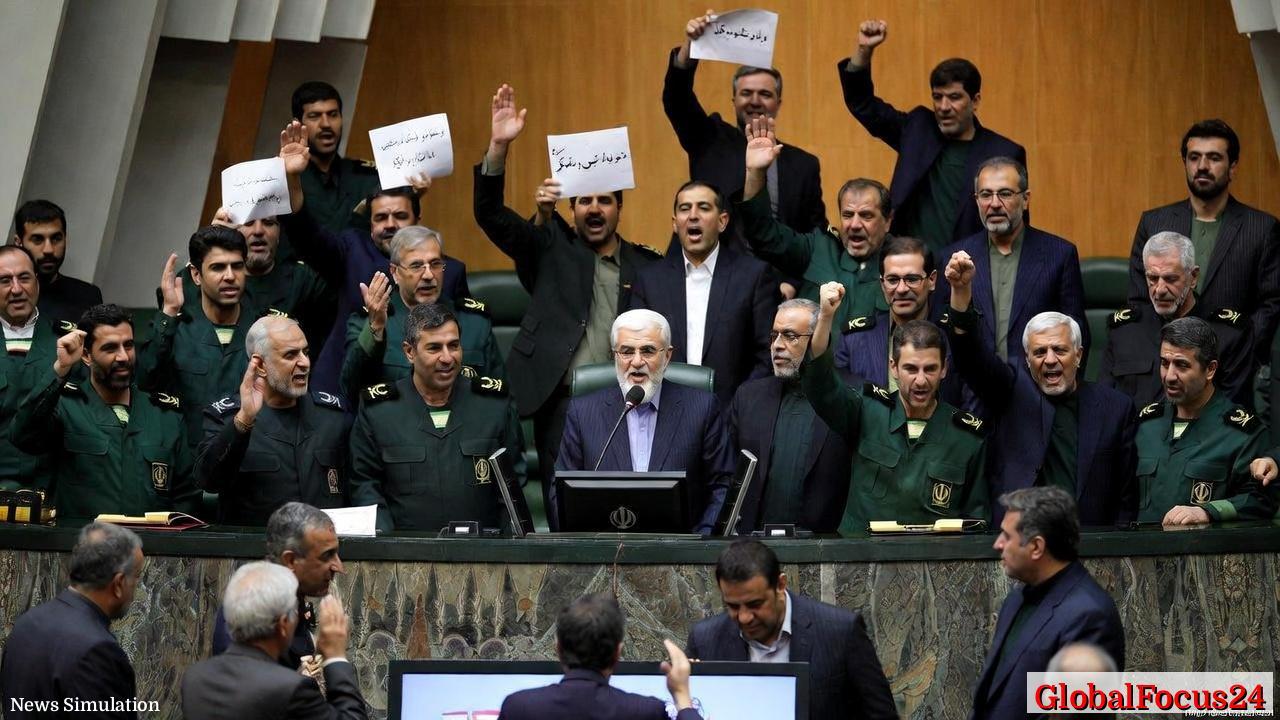
Iranian Parliament Declares EU Militaries as Terrorist Organizations in Broad Escalation
In a dramatic escalation that underscores the fragile security dynamics of the Middle East and the transatlantic rift over Iran’s regional policies, Iran’s parliament announced on Sunday that all European Union militaries are now designated as terrorist organizations. The decision comes in the wake of the EU’s designation of Iran’s Islamic Revolutionary Guard Corps (IRGC) as a terrorist group, a move Tehran characterized as a strategic counterstep and a warning about the consequences of external pressure on its defense and economic sectors.
Historical context: a legal framework that enable reciprocal designations Iran’s move to label foreign militaries as terrorists is anchored in a 2019 law that allows Tehran to designate foreign armed forces as terrorist organizations in response to similar classifications of Iranian entities. This legal mechanism reflects a broader pattern in which Iran has sought to deter external actors by extending its own designation regime beyond the domestic sphere. The parallel legal and symbolic logic mirrors how nations sometimes leverage labeling as a tool of strategic signaling, a practice that can complicate conventional diplomacy and threaten to widen conflict scenarios beyond direct confrontations.
The 2019 framework also signals why the current development is not merely rhetorical. Iran’s leadership views foreign military classification as a lever in a long-running contest over regional influence, deterrence, and the ability to shape international responses to its security posture. The IRGC’s reach extends into ballistic missiles, global proxy networks, and a web of economic interests that intertwine with domestic industrial policy. By equating EU militaries with terrorist organizations, Tehran is sending a message about what it perceives as the costs of diplomatic and economic isolation, while inviting a broader reckoning of how Western actors engage with Tehran’s security apparatus.
Economic impact: implications for energy, trade, and regional markets The designation has immediate and longer-term implications for markets and investment. The IRGC’s influence over significant sectors of Iran’s economy, including manufacturing, construction, and energy-related ventures, means that any broadening of sanctions rhetoric or actions could ripple through supply chains and financing channels. For European corporations with exposure to Iran’s energy and logistical sectors, the development raises questions about risk management, compliance, and the prospect of constrained access to key markets. While EU member states have pursued varied approaches to Iran, a reciprocal designation adds a new layer of complexity to sanctions regimes and to risk assessments conducted by multinational firms operating in or with Iran.
From a regional perspective, the move heightens tensions at a time when Gulf economies are navigating diversification investments, infrastructure expansion, and cross-border energy trade. In neighboring countries, freighters, shipping corridors, and port operations could experience shifting risk premiums as insurers reassess coverage for routes perceived as higher threat due to heightened geopolitical signaling. Traders may also monitor the ripple effects in the Strait of Hormuz, where regional navies monitor shipping lanes critical to global energy flows. While the EU designation focuses on terrorist organization branding, the practical consequences for maritime insurance, export controls, and dual-use technology transfers could be felt across the broader energy market.
Regional comparisons: how similar disputes have shaped policy trajectories Iran’s designation of foreign militaries as terrorists sits alongside a broader set of regional dynamics where states employ sanctions, designations, and strategic signaling to influence behavior. In some neighboring markets, countries have found that designation policies can be leveraged to enforce political objectives, but they also risk entrenching hardline stances and complicating humanitarian and commercial exchanges. The current development contrasts with certain regional partners that emphasize dialogue, confidence-building measures, and technical cooperation in non-security domains. The balance between deterrence and economic pragmatism remains a central question for policymakers as they weigh the costs of escalation against the potential benefits of restraint.
The public reaction at home and abroad: urgency, skepticism, and divided readings Within Iran, the parliamentary move is being interpreted by supporters as a defensive shield against external coercion and a reassertion of national sovereignty. Demonstrations across major cities have underscored a climate in which citizens increasingly weigh economic pressures against political principles, with protests historically tied to governance, inflation, and living standards. The government’s crackdown on protests has intensified debate about civil liberties, collective punishment, and the resilience of reformist movements in an environment shaped by security rhetoric.
Internationally, policymakers in Europe and North America have reacted with cautious scrutiny. Officials warn of potential escalation in a volatile theater where miscommunication can provoke inadvertent clashes. Analysts emphasize that the situation is dynamic, with diplomatic channels, back-channel talks, and ongoing negotiations over nuclear transparency, regional security architecture, and maritime security as potentially critical threads in a broader tapestry of responses. Markets watch these tensions closely, mindful that sudden shifts in risk perception can translate into volatile currency moves, hedging costs, and adjustments to portfolios with exposure to the region.
National security considerations: deterrence, resilience, and the risk calculus For Iran, the immediate objective appears to be signaling deterrence and resilience in the face of external pressure. By naming EU militaries as terrorist organizations, Tehran aims to complicate the international environment for any actor contemplating direct or indirect military action or influence operations. In the same breath, Iran’s supreme leadership has warned that any U.S. attack would trigger a regional war, reinforcing a posture that emphasizes readiness and a willingness to mobilize broader coalitions of regional actors in defense of national interests.
For Western governments, the challenge is to parse this declarative move through the lens of strategic stability. The risk calculations include potential misinterpretations of intent, miscalibrations in military posture, and the possibility of accidental incidents in hotspots where naval, air, and cyber domains intersect. A critical task for policymakers is to maintain open lines of communication, prevent miscalculations during live-fire exercises, and ensure that sanctions and designation regimes do not translate into unintended humanitarian or economic harm for ordinary citizens.
Livelihoods and people-centered effects: the social fabric under pressure The intersecting pressures of economic stagnation, protests, and punitive policy responses affect the daily lives of ordinary citizens. Curbs on international exchange, restrictions on financial transactions, and the chilling effect of broad designation regimes can restrict job opportunities and access to essential goods. In this environment, civil society groups, business associations, and local communities may seek avenues for resilience, whether through legal reform initiatives, economic diversification, or community-led support networks that cushion the impact of macro-level tensions.
In a broader sense, regional neighbors watching these developments bear in mind the importance of stable energy supply chains, predictable regulatory environments, and assurances that international norms governing the use of force remain intact. The interplay between domestic economic policies and foreign policy signaling can create feedback loops that influence consumer confidence, investment decisions, and long-term growth trajectories across the region.
Policy implications: how governments might respond in the near term
- Diplomatic channels: Reinvigorating dialogue remains essential. Even amid reciprocal designation moves, back-channel diplomacy, multilateral forums, and targeted talks on de-escalation could reduce the risk of misinterpretation and miscalculation.
- Sanctions architecture: The EU designation of the IRGC and Iran’s reciprocal action may lead to a broader recalibration of sanctions regimes. Policymakers may consider targeted measures that address concrete security concerns without unduly harming civilian populations or curtailing humanitarian trade.
- Maritime security coordination: Given the strategic importance of the Strait of Hormuz for global energy markets, increased coordination among international naval forces, allied patrols, and joint exercises could reinforce freedom of navigation while signaling a commitment to regional stability.
- Economic resilience strategies: Governments may deepen economic diversification to reduce exposure to external shocks. For Iran, this could involve accelerating domestic manufacturing, attracting investment in critical sectors, and developing alternative trade routes. For EU economies, it may mean refining risk management practices for operations in high-tension environments and supporting regional partners through trade and investment protections.
Public-facing narrative: what communities and markets are seeing now In the immediate aftermath,s reflect a world on alert. Financial markets tend to respond to heightened geopolitical risk with quick repricing of risk assets, while energy markets scrutinize supply disruptions and potential sanctions on corridors that feed global demand. In city centers and port towns, business leaders and workers watch for changes in import-export dynamics, supplier reliability, and the availability of goods whose paths may traverse regions of heightened tension. Public sentiment often toggles between concern for safety and a call for prudence in government action, underscoring the need for transparent communication from leadership about policy intentions and expected timelines.
What this means for the global security architecture The development sits within a larger trend of governments recalibrating how to manage proliferating security challenges in a multipolar world. Alliances founded on shared norms and interoperability—such as joint exercises, intelligence-sharing arrangements, and sanctions coordination—face pressure to adapt to rapid shifts in how countries define and pursue security objectives. The current moment tests the resilience of these structures and invites reflection on whether existing frameworks are sufficiently nimble to prevent escalation while preserving strategic deterrence.
Looking ahead: potential trajectories and uncertainties
- De-escalation through diplomacy: If channels reopen and practical compromises emerge, the risk of a broader regional confrontation could recede, though trust-building will take time.
- Economic pressures intensify: Prolonged standoffs could magnify inflationary pressures, disrupt supply chains, and influence energy prices globally.
- Regional realignments: Neighboring states may adjust alliances and economic partnerships to navigate the changing security landscape, potentially accelerating diversification and investment in alternative corridors and markets.
- Domestic political dynamics: In both Iran and EU member states, public opinion, civic activism, and domestic policy debates will shape how governments balance security imperatives with social and economic stability.
Conclusion: a pivotal moment with wide-reaching implications As the diplomatic vocabulary intensifies, the decision to designate European militaries as terrorist organizations marks a turning point in Iran’s approach to international security and regional influence. The move compounds existing tensions over Iran’s nuclear program, regional alignments, and the brutal reality of protests that test the credibility and resolve of leadership across the political spectrum. Many observers caution that the path forward will demand careful calibration: maintaining deterrence to safeguard national interests while protecting civilian well-being and avoiding a slide into a broader, less predictable conflict. In this uncertain environment, the international community will be watching not only the symbolic acts of designation but the practical steps governments take to prevent escalation, preserve open channels for dialogue, and sustain the global economy’s delicate balance between security and commerce.