Iran’s Crackdown on Protests: A Grim Milestone and Its Global Ripples
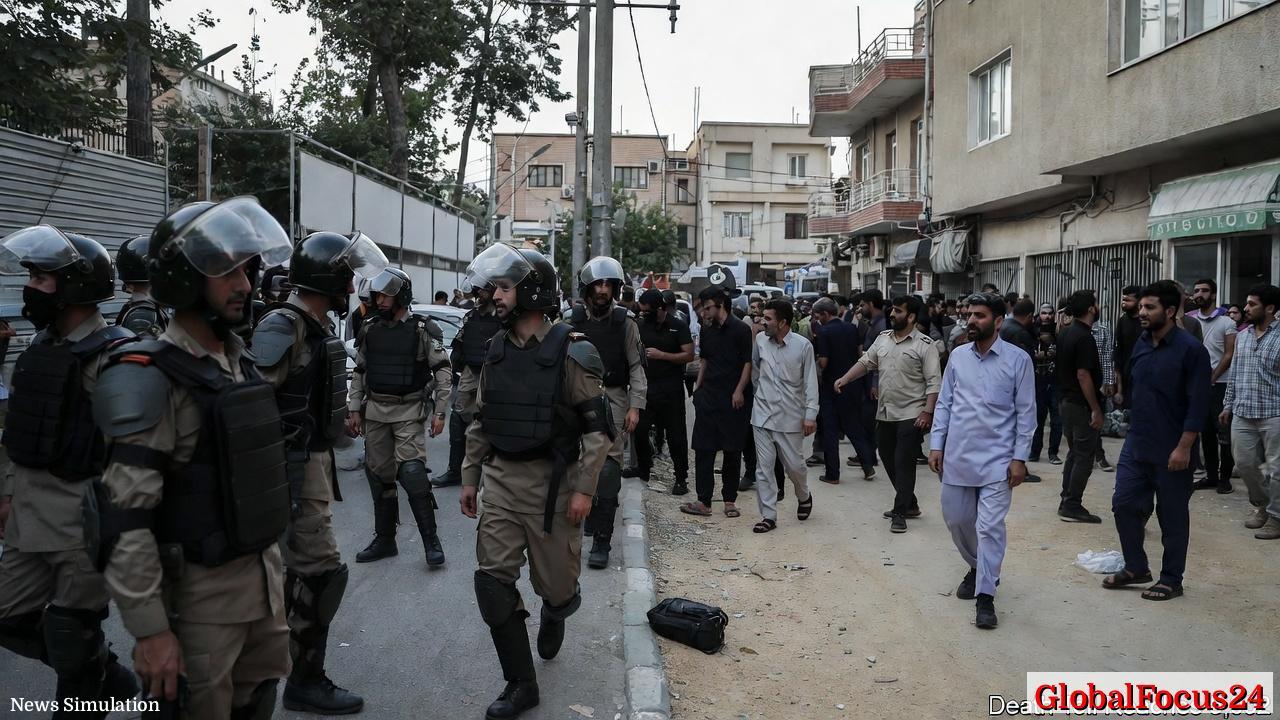
In the wake of sustained nationwide demonstrations, the death toll reported by human rights groups and activist networks has risen sharply, signaling a critical juncture for Iran and a widening burden on regional stability and international relations. While official figures from Tehran continue to be contested, observers and independent monitors say that the number of fatalities has surpassed five thousand, with many more injured and detained. The magnitude of this toll underscores a conflict that extends beyond city streets into the fabric of Iranian society, its economy, and its standing on the world stage.
Historical frame: protests that echo a long arc
To understand the current moment, it helps to recall the historical rhythms that have shaped Iran’s public mobilization. Large-scale protests have punctuated decades of political evolution, from the early post-revolutionary decades through periods of reformist energy and conservative consolidation. The present wave, however, is distinctive not only for its breadth but for its insistence on civic rights, personal autonomy, and an urgency that has drawn participants from multiple generations, urban and rural communities, and diverse socio-economic backgrounds. The mobilization reflects a pattern in which social grievances—economic pressures, inflation, employment prospects for youth, and perceptions of political repression—prompt spontaneous and organized demonstrations across major cities and smaller towns.
Economic context and the cost to daily life
The economic backdrop amplifies the stakes for ordinary Iranians. Hyperinflation and currency depreciation have eroded purchasing power for households, while unemployment, particularly among graduates, has kept many in a precarious position. In parallel, sanctions regimes and international financial constraints have constrained growth prospects, limiting state capacity to deliver broad-based public goods. The ensuing economic strain contributes to a climate where political expression is both a channel for release and a barometer of broader systemic stress.
For regional economies, Iran’s disruption ripples beyond its own borders. Energy markets, transportation corridors, and trade routes across the Persian Gulf and the broader Middle East are sensitive to political volatility. Even when production facilities are not directly affected, investor confidence and regional risk assessments shift in response to credible concerns about stability. Local businesses in Iran’s major urban centers report slower consumer spending, tighter credit conditions, and increased precautionary measures in response to security risks. The knock-on effects can be felt in supply chains that rely on Iranian manufacturing, artisanal goods, and the country’s crucial petrochemical sector, which has long been a barometer of regional economic resilience.
Regional comparisons: echoes and contrasts
Iran’s experience resonates with, yet differs from, protest movements in neighboring countries. In some Gulf states, authorities have pursued a blend of rapid modernization initiatives and stringent security measures, with varying tolerances for dissent. Across the broader region, countries with diversified economies and stronger social safety nets tend to experience a different dynamic: protests may arise from economic distress but are often translated into policy negotiations or reform-oriented reforms before escalating to mass confrontation. In Iran, the combination of centralized governance, a robust state security apparatus, and a highly connected population with access to international information networks has produced a unique information and response cycle, where footage and reports disseminate quickly and shape public perception globally.
Human rights and humanitarian implications
The human impact of such crackdowns extends beyond fatalities. Thousands of people face arrests, detentions, and reported abuses in custody. Families wrestle with uncertainty as the fate of loved ones remains unclear. Hospitals and clinics in major cities have reported treatment of protest-related injuries, with medical professionals documenting cases that highlight the strain on public health resources during periods of political tension. The international community has watched closely, balancing calls for restraint with concerns about human rights protections and due process.
Societal resilience: voices from the ground
Across the country, everyday Iranians continue to persevere despite risks, finding avenues to express discontent through organized demonstrations, social media mobilization, and peaceful assemblies in permitted spaces. Local communities have organized mutual aid networks, crowdfunding for families affected by the crackdown, and solidarity events in neighborhoods that seek to maintain a sense of normalcy amid disruption. Educators, students, and professionals have become active participants in the broader movement, underscoring a generational push for reforms that could redefine civic life in Iran.
Policy responses and the road ahead
International observers have urged restraint and urged authorities to protect fundamental rights while seeking to address legitimate grievances through dialogue and reform. In parallel, external actors have debated the appropriate balance between diplomatic engagement, sanctions policy, and humanitarian considerations. The landscape is complex: sanctions can curb state revenue and limit external influence, yet they may also intensify domestic hardship and fuel grievances if not carefully calibrated with humanitarian exemptions and targeted relief. For Iran, the path forward hinges on finding sustainable channels for governance that can accommodate popular aspirations without destabilizing the state’s core security and political objectives.
The economic dimension of potential reform
Any move toward economic reform that alleviates inflation, stabilizes the currency, and expands employment prospects could alter the tone of public discourse. A more predictable macroeconomic environment might reduce day-to-day pressures that fuel protests while enabling investment in productive sectors. Structural reforms—ranging from energy subsidy adjustments to job creation programs, export diversification, and regulatory simplification—could, over time, improve living standards and reduce the incentive for mass mobilization driven by economic distress. However, the sequencing and political will to implement such reforms will be critical, given the powerful interests shaped by past allocations and the central role of the state in the economy.
Cultural and demographic dimensions
Iran’s diverse demographic landscape—spanning major urban centers and rural communities—means that regional experiences of the crisis are not monolithic. Youth populations, researchers, and urban professionals may demand greater political participation and transparency, while older generations might emphasize stability and continuity of national identity. Language, traditions, and local histories contribute to a mosaic of opinions about governance, rights, and the role of civil society. This plurality adds complexity to any assessment of the protests’ long-term trajectory, as regional subcultures interpret events through their own historical and social lenses.
Media, information, and the digital frontier
In the digital age, information flows rapidly, compounding the stakes for both protesters and authorities. Social media platforms, satellite broadcasts, and independent reporting provide real-time insights into on-the-ground conditions, but they also pose challenges in verifying reports and countering misinformation. The information environment can influence mobilization dynamics, shaping who participates, where demonstrations unfold, and how international audiences respond. The evolving role of journalists and citizen reporters remains a critical factor in documenting events while ensuring the safety and rights of those reporting from the ground.
Public sentiment and global perception
Public reaction to a prolonged crackdown typically evolves over time. Early sympathy for demonstrators may give way to concern about violence and instability, while international audiences may press for humanitarian considerations and accountability. Governments and policymakers weigh the costs and benefits of different responses, including engagement with reform-minded voices, sanctions adjustment, and support for humanitarian relief. In this context, maintaining an open channel for dialogue that respects basic rights while addressing economic and social grievances becomes a central objective for those seeking a resolution that preserves regional stability and human dignity.
Operational outlook: safety, policy, and stability
For city and provincial authorities, the immediate priority often centers on public safety and the restoration of order while minimizing harm. Law enforcement strategies—whether through crowd management, de-escalation, or proportional use of force—are scrutinized by national and international observers. At the same time, the resilience of public services, healthcare, and essential infrastructure remains vital, particularly in densely populated urban hubs where disruptions can affect millions of residents. Policymakers must balance competing imperatives: sustaining security, preserving civil liberties, and laying groundwork for reforms that can foster long-term stability.
Conclusion: navigating a complex crossroads
As the situation unfolds, Iran stands at a critical crossroads where economic pressures, social demands, and political realities intersect. The reported death toll is more than a human tragedy; it is a marker of how a society grapples with questions of rights, governance, and economic opportunity in a modern state. The international community’s response, the tempo of internal reforms, and the resilience of Iranian society will collectively shape the path forward. While the road ahead is uncertain, the imperative remains clear: a steady commitment to protecting lives, enabling peaceful civic participation, and pursuing reforms that can offer a more inclusive and prosperous future.