)
Iran Warns Neighboring States Over Cooperation With U.S. and Israel Amid Rising Regional Tensions
Tehran Issues Sharp Warning to Regional States
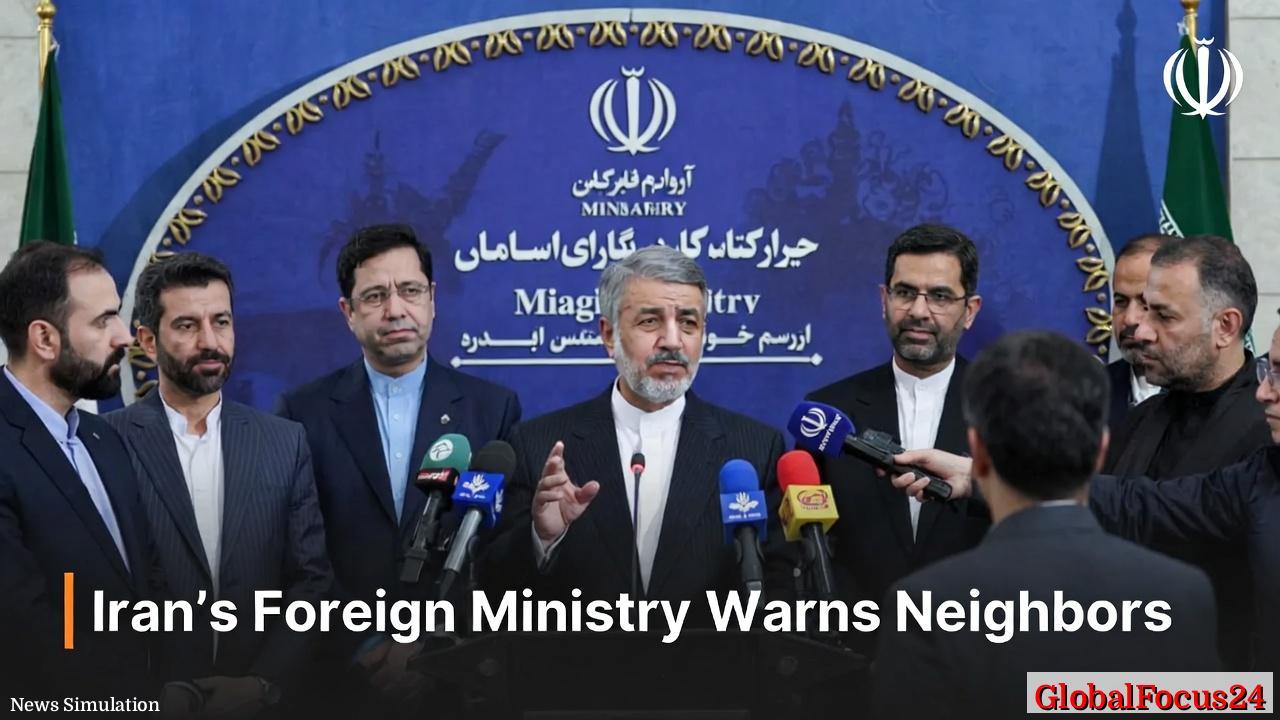
The Iranian Foreign Ministry has issued a stern warning to its neighbors, cautioning them against allowing the United States or Israel to use their bases, airspace, or intelligence networks for operations against Iran. The statement, made during a press briefing in Tehran, emphasized that any cooperation—direct or indirect—with these countries in potential military actions would make those nations “part of the aggression” and therefore “legitimate targets” in Iran’s view.
The warning comes amid heightened security anxiety across the Middle East following weeks of increased military activity and rhetoric from both Iranian and Western-aligned powers. Iranian officials described the warning as an assertion of the country's right to self-defense, though regional observers say it also serves as a deterrent aimed at discouraging neighboring states from participating in any campaign targeting Tehran.
Growing Regional Strain and Strategic Posturing
Tensions between Iran and its adversaries, particularly the U.S. and Israel, have surged over suspected covert actions and cyber operations as well as airstrikes allegedly targeting Iranian interests in Syria and Iraq. In recent months, the Gulf region has witnessed an intensification of military exercises by U.S.-led coalitions, including joint air drills that involved states such as Saudi Arabia, the United Arab Emirates, and Bahrain.
For Iran, these activities are perceived not as routine security initiatives but as part of a coordinated buildup of potential hostility. Iranian state media have repeatedly described U.S. and Israeli cooperation in the region as part of a broader campaign of “proxy destabilization.” Tehran’s latest remarks reflect deep-seated suspicion that neighboring countries could once again serve as logistical or intelligence hubs in the event of a confrontation—similar to patterns seen during previous conflicts in the Gulf.
Historical Context of Iran’s Security Doctrine
Iran’s cautionary statements are consistent with a long-standing policy of deterrence developed after the Iran–Iraq War in the 1980s, which deeply shaped its national defense outlook. That conflict, one of the most devastating in the region's modern history, left Iran wary of relying on outside powers and determined to defend its sovereignty at all costs.
Following the 1979 Islamic Revolution, Tehran adopted a strategic doctrine centered on regional self-reliance and asymmetric warfare capabilities. Over time, this doctrine evolved into what analysts call the “forward defense” model—reaching beyond Iran’s borders through alliances and proxy forces in Lebanon, Syria, Iraq, and Yemen. While Iranian officials frame this approach as protective, critics view it as expansionist.
Against this backdrop, Tehran’s latest message to Gulf capitals echoes earlier episodes in which Iran warned of “reciprocal” or “extended deterrence” responses, particularly following Israeli or American operations against its interests.
Reactions From the Gulf and Neighboring States
So far, the reaction from Gulf states has been measured but cautious. Officials in Riyadh, Abu Dhabi, and Manama have refrained from issuing direct responses to Iran’s latest declarations, though diplomatic sources in the region said the warning was “closely noted.” Many Gulf countries have, in recent years, sought to balance their relations between Washington and Tehran—pursuing cautious diplomacy while maintaining defense partnerships with the United States.
Saudi Arabia and Iran restored diplomatic ties in 2023 after years of deep hostility, a breakthrough brokered by China. However, that rapprochement remains delicate. Observers believe any perception of military alignment with Israel or the U.S. could strain these renewed ties. The United Arab Emirates and Oman have similarly pursued pragmatic engagement with Tehran, focused on maritime security and trade stability in the Strait of Hormuz, one of the world’s most vital shipping lanes.
The Strait of Hormuz and Economic Stakes
Iran’s warning carries particular weight because of the immense economic importance of the Persian Gulf and the Strait of Hormuz to global energy markets. Nearly one-fifth of the world’s traded oil passes through the narrow channel between Iran and Oman. Any disruption—whether through military confrontation or perceived risk—can send shockwaves through global energy prices.
Past incidents underscore these risks. In 2019, a series of attacks on oil tankers near the strait, which Tehran denied involvement in, drove crude prices sharply higher and spooked shippers. A wider conflict could threaten both oil and liquefied natural gas (LNG) flows from Qatar, the United Arab Emirates, Saudi Arabia, and Kuwait—countries Iran explicitly referenced in its warning as “neighbors who should exercise caution.”
Analysts note that a confrontation extending to the Gulf states would imperil not just regional economies but the fragile global energy recovery and trade stability that depend heavily on uninterrupted maritime routes.
The Israel Factor and Expanding Shadow Conflict
Iran’s message also directly implicates Israel, which it accuses of covert strikes and cyber operations targeting Iranian infrastructure and officials. Israel, for its part, has long stated that it will act unilaterally to prevent Iran from developing nuclear weapons capabilities or entrenching militarily in neighboring countries such as Syria and Lebanon.
Over the past two years, the so-called “shadow war” between Tehran and Tel Aviv has expanded beyond traditional fronts. Maritime sabotage, air raids in Syria, and cyber intrusions into civilian infrastructure have underscored how both nations are battling below the threshold of full-scale war. Iran’s latest statements suggest that it perceives the potential for escalation—perhaps spurred by Israeli pressure on U.S. policy circles advocating a tougher stance on Tehran.
U.S. Response and Broader International Implications
Washington has not yet responded directly to Iran’s warning but reiterated through State Department officials that it will “defend partner nations against threats to their security.” The U.S. currently maintains thousands of troops at bases in Qatar, Bahrain, and Kuwait, alongside a significant naval presence in the Gulf.
American analysts argue that Iran’s warning reflects both genuine concern and strategic signaling. By threatening retaliation against third countries, Tehran is betting that regional governments will press Washington and Tel Aviv to avoid confrontation. Western observers, however, caution that such threats could backfire, increasing isolation and suspicion of Iran’s intentions even among nations seeking improved relations.
European diplomats have also voiced worries that the rhetoric could unravel slow-moving diplomatic channels aimed at reviving dialogue over Iran’s nuclear program and regional de-escalation frameworks.
Regional Comparisons and Risks of Escalation
Iran’s approach mirrors security postures historically adopted by other regional powers seeking deterrence. For example, during the Cold War, Turkey and Egypt occasionally issued similar warnings about the use of their territory by foreign forces in ways that could trigger retaliation. However, few nations in the Middle East today possess Iran’s capacity to retaliate through cross-border proxies or long-range missile systems, elevating the potential consequences of miscalculation.
Gulf states find themselves walking a tightrope between deterrence and diplomacy. Economically, these nations are increasingly interconnected through the Gulf Cooperation Council (GCC) framework and rely heavily on energy exports, tourism, and foreign investment. Any perception of instability could deter investment, slow diversification goals such as Saudi Arabia’s Vision 2030, and unsettle global markets.
Meanwhile, Iran faces its own economic constraints. Continued Western sanctions, inflationary pressures, and a depreciating rial have fueled domestic frustrations. Analysts suggest the government’s firm external posture is partly intended to project strength at home, reinforcing its narrative of resilience against foreign pressure.
Outlook: Fragile Balance in the Gulf
As diplomatic observers warn, the interplay of deterrence, alliance politics, and economic vulnerability makes the Gulf region an exceptionally volatile theater. Small missteps—such as unauthorized overflights, misread military exercises, or cyber retaliation—could trigger wider consequences.
Iran’s latest warning raises the stakes not only for neighboring states but also for the broader international community that depends on Gulf stability. For now, regional capitals appear committed to avoiding direct confrontation, aware of how quickly tensions in the Gulf can ripple outward. But behind diplomatic niceties, mistrust remains deep, and the specter of escalation still looms.
Even as Tehran insists its threats are defensive in nature, the underlying message is unmistakable: the Middle East remains one of the most complex and combustible regions in the world, where alliance decisions—however seemingly minor—can shape the trajectory of conflict and peace for years to come.