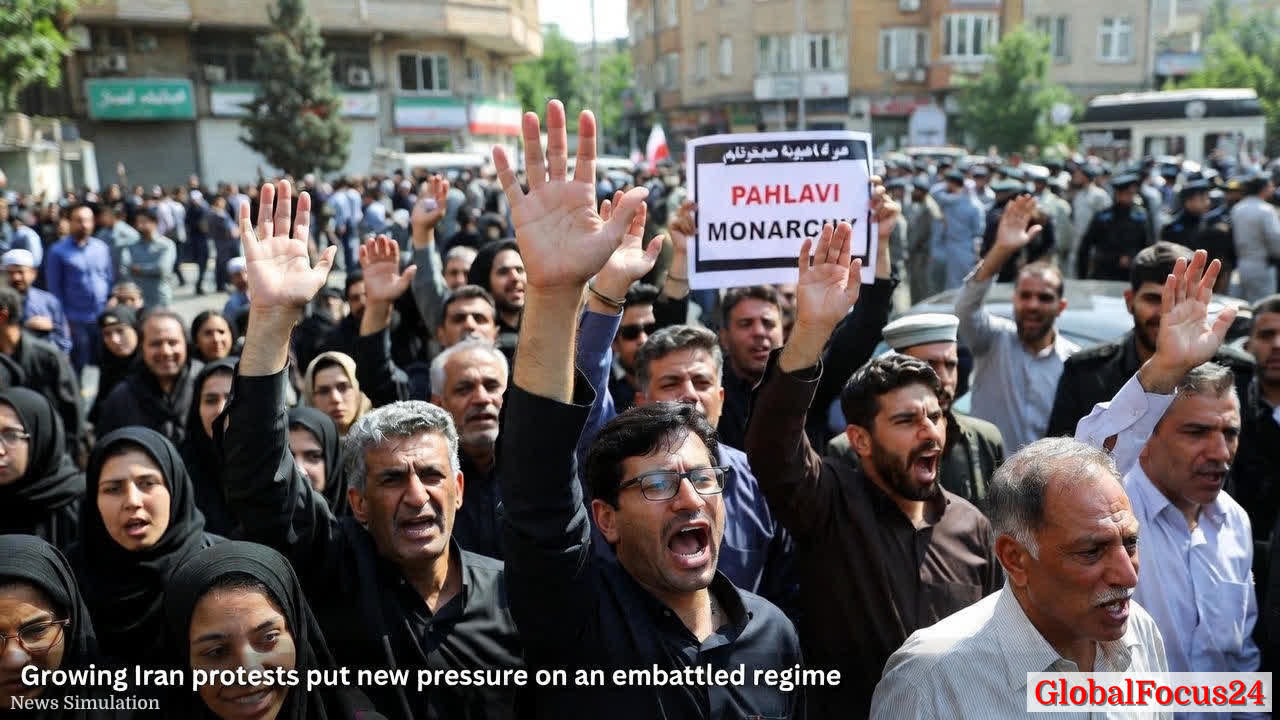
Growing Iran Protests Strain an Embattled Regime Amid Economic Turmoil
The continuing wave of protests across Iran has intensified scrutiny of the country’s leadership, highlighting the convergence of economic hardship, political repression, and public demand for change. From Tehran to provincial capitals, demonstrators have persisted despite security crackdowns, signaling a sustained challenge to a regime that has weathered years of internal and external pressure. The unfolding events, while deeply local in their immediacy, are being watched with concern by regional partners and global actors who weigh stability, human rights, and energy markets against the risk of further escalation.
Historical context anchors the current moment in a longer arc of political contestation. Iran’s modern political landscape has repeatedly confronted questions about governance, legitimacy, and the distribution of wealth and opportunity. The 1979 revolution fundamentally redefined the balance of power, replacing a monarchy with a theocratic republic and establishing institutions designed to channel popular grievances through controlled channels. Yet over the decades, economic shocks, sanctions, and policy missteps have periodically sharpened discontent, creating openings for broad-based movements that demand reform. In this frame, today’s protests can be read as a continuation of a struggle to define Iran’s political equilibrium in a regional and global context that prizes economic resilience, personal freedoms, and accountable leadership.
Economic pressures lie at the heart of the current unrest. Inflation remains a persistent drag on household budgets, while the value of the national currency has faced volatility in the face of sanctions and macroeconomic headwinds. Citizens across income levels report rising costs for essential goods and services, eroding purchasing power and contributing to a sense that the economic system is no longer serving ordinary people. The government’s ability to stabilize prices, protect savings, and sustain public services is a focal point of public concern. In many affected households, the daily experience of price increases, wage stagnation, and limited access to certain goods has become a tangible symbol of broader governance challenges. The economic strain is not simply a matter of numbers; it translates into everyday decisions about work, schooling, and family planning, amplifying demands for a more inclusive and responsive economic framework.
Regional comparisons illuminate how Iran’s situation fits into a broader pattern of security and socio-economic pressures affecting countries with similar geopolitical dynamics. In neighboring states, protests often intersect with concerns about governance transparency, public service delivery, and unemployment. Yet Iran’s combination of a powerful security apparatus, a centralized political system, and extensive state control over key economic sectors creates a distinctive backdrop for the current demonstrations. Observers note that in periods of economic stress, Iran’s leadership has historically relied on a mix of coercive measures and rhetorical assurances of social protection. The present episode challenges that playbook, as public demonstrations sustain momentum even in the face of deterrent tactics, signaling a demand for structural reform that transcends episodic policy adjustments.
The demonstrations have drawn diverse participation, including students, workers, and members of civil society who seek greater political voice and economic predictability. Reports from multiple cities describe gatherings that emphasize unity around core grievances: rising living costs, concerns about political freedoms, and calls for accountability. While some participants express nostalgia for a perceived past era, the broader current message centers on modernization and governance reform that would align Iran’s political system with the expectations of a younger, globally connected generation. Public reaction has been mixed, with many observers noting sympathy for the plight of families facing hardship, tempered by concerns about stability and the risk of escalation. The social dynamics—youthful energy, professional aspiration, and regional pride—suggest that any resolution will require careful communication strategies and tangible policy changes.
Policy responses within Iran’s leadership have ranged from tough security measures to cautious statements about national unity and economic reform. The government has emphasized stability and the protection of social order, a line often used to justify security operations and internet controls that curtail access to information. Critics argue that such approaches may provide short-term calm but risk deepening grievances if underlying issues remain unaddressed. Analysts emphasize that a credible path forward would require transparent economic management, targeted investments to alleviate cost-of-living pressures, and steps toward greater political openness without compromising national security. The balancing act is delicate: push too hard on reform, and authorities risk perceived concession; push too hard on security, and public trust may erode further.
Meanwhile, international stakeholders continue to monitor developments with a mix of concern and strategic interest. Energy markets, regional security architecture, and diplomatic channels are all influenced by Iran’s trajectory. In an era where energy supply and price stability intersect with geopolitical risk, observers watch for signals about Iran’s readiness to engage economically on the global stage while managing domestic unrest. Sanctions regimes and export dynamics remain central to discussions about Iran’s macroeconomic outlook, with implications for regional trading partners and global economics. Diplomatic engagement, humanitarian considerations, and crisis-management protocols are essential components of any broader strategy to reduce instability while safeguarding civilian welfare.
The human impact of the protests is a focal point for both domestic audiences and international observers. Stories from the field highlight the resilience of communities negotiating daily life amid upheaval. Healthcare workers, educators, and small business owners describe a common thread: the pressure to maintain essential services and livelihoods amid uncertainty. The emotional toll—fear, hope, frustration—permeates streets, homes, and workplaces. Public sentiment often evolves as events unfold, influenced by perceived responsiveness from authorities, the visibility of reforms, and the pace at which economic relief measures are introduced. In many instances, communities are compelled to improvise support networks, extending mutual aid, sharing information, and sustaining solidarity as a counterweight to disruption.
From a regional perspective, comparisons with historical transitions in other countries underscore both parallels and divergences. Across the Middle East and adjacent regions, moments of mass mobilization have historically led to varying outcomes, depending on leadership responses, economic resilience, and external pressures. Some cases underscore the potential for gradual reform through negotiated settlements and policy realignment, while others demonstrate that sustained protests can catalyze more abrupt political shifts. The Iranian experience is distinctive, given its theocratic framework and centralized decision-making structures, yet it resonates with broader truths about how societies respond when economic strain intersects with demands for political participation.
Beyond the immediate stakes, the protests raise questions about the future of governance and social contract in Iran. A key issue will be whether authorities can deliver tangible economic relief while maintaining social cohesion and security. Investments in critical sectors—education, healthcare, infrastructure, and energy diversification—could help alleviate some of the structural pressures that contribute to discontent. Transparent communication about policy goals, timelines, and expected outcomes will be crucial to building public confidence. At the same time, the direction of political reforms—how to reconcile popular demands with constitutional frameworks and security considerations—will shape the trajectory of Iran’s development, its regional influence, and its role on the world stage.
Public health and everyday life have also felt the effects of ongoing unrest. Access to information, mobility, and the ability to pursue education and employment can be disrupted during periods of intensified demonstrations. Community leaders and civic organizations often work to safeguard essential services and provide safe spaces for dialogue, even as authorities deploy countermeasures. The resilience of civil society in such contexts can influence the pace at which public trust is rebuilt, and it can serve as a barometer for the broader health of the political system. Observers note that sustained, nonviolent engagement aligned with clear objectives tends to yield more constructive outcomes over time, though the path to resolution is rarely linear.
Looking ahead, the trajectory of Iran’s protests will hinge on multiple interwoven factors: the effectiveness of policy responses, the persistence of mobilization, and the external environment. Economic stabilization efforts that directly address household burdens could dampen some of the immediate pressure, while meaningful political engagements that expand avenues for public participation could alter perceptions of legitimacy. The international community’s role—through diplomacy, humanitarian assistance, and shared regional security interests—will influence both short-term developments and long-term stability. As the situation evolves, observers will be watching for signs of path-dependent dynamics: will the regime adapt through a gradual reform process, or will the protests push the country toward a more abrupt political recalibration?
In sum, the ongoing protests in Iran reflect a convergence of economic strain, political demand, and social aspiration. The immediate challenges include managing inflation, stabilizing the currency, and ensuring the continuity of essential services. The longer-term questions center on governance, accountability, and the potential for reforms that align the political system with the needs and hopes of a population seeking a more participatory and prosperous future. The coming weeks will be pivotal in determining whether the current phase of unrest leads to incremental change, a broader realignment of political structures, or a renewed emphasis on security-oriented strategies. As Iran navigates this critical period, the world watches closely, weighing the potential for stability against the imperative of safeguarding civil liberties and human rights.