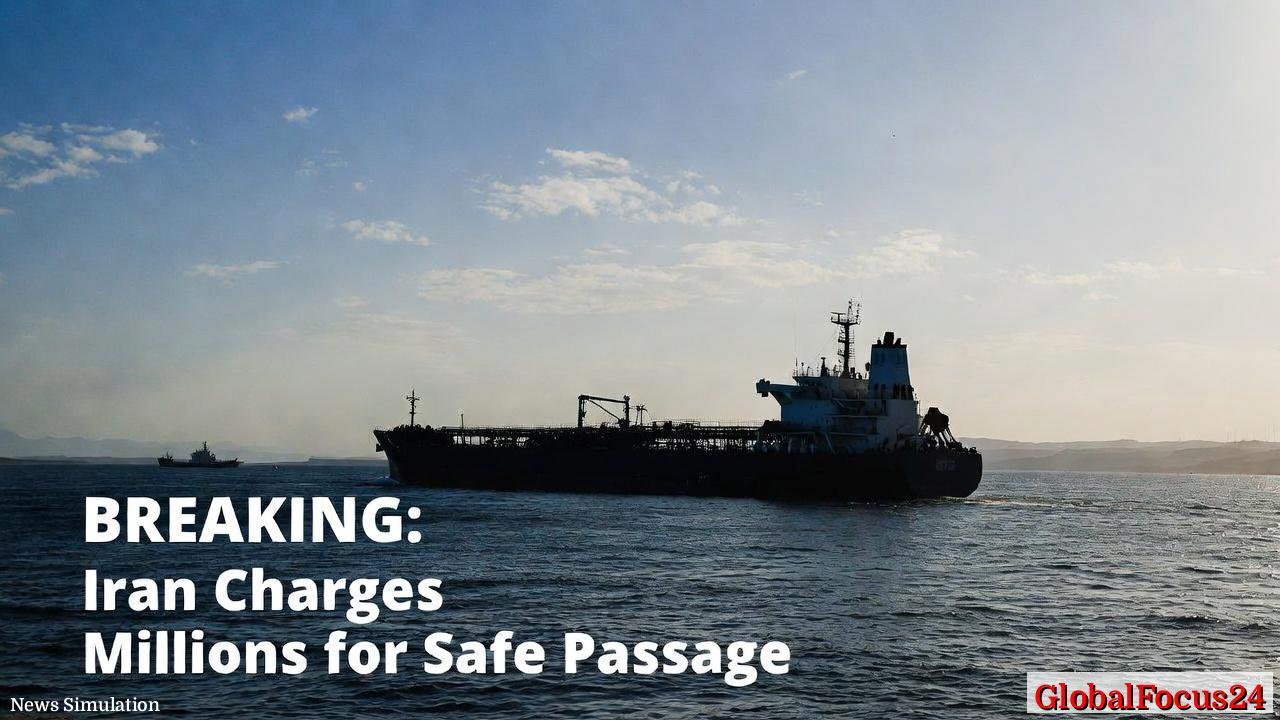
Iran Imposes Multi-Million Dollar ‘Safe Passage’ Fees for Oil Tankers in Strait of Hormuz
Rising Costs for the World's Vital Energy Corridor
An oil tanker operator has reportedly paid Iran a $2 million fee for safe passage through the Strait of Hormuz this week, signaling a sharp escalation in the security and economic tensions surrounding one of the world’s most strategic maritime chokepoints. The new policy, under which favored nations are charged multi-million dollar sums per ship, marks the latest chapter in Iran’s long-standing bid to assert control over the narrow strait through which roughly one-fifth of globally traded crude oil passes.
The decision comes amid heightened uncertainty in global energy markets and renewed geopolitical friction in the Persian Gulf. Maritime insurers and shipping companies have confirmed that a growing number of carriers navigating through Iranian-controlled waters are now facing demands for “protection fees” framed as payments for guaranteed safe passage.
The Strait of Hormuz: A Strategic Lifeline
At its narrowest point, the Strait of Hormuz measures only about 21 miles wide, yet it connects the Persian Gulf to the Arabian Sea and remains the only sea route for many of the region’s major oil producers, including Saudi Arabia, Kuwait, Iraq, and the United Arab Emirates. Every day, an estimated 20 to 25 million barrels of crude oil transit the corridor. Any disruption, even temporary, can ripple instantly through global energy markets.
Historically, the strait has served as a geopolitical flashpoint. During the 1980s Iran-Iraq War, the “Tanker War” phase saw both countries targeting oil ships in the Gulf, prompting U.S. naval escorts for reflagged Kuwaiti tankers. Decades later, in 2019, a series of suspected attacks on oil tankers off the Emirati coast reignited fears of confrontation, briefly spiking oil prices by nearly 10% in a single week.
Iran has long regarded the Strait of Hormuz not only as a strategic military gateway but also as a lever of economic and political influence. Its latest move to charge shipping fees, framed as “security costs,” is seen by analysts as part of a broader strategy to monetize control while reinforcing the perception of dominance over regional maritime transit routes.
A New Revenue Stream Amid Sanctions Pressure
Iran’s economy remains under heavy strain from international sanctions that have curtailed oil exports and restricted access to foreign currency reserves. For Tehran, these new maritime charges could represent a significant source of hard currency income.
According to maritime trade observers, the recently imposed $2 million fee per vessel is being selectively applied to “favored countries” — reportedly those maintaining energy trade or diplomatic ties with Iran. By contrast, tankers linked to nations perceived as hostile could face delays, denials of transit, or additional security inspections.
Economic analysts suggest that if the practice becomes widespread, Iran could generate tens or even hundreds of millions of dollars annually by collecting these fees. However, such revenue comes at the risk of further isolating the country diplomatically and potentially prompting retaliatory measures from global shipping coalitions or international regulators.
Global Reactions and Trade Implications
Reactions from the international maritime community have been swift. Several tanker operators based in Asia and Europe have confirmed receiving notices of Iran’s fee requirements, though few have publicly acknowledged payment. Industry leaders warn that such costs could cascade through the global supply chain, inflating freight rates and possibly increasing the delivered price of oil for consumers worldwide.
Insurance underwriters are scrambling to recalculate risk premiums for vessels transiting the narrow waterway. Historically, when tensions rise in the Gulf, war-risk insurance premiums can triple within days. Early market indicators already show signs of tightening: spot charter rates for supertankers have edged up by roughly 7% since the start of the week.
Regional energy markets are particularly sensitive to these developments. For countries reliant on imports — such as Japan, South Korea, and India — even small disruptions in tanker movement through the Strait of Hormuz can alter procurement plans and national reserve strategies.
Historical Patterns of Maritime Leverage
Iran’s reliance on maritime leverage is not new. The Islamic Republic has repeatedly used the Strait of Hormuz as a strategic bargaining chip, threatening at times to close the passage in response to sanctions or military provocations. While such threats have rarely been acted upon, even the rhetoric is enough to unsettle markets and draw military attention from Western navies stationed in the Gulf.
The precedent for transactional “protection fees” dates back centuries. During periods of heavy piracy in the Indian Ocean and along the Barbary Coast, regional powers routinely demanded payments from passing vessels to guarantee their safety. Iran’s current approach, while operating under a modern geopolitical framework, echoes those historical patterns — asserting territorial authority through controlled access and economic extraction.
However, the international community views the Strait of Hormuz as an international waterway under the principle of free navigation, protected by the United Nations Convention on the Law of the Sea (UNCLOS). Iran, though a party to certain maritime conventions, interprets these legal frameworks differently, maintaining that it holds sovereign rights over its internal waters and adjacent territorial zones.
Comparisons Across Strategic Maritime Chokepoints
Other global chokepoints — such as the Suez Canal, the Strait of Malacca, and the Panama Canal — also impose transit fees. Yet, those are governed by internationally recognized frameworks, transparent pricing structures, and regulated authorities. Ships passing through the Suez Canal, for example, pay fees proportional to cargo and vessel size, with revenues publicly managed by Egypt’s Suez Canal Authority.
Iran’s approach differs fundamentally. Its charges lack formal transparency and seem tied to political and security discretion rather than codified maritime law. This uncertainty breeds complexity for global shipping operators, who now face difficult decisions balancing risk, cost, and geopolitical exposure.
Industry observers note that unlike the Suez or Panama canals — both of which are critical infrastructure maintained for commercial neutrality — the Strait of Hormuz lies within a volatile regional context, surrounded by nations with diverging security interests and alliances.
Economic Ripple Effects and Market Volatility
Each disruption in the Strait of Hormuz carries global economic impacts. Energy economists estimate that a sustained $2 million per vessel transit fee could add between $1 and $3 per barrel to the cost of oil once secondary effects propagate through insurance, chartering, and refinery logistics. Given that more than a fifth of the world’s oil trade relies on this corridor, the potential inflationary consequences are significant.
Moreover, the introduction of these charges comes at a precarious time for global energy markets. Demand is rebounding unevenly across regions following recent supply-chain constraints, while producers in OPEC+ have been cautiously managing output levels to stabilize prices. Any further cost pressures in transportation could unsettle the balance, especially for energy-importing economies already contending with rising shipping and production costs.
Regional Responses and Diplomatic Balancing Acts
Neighboring Gulf states are watching closely. Saudi Arabia and the United Arab Emirates, which export most of their crude via Hormuz, have invested heavily in alternative pipeline routes to reduce dependency on the passage. The UAE’s Habshan–Fujairah pipeline, for example, bypasses the strait entirely and can carry up to 1.5 million barrels per day. These investments, though costly, have gained renewed importance as regional tensions mount.
Diplomatically, the situation places Middle Eastern powers in a delicate position. Countries like Qatar and Oman, which maintain balanced relations with Tehran, may serve as intermediaries in seeking clarification or negotiation over the new fee structure. Meanwhile, Western powers with vested interests in energy security have emphasized freedom of navigation and the need for de-escalation.
Maritime Security and the Risk of Escalation
The security implications of Iran’s move are hard to ignore. Naval authorities report increased patrol activity from both Iranian forces and international fleets, including the U.S. Navy’s Fifth Fleet headquartered in Bahrain. While direct confrontation remains unlikely, heightened presence raises the risk of miscommunication or accidental engagement — a concern frequently cited in military briefings about the Gulf.
Experts caution that each episode of coercive economic pressure in the strait heightens long-term instability. By monetizing security guarantees, Iran effectively formalizes its role as both regulator and participant in regional risk dynamics — a status that complicates any international effort to standardize maritime conduct.
A New Phase in Gulf Power Dynamics
As global energy transition policies evolve, and as the geopolitics of fossil fuels shift toward Asia, control over the Strait of Hormuz remains as consequential as ever. Iran’s decision to charge for “safe passage” underscores both its determination to assert relevance and the vulnerability of the global oil market to political maneuvers at key chokepoints.
Whether this marks the beginning of a new norm or a temporary economic tactic will depend on the response of the international shipping community. For now, one fact remains clear: in the turbulent waters of the Gulf, the price of safety just became measurable — and costly — in millions.